Saving: How to save for a big purchase instead of putting it on credit
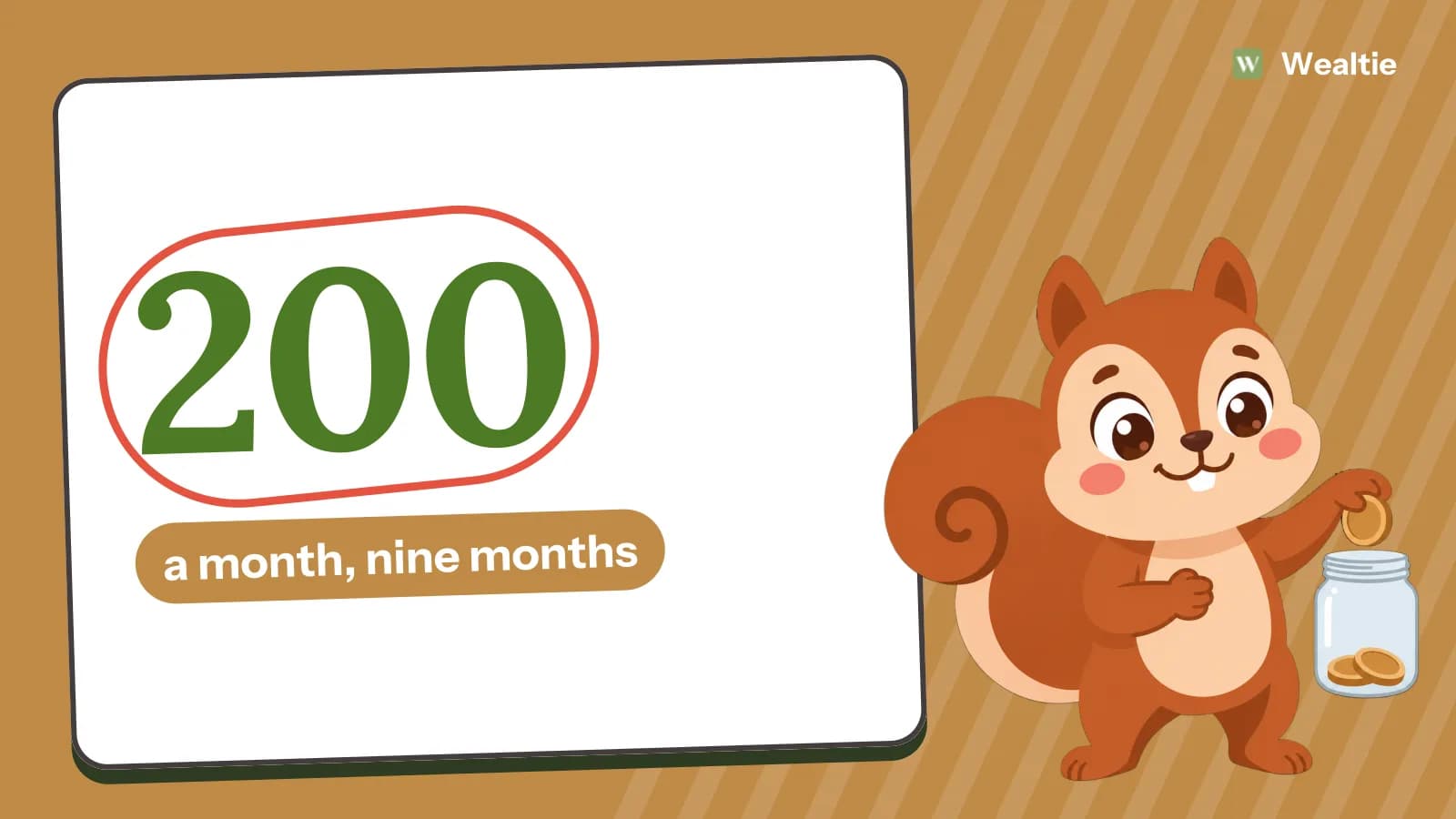
Here's how to save for a big purchase: decide the price and the date, divide one by the other to get a monthly amount, and move it to a separate pot each payday. Saving 1,800 for a laptop over nine months is 200 a month, with no interest to pay.
 By Wealtie Team · 3 min read
Key takeaways
- Decide the price and the date first, then divide to get the monthly amount.
- Saving 1,800 over nine months takes 200 a month.
- Keeping the money in a separate pot stops it being spent on everyday things.
- Saving first usually costs less than buying on credit, and waiting can also show whether you still want it.
How do you save for a big purchase?
Set a price and a date, work out the monthly amount, and automate it. It's the same method whether you're saving for a laptop, a sofa, a bike or a course. The steps are simple. Sticking with them for several months is the hard part, so the setup is designed to make that easy.
How much do you need to save each month?
Divide the price by the months you've got. Here's 1,800 for a new laptop, in round numbers that work in any currency:
| Months until you buy | Monthly amount |
|---|---|
| 6 | 300 |
| 9 | 200 |
| 12 | 150 |
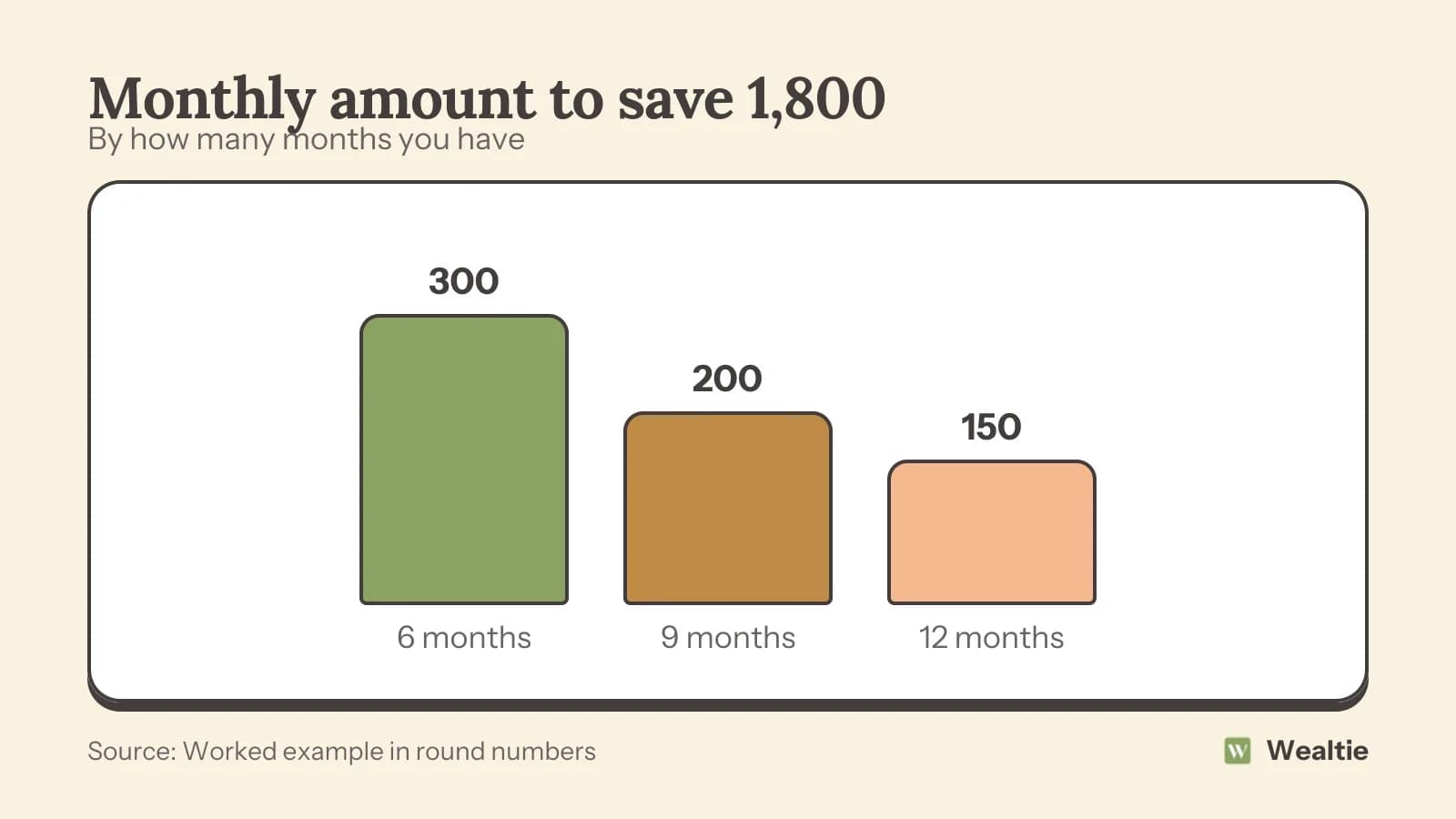
If the monthly amount doesn't fit, you've got three levers: wait longer, find a cheaper version, or save part and accept a smaller purchase. Moving the date is often the easiest.
If the price might change, like a phone about to be replaced by a newer model, check whether waiting would make it cheaper. Get a realistic price before you start. Include delivery, setup, accessories or anything else you'll need, so you don't arrive at the target and find you're short.
Where should you keep the money?
In a separate savings pot, named after what it's for. Money sitting in your everyday account tends to get absorbed into ordinary spending. A pot called "Laptop, August" is much harder to dip into than a general balance.
Set up an automatic transfer for the day after payday. Pay yourself first explains why payday is the right moment. If you're saving for several things, give each its own pot, so progress on one doesn't hide a lack of progress on another.
Is saving better than buying on credit?
Usually, yes. Buying on a credit card you can't clear, or on a finance deal with interest, means paying more than the price. Saving first means you pay the price and nothing else.
Interest-free deals can work if you're certain you'll clear them before the deadline, but many charge a lot if you don't, and they can encourage spending more than you planned. Should you pay your credit card in full explains what carrying a balance costs.
Saving also gives you time. Plenty of people find, a few months in, that they no longer want the thing, or that a cheaper option would do. That's money kept, not lost.
What if the item you need can't wait?
Then it's closer to an emergency. If your only laptop breaks and you need it for work, use your emergency fund, then refill it. What counts as an emergency has a test for when that's the right call.
For things that will need replacing one day, like a phone, a laptop or a washing machine, saving a small amount each month in advance means it never becomes urgent.
How do you stay motivated over several months?
Make progress visible. Check the pot's balance once a month, and note the date you reach each quarter of the target. If you've got a picture of what you're saving for, that helps too. Telling someone what you're saving for makes it easier to keep going, since they'll ask how it's going.
Keep the target realistic, and check the plan each month against the pot. If you keep missing transfers, lower the monthly amount and move the date, rather than giving up. A slower plan that finishes beats a fast one that stops.
How do you get the best price when you buy?
Set a price alert for the exact model, and decide in advance the price at which you'll buy. Shop around once you've got the money. Compare prices, check for discounts at sale times you'd shop at anyway, and look at refurbished or second-hand options for electronics and furniture. Check the returns policy and warranty before you pay.
Paying with money you've saved also means you can choose the best deal, rather than the one that offers finance.
How do you save for a purchase in Wealtie?
Add a savings account named after the goal, and move the monthly amount into it as a transfer, which isn't counted as spending. Your net worth tracker shows the balance growing. When you buy, log the purchase from that account, so your budget tracker for the month isn't hit by money you saved earlier. How to save for a car and how to save for a vacation apply the same method to two common goals.
Questions people ask
Decide the price and date, divide to get a monthly amount, and move it to a separate pot each payday.
Saving is usually cheaper, because you pay only the price and no interest. Waiting also gives you time to decide whether you still want it.
Divide the price by the months until you buy. Saving 1,800 over nine months takes 200 a month.
In a separate savings pot named after the goal, so it doesn't get absorbed into everyday spending.
This article is general information, not financial, tax or legal advice. Your situation is your own; check the numbers that apply to you before you act on them.