Saving: How to save money on prescriptions and medicines
To save money on prescriptions, check whether you're entitled to free or reduced-cost medicine, ask about prepayment options if you need several items, and choose generic versions of everyday medicines. In a worked example, someone needing two prescriptions a month saves over 100 a year with a prepayment plan.
 By Wealtie Team · 3 min read
Key takeaways
- Check whether you qualify for free or reduced-cost prescriptions before paying.
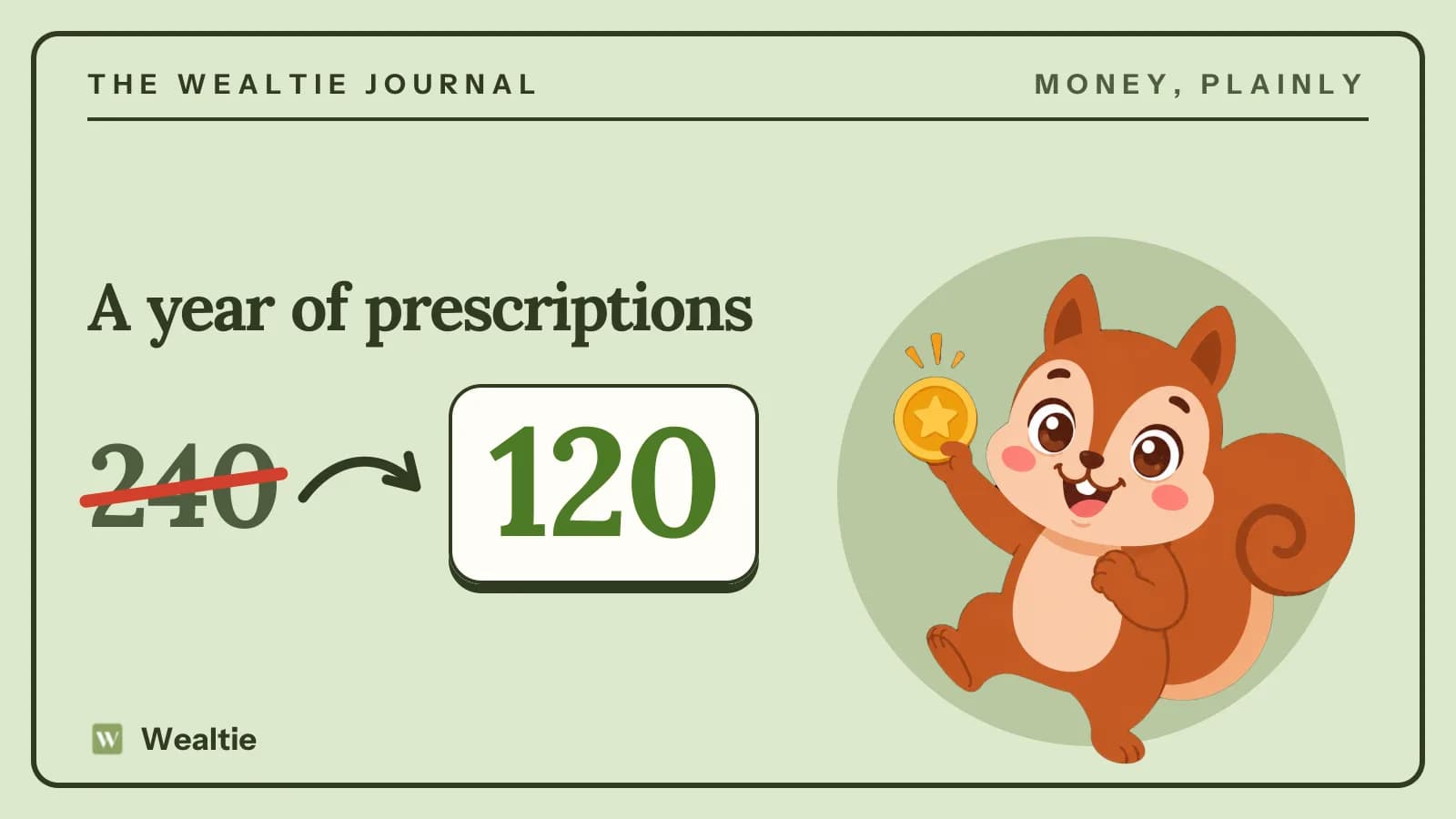
- In a worked example, a prepayment plan saves 120 a year for someone needing two items a month.
- Generic medicines usually work the same way as branded ones and cost much less.
- Ask a pharmacist before buying; they can often suggest cheaper options.
How do you save money on prescriptions?
Check what you're entitled to, choose cheaper equivalents where your doctor or pharmacist agrees, and plan for regular medicines. Prescriptions and everyday medicines are a cost that's easy to overlook until you need several at once or take something long term. A few simple steps can bring the yearly cost down a lot.
Always follow the advice of your doctor or pharmacist about what medicine to take. This guide covers how to pay less for it.
Are you entitled to free prescriptions?
Check before you pay. In many places, prescriptions are free or cheaper for certain groups, such as:
- Children and older people
- People on lower incomes or certain benefits
- Pregnant women and new mothers, in some countries
- People with specific long-term conditions
- Students, in some places
Rules vary a lot between countries and regions. Your pharmacist, doctor or local health service can tell you what applies to you. It's worth asking again when your circumstances change, like a new diagnosis or a drop in income.
Is a prepayment plan worth it?
If you need several prescriptions, it often is. Some health systems offer a prepayment option, where you pay a fixed amount for a set period and get all your prescriptions covered. Here's a worked example, in round numbers that work in any currency:
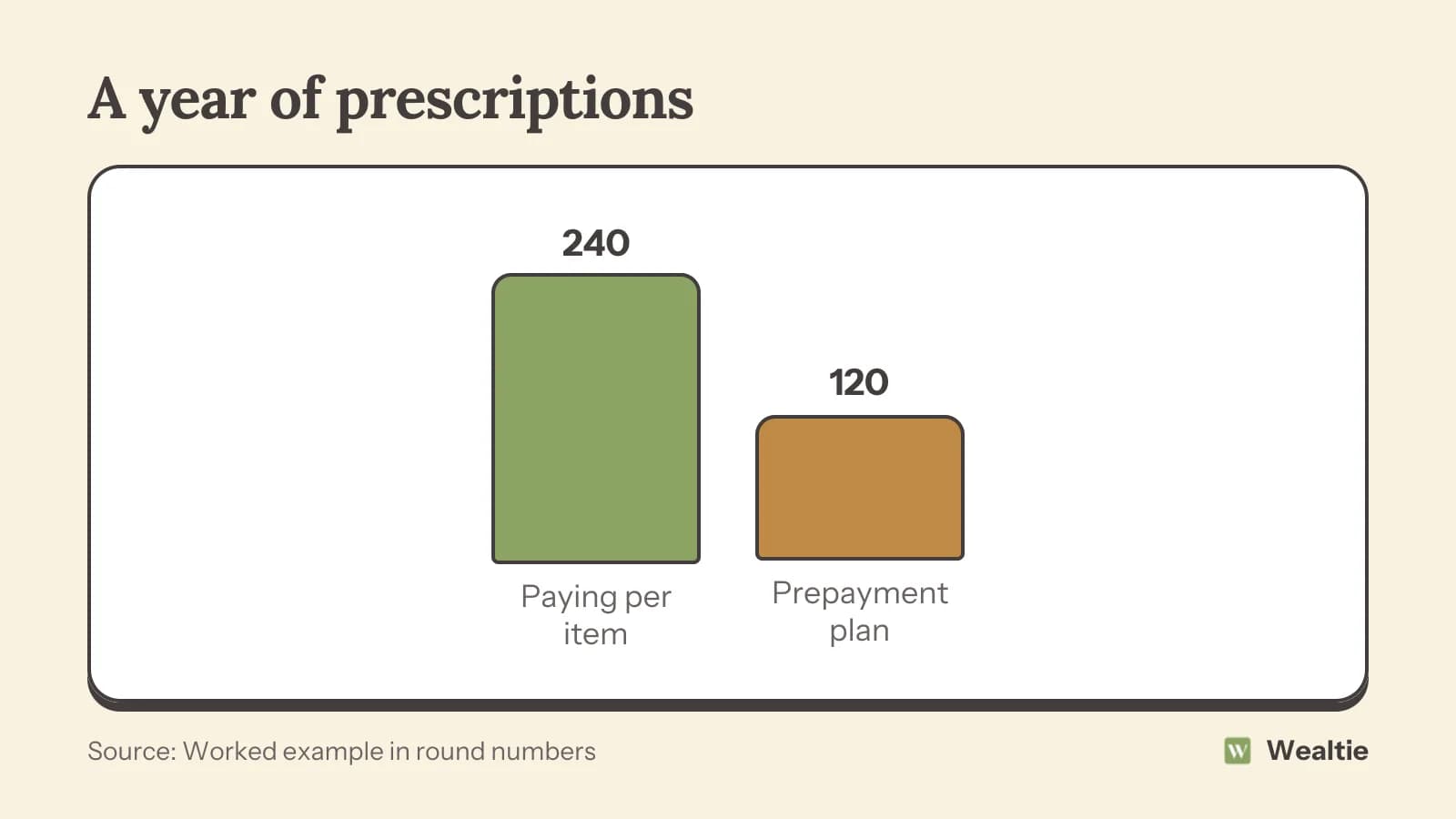
In this example, two items a month at 10 each cost 240 a year. A prepayment plan costing 120 saves 120. If you need only one or two prescriptions a year, paying per item is usually cheaper. Count how many items you need, then compare. Some plans can be paid in monthly instalments, which spreads the cost.
Are generic medicines as good?
Usually, yes. Generic medicines contain the same active ingredient as branded ones and must meet the same standards. They often cost much less. For everyday medicines, like painkillers and allergy tablets, a branded pack might cost 4 while a generic one costs 1 for the same ingredient and dose. Check the active ingredient and strength on the label, and ask your pharmacist if you're unsure. If your doctor prescribes a branded medicine, you can ask whether a generic is suitable.
How do you save on everyday medicines?
Buy the basics for less:
- Choose supermarket or pharmacy own-brand versions of common medicines
- Buy larger packs of things you use often, if they won't expire before you finish them
- Check expiry dates in your medicine cabinet and use older items first
- Ask your pharmacist whether a cheaper product would work as well
- Avoid buying extras you don't need, like combination products when a single ingredient would do
How to save money on personal care has more ideas for everyday health and toiletries.
Build a simple medicine kit
Keeping a small kit at home with painkillers, plasters, antiseptic and allergy tablets, bought cheaply in advance, saves paying more at a late-night shop or while travelling. Check it twice a year and replace anything out of date.
Ask your pharmacist
Pharmacists can often treat minor conditions and recommend cheaper over-the-counter options, saving a doctor's visit. They can also check whether two medicines you're taking interact, which matters for safety as well as cost. Many pharmacies offer free advice consultations, so it's worth asking before booking a paid appointment.
How do you plan for regular medicines?
If you take medicine long term, treat it as a regular bill. Work out the monthly or yearly cost, and include it in your budget. Ordering repeat prescriptions in good time avoids last-minute trips or paying for emergency supplies. If you're travelling, check you have enough and how to get more abroad. A reminder a week before you run out gives you time to order without paying for urgent supplies.
What about other health costs?
Prescriptions often sit alongside other health costs, like dental care, glasses and appointments. Looking at them together helps you see the full picture and spot where to save. How to budget for medical bills covers planning for health costs, and how to save money on glasses covers another regular cost. Some workplaces and insurance policies help with prescription costs, so check your benefits.
How do you track medicine costs in Wealtie?
Set up regular prescriptions or a prepayment plan as a recurring transaction with the bill tracker, so they're logged on time. Give medicines and health costs their own line in your expense categories, so you can see what they add up to over a year and whether a prepayment plan would save money.
Questions people ask
Check whether you qualify for free prescriptions, consider a prepayment plan if you need several items and choose generic medicines where appropriate.
If you need several items a year, often yes. In a worked example, it saves 120 a year for someone needing two items a month.
Usually, yes. They contain the same active ingredient and meet the same standards. Ask your pharmacist if unsure.
Choose own-brand versions, compare active ingredients, buy sensible pack sizes and ask your pharmacist for cheaper options.
This article is general information, not financial, tax or legal advice. Your situation is your own; check the numbers that apply to you before you act on them.