Saving: How to save for a vacation: price the trip, then a monthly number
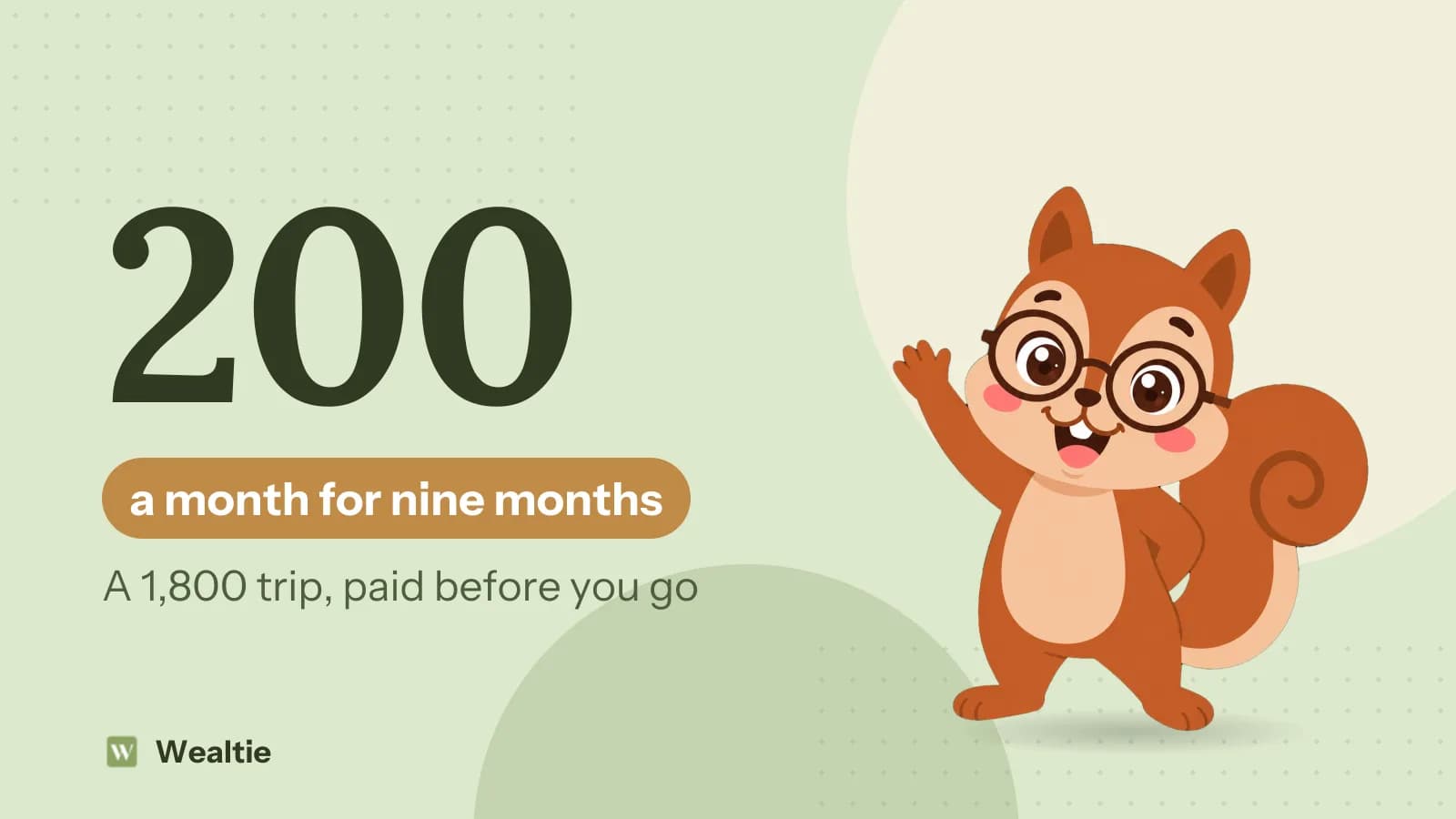
To save for a vacation, price the whole trip first, from flights to daily spending, then divide by the months until you go. A 1,800 trip nine months away is 200 a month. Move that into a separate account each payday, and pay every deposit and booking from it, so the trip is paid for before you leave.
 By Wealtie Team · 3 min read
Key takeaways
- Price the trip line by line before saving: travel, accommodation, a daily spending amount times the days, insurance and a buffer.
- Divide the total by the months until you go: a 1,800 trip nine months away is 200 a month.
- Keep the money in a separate account, and pay deposits and bookings from it, so you can see what's still to save.
- Book the big items early when prices are known, and leave the daily spending as the last thing to save.
- Come home with the trip paid for: anything that goes on a card should be paid off from the fund, not next month's budget.
How do you save for a vacation?
Price the trip, divide by the months until you go, and move that amount to a separate account every payday.
It sounds obvious, but most vacation budgets start the other way round: book the trip, then work out how to pay for it, often on a card. Pricing it first means you know the trip is affordable before you commit, and you come home with it already paid for.
How much should you save for a vacation?
The full cost of the trip, line by line. Here's a worked example in round numbers, the same in any currency, for a seven-night trip:
| Line | How to price it | Amount |
|---|---|---|
| Travel | Flights, trains or fuel for everyone | 600 |
| Accommodation | 7 nights × 80 | 560 |
| Daily spending | 7 days × 60, for food, transport, activities | 420 |
| Insurance and transfers | Travel insurance, airport transfers, parking | 60 |
| Buffer | About a tenth of the rest | 160 |
| Total | 1,800 |
The daily spending line is the one people forget or underestimate. Check typical prices for food and local transport at your destination, and be honest about how you like to travel. The buffer covers the things you can't price in advance: a missed connection, a rainy-day museum, a better restaurant.
How much do you need to save each month?
The total divided by the months until you go. For the 1,800 trip:
| Months until departure | Monthly amount |
|---|---|
| 12 | 150 |
| 9 | 200 |
| 6 | 300 |
| 3 | 600 |
If the monthly amount doesn't fit your budget, change the trip, not the plan: fewer nights, a cheaper destination, travelling outside peak season. The longer the lead time, the smaller the monthly amount, which is one reason to plan next summer's trip in autumn.
What if the trip is only weeks away?
Then the saving has to come from this month's budget, and the trip may need to shrink.
With three months or less, the monthly amount gets large quickly: 600 a month for the same 1,800 trip. Look at what's already booked and what isn't. Trim the parts that can still change, like the number of nights or the daily spending, and cover the rest from changeable categories for a month or two. If it still doesn't fit, a shorter or closer trip this year and a properly saved one next year usually beats a trip that's paid off for months afterwards.
Where should you keep vacation savings?
In a separate savings account, apart from your everyday money and your emergency fund. A sinking fund for the trip, in other words.
A separate account does two things. It stops the money being spent on something else, and it shows exactly how much is saved and how much is still to go. Don't use the emergency fund for a trip; a vacation is a planned cost, and what counts as an emergency explains why the difference matters.
When should you book, and what do you pay first?
Book the big items when the prices are good, and pay deposits from the vacation account.
Flights and accommodation usually make up most of the cost, and their prices change. Book them when you find a price that fits the plan, even if the fund isn't full yet, and pay from the vacation account. The rest of the saving then covers the remaining balance and the daily spending.
Keep a simple list of what's paid and what's left. When the account balance matches what's left, you're done.
How do you save for a vacation faster?
Cut the biggest line, then add to the fund from elsewhere.
- Change dates. Travelling a week either side of school holidays can cut flights and accommodation noticeably.
- Change the base. A flat with a kitchen cuts the daily spending line.
- Save windfalls. Tax refunds, bonuses and gifts can go straight into the fund.
- Trim one category. Moving 50 a month from eating out to the trip fund adds 450 over nine months.
Should you use a credit card for the trip?
For protection and points, if you pay it off in full from the fund. Not as a way to pay for the trip over the following months. While you're away, how to budget for a trip abroad covers sticking to the daily number.
How do you track a vacation fund?
In Wealtie, add the vacation savings account to your accounts and log each payday move as a transfer, so it doesn't count as spending. Put the monthly amount in your budget as a fixed line. When you pay a deposit from the account, log it there, and the balance shows exactly what's still to save.
Questions people ask
Price the trip first: travel, accommodation, daily spending times the number of days, insurance, and a buffer of about a tenth. That total is what to save.
Divide the trip's total cost by the months until you leave. A 1,800 trip in nine months needs 200 a month; in six months, 300.
In a separate savings account, apart from your everyday money and your emergency fund, so you can see exactly what's saved and it isn't spent on something else.
Only if the money is already saved and you pay the card off in full. Using a card for protection or points is fine; using it to pay for a trip over the following months is expensive.
Cut the biggest line first, usually accommodation or flights, by changing dates or destination. Then save windfalls into the fund and trim one changeable category in your monthly budget.
This article is general information, not financial, tax or legal advice. Your situation is your own; check the numbers that apply to you before you act on them.