Multi-currency & travel: How to plan a city break budget for a long weekend
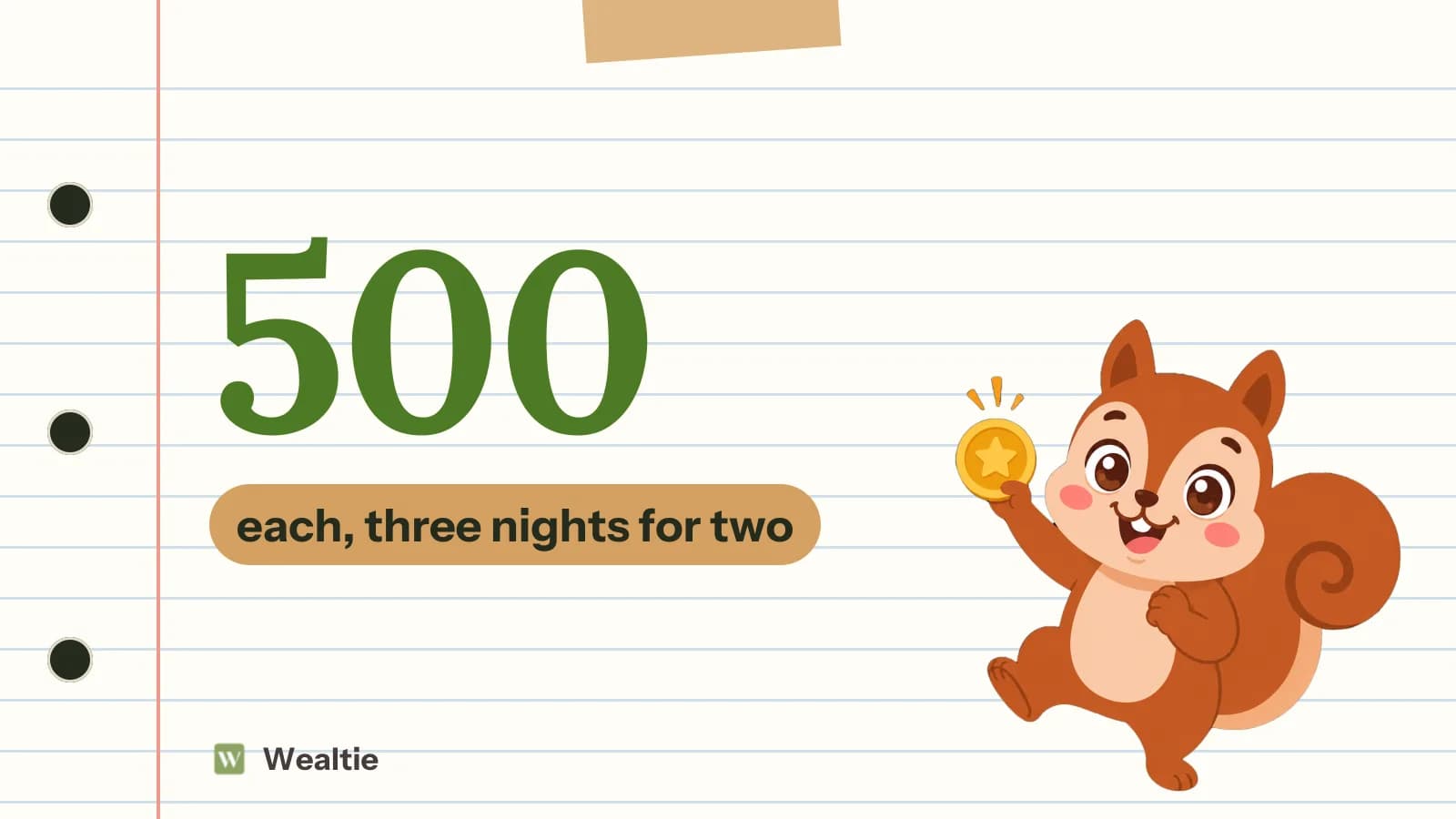
A city break budget covers travel, three nights somewhere to stay, food, sights and local transport, with a small buffer. In a worked example, a long weekend for two comes to about 1,000, or 500 each.
 By Wealtie Team · 3 min read
Key takeaways
- A city break budget covers travel, accommodation, food, sights, local transport and a small buffer.
- In a worked example, three nights for two comes to about 1,000, or 500 each.
- Accommodation and food are usually where the budget can move most.
- City passes and free walking routes can cut the cost of sights.
How do you plan a city break budget?
Price each part, add a small buffer and set a daily figure for spending once you're there. City breaks are short, so a few expensive choices can make up a big share of the total. Planning ahead keeps the trip enjoyable without a bill that lingers. Decide the total first, then fit the trip to it, rather than adding up the cost after you get home.
What does a city break cost?
Here's a three-night trip for two, in round numbers that work in any currency:
| Line | Amount |
|---|---|
| Travel, return for two | 300 |
| Three nights at 120 | 360 |
| Food and drinks | 220 |
| Sights and local transport | 70 |
| Buffer | 50 |
| Total | 1,000 |
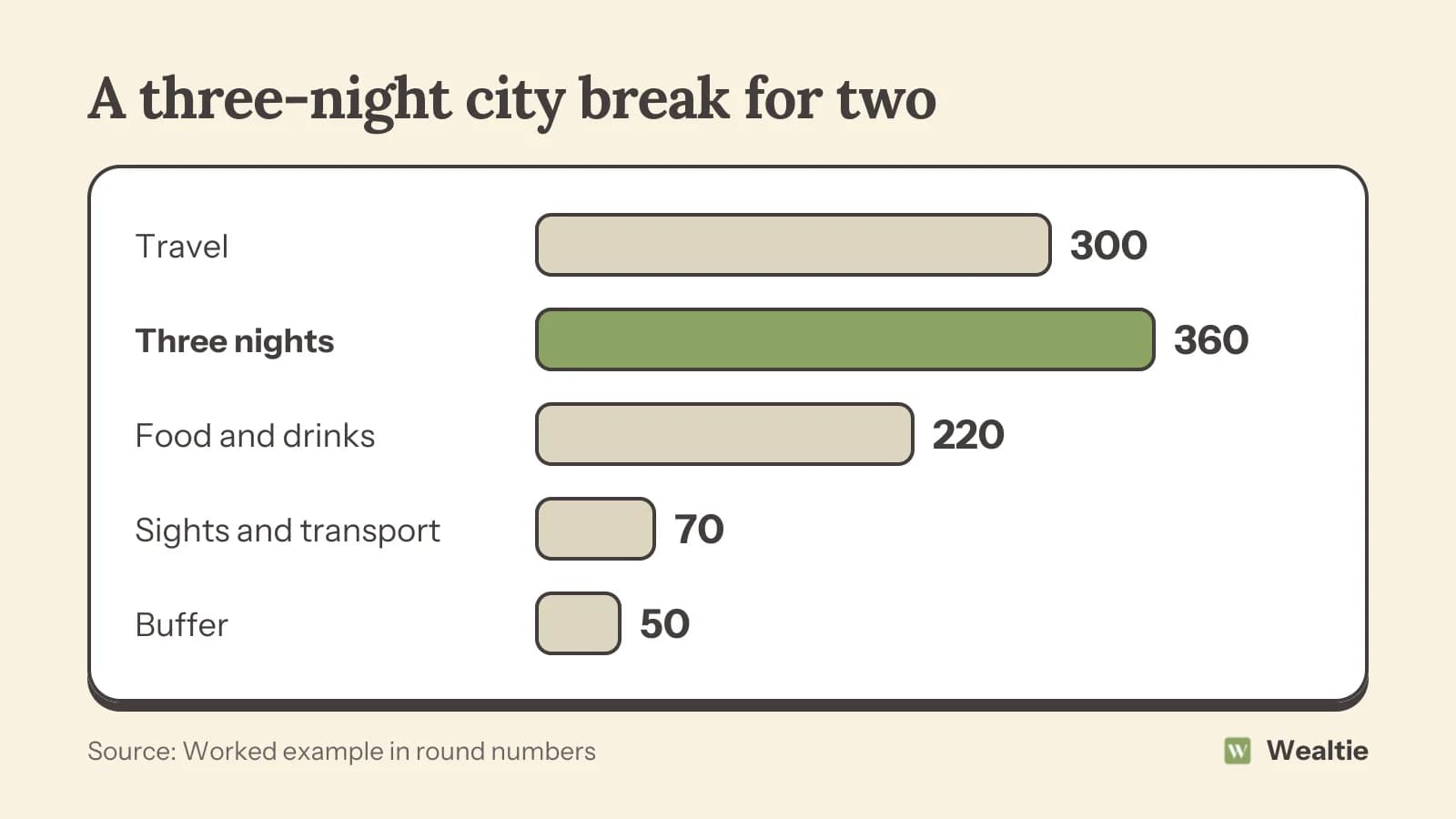
That's 500 each. Your figures will depend on the city, the season and how you travel. Some cities cost far more than others for the same weekend, so research prices for the place you're going.
Where can you save on travel?
Be flexible on dates and times. Flying or taking the train midweek or at off-peak times can cost less than a Friday evening. Compare the total price including bags and transfers from the airport. How to save money on flights goes through the details.
Book once you've decided, since prices for popular weekends tend to rise. For closer cities, the train can be competitive once you count airport transfers and the time spent at the airport.
Where should you stay?
Somewhere central enough to walk to most things, since that saves on transport and time. Staying a little outside the busiest area, near a good transport link, often costs less. Apartments can work well for longer stays or groups, and small hotels for a short weekend.
Check the total price including taxes and fees, and read the cancellation terms. Breakfast included can be worth it if it's good and you'd otherwise pay for it, and some cities give hotel guests a local transport pass.
How do you keep food costs down?
Mix meals out with cheaper options. A bakery breakfast, a market or street-food lunch and one proper dinner a day can cost far less than three restaurant meals. Eating where locals eat, away from the main squares, usually costs less and tastes better.
Supermarkets sell picnic food and drinks for far less than cafés, and a picnic in a park can be one of the best meals of a trip. Set a daily food amount and check it each evening. In this example, 220 over three and a half days is about 63 a day for two.
How do you save on sights?
Pick the two or three things you most want to see and book those. Many cities have free museums on certain days, free walking routes, parks and viewpoints. A city pass can save money if you'll use several of the included sights, but add up what you'd use before buying one.
Walking is the best way to see a city, and it's free. Book timed tickets online for the big attractions, which can be cheaper and save queuing, and check opening days, since a closed museum can push you into paying for something else.
What costs catch people out?
The small ones: airport transfers, tourist taxes added at checkout, card fees abroad, and snacks and coffee throughout the day. Check whether the city charges a tourist tax, and whether it's paid on arrival. Use a card with low foreign fees and pay in the local currency. Foreign transaction fees explains why.
How do you pay for it?
Save in advance. A 1,000 trip saved over five months is 200 a month. Booking the travel and accommodation early, once you've got the money, locks in prices and leaves only the spending money for the trip itself.
Keep the spending money in the account you'll use abroad, so you can see what's left. If you're going with friends, agree how you'll split costs before you go. Splitting travel costs with friends has a system for that.
How do you track a city break in Wealtie?
Log costs in a Travel category as you go, in the currency you paid. Each account keeps its own currency, and your totals are converted into your display currency at each day's rate, so the trip's cost shows up in the money you think in. Your expense categories show the trip's total, and the multi-currency budget app covers 68 currencies on the Free plan.
Questions people ask
About 1,000 for three nights for two in a worked example, or 500 each, though the city and season make a big difference.
Travel off-peak, stay near good transport rather than right in the centre, mix street food with one meal out a day and pick a few sights to pay for.
Only if you'll use several of the included sights. Add up what you'd pay without one first.
Airport transfers, tourist taxes, card fees abroad and small daily spending on snacks and coffee.
This article is general information, not financial, tax or legal advice. Your situation is your own; check the numbers that apply to you before you act on them.