Multi-currency & travel: How to plan a retiring abroad budget
A retiring abroad budget needs to cover living costs, healthcare and currency swings, not just the lower cost of living. In a worked example, a couple needs 2,000 a month abroad, plus a 15,000 move and a buffer for exchange rates.
 By Wealtie Team · 4 min read
Key takeaways
- A retiring abroad budget must include healthcare, currency risk and trips home.
- A lower cost of living can be offset by healthcare and travel costs.
- Pensions paid in another currency can rise or fall with exchange rates.
- Try living there for a few months before selling up.
What should a retiring abroad budget include?
Retiring somewhere warmer, cheaper or closer to family is a dream for many people. A lower cost of living can make your pension go further, but a retiring abroad budget needs to cover more than rent and groceries. Healthcare, insurance, residency visas, trips back home and exchange rates can all change the sums, and some costs grow as you get older.
The main areas to plan for are:
- Monthly living costs: housing, food, utilities, transport and leisure
- Healthcare: insurance, local health system costs and medication
- Currency: how exchange rates affect your pension and savings
- The move: removals, visas, legal fees, deposits and furnishing
- Staying connected: flights home, phone and visitors
How much does it cost to retire abroad?
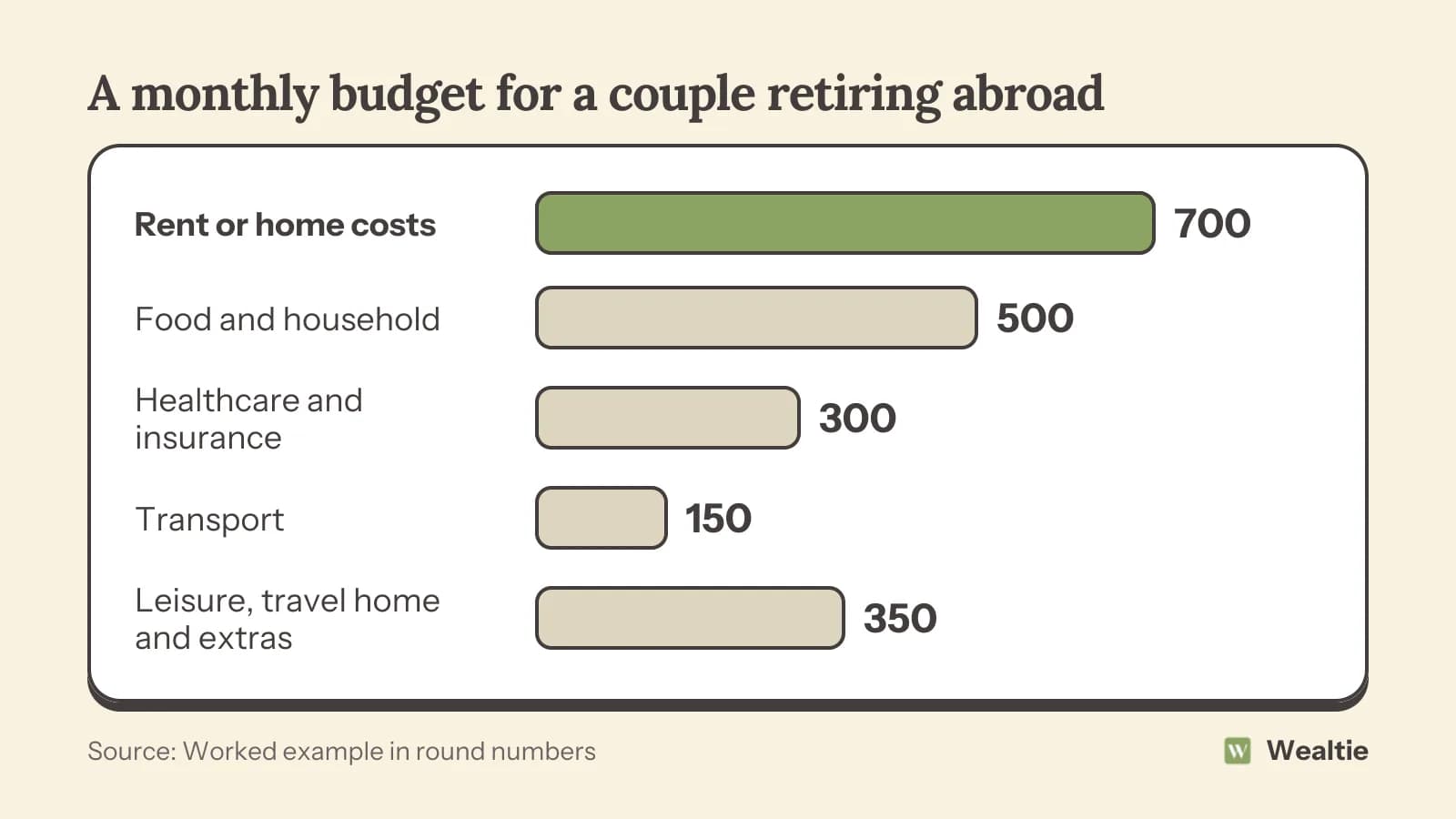
Here's a worked example of a monthly budget for a couple, in round numbers that work in any currency:
| Monthly cost | Amount |
|---|---|
| Rent or home costs | 700 |
| Food and household | 500 |
| Healthcare and insurance | 300 |
| Transport | 150 |
| Leisure, travel home and extras | 350 |
| Total | 2,000 |
On top of that, the move itself might cost around 15,000, including removals, visa fees, legal and property costs, deposits and furnishing a new home. Costs vary hugely by country and city, so research your chosen place in detail. How to make a moving abroad budget covers the costs of the move.
How do exchange rates affect your budget?
If your pension is paid in one currency and you spend in another, exchange rates matter every month. A pension that converts to 2,000 when you move could convert to 1,800 a year later if rates move against you, with no change in your spending. Plan for that by building a buffer into your budget, keeping some savings in the local currency, and using a low-cost way to transfer money. How to send money abroad cheaply covers keeping transfer fees down.
What about healthcare?
Healthcare is often the most important and least predictable cost. Some countries let residents join the public health system, sometimes after a period or with contributions. Others require private insurance, which gets more expensive with age. Check what applies to you, whether pre-existing conditions are covered and how close good medical care is to where you plan to live. Budget generously for this line, since it tends to rise over time.
What else should you check before moving?
Residency rules
Many countries require a retirement or residency visa, often with proof of income or savings. Check the requirements and costs well in advance.
Pensions and tax
Some pensions are taxed differently abroad, and some state pensions may not rise each year in certain countries. Rules vary, so check official guidance and consider an adviser who specialises in your situation.
Property
Buying abroad involves different processes and costs. Renting first gives you time to learn the area before committing.
Banking
You'll likely need a local bank account. How to budget as an expat covers managing money across countries.
Family and support
Distance from family, language and building a social life all affect wellbeing. Budget for flights home and for visitors.
How do you test the plan?
The best test is to live there before you commit. Renting for a few months, ideally including the least pleasant season, shows you the real cost of living, what you'd miss and whether the lifestyle suits you. Keep a record of what you spend during that time, and compare it with your planned budget.
It's also wise to keep some flexibility. Not selling your home straight away, or keeping enough savings to return if needed, protects you if circumstances change.
How do you fit it into retirement planning?
Start with your expected income from pensions and savings, then check it covers your monthly budget abroad with a buffer for currency and healthcare. How to budget in retirement covers planning income and spending in later life, and how to budget before retirement covers the years leading up to it.
Think about how your needs may change over time, too. A home with stairs or a long drive to the shops may suit you at the start of retirement but become harder later. Budgeting for possible care, or a move to somewhere more practical, keeps your plan realistic for the long term. It's also worth thinking about what would happen if one partner died or needed care, and whether the other would want to stay abroad or return home.
Talking to other retirees who've made the same move can be the most useful research of all. Online groups and local clubs for expats often share honest numbers on what life costs and what surprised them.
How can Wealtie help you budget across currencies?
Wealtie supports multiple currencies, so you can track a pension paid in one currency and spending in another, and see your totals in one place. Set a monthly budget for your new life abroad and log spending in expense categories during a trial stay to check your plan against reality.
Questions people ask
It varies by country. In a worked example, a couple needed about 2,000 a month to live, plus around 15,000 for the move.
Healthcare, currency swings, visa fees, trips home and the cost of setting up a new home are often underestimated.
If your pension is paid in another currency, its value can rise or fall each month. Building a buffer into your budget helps.
Yes. Renting for a few months shows you the real cost of living and whether the area suits you before you commit.
This article is general information, not financial, tax or legal advice. Your situation is your own; check the numbers that apply to you before you act on them.