Multi-currency & travel: How much does volunteering abroad cost? A budget for a month
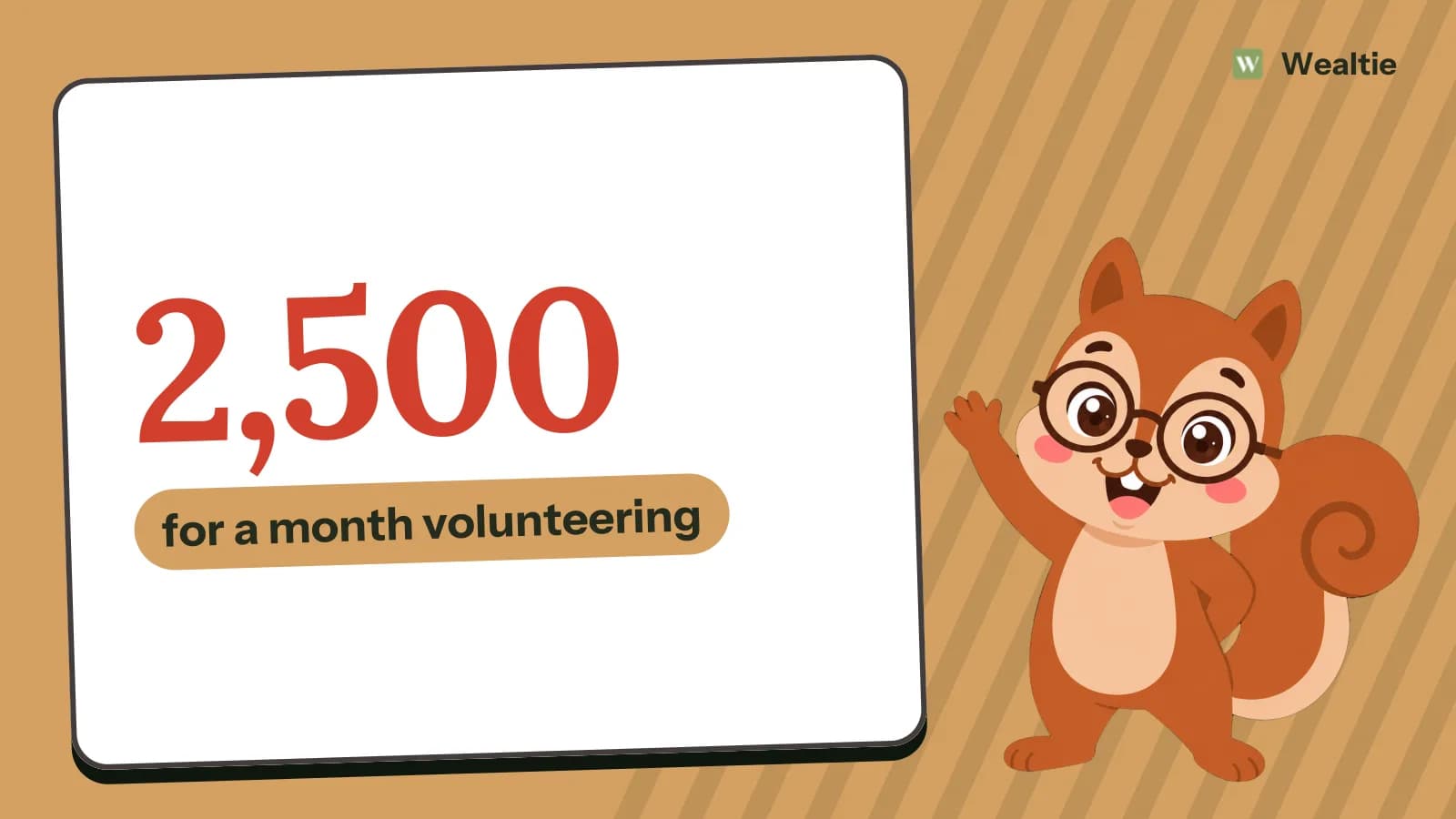
The cost of volunteering abroad covers flights, a programme fee, accommodation, food, insurance and vaccinations, and most placements charge you rather than pay you. In a worked example, a month-long placement costs about 2,500.
 By Wealtie Team · 3 min read
Key takeaways
- The cost of volunteering abroad includes flights, a programme fee, living costs and insurance.
- In a worked example, a month-long placement costs about 2,500.
- Ask where the programme fee goes, and compare it with arranging a placement yourself.
- Fundraising, cheaper destinations and longer stays can lower the cost.
How much does volunteering abroad cost?
More than many people expect. Most volunteering placements abroad don't pay you, and many charge a fee on top of your travel and living costs. In a worked example, a month-long placement costs about 2,500, including flights, a programme fee, food and accommodation, insurance and spending money. A shorter trip close to home costs less, while a long-haul placement of several months costs more.
The cost of volunteering abroad depends mostly on where you go, how long you stay and whether you go through an organisation or arrange it yourself.
What does a month volunteering abroad cost?
Here's a worked example for a month-long placement, in round numbers that work in any currency:
| Cost | For the month |
|---|---|
| Flights | 700 |
| Programme fee | 800 |
| Food and accommodation | 500 |
| Insurance and vaccinations | 300 |
| Spending money | 200 |
| Total | 2,500 |
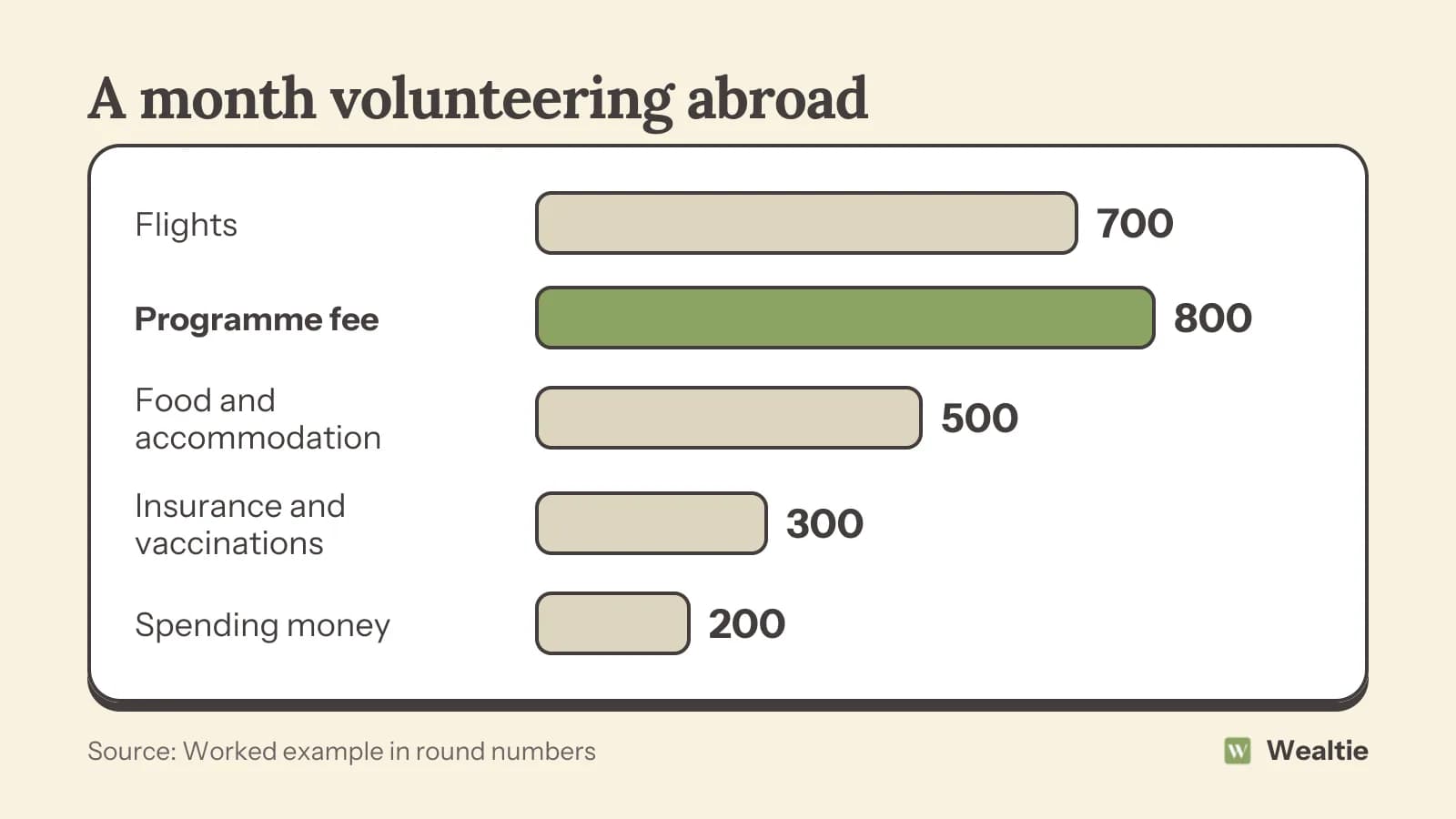
Some programmes include food and accommodation in the fee, while others charge for them separately. Read what's included before you compare prices.
What does the cost of volunteering abroad include?
Flights and visas
Flights are often the largest single cost. Booking early and being flexible with dates helps. Check whether you need a visa for volunteering, since the rules vary by country and some placements need a specific type.
Programme fees
Many organisations charge a fee to arrange the placement, train you and support you while you're there. Some of it may go to the local project. Ask how the fee is spent. A good organisation will tell you clearly.
Food and accommodation
Volunteers often stay with a host family, in shared housing or at the project. Living costs in many volunteering destinations are low, but budget for them unless they're included.
Insurance and health costs
Travel insurance that covers the work you'll do is essential. You may also need vaccinations, medicines or a health check before you go. These can add up, so price them early.
Costs at home while you're away
If you keep paying rent, phone contracts or subscriptions at home, add them to the cost of the trip. Pausing what you can, or subletting your room where that's allowed, can save a lot over a few months. Remember small costs too, like a local SIM card, laundry, transport to and from the project and weekend trips with other volunteers. Those weekends are often the part people remember most, and they're easy to leave out of the plan.
How can you volunteer abroad for less?
- Arrange it yourself: contacting local projects directly can avoid large fees, though you'll have less support.
- Stay longer: flights cost the same for a week or three months, so a longer stay spreads them out.
- Choose a cheaper destination: living costs vary hugely between countries.
- Look for placements that include food and housing: some exchange work for board and lodging.
- Fundraise: many volunteers raise part of the cost from friends, family or local groups.
How do you check a placement is worth the cost?
Look for clear information on where the money goes, what you'll do and who benefits. Read reviews from past volunteers. Be wary of placements that put untrained volunteers in roles that need skills, or that seem built around the volunteer rather than the community. A well-run project is usually happy to answer questions before you pay. Ask what a typical day looks like, who supervises volunteers, what happens if you fall ill, and whether the fee is refundable if plans change. Clear answers to these questions are a good sign that your money and time will be well used.
How do you save for volunteering abroad?
Divide the total cost by the months until you leave. For a trip costing 2,500 in ten months, that's 250 a month. Put the money in a separate savings pot so it doesn't get spent. The gap year budget covers planning a longer trip, and the working holiday budget covers trips where you earn as you go. If you'd rather give money than time, the charity giving budget covers planning donations.
Budget for coming home
Leave something for when you get back: a few weeks of costs while you settle in, and any bills that continued while you were away. Coming home to an empty account takes the shine off a good trip.
How do you track volunteering costs in Wealtie?
Set a budget for the trip and log costs in your own expense categories as you go. Wealtie supports 68 currencies, and each account keeps its own, so you can log spending in the local currency and see your totals converted with multi-currency support.
Questions people ask
In a worked example, a month-long placement costs about 2,500, including flights, a programme fee, food and accommodation, insurance and spending money.
Many organisations charge a fee to arrange the placement, train and support you, and sometimes to fund the local project.
Arrange a placement directly with a local project, stay longer to spread the flight cost, choose a cheaper destination and fundraise.
Add up flights, fees, living costs and insurance. In a worked example, 2,500 for a month, or 250 a month over ten months.
This article is general information, not financial, tax or legal advice. Your situation is your own; check the numbers that apply to you before you act on them.