Budgeting: How to budget in the five years before retirement
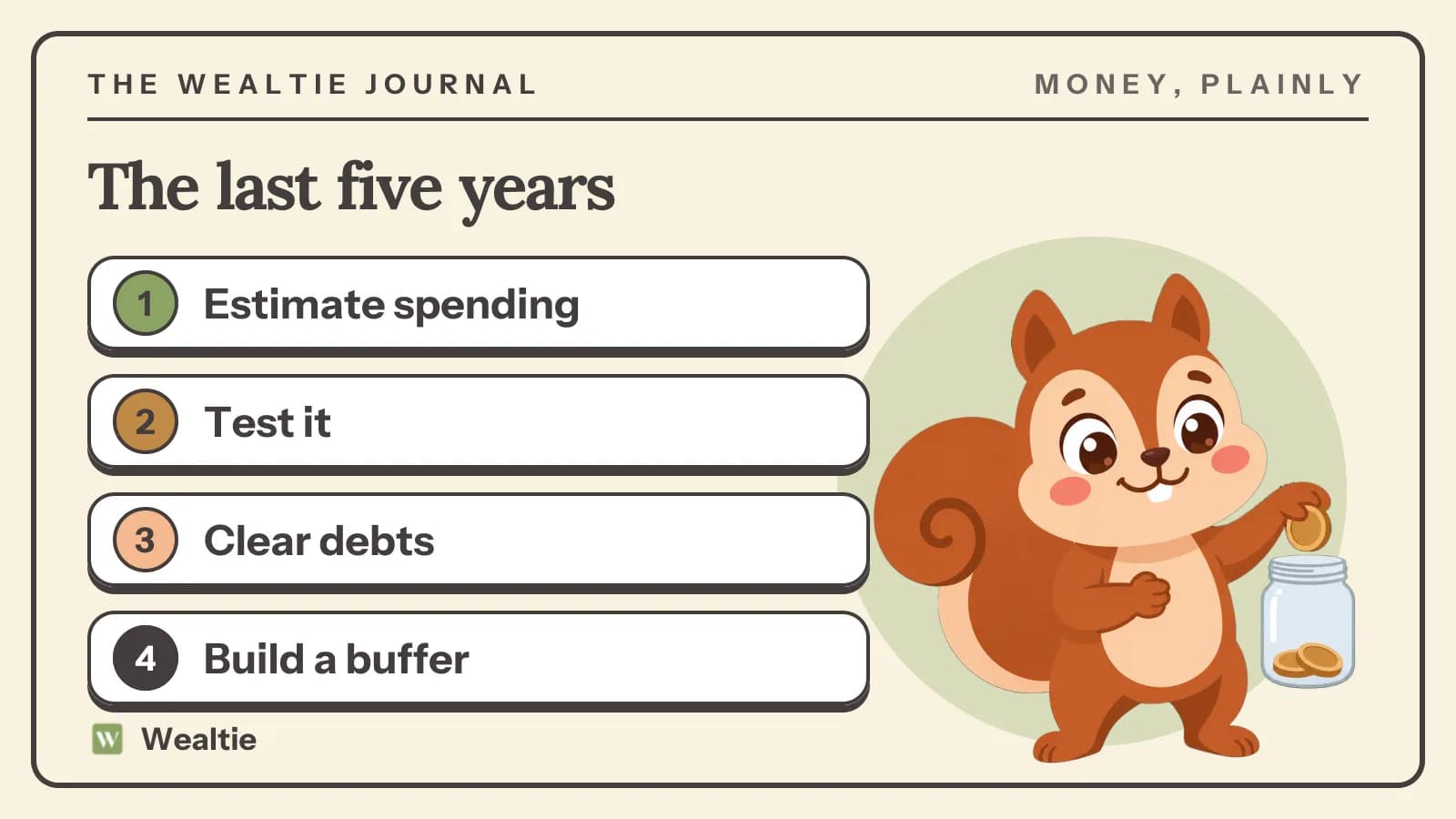
To budget before retirement, estimate what you'll spend each month, test living on it, clear remaining debts and build a cash buffer for the first years. In a worked example, a cash buffer of 12,000 covers a year of the gap between pension income and spending.
 By Wealtie Team · 3 min read
Key takeaways
- Budgeting before retirement means estimating spending, testing it and clearing debts.
- In a worked example, a 1,000 monthly gap between spending and pension income needs 12,000 a year from savings.
- A cash buffer helps you avoid selling investments at a bad time early in retirement.
- Plan when each income source starts, since they often begin at different ages.
How do you budget before retirement?
Turn your retirement plan into numbers you can test. The five years before retirement are a chance to make sure your money will work the way you hope. You can still adjust: save more, change your timing or rethink plans. Once you stop working, there's less room to change course. A budget before retirement gives you confidence about the move. It also helps you choose a retirement date based on numbers rather than guesswork.
How do you estimate your retirement spending?
Start from what you spend today, then adjust. Remove costs that will end, like commuting, work clothes and pension contributions. Add costs that may rise, like travel, hobbies, heating during the day and health costs. Many people find their spending is higher in the early, active years of retirement and lower later on.
Here's a worked example comparing planned spending with pension income, in round numbers that work in any currency:
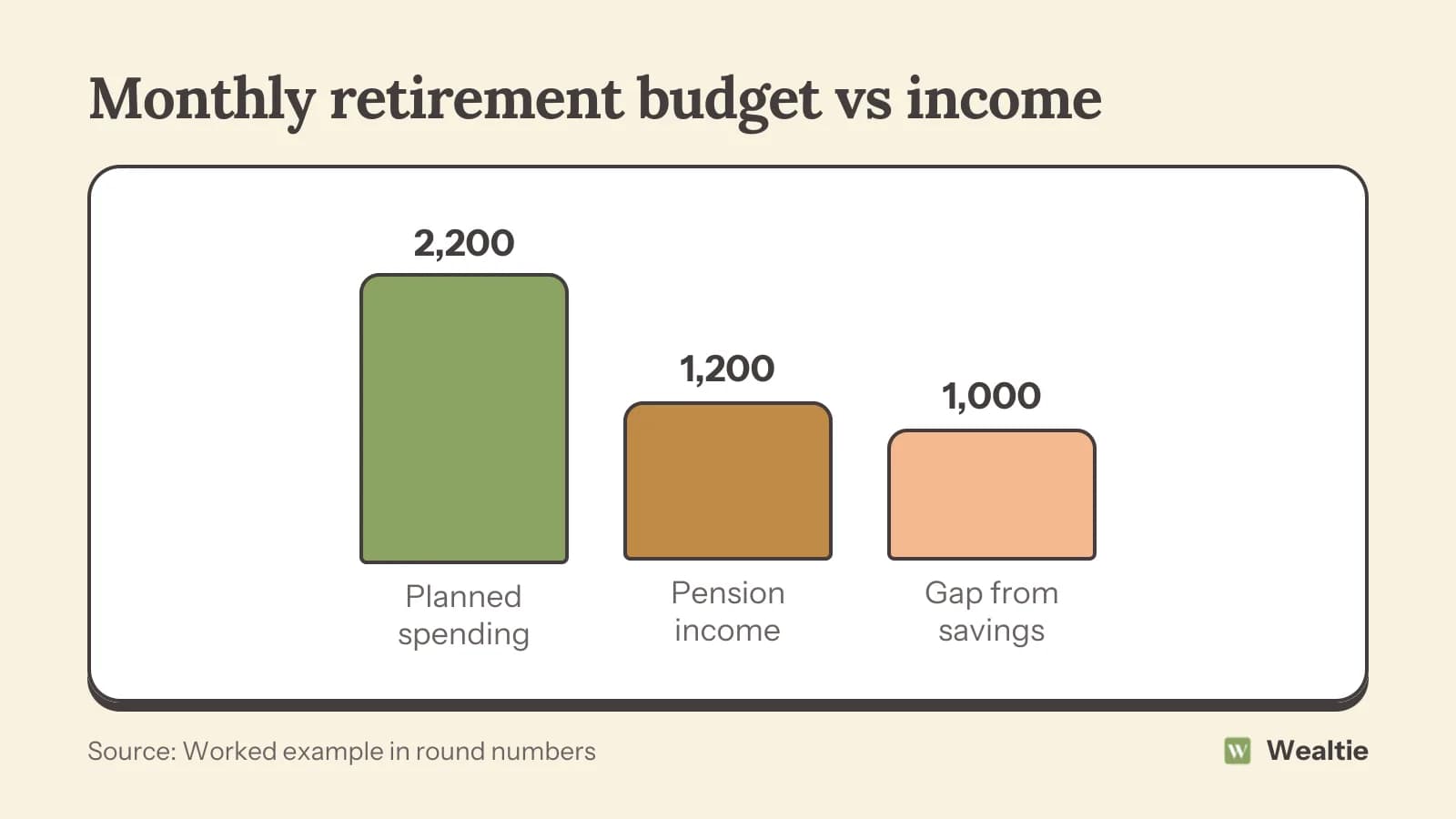
In this example, the couple plan to spend 2,200 a month, and their pension income is 1,200. The gap of 1,000 a month, or 12,000 a year, needs to come from savings or other income. How to budget in retirement covers building the full budget.
Why test your retirement budget?
Because estimates can be off. Living on your planned retirement budget for six months or a year while still working shows whether it's realistic. Save everything above it. If it feels too tight, you have time to adjust your plans or save more. If it's comfortable, the extra savings make your retirement more secure. Keep a note of what you missed or didn't miss, since it shows which costs matter to you.
How do you plan your income?
List every income source and when it starts: workplace pensions, personal pensions, state pension, rental income, part-time work or savings. They often start at different ages, so you may need to bridge gaps in the early years. Check your state pension forecast through official channels, and ask your pension providers for projections. A financial adviser can help you decide how and when to draw on each one. The order you draw from different pots can affect how much tax you pay, so it's worth getting advice before you start.
Build a cash buffer
Many people keep a year or two of their spending gap in cash before retiring. In the worked example, that's 12,000 to 24,000. A buffer means you can cover spending without selling investments at a bad time, like after a market fall. Where to keep your emergency fund covers choosing an account.
Should you clear debts first?
Usually, yes. Going into retirement without debt lowers the income you need each month. Prioritise high-interest debt first. If you still have a mortgage, consider whether to clear it, overpay it or plan to keep paying from your retirement income. Should you pay off your mortgage early helps you weigh the options. Avoiding new borrowing in the last years of work, like a new car on finance, keeps your retirement income free for living costs.
What big costs should you plan for?
List the larger costs you might face in the first ten years: a new car, home repairs, a big trip, help for children or grandchildren. Setting aside money for these, separately from monthly spending, stops them eating into your regular income. Should I save or invest covers where to keep money for different goals.
Health and care
Health costs often rise with age. Check what your health system covers, and whether you need insurance or savings for the gaps. It's also worth thinking early about how later care might be paid for. Having these conversations with family now makes decisions easier if they're needed.
How do you prepare emotionally?
Retirement is a big change. Spending patterns shift, days need new routines, and some people find it hard to stop earning. Talking with a partner about how you'll spend your time, and what you'd like to do first, helps plan both the budget and the life. Many people find a gradual step down, like working part-time for a while, eases the change financially and emotionally.
How do you prepare for retirement with Wealtie?
Track spending in your expense categories to see what you spend today, then set your planned retirement amount in the budget tracker to test living on it. Add accounts for pensions and savings so your net worth is in one place, and set an income goal that matches your expected retirement income.
Questions people ask
Estimate your retirement spending, test living on it, plan when each income source starts, clear debts and build a cash buffer.
Many people keep a year or two of the gap between spending and income. In a worked example, 12,000 to 24,000.
Often, since it lowers the income you need. Weigh it against your savings and other debts.
Live on it for six months to a year while still working, and save everything above it.
This article is general information, not financial, tax or legal advice. Your situation is your own; check the numbers that apply to you before you act on them.