Income & freelancing: How retainer clients make freelance income steadier
Retainer clients pay a set amount each month for an agreed amount of work, which turns unpredictable freelance income into something you can plan around. In a worked example, two retainers of 1,000 a month cover most fixed costs, so project work becomes extra rather than essential.
 By Wealtie Team · 3 min read
Key takeaways
- Retainer clients pay a set amount each month, which makes income easier to plan.
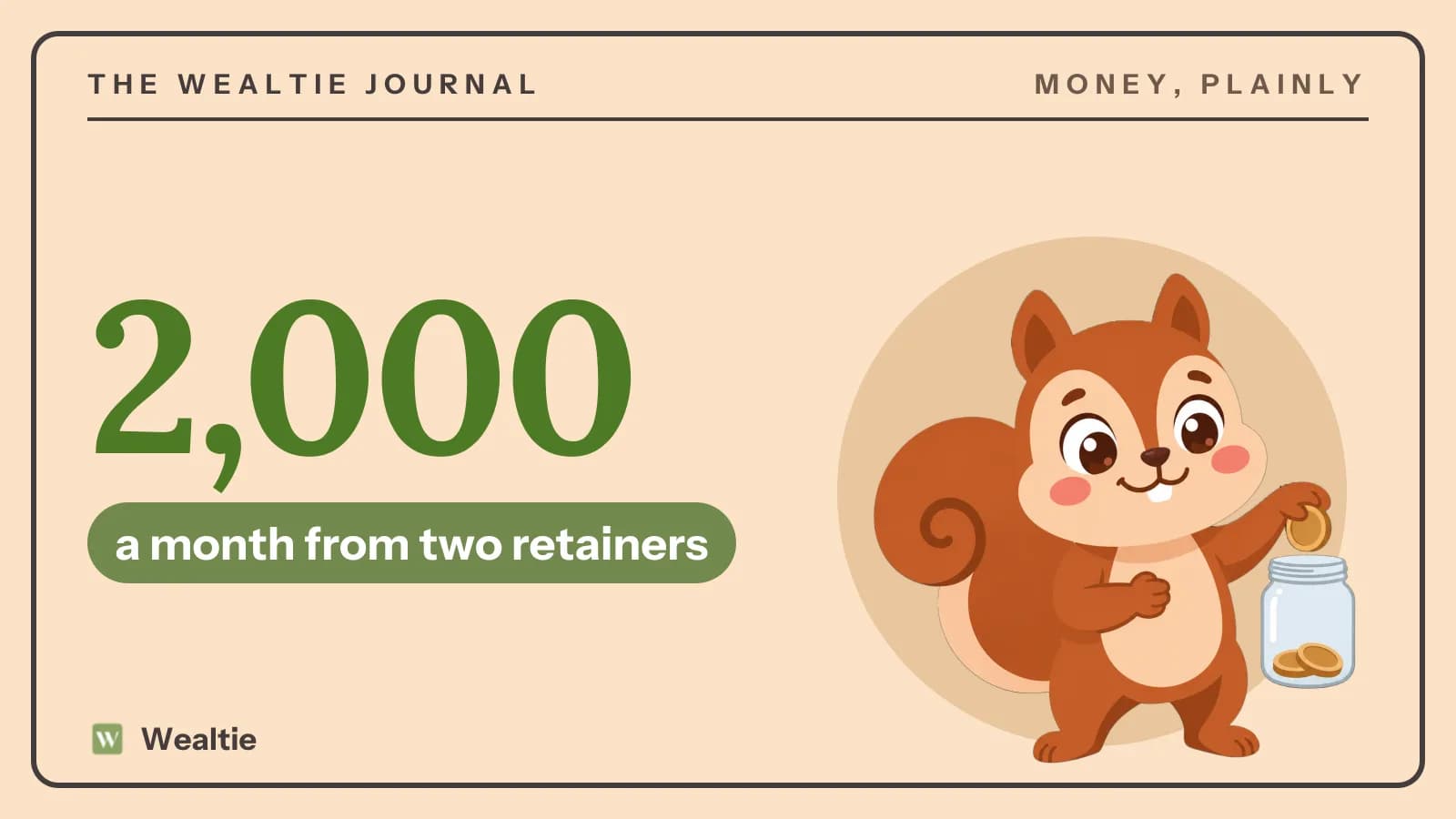
- In a worked example, two retainers of 1,000 a month cover most fixed costs.
- Define the hours, tasks and response times clearly so the retainer doesn't grow beyond what's paid.
- Keep a mix of clients, so losing one retainer doesn't remove too much income at once.
What are retainer clients?
Retainer clients pay you a set amount each month for an agreed amount of work or availability. Instead of quoting and invoicing project by project, you agree a regular arrangement: for example, 20 hours a month of design, writing, bookkeeping or support. For freelancers, retainers are one of the best ways to make income steadier.
Retainers suit ongoing work, like content, social media, maintenance, accounts or advice, where a client needs regular help rather than a single project.
Why do retainers help your budget?
Because you know what's coming in. Freelance income often swings from month to month, which makes it hard to plan. A retainer gives you a base you can count on. Here's a worked example of a month, in round numbers that work in any currency:
| Income | Amount |
|---|---|
| Retainer A | 1,000 |
| Retainer B | 1,000 |
| Project work | 1,200 |
| Total | 3,200 |
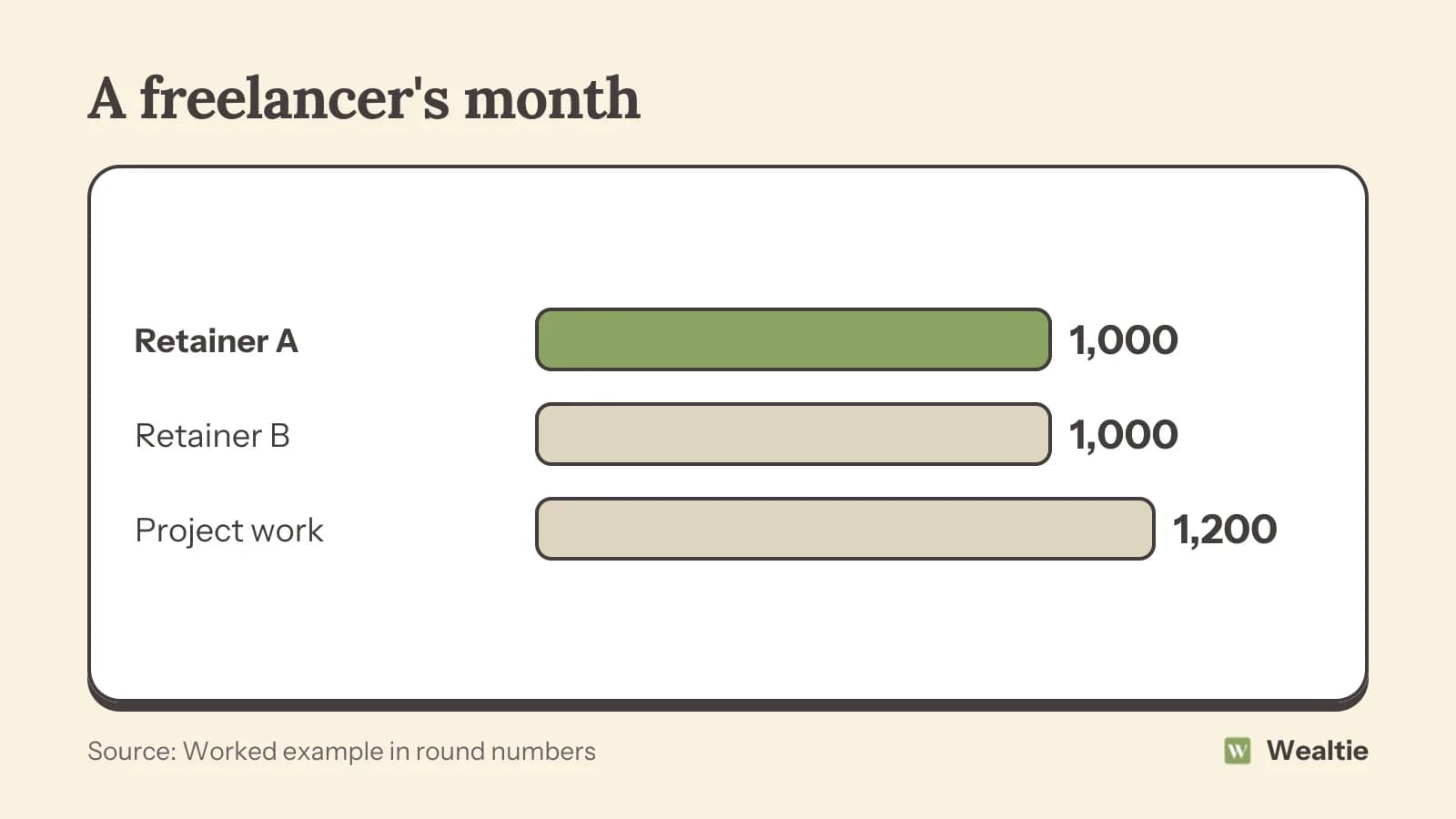
If your fixed costs are 1,800 a month, the two retainers cover most of them. Project work, which varies, becomes extra rather than essential. That changes how you feel about quiet months, and lets you plan savings with more confidence. How to measure income stability shows how to see this for your own income.
How do you price a retainer?
Start from your hourly rate and the expected hours. In a worked example, 20 hours a month at 50 an hour is 1,000 a month. Some freelancers offer a small discount for the commitment, since a retainer saves them time finding work. Others charge a premium for priority availability or fast response times.
Think about what the client values. A retainer for guaranteed availability is worth more than one for occasional tasks. How to set your freelance rate covers working out your base rate.
Hours or outcomes?
Some retainers are based on hours, and others on outcomes, like four blog posts a month or a monthly report. Outcome-based retainers can be simpler for clients to understand, but make sure the scope is clear so the work doesn't grow.
What should a retainer agreement include?
Write it down. A clear agreement protects both sides and avoids misunderstandings. Include:
- The monthly fee and when it's paid, ideally at the start of the month
- The hours or deliverables included
- What happens to unused hours: whether they roll over or not
- How extra work is charged
- Response times and availability
- How much notice either side must give to end it
- When the rate will be reviewed
Asking for payment at the start of the month, before the work, gives you the most stability and reduces late payment risk. What to do when a client pays late covers that problem if it comes up.
How do you stop a retainer growing beyond what's paid?
Track your time and talk early. Scope creep is the biggest risk: small extra requests add up until you're doing far more than you're paid for. Keep a simple record of hours or tasks each month. If a client regularly needs more, suggest moving to a larger retainer, rather than absorbing the extra work. A short monthly summary of what you delivered also reminds clients of the value they're getting.
How do you find retainer clients?
Often, they're clients you already have. If someone returns to you for similar work every month, suggest a retainer. Explain the benefits for them: guaranteed availability, a simpler monthly invoice and a predictable cost. Many clients welcome the simplicity. Offering a short trial retainer, like three months, lets both sides see how it works before committing longer.
Don't rely on one client
Retainers are steady, but they can still end. If one retainer makes up most of your income, losing it can be a shock. Aim for a mix of clients, so no single one is too large a share of what you earn.
How do you budget with retainer income?
Use retainers for your essentials and project income for everything else. Cover fixed costs and tax savings from the retainer base, then use project work for savings, goals and extras. Keep a buffer of a few months' costs, since even retainers can end with a month's notice. How to budget with seasonal income has more on smoothing an income that changes. When a retainer ends, replace its income before raising your spending again.
How do you track retainer income in Wealtie?
Set up retainers as recurring income, so each month's payment is logged on the day, and track project payments in the income tracker as they arrive. A monthly income goal shows how close you are to your target, and Pro adds income analytics to compare retainers with project work. Your expense categories show what's left after business costs.
Questions people ask
A client who pays a set amount each month for an agreed amount of work or availability.
Multiply your hourly rate by the expected hours. In a worked example, 20 hours at 50 an hour is 1,000 a month.
The fee and payment date, the hours or deliverables, rules for unused hours, extra work charges, response times and notice periods.
They give a steady base that can cover fixed costs, so project income becomes extra rather than essential.
This article is general information, not financial, tax or legal advice. Your situation is your own; check the numbers that apply to you before you act on them.