Budgeting: The cost of replacing windows, and how to spread it
The cost of replacing windows depends on how many you need, the frame material, the type of glass and the fitting work. In a worked example, replacing eight windows in a typical home costs about 6,000.
 By Wealtie Team · 3 min read
Key takeaways
- The cost of replacing windows depends on how many, the frames, the glass and the fitting.
- In a worked example, replacing eight windows costs about 6,000.
- Replacing the worst windows first spreads the cost.
- Better windows can cut heating bills and make a home more comfortable.
How much does it cost to replace windows?
Replacing windows is a big job, but it can make a home warmer, quieter and more secure. The cost depends mainly on how many windows you replace, their size, the frame material and the type of glass. Fitting, removing old frames and tidying up afterwards add to the bill. In a worked example, replacing eight windows in a typical home costs about 6,000, or about 750 a window.
Rules on window replacement vary, especially for older buildings, listed homes and some flats, so check whether you need permission before ordering.
What does replacing windows cost?
Here's a worked example for eight windows in a typical home, in round numbers that work in any currency:
| Item | Cost |
|---|---|
| Windows | 4,400 |
| Fitting | 1,200 |
| Removal and disposal | 200 |
| Making good | 200 |
| Total | 6,000 |
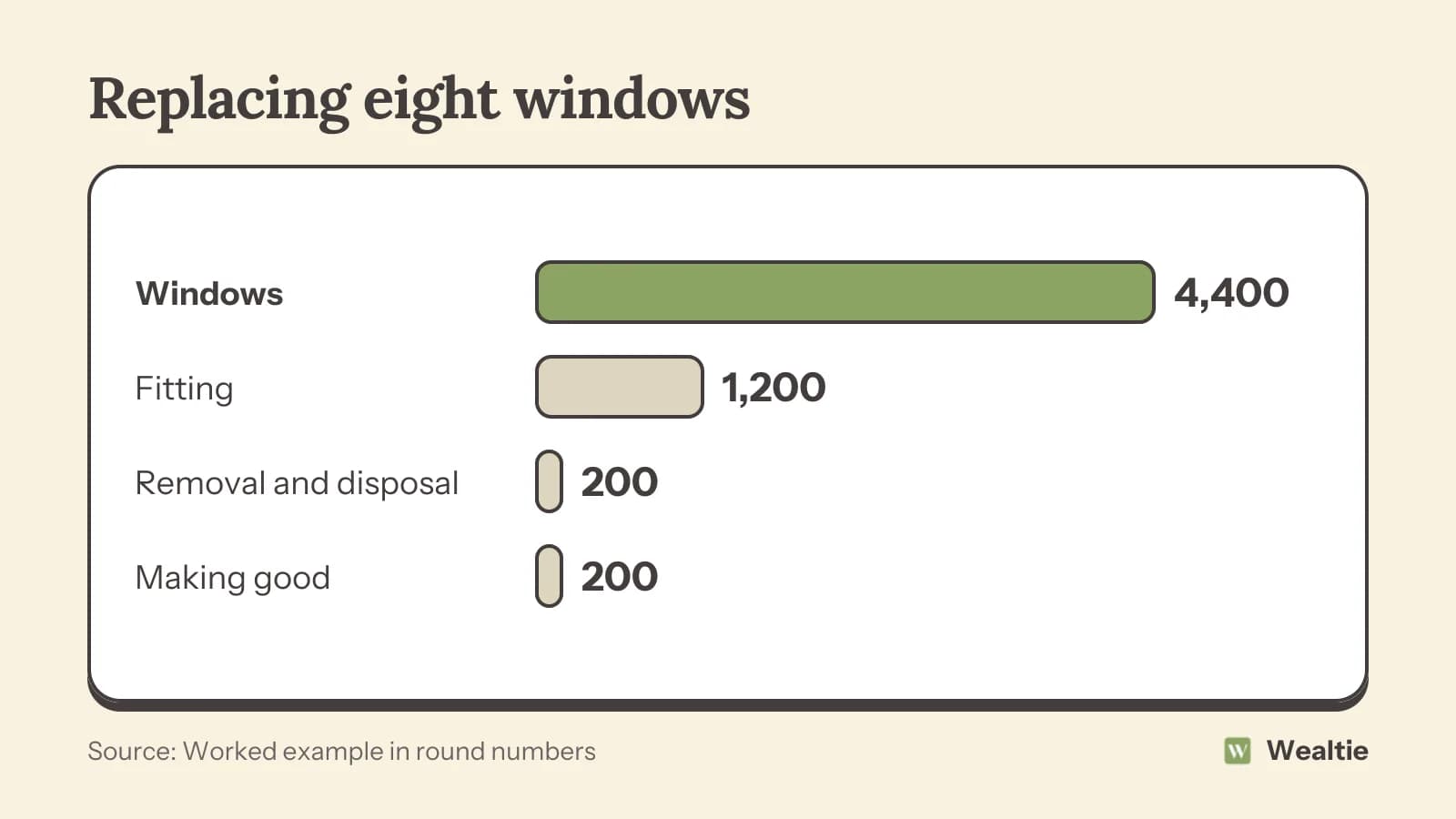
Making good means repairing plaster, paint and sills around the new windows. Some installers include it, while others leave it to you.
What affects the cost of replacing windows?
Number and size
More windows cost more, but the price per window often drops when you replace several at once. Large or unusual shapes, like bay windows, cost more to make and fit.
Frame material
Different materials have different prices and lifespans. Some are cheaper and need little upkeep. Others look more traditional or last longer but cost more. Ask about how long each option lasts and what care it needs. A frame that needs painting every few years has a running cost that a cheaper upfront price can hide.
Glass
Double glazing is standard in many places, and triple glazing is warmer but costs more. Special glass for noise, security or privacy adds cost.
Fitting and access
Upstairs windows, homes that need scaffolding and tricky openings take longer to fit. Fitting is usually a large part of the bill.
Can you replace windows in stages?
Yes, and it's a common way to spread the cost. Start with the windows in the worst condition, or those in the rooms you use most. In a worked example, replacing the two worst windows first costs about 1,500. The rest can follow over the next year or two. Ask installers whether they'll match styles later, so the windows look consistent.
Plan around the seasons
Windows are taken out and fitted on the same day where possible, but the house is open to the weather for a few hours each time. Late spring and early autumn are often good times, with milder weather and installers less busy than in peak summer. Planning ahead also gives you time to save and compare quotes, rather than rushing a decision after a window breaks. If one does fail suddenly, a temporary repair can buy you time to plan the rest properly instead of replacing everything at once.
Repair before replacing
A draughty window doesn't always need replacing. New seals, draught strips or repairs to the frame can cost far less. Replacing a single broken pane of glass is much cheaper than a whole window. Repair or replace covers how to decide.
How can you save on replacing windows?
- Get at least three quotes: prices vary a lot between installers.
- Replace several at once: the price per window is often lower.
- Choose standard sizes and styles: custom shapes cost more.
- Book outside busy seasons: some installers offer better prices in quieter months.
- Check for grants: some places offer help with energy-saving improvements.
- Do the making good yourself: if you're handy, painting and filling can save money.
Will new windows lower your bills?
Better windows reduce heat loss and draughts, so they can lower heating bills and make rooms more comfortable. The saving depends on how poor your old windows were and how you heat your home. It usually takes many years to pay back the full cost through bills alone, so think of comfort, noise and security as part of the value. How to save money on heating has cheaper ways to cut heat loss too.
How do you save for new windows?
Divide the cost by the months until you'll replace them. For 6,000 over two years, that's 250 a month. A sinking fund for home improvements keeps the money separate. The home maintenance budget and the home renovation budget cover planning for bigger home costs.
How do you plan window costs in Wealtie?
Add a monthly transfer to your home savings as a recurring transaction, so it logs itself on its date. Track home improvement spending in its own expense categories, and set a budget for it.
Questions people ask
In a worked example, replacing eight windows in a typical home costs about 6,000, or about 750 a window, including fitting and making good.
Yes. Replacing the worst windows first spreads the cost. Ask the installer about matching styles later.
They can, by reducing heat loss and draughts, but the full cost usually takes many years to pay back through bills alone.
Get at least three quotes, replace several at once, choose standard sizes and check for energy-saving grants.
This article is general information, not financial, tax or legal advice. Your situation is your own; check the numbers that apply to you before you act on them.