Income & freelancing: How to budget the income from renting out a room
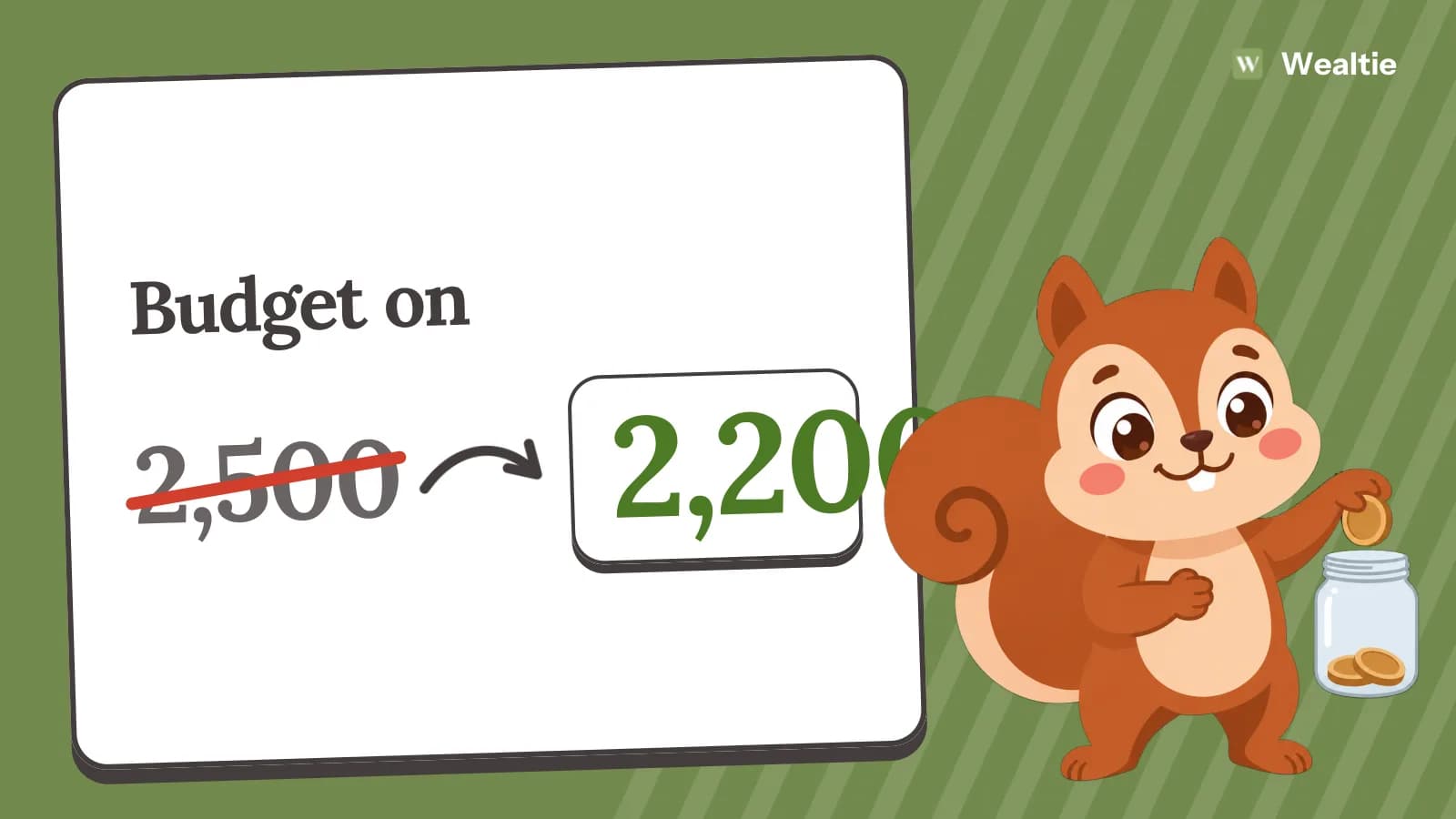
Renting out a room can bring in steady income, but the real gain is the rent minus the extra bills, wear and any tax. In a worked example, a room let for 500 a month leaves about 380 after higher energy, water and internet costs, and deciding what that money is for makes it go further.
 By Wealtie Team · 3 min read
Key takeaways
- Renting out a room brings income, but extra bills and wear reduce what you keep.
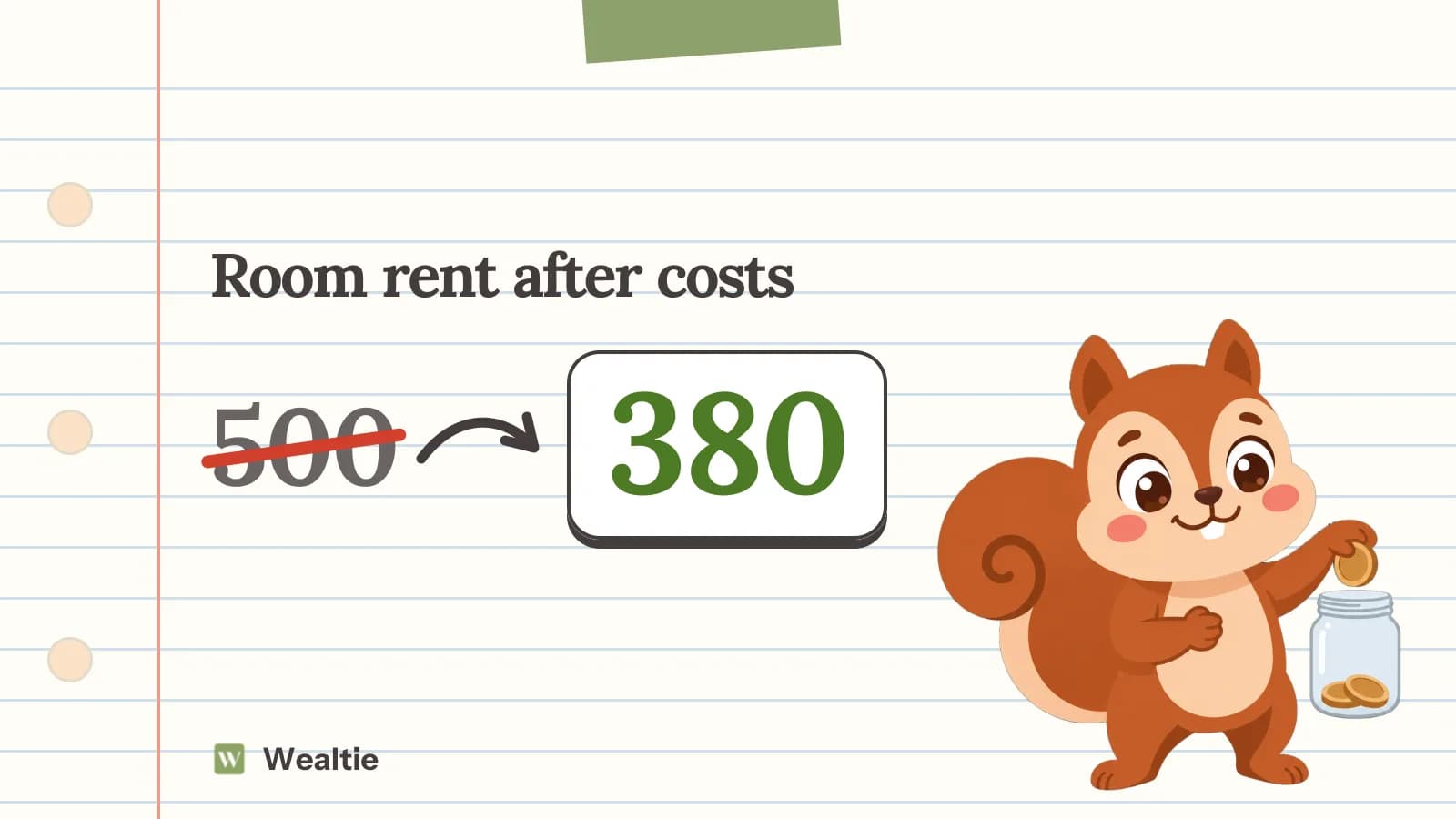
- In a worked example, a room let for 500 a month leaves about 380 after extra costs.
- Check your mortgage, tenancy, insurance and local tax rules before taking in a lodger.
- Deciding what the income is for, like paying down a mortgage or saving, keeps it from disappearing.
Is renting out a room worth it?
It can be, if you have a spare room and you're comfortable sharing your home. Renting out a room brings in regular income, often more than many side jobs, without extra hours of work. But it also brings higher bills, some wear on your home, less privacy and possibly tax. Working out what you'll keep after costs helps you decide.
How much do you keep after costs?
Here's a worked example for a room let for 500 a month, with bills included, in round numbers that work in any currency:
| Amount | |
|---|---|
| Rent received | 500 |
| Extra energy | 60 |
| Extra water and internet | 30 |
| Shared food and household items | 30 |
| Left over | 380 |
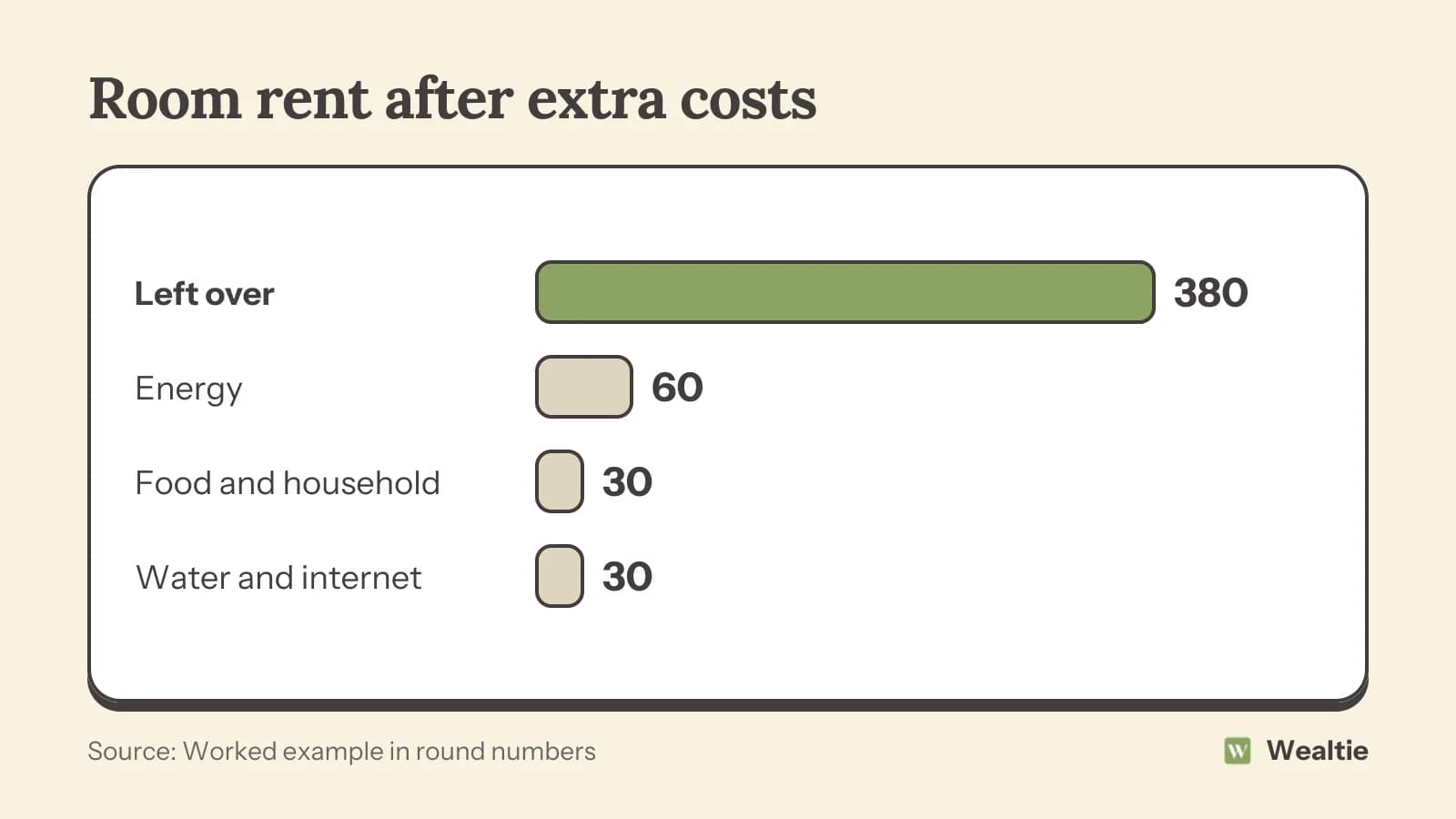
Over a year, that's about 4,560. Your own figures depend on local rents, whether bills are included and how much the lodger uses. If you charge rent with bills included, set the rent high enough to cover them comfortably.
How do you set the rent?
Look at what similar rooms nearby rent for, and adjust for what's included: bills, internet, cleaning, a private bathroom or parking. A room with its own bathroom or more space can charge more. Pricing a little below similar rooms can help you find a reliable lodger quickly, which matters more than a slightly higher rent with long empty weeks.
Choosing a lodger
Meet anyone interested in person, ask about their work and routine, and ask for references from a previous landlord or employer. A good match in habits, like work hours and tidiness, matters as much as the rent. Agreeing a short trial period at the start gives both of you a chance to check it works.
Agree in writing what the rent covers, when it's paid and how much notice either side needs to give. How to split utilities with roommates has ideas for sharing bills fairly if you'd rather charge them separately.
What should you check first?
Check your permissions and cover before you advertise:
- Mortgage or tenancy. Some mortgages and most tenancies need permission to take in a lodger.
- Insurance. Tell your home insurer, since a lodger can affect your cover.
- Local rules. Some places have rules about renting out rooms, safety checks or registering.
- Tax. In many countries, rent from a room counts as income, though some have special rules for renting a room in your own home.
A short call to your lender, landlord or insurer, and a look at the tax rules where you live, saves problems later. How to declare side hustle income covers the general steps for extra income.
What other costs should you plan for?
Beyond bills, plan for a few one-off and ongoing costs. You may need to furnish the room with a bed, storage and bedding. Extra keys, a lock for the room and minor repairs add up. More people in the home means more wear on carpets, appliances and furniture over time. Setting aside a small amount each month for repairs and replacements keeps these from becoming surprises.
Empty weeks
A room won't always be let. Lodgers move on, and finding the next one can take a few weeks. Planning your budget as if the room is empty for a month or two a year keeps you from relying on income that might pause.
How do you budget the room income?
Decide what it's for. Room income is regular, which makes it ideal for a specific goal. Common choices include:
- Paying extra off the mortgage
- Building an emergency fund
- Covering a large regular bill
- Saving towards a goal, like a holiday or a car
If the income goes straight into your everyday account, it tends to get absorbed into spending. Moving it to a separate account on the day it arrives keeps it working towards your goal. Over a year, even part of the 4,560 in the example can make a real difference to a mortgage balance or an emergency fund.
What makes it work day to day?
Clear agreements and good communication. Agree on shared spaces, guests, cleaning and quiet hours at the start. Most problems between householders come from expectations that were never discussed. Checking in after the first month, and every few months after that, gives both of you a chance to raise small issues before they grow. How to split rent with roommates covers fair ways to share costs and space.
How do you track room income in Wealtie?
Set up the rent as recurring income, so it logs itself each month, and track it in the income tracker alongside your other income. Log extra bills and household costs in your expense categories, so you can see what the room brings in after costs. Pro adds income analytics to compare it with your other sources.
Questions people ask
In a worked example, a room let for 500 a month leaves about 380 after extra energy, water, internet and household costs.
Often. Check your mortgage or tenancy, tell your insurer and look at any local rules before you advertise.
In many countries, yes, though some have special rules for renting a room in your own home. Check the rules where you live.
Including bills is simpler, but set the rent high enough to cover them comfortably.
This article is general information, not financial, tax or legal advice. Your situation is your own; check the numbers that apply to you before you act on them.