Budgeting: How to make a relocation budget when you move for a job
A relocation budget covers moving your things, any overlap in rent, travel, deposits and the first month in a new place before your new pay arrives. In a worked example, moving cities for a job costs about 4,200, and part of that may be covered by your employer.
 By Wealtie Team · 3 min read

Key takeaways
- List every relocation cost, including overlap in rent, deposits, travel and the first month before new pay arrives.
- In a worked example, moving cities for a job costs about 4,200.
- Ask your new employer what they'll cover before you accept, since relocation support can be part of the offer.
- Compare living costs in the new city with your new salary, not just the salary.
How do you make a relocation budget?
List every cost of the move, ask what your employer will cover, and plan for the gap before your first new payslip. Moving for a job brings costs that a normal move doesn't, and they often arrive in a short space of time, like paying two rents for a month or living somewhere temporary while you look for a place.
What does relocating cost?
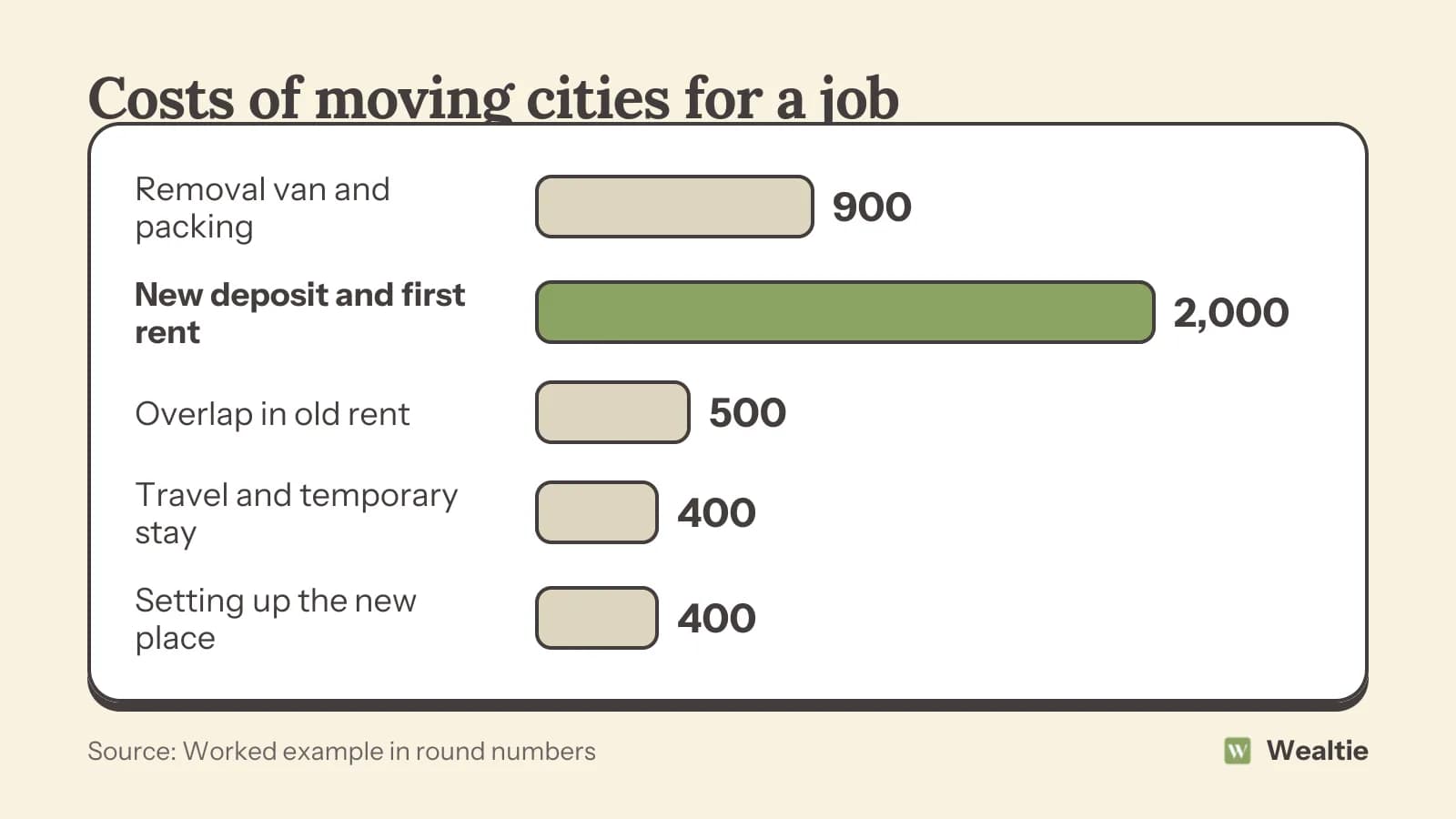
Here's a worked example for moving cities, in round numbers that work in any currency:
| Cost | Amount |
|---|---|
| Removal van, packing materials, help | 900 |
| Deposit and first month's rent in the new place | 2,000 |
| Overlap: an extra month's rent on the old place | 500 |
| Travel, viewings and a few nights' temporary stay | 400 |
| Setting up: connecting utilities, basics for the new place | 400 |
| Total | 4,200 |
Your costs depend on distance, how much you own and whether you're renting or selling. Add any cleaning needed to get your deposit back on the old place. Moving abroad adds visas, flights and shipping, which can change the total a lot.
What might your employer cover?
Ask before you accept the offer. Relocation support can include moving costs, temporary accommodation, travel for house-hunting, or a lump sum. It's part of the package, and it's easier to negotiate before you've said yes.
Get the details in writing, including what receipts you'll need and when you'll be reimbursed. Read the terms carefully. Some employers ask you to repay relocation money if you leave within a set period. Relocation payments can also be taxed in some countries, which affects how much you receive. How to negotiate a pay rise has tips that work for negotiating a package too.
Why does the first month matter so much?
Because money goes out before it comes in. You might pay a deposit and rent in the new city a few weeks before your first payslip from the new job, while your last payslip from the old job has already been spent on the move. A buffer of a month's living costs makes the gap manageable.
If your employer repays relocation costs after the move, you may need to cover them first and claim back, which widens the gap. Check when your new employer pays, and when your final pay from the old job arrives, so you can see exactly how long the gap is.
Is the new salary worth it after living costs?
Work it out. A higher salary in a more expensive city can leave you with less. Compare what's left after rent, transport and other essentials in each place. How to budget in an expensive city has a worked comparison.
Look at local taxes and transport costs too, which can differ between cities. Think about the commute and lifestyle as well. A cheaper area with a long commute can cost more in time and transport than it saves in rent.
How do you keep costs down?
A few ways:
- Sell, donate or throw away what you won't use before you move, so there's less to pay to move
- Get several quotes for removals, and compare a van you drive yourself
- Move midweek or outside the end of the month, when removal companies can be cheaper
- Time your notice on the old place to keep the overlap as short as possible
- Stay with friends or in a short let while you look, instead of signing quickly
- Measure the new place before you move furniture, so you don't pay to move something that won't fit
How much money to save before moving out has more on setting up a new place on a budget.
How do you budget for the first months in a new city?
Set a temporary budget with a buffer for the costs you don't know yet. Your first few months will include things you didn't expect: a parking permit, a new travel pass, local taxes, a different price for groceries. After three months, you'll have real numbers to set a proper budget. Find the local cheap supermarket and transport options early, since they make the biggest difference to day-to-day costs.
How do you track a relocation in Wealtie?
Make a Moving category and log each cost there, so your expense categories show the full cost of the move. Add any relocation payment from your employer as income. A monthly limit in the budget tracker helps you keep the first months in the new city on track, and your accounts show your buffer as it's used.
Questions people ask
About 4,200 to move cities in a worked example, including deposits, overlap in rent and moving costs, though distance and how much you own change it a lot.
It varies, but can include moving costs, temporary accommodation, travel for house-hunting or a lump sum. Ask before you accept the offer.
Some employers require repayment if you leave within a set period. Check the terms before you accept.
Only if what's left after rent, transport and essentials is higher than before. Compare the leftover amount, not the salary.
This article is general information, not financial, tax or legal advice. Your situation is your own; check the numbers that apply to you before you act on them.