Income & freelancing: How to raise your freelance rates without losing clients
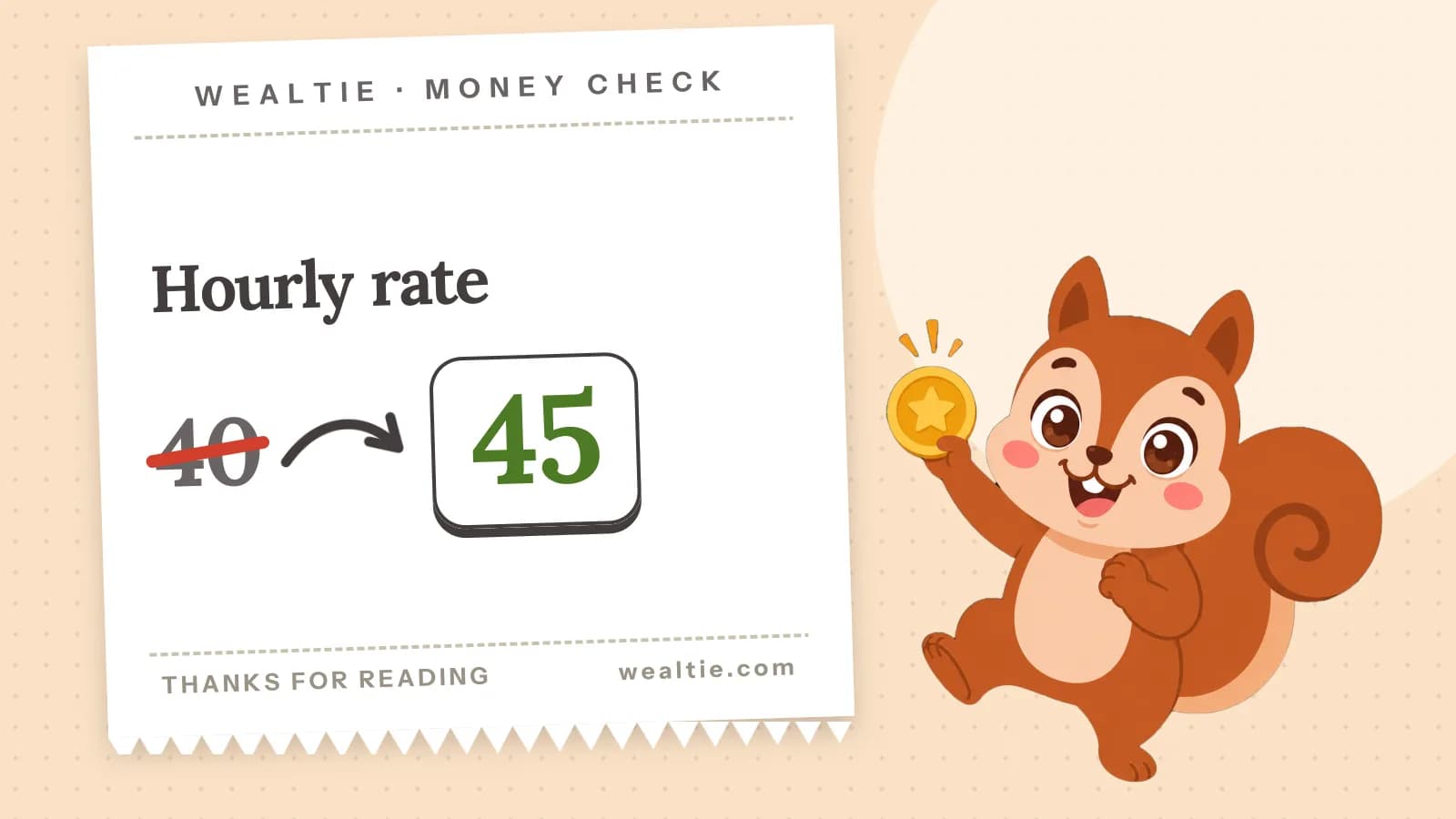
To raise your freelance rates, pick a clear date, give existing clients notice, explain the change briefly and apply the new rate to new clients straight away. In a worked example, raising a rate from 40 to 45 an hour adds about 4,000 a year at 800 billable hours.
 By Wealtie Team · 3 min read
Key takeaways
- Raise your freelance rates on a regular schedule, like once a year, so it feels routine to you and your clients.
- In a worked example, a rise from 40 to 45 an hour adds about 4,000 a year.
- Give existing clients notice and a short explanation; new clients get the new rate straight away.
- Losing a low-paying client can free time for better-paid work.
When should you raise your freelance rates?
Regularly, and whenever your value has grown. Many freelancers set a rate when they start and leave it for years, while their skills, experience and costs all rise. Over time, that means earning less in real terms for better work. Raising your freelance rates on a schedule, like once a year, makes it feel routine for you and for your clients.
Good times to raise your rates include:
- Once a year, on a set date
- When you're fully booked and turning work away
- After gaining a new skill, qualification or strong results
- When your costs or taxes have risen
- When you notice others with similar experience charge more
How much should you raise your rates by?
Enough to matter, but not so much that it shocks long-standing clients. Here's a worked example for a freelancer billing 800 hours a year, in round numbers that work in any currency:
| Amount | |
|---|---|
| Current rate | 40 an hour |
| New rate | 45 an hour |
| Yearly income at old rate | 32,000 |
| Yearly income at new rate | 36,000 |
| Difference | 4,000 |
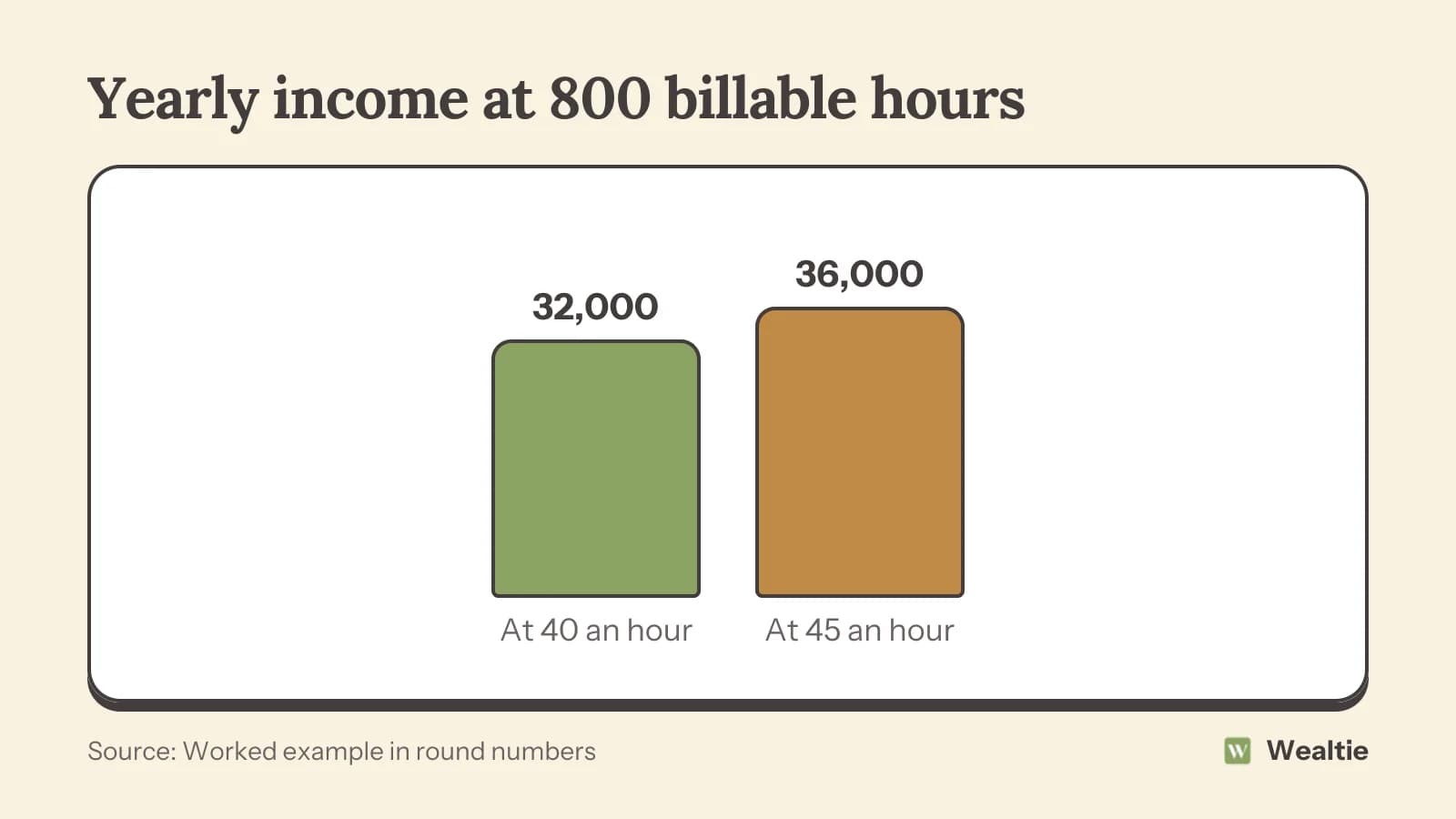
A small hourly rise makes a big difference over a year. Check what others with similar skills charge, and look at what you need to earn after taxes, savings and costs. How to set your freelance rate covers the basics, and freelance rate to salary shows what a rate is worth over a year.
New clients first
Charge new clients your new rate from the start. They don't know your old rate, so there's nothing to explain. Seeing new clients accept the higher rate also builds your confidence before talking to existing ones.
How do you tell existing clients?
Clearly, briefly and with notice. Give at least a month's notice, or longer for big clients, so they can plan their budgets. A short message is enough:
- Thank them for the work together
- State the new rate and the date it starts
- Give a short reason, like rising costs or expanded skills, if you want to
- Offer to talk if they have questions
There's no need to apologise or justify it at length. A rate increase is a normal part of running a business.
Offering a transition
For long-standing clients, some freelancers keep the old rate for a few more months, or until a current project ends. This shows goodwill without delaying the increase forever.
What if a client pushes back?
Listen, then decide. Some clients will accept without question. Others may ask for a smaller increase or more time. You can negotiate, for example by keeping the old rate for a fixed project but applying the new one to new work. You can also adjust what's included, like fewer revisions, rather than lowering the rate. Put any agreed change in writing, even a short email, so both sides remember what was agreed.
If a client can't pay the new rate, it may be time to part ways. That can feel risky, but low-paying work takes time you could spend on better-paid clients.
What if you lose a client?
It can work out. Say you lose a client who gave you 100 hours a year at 30 an hour. If you replace that work at 45 an hour, you earn more for the same time. In the meantime, a gap can be filled with marketing, new outreach or work on your own skills. Keeping a savings buffer makes this kind of change much less stressful. How to measure income stability helps you see how much one client matters to your income.
How do you raise rates on retainers and fixed prices?
The same way, at a natural point. For retainers, raise the rate when the agreement renews, with notice. For fixed-price projects, update your prices for new quotes. If you're unsure, quote the new price on the next project and see how clients respond.
How do you build confidence to ask?
Practise, prepare and remember that rate increases are expected. Write down the value you bring, like results you've delivered or problems you've solved. If you're employed as well as freelancing, how to negotiate a pay rise covers similar conversations. The first increase is the hardest; after that, it becomes part of how you work. Many freelancers find clients respect them more after a confident rate increase, not less.
How do you track freelance income in Wealtie?
Log each payment in the income tracker, and set a monthly income goal that reflects your new rate, so you can see whether the rise is coming through. Pro adds income analytics to compare months and clients. Your expense categories show your business costs, so you know what's left after them.
Questions people ask
Once a year is a good routine, and also when you're fully booked or your skills have grown.
Enough to matter without shocking long-standing clients. In a worked example, 40 to 45 an hour adds about 4,000 a year.
At least a month, or longer for big clients, so they can plan their budgets.
You can negotiate, adjust what's included or part ways and use the time for better-paid work.
This article is general information, not financial, tax or legal advice. Your situation is your own; check the numbers that apply to you before you act on them.