Budgeting: Is a prepaid card worth it? Fees, uses and limits
Is a prepaid card worth it? It can be for sticking to a budget, giving kids spending money or travelling, but fees can make it more expensive than a basic bank account.
 By Wealtie Team · 3 min read
Key takeaways
- A prepaid card can help with budgeting, kids' spending and travel.
- You can only spend what you load, so there's no overdraft.
- Monthly, top-up and withdrawal fees can add up.
- A free bank account is often cheaper if you don't need the extra control.
Is a prepaid card worth it?
A prepaid card works like a debit card, but instead of being linked to a bank account, you load money onto it first and can only spend what's on the card. There's no overdraft and no borrowing, which makes prepaid cards useful for sticking to a budget, giving children controlled spending money or carrying travel money separately from your main account.
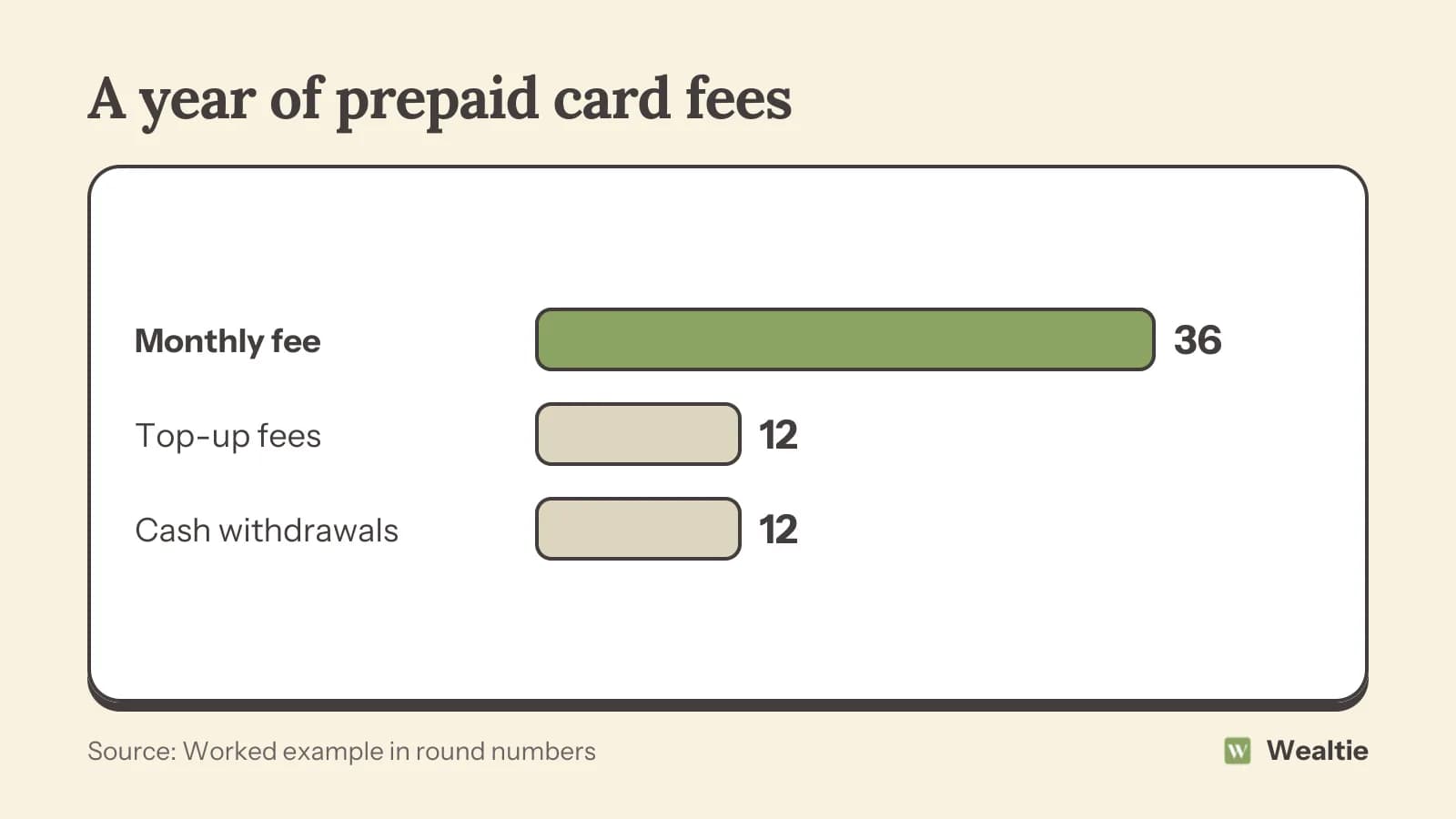
The catch is cost. Many prepaid cards charge a monthly fee, fees for topping up, fees for cash withdrawals or fees when the card isn't used. Here's a worked example of a year's fees, in round numbers that work in any currency:
| Fee | Per year |
|---|---|
| Monthly fee | 36 |
| Top-up fees | 12 |
| Cash withdrawals | 12 |
| Total | 60 |
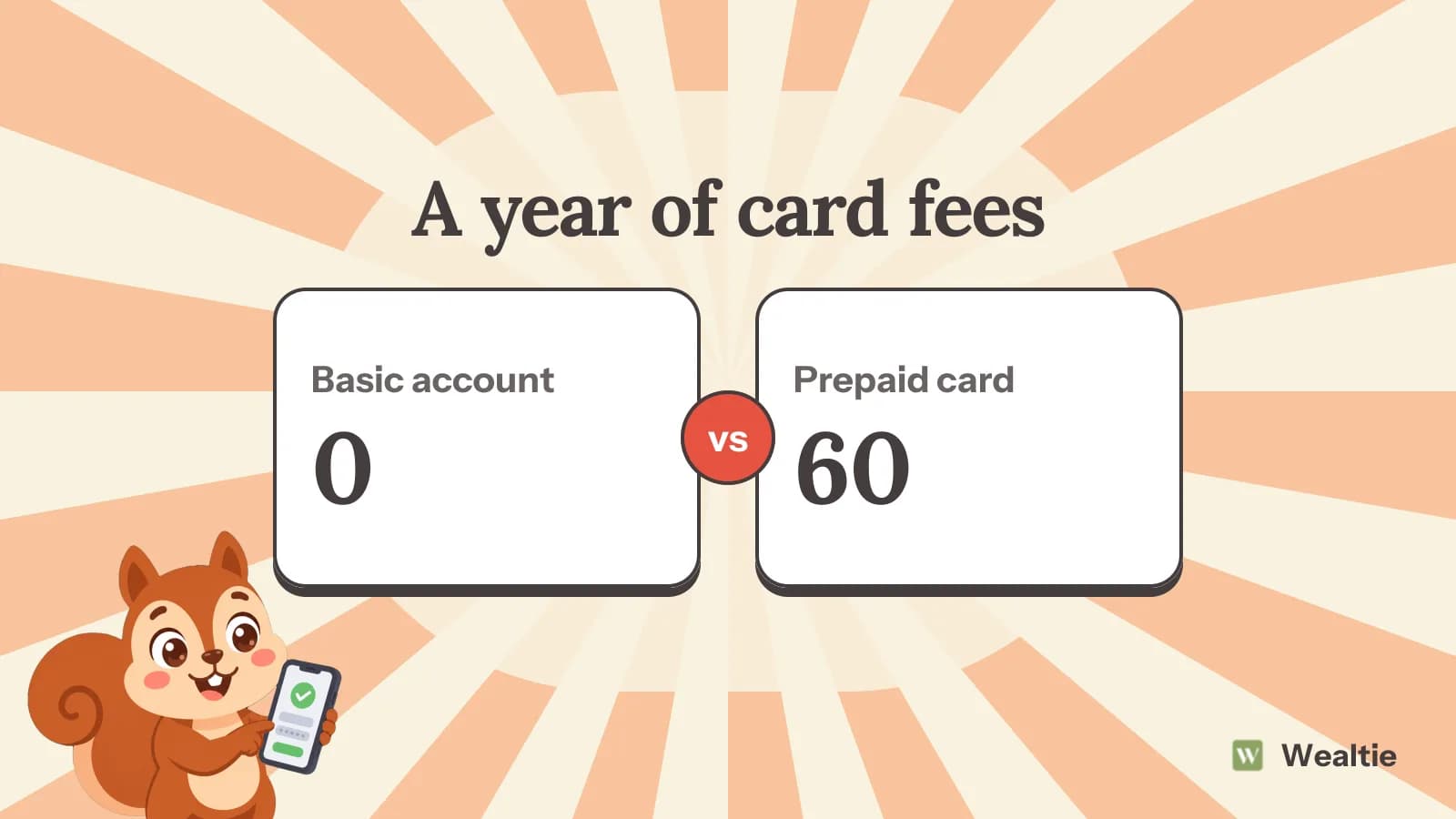
That's 60 a year for a card that only holds your own money. A basic bank account with a debit card often costs nothing. Some prepaid cards have no monthly fee, so comparing carefully matters.
When is a prepaid card worth it?
Sticking to a budget
Loading a set amount each week or month for spending, like food or fun money, works like a digital version of envelope budgeting. When it's gone, it's gone.
Children and teenagers
Prepaid cards for kids let parents load pocket money, set limits and see spending, while children learn to manage money. Pocket money by age covers setting amounts.
Travel
Some prepaid travel cards hold several currencies, which can help with budgeting abroad. Compare exchange rates and fees with a no-fee debit card. Foreign transaction fees covers what to check.
Online shopping
Using a prepaid card with a small balance for online purchases limits what a fraudster could take if the card details were stolen.
People who can't get a bank account
For anyone who can't open a bank account, a prepaid card can be a way to make card payments and receive money.
When is a bank account better?
You want to avoid fees
Many bank accounts have no monthly fees and free cash withdrawals.
You want protection
Money in bank accounts is often protected by a deposit scheme if the bank fails. Prepaid cards may be protected differently, so check the terms.
You need to build credit
Prepaid cards usually don't help build a credit history.
You receive your salary
A bank account is usually simpler for salaries, bills and direct debits.
How do you avoid prepaid card fees?
Compare cards
Look for cards with no monthly fee, free top-ups and low withdrawal charges.
Top up in the cheapest way
Bank transfers are often free, while cash top-ups at shops may cost extra.
Use it regularly
Some cards charge inactivity fees if you don't use them for a while.
Avoid cash withdrawals
Paying by card is often free, while cash withdrawals may cost each time.
Are there alternatives?
Many banks now offer features like spending pots, spending limits and instant notifications, which give much of the control of a prepaid card without the fees. A separate bank account for spending money can work the same way. How to avoid overdraft fees covers keeping a buffer in your main account, and how to switch bank accounts covers moving to an account with better features.
Read the terms carefully before choosing a card. Fees are often listed in small print, and some cards charge for things you might not expect, like checking your balance at a cash machine, receiving a replacement card or closing the account. A card that looks free can become expensive if you use it in the wrong way. Comparing two or three cards with your own habits in mind, like how often you top up and withdraw cash, shows which one suits you best.
Think about what happens if the card is lost or stolen. Most prepaid cards can be frozen in an app, but check how quickly you can get a replacement and whether there's a fee. Keeping only the money you need for the week on the card limits what you could lose.
If you're using a prepaid card to control spending, pair it with a simple plan. Decide what the card is for, like groceries or fun money, and how much goes on it each week. A clear purpose makes the limit feel helpful rather than restrictive.
Finally, review the card after a few months. If the fees outweigh the benefits, or your bank now offers similar features for free, switching can save money.
How can Wealtie help you stick to a budget?
Add your prepaid card or spending account as an account in Wealtie and log what you spend in expense categories. Setting a monthly budget for each category shows how much is left, with or without a prepaid card.
Questions people ask
It can be for budgeting, kids' spending money or travel, but fees can make it more expensive than a basic bank account.
You load money onto the card first and can only spend what's on it. There's no overdraft or borrowing.
Common fees include monthly fees, top-up fees, cash withdrawal fees and inactivity fees. In a worked example, they came to 60 a year.
Usually not. Prepaid cards don't involve borrowing, so they typically don't help build a credit history.
This article is general information, not financial, tax or legal advice. Your situation is your own; check the numbers that apply to you before you act on them.