Budgeting: How to avoid overdraft fees: the settings and habits that work
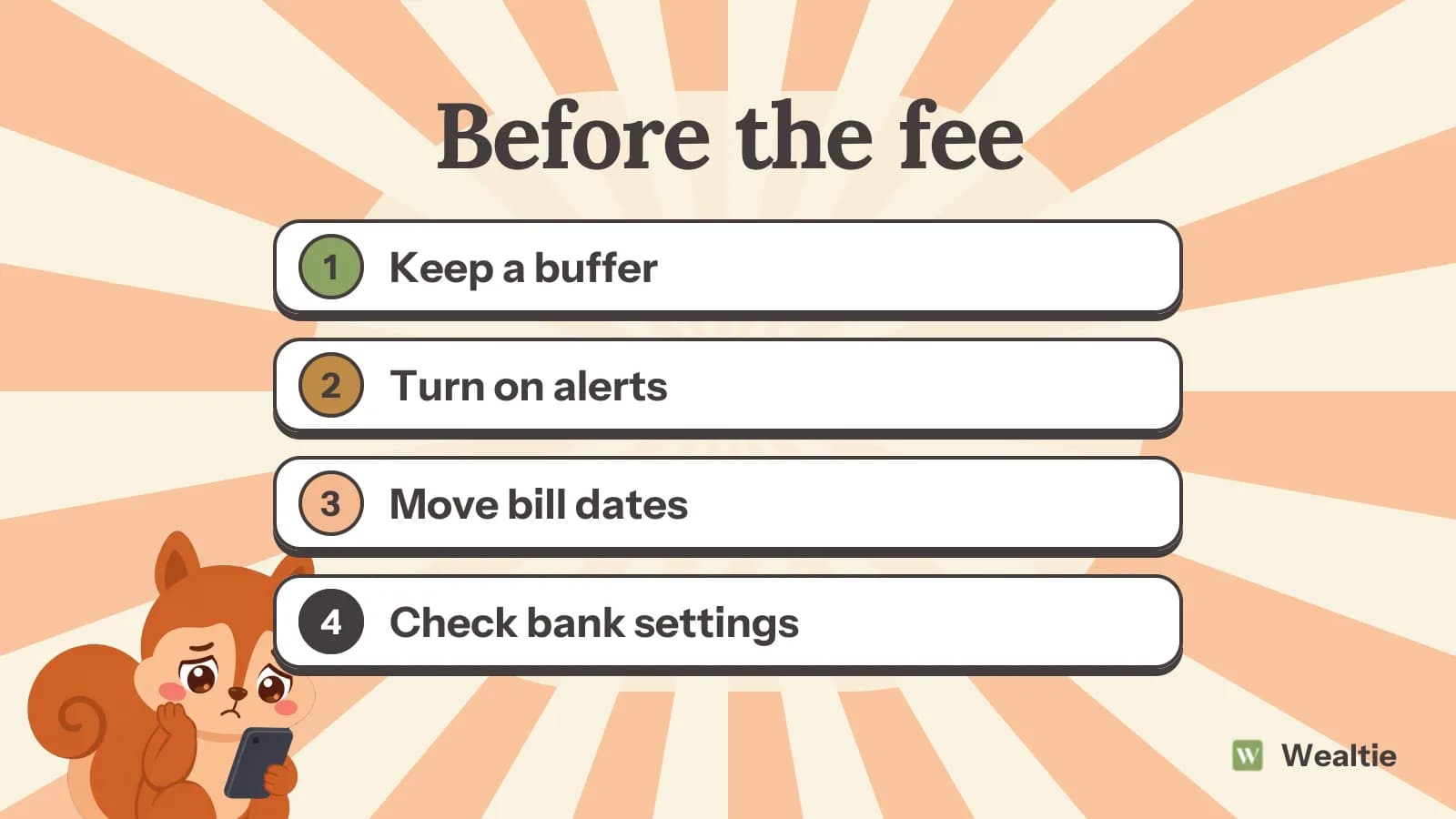
To avoid overdraft fees, keep a small buffer in your account, turn on low-balance alerts, move bill dates to just after payday, and ask your bank whether it can decline a payment instead of overdrawing. Most fees come from timing, not overspending.
 By Wealtie Team · 3 min read
Key takeaways
- Most overdraft fees come from timing, like a bill leaving the day before payday, more than from overspending.
- A small buffer of a week's spending in your account absorbs most timing problems.
- Low-balance alerts and moving bill dates to just after payday prevent many fees.
- Ask your bank about declining payments instead of overdrawing, and about linking a savings account.
How do you avoid overdraft fees?
Fix the timing, keep a small buffer and use the tools your bank already offers. Most overdraft fees happen when a payment leaves a few days before money arrives, or when a balance is lower than you thought. Those are easier to prevent than overspending.
Why do people go overdrawn?
The common causes, roughly in order:
- A bill or direct debit leaving just before payday
- A card payment taking a few days to clear, so the balance looked higher than it was
- An annual charge or renewal you'd forgotten
- A payment going out twice by mistake
- Spending more than planned near the end of the month
Most of these are about not knowing the real balance, not about spending too much, which is good news, because they're easier to fix.
How does a buffer help?
It absorbs timing problems. Keep a small amount in your account that you treat as zero, say about a week's spending. If a bill comes out early or a payment clears late, the buffer covers it. How much to keep in checking shows how to set the amount.
Keep the buffer in the same account, not in savings, so it's there when a payment clears late. If you've got nothing spare, build it slowly. Even 200, put aside over a few months, can stop most fees.
Which bank settings should you check?
These vary by bank and country, so look at what yours offers:
- Low-balance alerts: a message when your balance drops below an amount you choose
- Decline instead of overdraw: some banks let you choose to have card payments declined when there isn't enough money, instead of going overdrawn
- Linked savings: some banks move money from savings automatically to cover a shortfall, often for a smaller fee or none
- Payment reminders: alerts before a direct debit or scheduled payment goes out
Check what each setting costs, since some linked-savings transfers carry their own fee. Turn on alerts first. They're free at most banks, and knowing your balance is low a day early is often enough.
How does moving bill dates help?
It lines up money in with money out. If you're paid on the 25th and your phone bill leaves on the 22nd, you're relying on there being money left at the end of the month. Move it to the 27th, and it's paid from new money.
If your pay date changes, for example with a new job, check the bill dates again. Most providers let you change a due date, often in your account settings or with a short call. How to organize bills has the full method.
What if you're already overdrawn?
Get back to zero as fast as you can, since fees and interest can build quickly. Move money from savings if you have it. If you can't, cut spending for the rest of the month and call your bank.
Avoid covering it with a cash withdrawal on a credit card, which usually costs more. Ask whether they'll refund the fee, especially if it's the first time or it was caused by timing. Many banks will waive a fee once if you ask. Ask too about any support for customers who are struggling, since some banks have hardship options.
If you're using an overdraft every month, it's become a loan. Make a plan to pay it down, the same as you would a card. How to stop living paycheck to paycheck is the place to start.
How do you know your real balance?
Log purchases as you make them, not when they clear. Your banking app may show a balance that doesn't include card payments still pending. If you track spending as it happens, you know what's left.
Refunds work the other way, so don't count one until it's in your account. Check your bank balance once a week against your own record, and correct it if it's drifted. A five-minute check each Sunday catches most problems before they cost you.
How can Wealtie help you avoid going overdrawn?
Log spending as you go, and your account balance in Wealtie reflects purchases before the bank does. The recurring list shows bills due next, and the Budget Remaining budget widget shows what's left without opening the app. If the balance drifts from your bank's, Update Balance corrects it. A monthly limit in the budget tracker, with Budget Health, warns you mid-month if spending's running ahead.
Questions people ask
Keep a small buffer, turn on low-balance alerts, move bill dates to just after payday, and ask your bank about declining payments instead of overdrawing.
Often, if you ask, especially for a first time or a fee caused by timing. Call and ask politely.
Usually because of timing, like bills leaving before payday, or because pending payments made the balance look higher than it was.
A small amount, often about a week's spending, that you treat as zero. It absorbs timing problems so you don't go overdrawn.
This article is general information, not financial, tax or legal advice. Your situation is your own; check the numbers that apply to you before you act on them.



