Income & freelancing: How to earn money pet sitting and dog walking
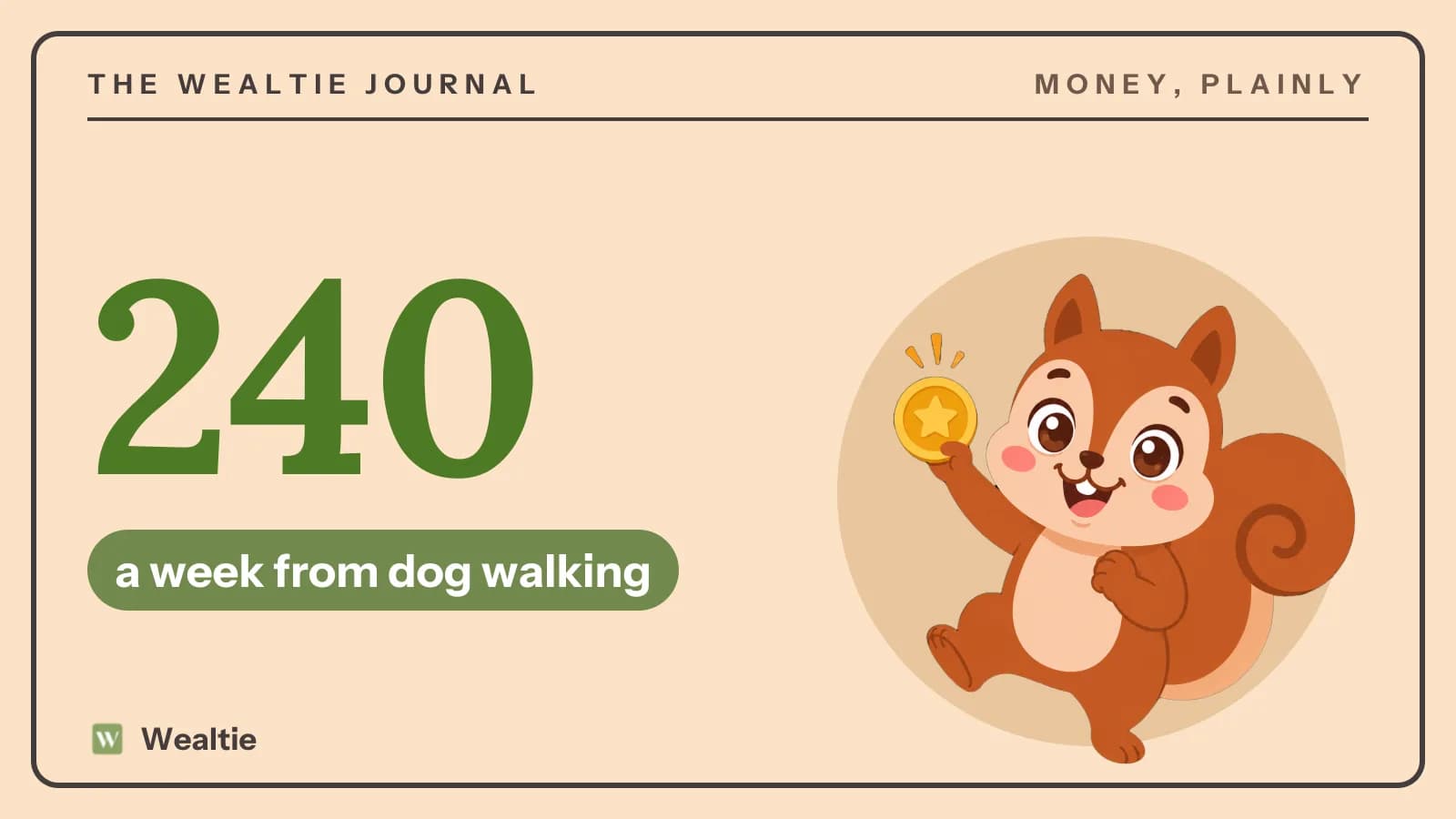
You can earn money pet sitting and dog walking by setting clear rates, counting costs like travel and insurance, and planning for an income that peaks in holidays. In a worked example, walking four dogs a day on weekdays at 12 a walk brings in about 240 a week.
 By Wealtie Team · 3 min read
Key takeaways
- You can earn money pet sitting and dog walking with flexible hours and little setup.
- In a worked example, four dog walks a day on weekdays at 12 each bring in about 240 a week.
- Count travel, insurance and supplies, so you know your real earnings.
- Demand peaks in holidays, so plan your budget for quieter months.
How do you earn money pet sitting?
Start with the animals you know, set clear rates and build trust with a few clients. Pet sitting and dog walking are popular side incomes because they need little setup, fit around other work and suit people who love animals. Owners need help when they're at work, away for the weekend or on holiday, and a reliable sitter is valuable to them.
What services can you offer?
Most pet care work falls into a few types:
- Dog walking, usually 30 minutes to an hour, on weekdays while owners work
- Drop-in visits to feed pets, change litter and check in
- Overnight stays in the owner's home while they're away
- Boarding pets in your own home, where allowed
- Day care for dogs who need company during the day
Starting with one or two services keeps it simple. Many sitters add more as they build up regular clients. Some owners also need help with puppies who can't be left long, older pets who need medication or pets recovering from surgery, and these visits often pay more because of the extra care.
How much should you charge?
Look at local rates and price by the service. Walks are usually priced per walk, visits per visit and overnight stays per night. Charge a little extra for more than one pet, for longer walks or for pets needing medication. Here's a worked example of a week, in round numbers that work in any currency:
| Service | Number | Rate | Income |
|---|---|---|---|
| Dog walks | 20 | 12 | 240 |
| Drop-in visits | 6 | 10 | 60 |
| Overnight stay | 1 | 100 | 100 |
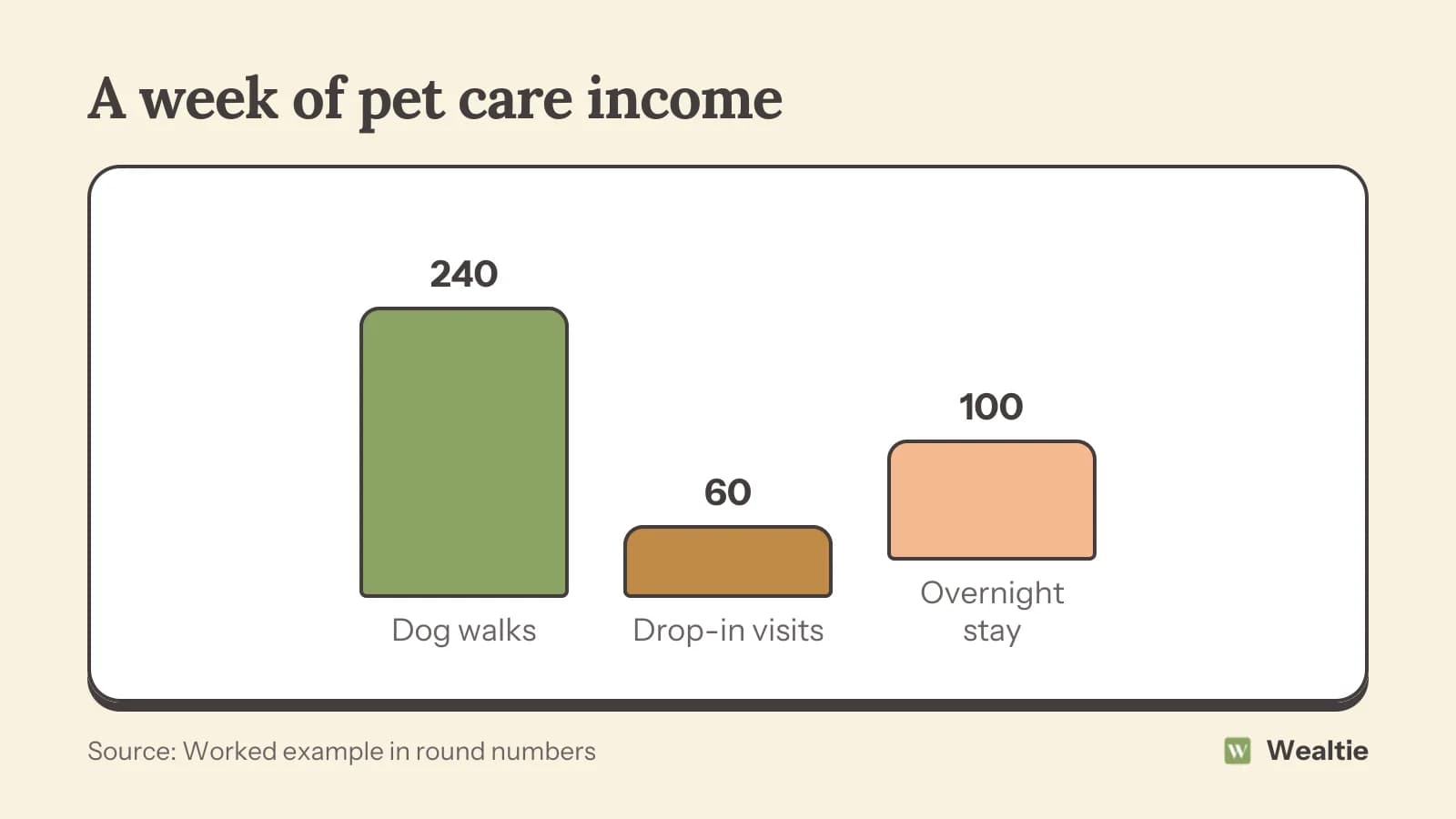
In this example, the week brings in 400. Your own rates depend on where you live and what's usual locally.
What are the real costs?
Count them, so you know what you're earning. Common costs include travel between clients, treats, poo bags, leads, cleaning supplies and insurance. Wet weather gear and good shoes wear out quickly when you're walking dogs every day, so include them too. In the worked example, travel of 20 and supplies of 10 a week take the 400 down to 370.
Insurance is worth looking into before you start. It can protect you if a pet is injured, causes damage or goes missing while in your care. In some places, boarding pets in your home also needs a licence. Check what applies where you live.
Making your time count
Group walks and visits by area to cut travel time. Walking two or three compatible dogs together, with the owners' agreement, can raise what you earn per hour. Be careful not to take on more than you can handle safely.
How do you find clients?
Start with people you know. Friends, neighbours and colleagues with pets are often the first clients, and their recommendations bring more. Local noticeboards, community groups and pet care platforms help you reach further. A short meeting before the first booking, so the owner and pet can meet you, builds trust.
Reliability is what keeps clients. Arrive on time, send a photo or a short update after each visit, and follow the owner's instructions carefully.
Building trust with owners
Owners are trusting you with a family member and often their home. References from past clients, a simple written agreement and an emergency contact for the vet make you look professional. Some sitters also complete a basic pet first aid course, which owners value.
How do you plan for busy and quiet times?
Pet sitting demand often peaks around school holidays and festive periods, when many owners travel, and drops at other times. Dog walking is steadier, but clients may pause when they're on holiday or working from home. Look at your income over a full year, and set aside some of the busy weeks' earnings for quieter ones. How to budget with seasonal income has a simple method.
If you have pets yourself, the cost of a pet is a helpful reminder of what owners spend, and why good care is worth paying for.
Do you need to pay tax on pet sitting income?
In many countries, yes, once your income passes a certain amount. Keep records of what you earn and what you spend from the start, since costs can often be deducted. How to declare side hustle income covers the general steps, and how to track side hustle income has a simple way to keep records.
How do you track pet sitting income in Wealtie?
Log each payment in the income tracker, and give travel, supplies and insurance their own line in your expense categories, so you can see what's left. A monthly income goal shows how close you are to your target, and Pro adds income analytics to compare busy and quiet months.
Questions people ask
In a worked example, a week of walks, drop-in visits and one overnight stay brings in about 400 before costs.
Look at local rates and charge per walk, with extra for more than one dog, longer walks or pets needing medication.
It's strongly worth having, since it can protect you if a pet is hurt or causes damage in your care. Check what's required where you live.
Start with friends, neighbours and colleagues, then use local noticeboards, community groups and pet care platforms.
This article is general information, not financial, tax or legal advice. Your situation is your own; check the numbers that apply to you before you act on them.