Budgeting: Pest control cost: what you'll pay and how to prevent pests
Pest control cost depends on the pest and how established it is, with bed bugs among the most expensive to treat. In a worked example, a mouse treatment costs 150, while bed bug treatment costs 400.
 By Wealtie Team · 3 min read
Key takeaways
- Pest control cost depends on the type of pest and how bad the problem is.
- Acting early is cheaper than waiting until pests spread.
- Some problems can be handled with DIY, but others need professionals.
- Prevention, like sealing gaps and storing food well, saves money.
How much does pest control cost?
Mice in the kitchen, a wasp nest by the door or bed bugs after a trip are stressful problems that often need sorting quickly. Pest control cost depends on the type of pest, how established it is, the size of your home and whether you use a professional or try to handle it yourself.
Here's a worked example of typical professional treatments, in round numbers that work in any currency:
| Pest | Cost |
|---|---|
| Wasp nest | 80 |
| Mice | 150 |
| Rats | 200 |
| Bed bugs | 400 |
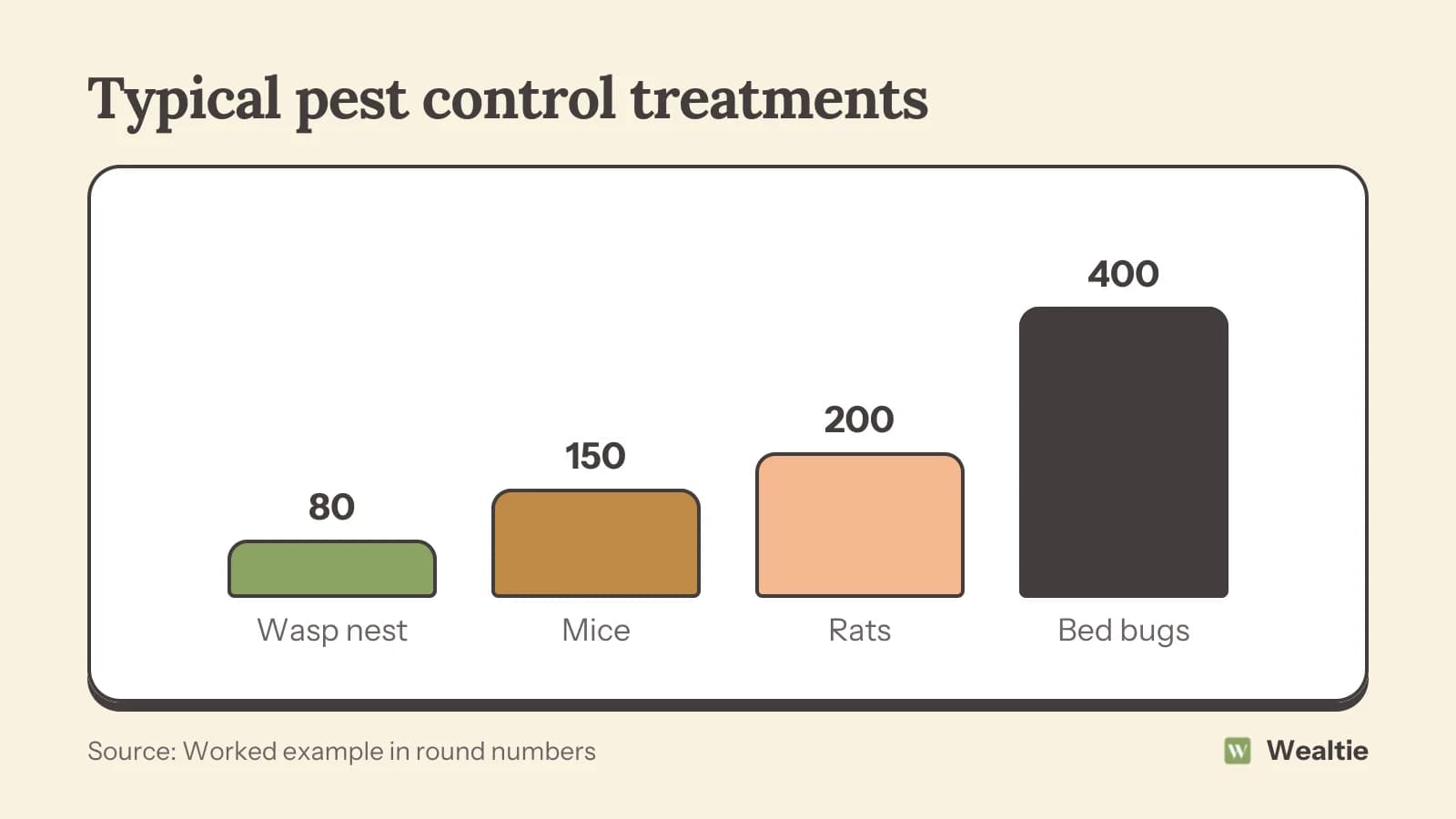
Wasp nests are often treated in one visit. Mice and rats usually need several visits to lay bait, check traps and seal entry points. Bed bugs can be expensive because they spread easily and often need several treatments. Prices vary by area and company, and some local councils offer cheaper services for certain pests.
When can you handle pests yourself?
Mice
A few traps, which might cost around 20, and sealing small gaps can solve a minor mouse problem. If they keep coming back, a professional can find how they're getting in.
Ants and small insects
Cleaning up food, sealing gaps and using shop-bought treatments often works.
When to call a professional
Rats, wasp nests near entrances, bed bugs, cockroaches and large infestations usually need professional treatment. Some treatments use chemicals that are best handled by trained people, especially in homes with children or pets.
How do you keep pest control costs down?
Act early
A few mice are easier and cheaper to deal with than a large infestation. Don't wait to see if the problem goes away.
Get several quotes
Ask what's included, how many visits, whether there's a guarantee and what happens if the pests return.
Check council services
Some local councils offer pest control at lower prices, sometimes with discounts for people on certain benefits.
Check your insurance
Some home insurance policies include pest cover or home emergency cover. How to save money on home insurance covers what policies often include.
How do you prevent pests?
Seal entry points
Fill gaps around pipes, doors and vents. Mice can squeeze through very small holes.
Store food well
Keep food in sealed containers and clean up crumbs and spills.
Manage rubbish
Use bins with tight lids and empty them regularly. Keep compost bins away from the house.
Declutter
Clutter gives pests places to hide, especially in lofts, garages and cupboards.
Check luggage after travel
Bed bugs often arrive in luggage. Checking bags and washing clothes on a hot cycle after trips reduces the risk.
Who pays if you rent?
In many places, landlords are responsible for pest problems caused by the building, like gaps or structural issues, while tenants may be responsible for problems caused by how they live, like poor food storage. Rules vary, so check your tenancy agreement and tell your landlord in writing as soon as you notice a problem.
Signs of pests are worth acting on quickly. Droppings, gnaw marks, scratching noises in walls or ceilings, small bites and unusual smells can all point to a problem. Noticing early, and dealing with it before pests breed and spread, is the cheapest approach. A small mouse problem caught early might be solved with a few traps, while an established one can take several professional visits.
Ask pest control companies about guarantees. Some offer a follow-up visit or a period of cover after treatment, which can save money if pests return. Others charge for every visit. Knowing what's included helps you compare quotes fairly, rather than choosing the lowest headline price.
Think about prevention as an ongoing habit. A quick check of the loft, garage and kitchen cupboards every few months, and sealing any new gaps, helps keep pests out for good. Keeping gardens tidy and bins sealed reduces the attraction for rats and mice.
If you have pets or children, ask about safe treatment options. Many professionals use methods designed to keep households safe, but it's worth discussing before they start.
Finally, if you live in a flat or terraced house, pests may move between homes. Talking to neighbours and, if needed, your landlord or building manager, can lead to a shared treatment that works better and costs each household less.
Keep receipts and notes from every visit. If the problem returns, a record of what was treated and when helps the next technician, and it supports any claim on a guarantee or insurance policy.
How can Wealtie help you plan for surprise costs?
Log pest control and other repairs in a home maintenance expense category, and set a monthly budget for upkeep. An emergency fund and a home maintenance budget mean surprise costs like these don't go on a credit card.
Questions people ask
In a worked example, treating a wasp nest cost about 80, mice 150, rats 200 and bed bugs 400.
For a minor problem, traps and sealing small gaps often work. If mice keep returning, a professional can find how they get in.
Bed bugs spread easily and hide well, so treatment often needs several visits and careful work.
Landlords often cover problems caused by the building, while tenants may cover ones caused by how they live. Rules vary, so check your tenancy agreement.
This article is general information, not financial, tax or legal advice. Your situation is your own; check the numbers that apply to you before you act on them.