Budgeting: The peak-end rule: spend on what you'll remember
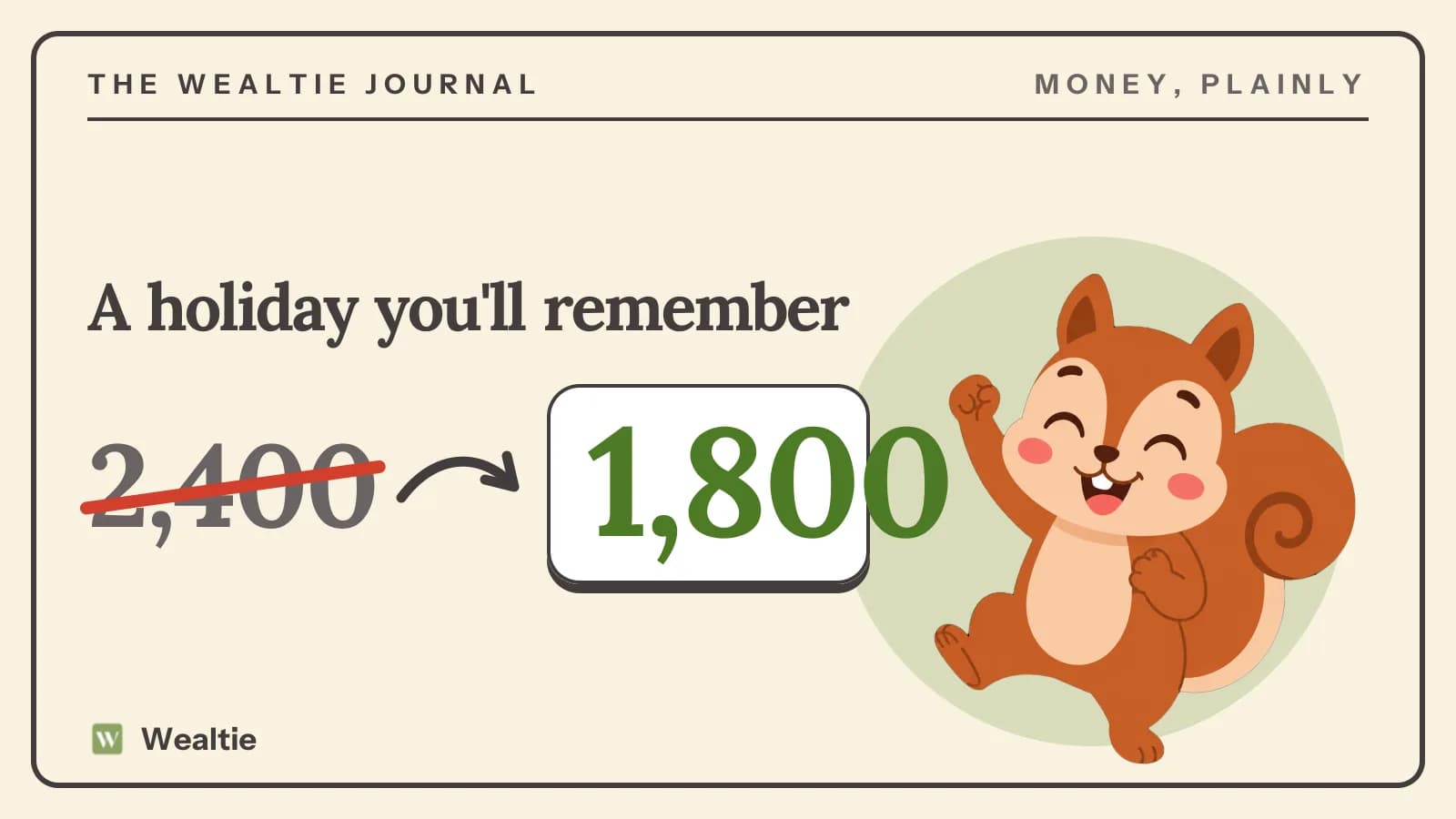
The peak-end rule says we judge an experience mostly by its best moment and how it ends, not by its length or total cost. In a worked example, a 10-day holiday cut to 7 days with one special day saves 600 without making the memory any worse.
 By Wealtie Team · 3 min read
Key takeaways
- The peak-end rule means we remember an experience's best moment and its ending.
- Shorter holidays with a highlight can feel as good as longer, pricier ones.
- Spend on one special moment instead of spreading money thinly.
- Plan a good ending, since it shapes the whole memory.
What is the peak-end rule?
The peak-end rule is the finding that people judge an experience mainly by how it felt at its most intense moment and at its end, rather than by the average of every moment or how long it lasted. Daniel Kahneman and colleagues showed this in experiments in the 1990s, including one where people held a hand in cold water. Many preferred a longer session that ended slightly less painfully to a shorter one, because the ending shaped their memory.
The same rule applies to holidays, celebrations, meals and days out. We remember the highlight and the ending, and forget much of the rest. That has a useful money lesson: you don't need to spend more or go for longer to have a better memory. You need a great moment and a good finish.
How can the peak-end rule save money?
Here's a worked example of planning a holiday, in round numbers that work in any currency:
| Holiday plan | Cost |
|---|---|
| 10 days, evenly spread budget | 2,400 |
| 7 days with one special day | 1,800 |
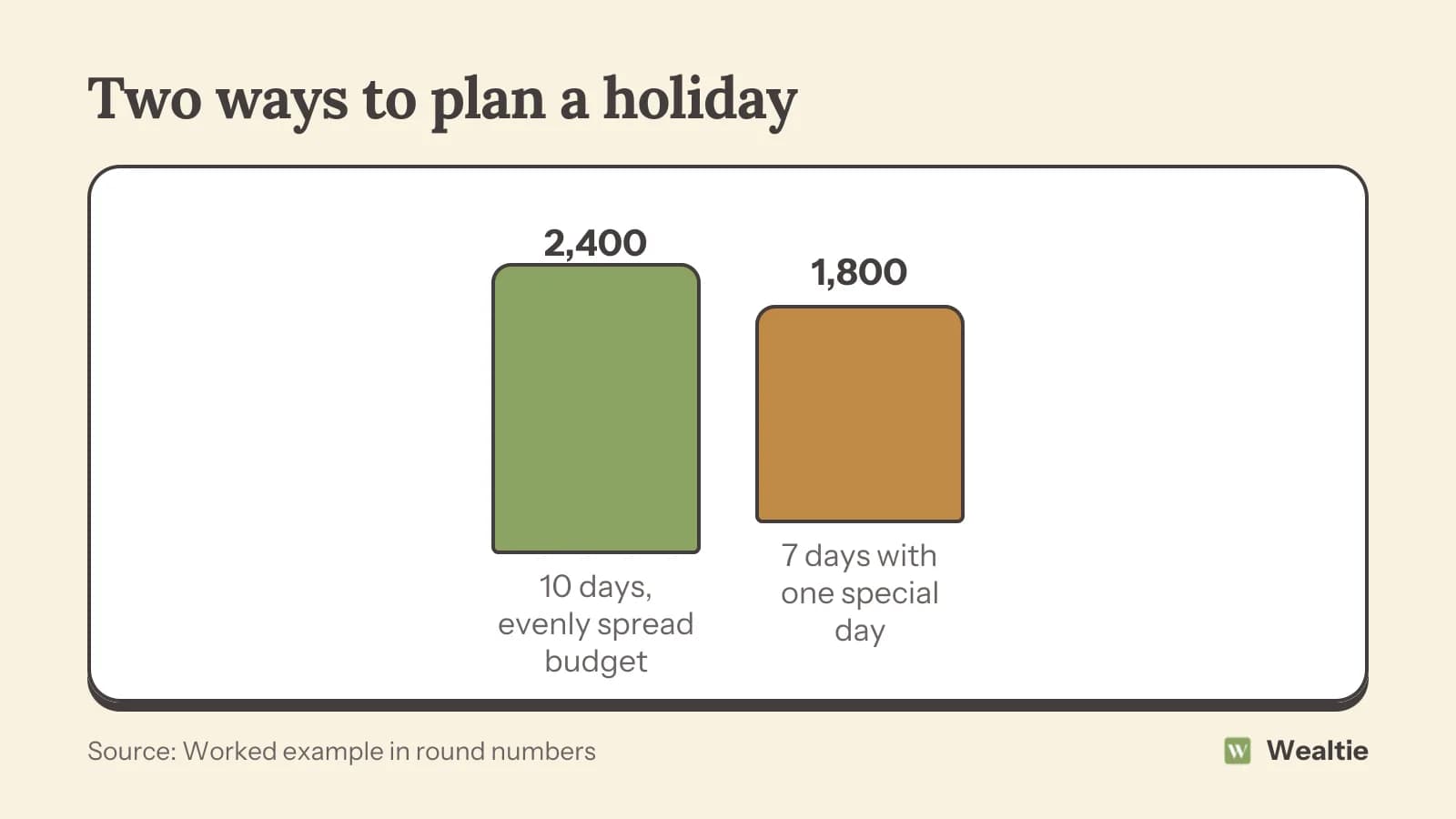
Ten days at around 240 a day costs 2,400. Seven days, with most days kept simple and one day set aside for something special, like a boat trip or a memorable meal, costs 1,800. Because memories are shaped by the highlight and the ending, the shorter trip can feel just as good, and you save 600.
How do you use the peak-end rule when spending?
Plan one highlight
Instead of spreading your budget evenly, put more into one special moment. It's what you'll remember and talk about.
Keep the rest simple
Cheaper days with picnics, walks and free attractions don't take away from the memory if the highlight is strong.
End on a high
Plan something enjoyable for the last day or evening, and avoid a stressful, rushed ending. A calm final day, a favourite meal or a sunset walk leaves a good final impression.
Make the trip shorter, not thinner
A shorter trip with a highlight often beats a longer one where everything is done on the cheap.
Avoid a painful ending
Arriving home to a big credit card bill can sour the memory. Saving ahead means the ending stays positive. How to save for a vacation covers saving before you go.
Where else does the peak-end rule apply?
Birthdays and celebrations
One special activity or a thoughtful surprise often matters more than a long, expensive day. How to celebrate a birthday on a budget has ideas.
Days out
A trip to the coast with one great ice cream and a sunset may be remembered more fondly than a packed day at an expensive attraction.
Staycations
A few days at home with one special outing can feel like a real break. How to plan a staycation budget covers this.
Meals
A simple meal with a great dessert or a lovely setting can feel special without an expensive menu.
Does this mean experiences beat things?
Many people find experiences bring longer-lasting happiness than possessions, partly because memories improve with time. The peak-end rule suggests you can get much of that value without overspending, by focusing money on the moments that matter. How to budget for a trip abroad and how to recover from holiday spending cover the practical side.
Anticipation counts too. Research on happiness suggests that looking forward to a trip or event brings pleasure of its own, often for weeks beforehand. Planning a special moment in advance, and talking about it with the people you'll share it with, adds enjoyment without adding cost. Some families keep a countdown or plan the highlight together, which makes the whole experience feel bigger.
Photos and small mementos help keep the memory alive after you get home. A few printed photos or a simple album from the highlight of the trip can bring back the good feeling for years, which makes the money spent feel worthwhile long after the bill is paid.
Be careful not to over-schedule. Packing every day with paid activities can leave you tired and stressed, which may make the ending feel worse. A relaxed pace with one or two standout moments often creates better memories and costs less.
Finally, think about who you're with. Shared highlights tend to be remembered more fondly than solo ones, so planning a special moment with family or friends can be worth more than the same money spent on a bigger trip alone.
Used well, the peak-end rule lets you spend less while remembering more, which is a rare win for both your budget and your happiness.
How can Wealtie help you plan memorable spending?
Set a budget for a trip or celebration and log costs in their own expense categories. Setting aside a clear amount for the highlight, and keeping the rest of the budget simple, makes it easier to spend where it counts.
Questions people ask
The peak-end rule says we judge an experience mostly by its best moment and how it ends, rather than its length or average.
Plan one highlight and a good ending instead of spreading money evenly. In a worked example, a shorter holiday with a special day saved 600.
Plan one special activity, keep other days simple, end on a high and save ahead so the bill doesn't sour the memory.
Yes. Birthdays, days out, meals and staycations are remembered by their highlight and ending, so spend where it counts.
This article is general information, not financial, tax or legal advice. Your situation is your own; check the numbers that apply to you before you act on them.