Money as a couple: Should you pay grandparents for childcare?
Whether to pay grandparents for childcare depends on what they want and what's fair to both sides. In a worked example, two days a week of grandparent care saves about 520 a month against nursery fees.
 By Wealtie Team · 3 min read
Key takeaways
- Whether to pay grandparents for childcare depends on what they want and what feels fair.
- In a worked example, two days a week of grandparent care saves about 520 a month against nursery fees.
- At the very least, cover the costs grandparents carry, like food, outings and travel.
- Talk openly and review the arrangement as needs change.
Should you pay grandparents for childcare?
There's no single right answer, and families handle it in many ways. Grandparents often help with childcare out of love, and many refuse payment. Others would welcome some money, especially if they've given up work or have a fixed income. Whether you pay grandparents for childcare should depend on what they want, what you can afford and what feels fair to everyone.
The most important thing is talking about it openly, so no one feels taken for granted. Unspoken expectations on either side are a common source of family tension.
How much do grandparents save families?
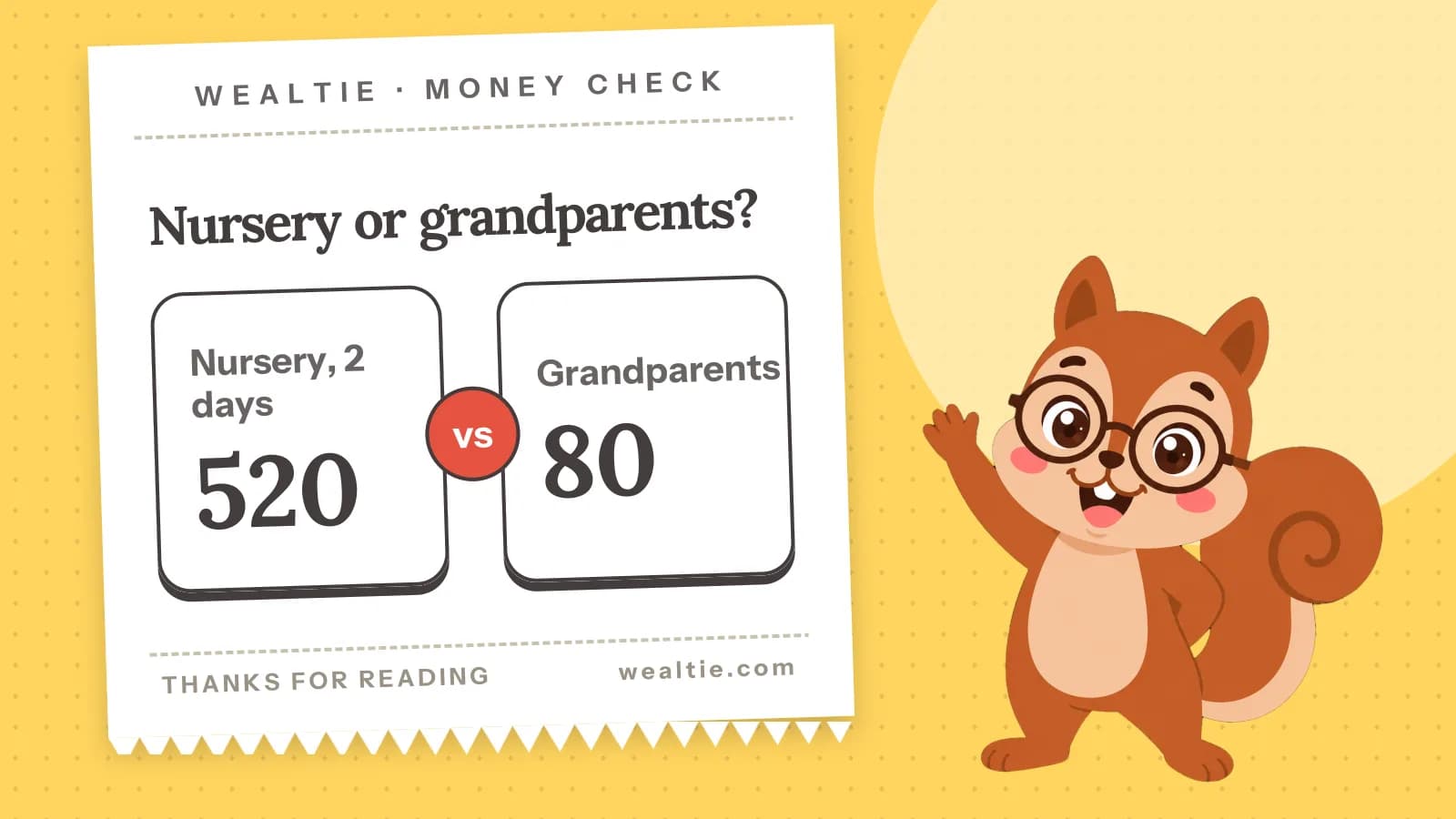
A lot. Here's a worked example of two days a week of childcare, in round numbers that work in any currency:
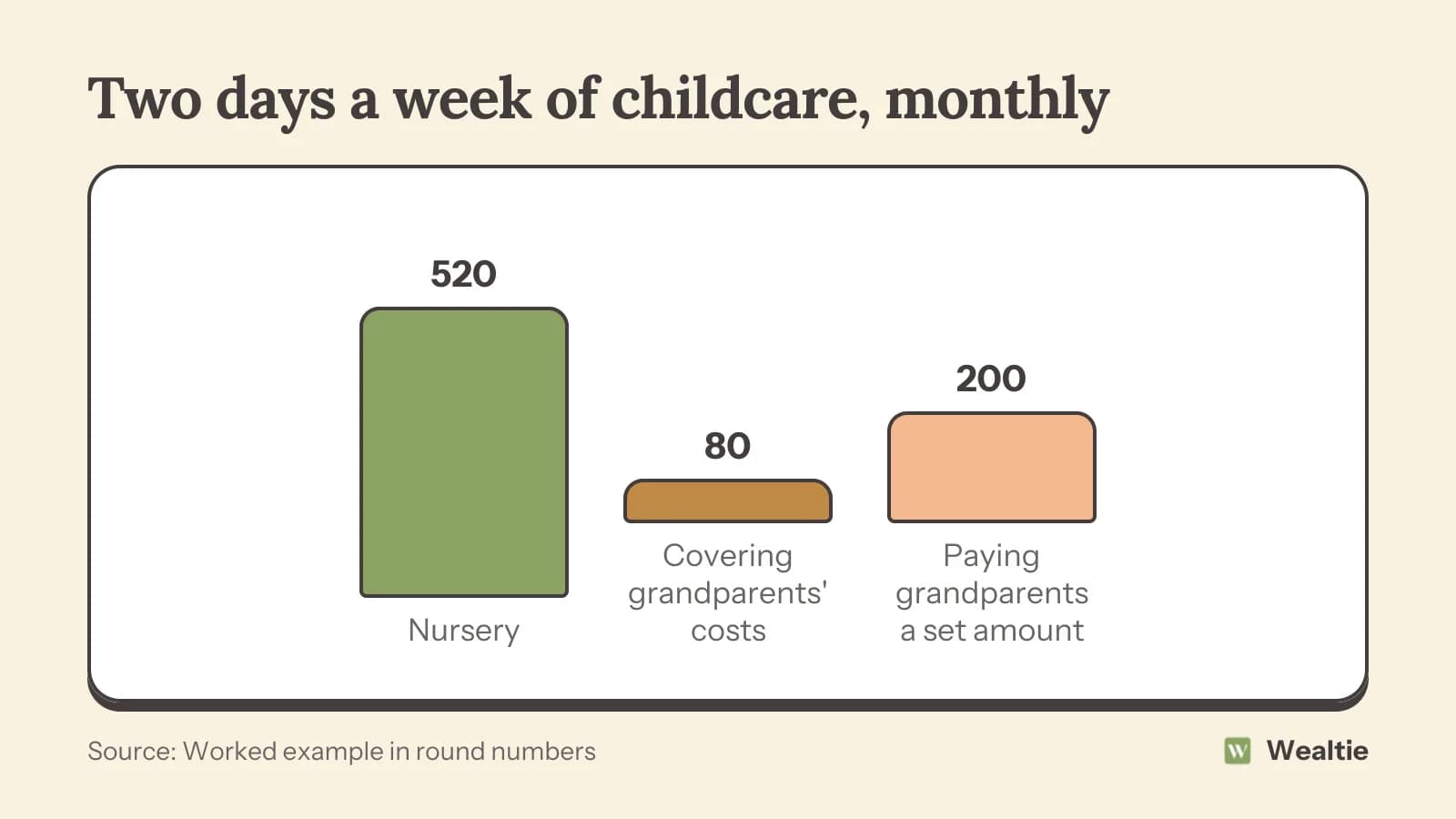
In this example, nursery would cost about 520 a month. Covering the grandparents' costs, like food, outings and travel, costs about 80. Paying them a set amount of 200 a month, including costs, still saves the family over 300. Your own figures depend on local childcare prices and what you agree. Even after paying grandparents fairly, most families still save a large amount.
What costs do grandparents carry?
Even unpaid, looking after children costs money. Grandparents may spend on:
- Food and snacks
- Outings, activities and entry fees
- Travel and fuel, including school runs
- Extra heating and electricity at home
- Toys, books and equipment, like a car seat or high chair
At the very least, most families cover these costs, so grandparents aren't out of pocket. Giving a monthly amount for expenses, or providing food and equipment, keeps it simple. Buying a second car seat or a travel cot for their home saves them buying their own.
What does fair help look like?
It depends on the arrangement. A few hours a week is different from full-time care. Things to consider:
- How many hours and days grandparents are caring
- Whether they've given up paid work or other plans
- Their own finances and whether money would help them
- Their energy and health, especially with young children
Some families pay a regular amount, some cover costs and give occasional gifts, and some help in other ways, like doing jobs around the house or paying for a holiday. If more than one set of grandparents helps, try to treat them consistently.
Other ways to say thank you
If grandparents won't accept money, you can show appreciation in other ways: a meal out, help with their garden or shopping, a weekend away or making sure they have time off too.
How do you talk about money with grandparents?
Raise it early, before the arrangement starts, and keep it relaxed. Ask what they'd like, and be honest about what you can afford. Agree the days and hours, what happens when they're ill or on holiday, and how costs will be covered. Reviewing the arrangement every few months, or when needs change, stops resentment building on either side. How to talk about money with your partner has tips that apply to family conversations too.
Are there benefits or credits for grandparent care?
In some countries, grandparents caring for grandchildren can receive credits towards their own state pension, or families can use childcare support for registered carers. Check what's available where you live, since it can make a real difference to grandparents' finances. Grandparents who've reduced work to help may also be giving up pension contributions, which is worth considering.
Agree the practical details
Beyond money, agree on routines, food, screen time and what happens when a child is ill. Clear expectations make the arrangement easier for everyone and avoid friction that can be harder to fix than any money question. A short note of what you've agreed helps when memories differ.
What if grandparents can't help forever?
Plan for changes. Grandparents' health, energy or circumstances may change, and children's needs change too. Knowing what other childcare would cost, and saving a little towards it, means a change doesn't become a crisis. How to save money on childcare covers other options, and going back to work after maternity leave covers planning the return to work.
How do you track childcare costs in Wealtie?
If you pay grandparents a regular amount, set it up as a recurring transaction with the bill tracker. Log childcare-related costs in your expense categories, so you can see what childcare costs and plan for changes. A limit in the budget tracker keeps it on plan.
Questions people ask
Many families do, or at least cover their costs. Talk openly about what they want and what feels fair.
What you agree together. In a worked example, a set amount of 200 a month still saves over 300 against nursery fees.
Food, outings, travel, extra heating and equipment like car seats.
In some countries, grandparents can receive pension credits for caring for grandchildren. Check what's available.
This article is general information, not financial, tax or legal advice. Your situation is your own; check the numbers that apply to you before you act on them.