Money as a couple: How to help your child buy a home without risking your own finances
To help your child buy a home, decide how much you can give without harming your own retirement, choose between a gift, a loan or another option, and put it in writing. In a worked example, parents give 15,000 towards a deposit after checking it still leaves their retirement savings on track.
 By Wealtie Team · 3 min read
Key takeaways
- Before you help your child buy a home, check that it won't harm your own retirement.
- In a worked example, parents give 15,000 towards a 25,000 deposit.
- A gift, a loan and other options each have different effects on lenders, taxes and family fairness.
- Put the arrangement in writing, even within the family.
How can you help your child buy a home?
Start with your own finances, then choose the type of help that suits your family. Many parents want to help their children onto the property ladder, often with money towards a deposit. It can make a huge difference to a young person's life. But it's important that helping doesn't leave you short in retirement or create tension between siblings.
Rules around gifts, loans, taxes and what lenders accept vary between countries, so get advice before you commit.
How much can you afford to give?
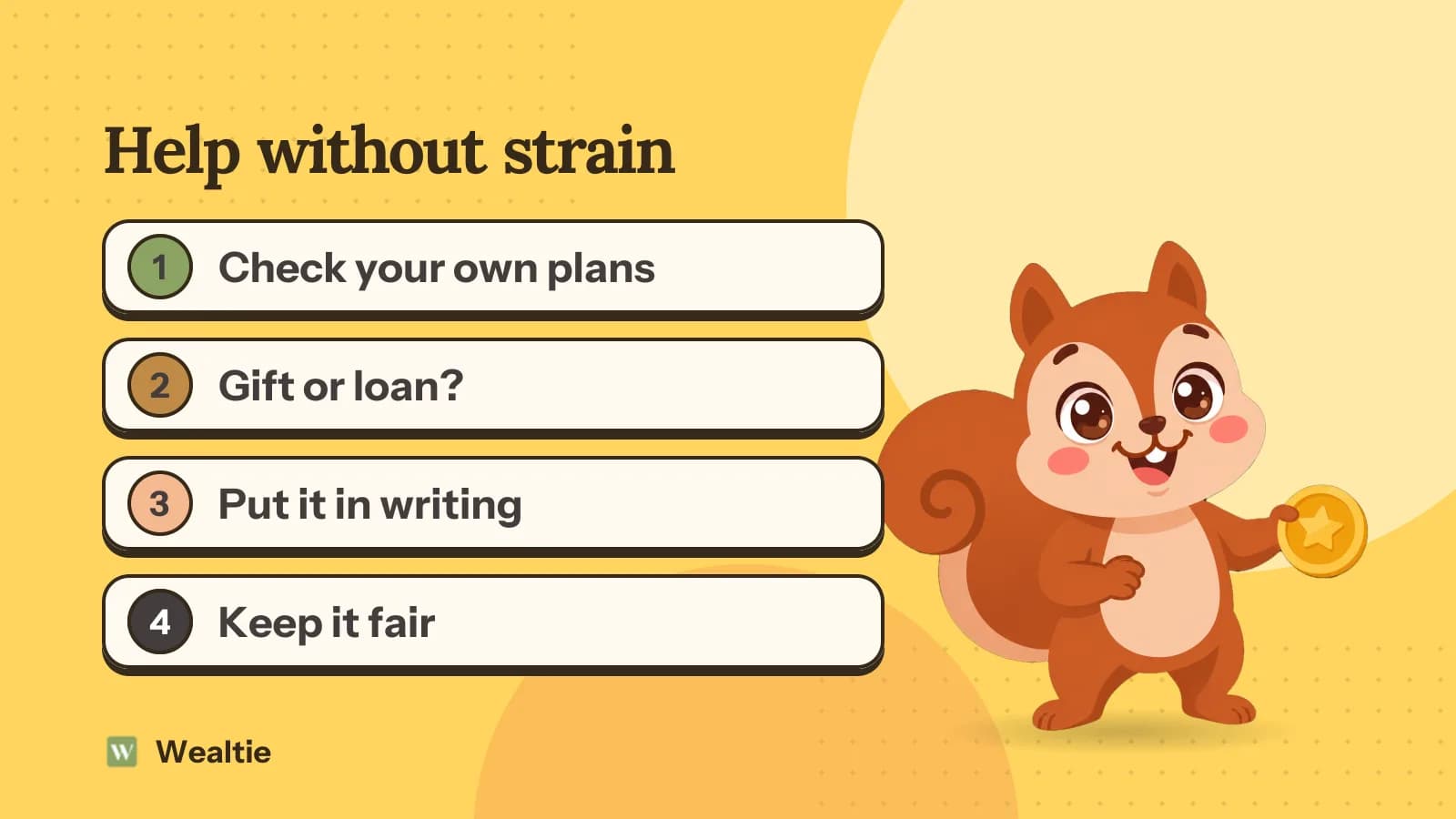
Work it out before you offer. Look at your retirement savings, emergency fund and any debts, and decide how much you could give without changing your own plans. Money given away is money you can't use later for care, home repairs or emergencies. How to budget in retirement helps you check what you'll need. If you'd need to borrow or release equity to help, get independent advice first, since it can affect your finances for decades.
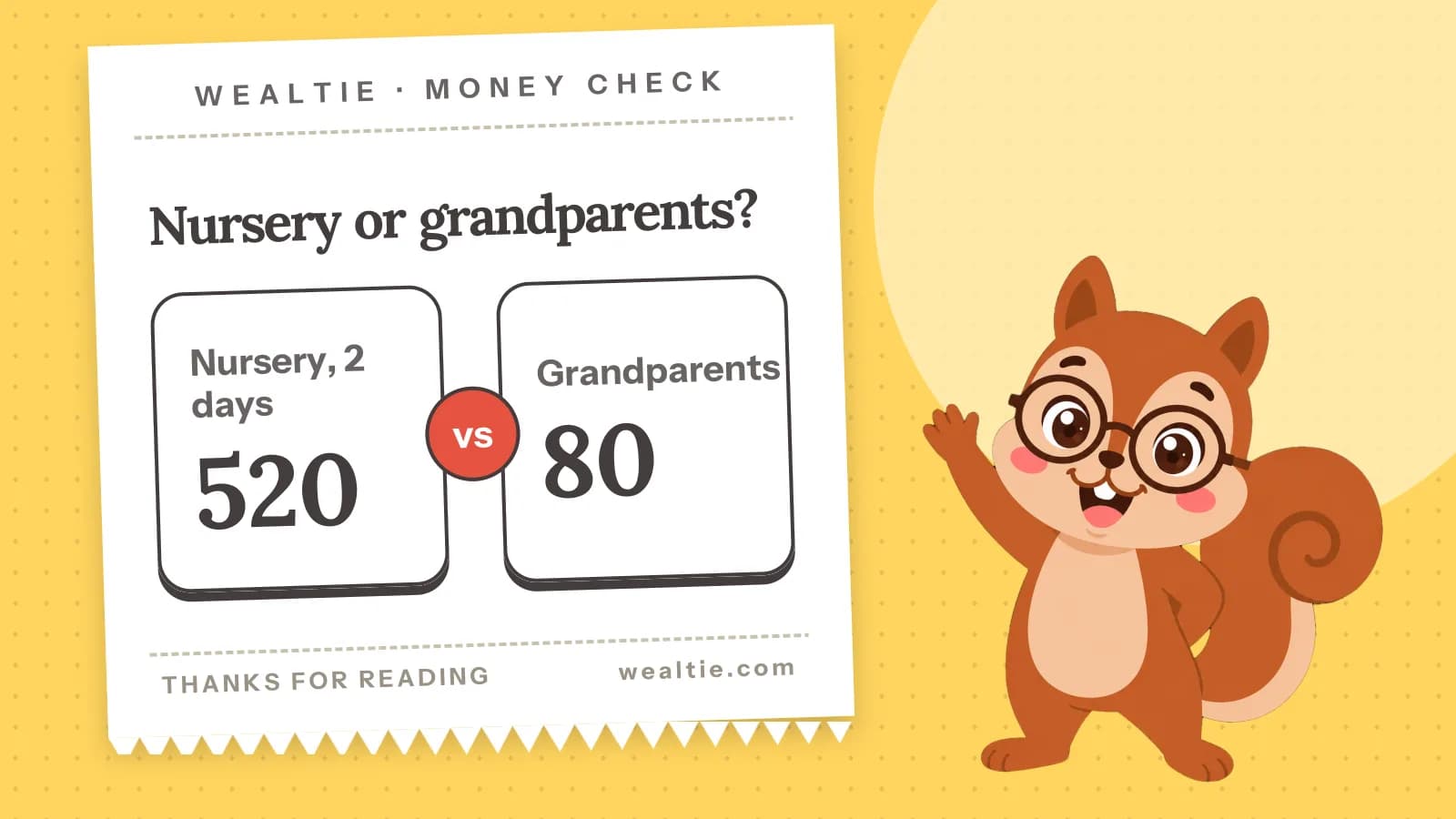
Here's a worked example of a first home deposit, in round numbers that work in any currency:
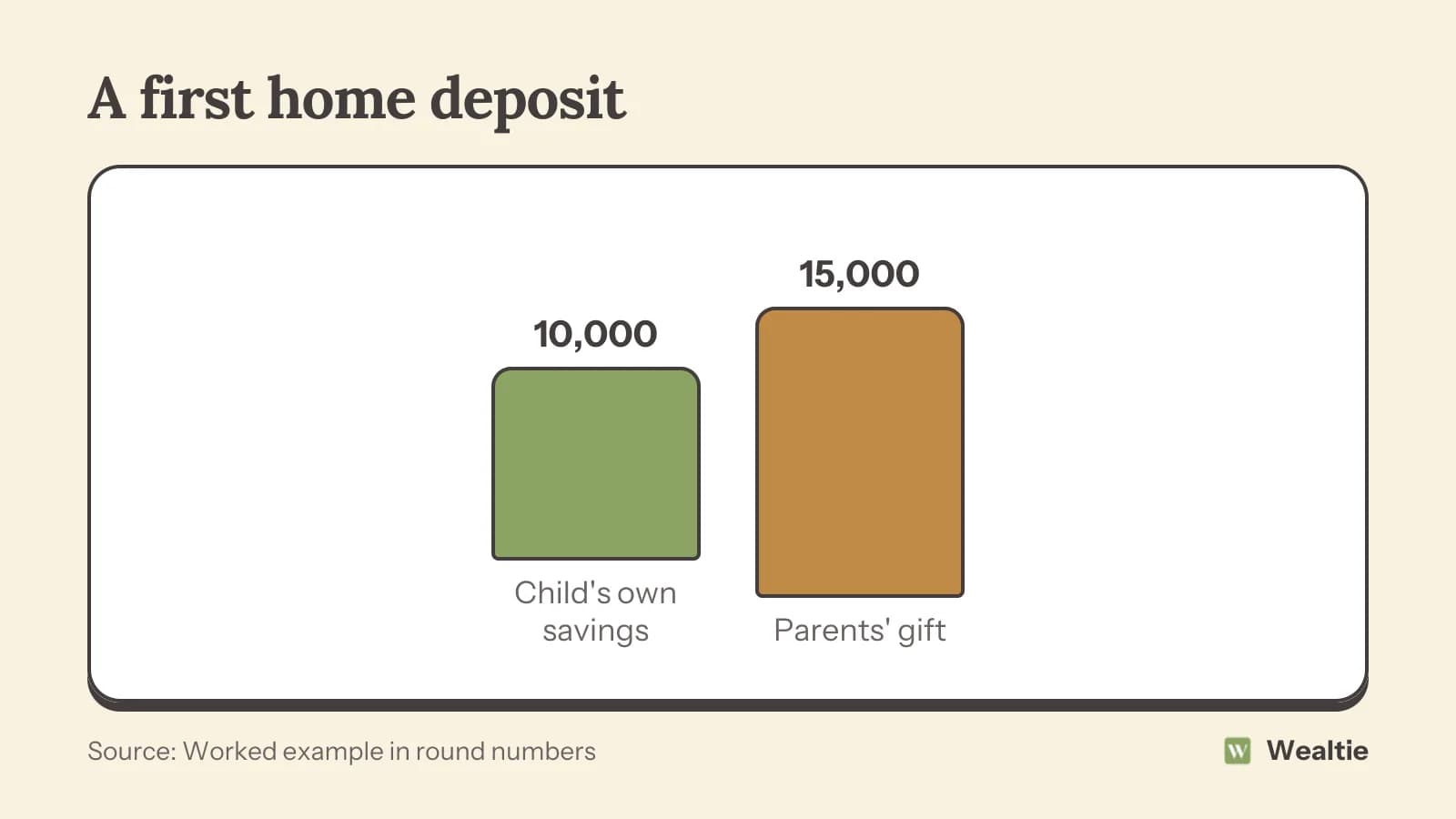
In this example, the child has saved 10,000 and the parents give 15,000, making a 25,000 deposit. The parents checked first that the gift still left their retirement savings on track.
Should you give a gift or a loan?
Each has pros and cons:
- A gift is simple and doesn't need repaying. Lenders often ask for a letter confirming it's a gift with no expectation of repayment. In some countries, large gifts may have tax implications later.
- A loan means you get the money back, which can protect your own finances. But lenders may treat it as debt, which can reduce how much your child can borrow. Agree the terms clearly.
- Joint ownership or other arrangements are possible in some places, but they're more complicated and need legal advice.
How to lend money to a friend covers the basics of lending within close relationships.
Put it in writing
Whatever you choose, write down what's been agreed: the amount, whether it's a gift or a loan, any repayment terms and what happens if the home is sold. If your child is buying with a partner, think about what happens to your money if they separate. A solicitor can help with a formal agreement. Keep a copy with your will and other important papers.
How do you keep things fair between siblings?
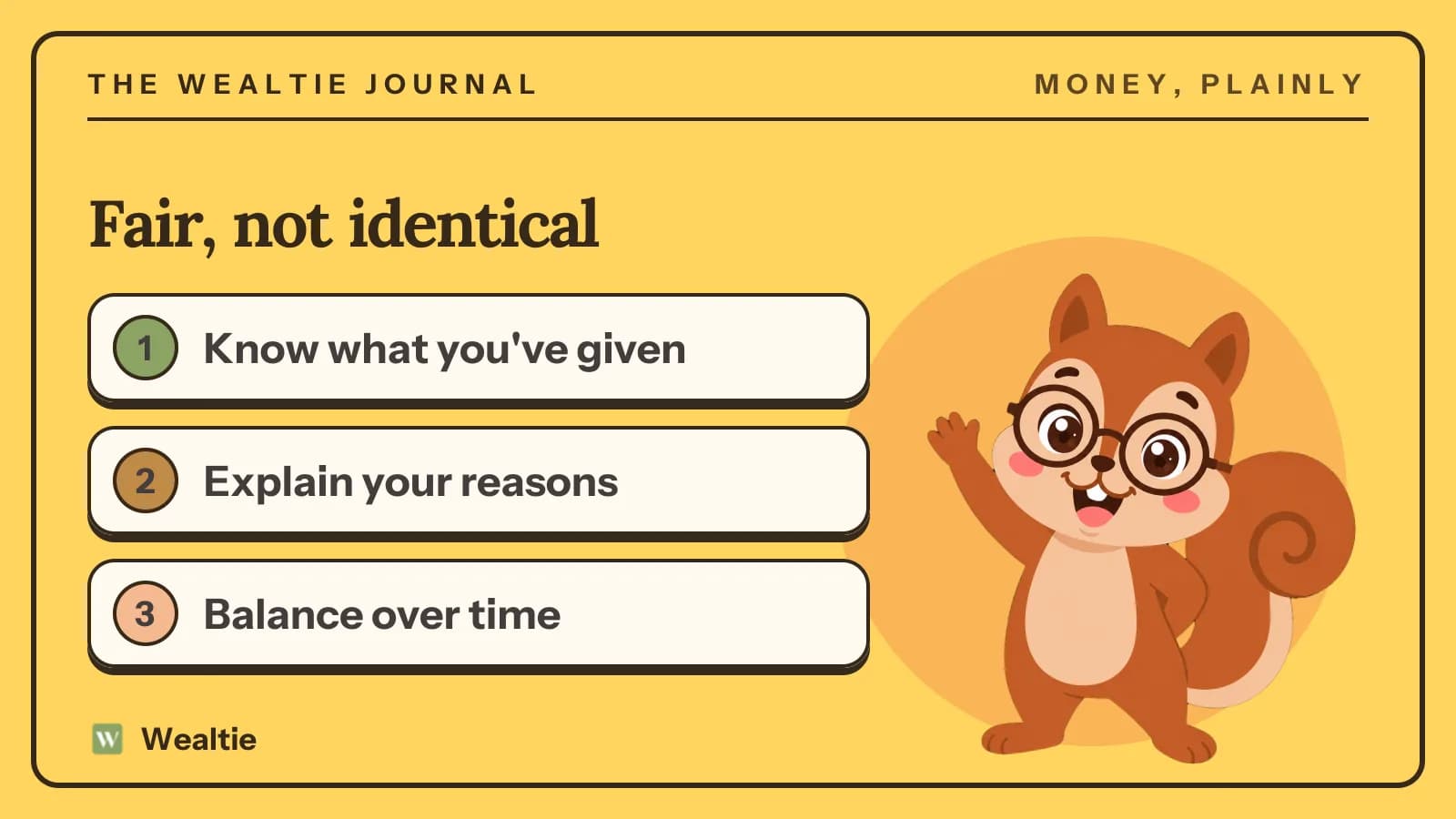
Talk about it openly. If you help one child now, consider whether you can offer similar help to others later, or adjust for it in your will. Children often care more about feeling treated fairly than about exact amounts. Explaining your reasons, and writing down your intentions, avoids hurt feelings later. How to save money for your child covers saving for children more generally.
What other ways can you help?
You don't have to give a large sum to make a difference:
- Let your child live at home rent-free or at low rent while they save. How much rent to pay your parents covers this.
- Help with buying costs, like legal fees or moving, rather than the deposit.
- Give smaller amounts over several years.
- Help them budget and save, so their own deposit grows faster.
Help them save too
Matching what your child saves each month, up to a limit, encourages good habits and grows the deposit faster. It also means they've built the savings discipline they'll need as homeowners. How to save money for a house has a step-by-step plan they can follow.
What risks should you think about?
Consider what happens if your child can't keep up mortgage payments, if the relationship with a partner ends or if house prices fall. Avoid helping in ways that put your own home at risk, like using it as security for their mortgage, without careful advice. Some lenders offer mortgages where family savings are held as security for a time; understand exactly what you'd lose if payments were missed.
How do you track family help in Wealtie?
Add a savings account for the gift and move money into it as a transfer, which isn't counted as spending, so you can see your plan building. When you give the money, log it in a gifts line in your expense categories, and check your budget tracker to make sure your own spending stays on track.
Questions people ask
With a gift or loan towards the deposit, help with buying costs, low rent while they save or matching their savings.
A gift is simpler for lenders, while a loan protects your finances but may reduce what your child can borrow.
Only what you can give without harming your retirement and emergency savings.
Talk openly, consider offering similar help to others later and write down your intentions.
This article is general information, not financial, tax or legal advice. Your situation is your own; check the numbers that apply to you before you act on them.