Money as a couple: How to be fair with money between your children
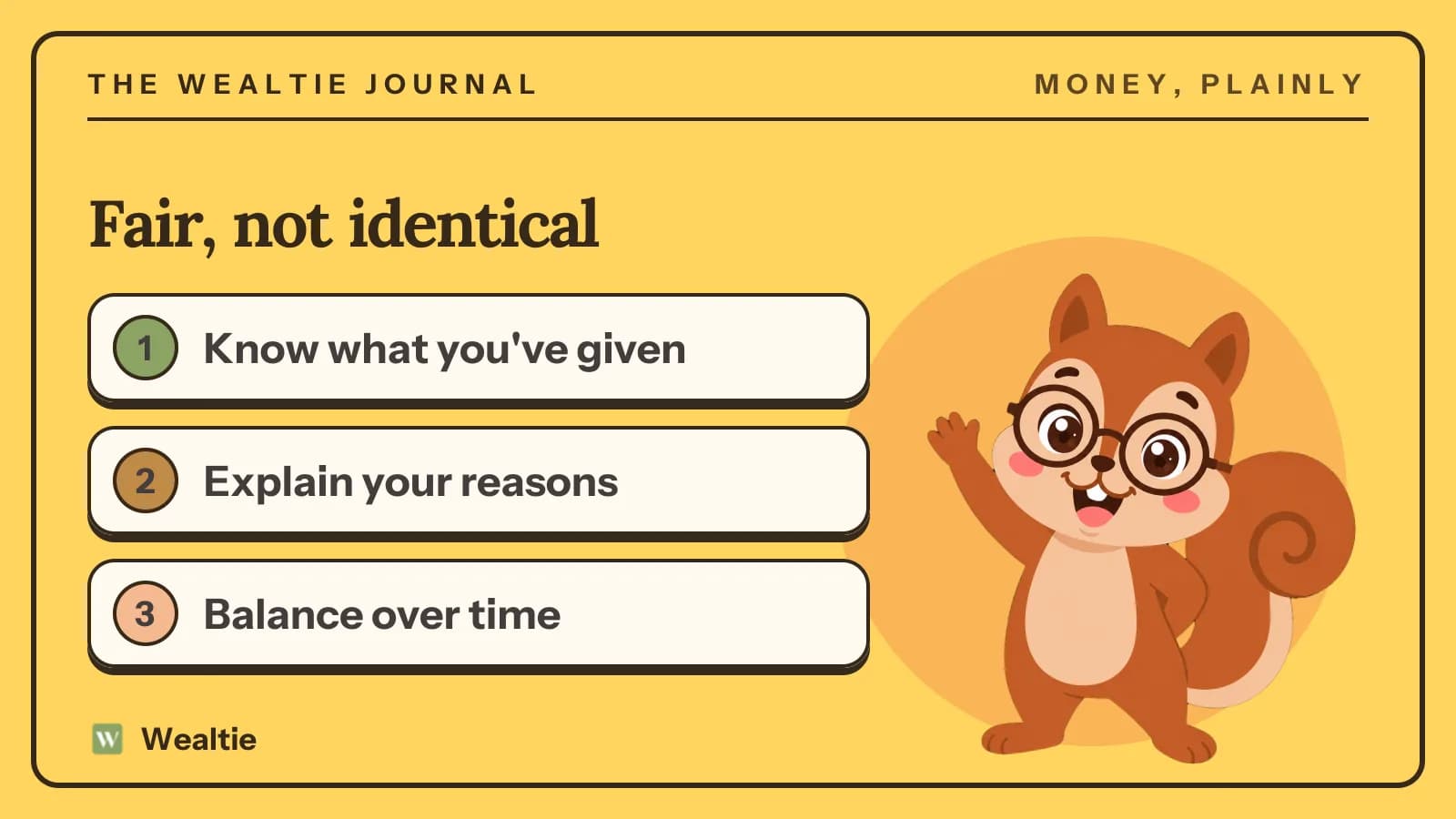
Being fair with money between your children doesn't always mean giving the same amount; it means being thoughtful and open about why. In a worked example, parents keep a simple record of support given to each child, so help with a car for one and university for another can be balanced over time.
 By Wealtie Team · 3 min read
Key takeaways
- Being fair with money between your children doesn't always mean giving identical amounts.
- In a worked example, parents record support to each child so it can be balanced over time.
- Explaining your reasons openly matters as much as the amounts.
- Write down your intentions, especially for big gifts or inheritances.
What does it mean to be fair with money between your children?
It means making thoughtful choices that each child can understand, even if the amounts aren't the same. Children's needs differ. One might need help with university, another with a car or a deposit, and another with a health condition or a difficult time. Giving exactly the same amount to each can sometimes feel less fair than giving according to need. What matters most is being open about your reasons.
Every family is different, and there's no formula. But a few habits make it much easier to avoid misunderstandings. Many family disagreements about money come from surprise, not from the amounts themselves.
Equal or fair: what's the difference?
Equal means the same amount for everyone. Fair means taking circumstances into account. Many parents aim for equal treatment over a lifetime, while giving different amounts at different times. Others choose to give more to a child who needs more. Both can work if children understand the thinking behind them.
Here's a worked example of support given to two children over ten years, in round numbers that work in any currency:
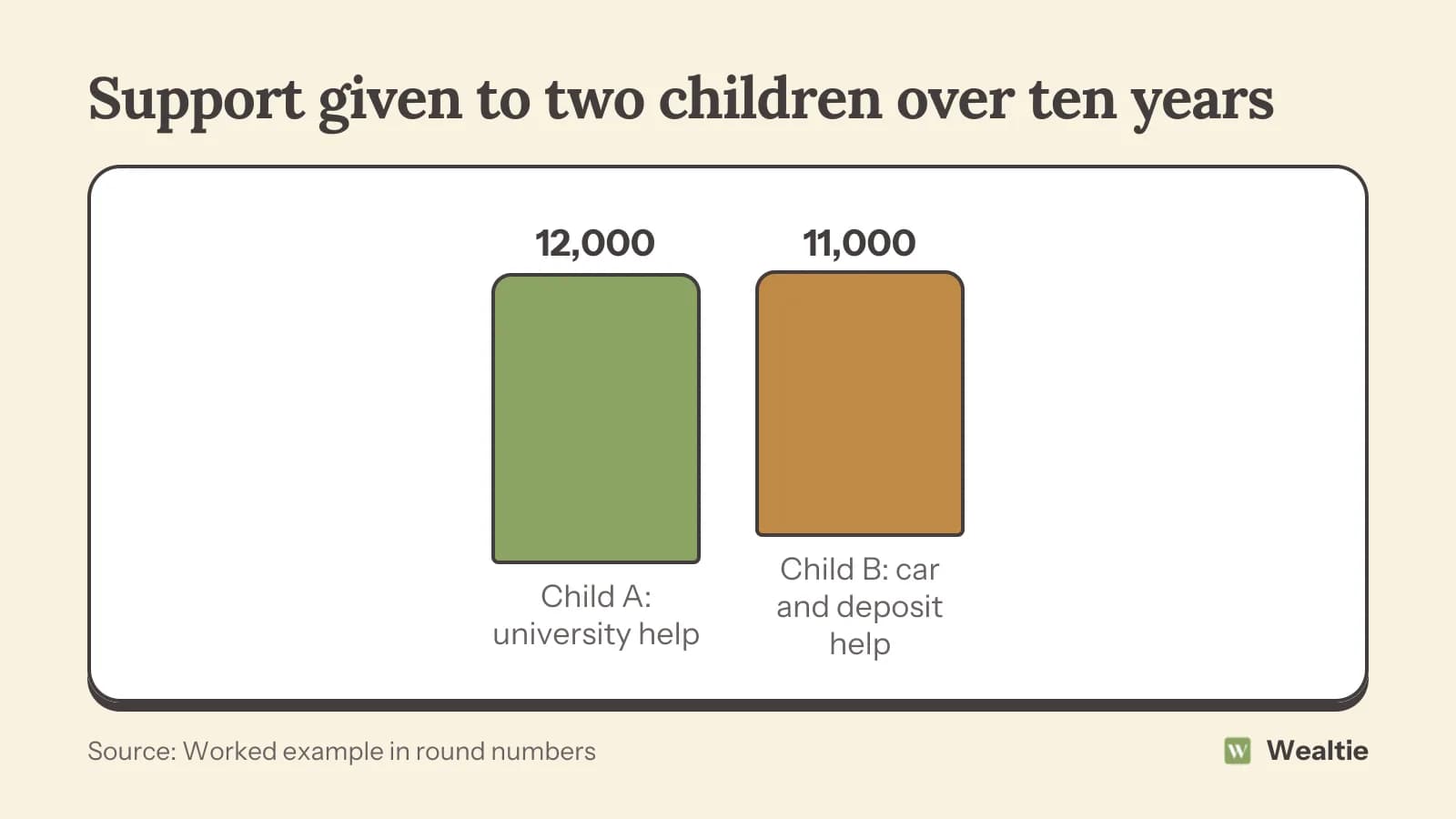
In this example, one child received help with university and the other with a car and a house deposit. The amounts are close, though given at different times and for different reasons. Keeping a record made it easy for the parents to see the overall picture. It also meant they could explain their choices clearly when one child asked.
How do you keep track of what you've given?
Write it down. Over the years, it's easy to forget who received what. A simple list of significant gifts and support, with dates and amounts, helps you stay balanced. It doesn't need to include everyday costs or birthday presents, just the bigger help, like contributions to education, cars, weddings or homes.
Loans and gifts
Be clear whether money is a gift or a loan, and record it. If one child repays a loan and another received a gift, that affects how fair things feel. How to lend money to a friend covers making loans clear, and it applies within families too.
How do you handle different needs?
Explain your reasons openly. If one child needs more help because of illness, disability, a job loss or caring responsibilities, most siblings understand when they're told why. Problems usually come from secrecy or assumptions. If you can, offer similar help to other children when their time comes, even if it looks different. Help with time, like childcare or practical support, counts too, and some children value it more than money.
What about younger children?
Fairness starts early. With pocket money, gifts and treats, children notice differences quickly. Giving amounts that match age, and explaining that older siblings get more because they're older, helps children understand that fair isn't always identical. Pocket money by age covers typical amounts. Letting children know they'll get the same privileges when they reach the same age helps younger ones accept the difference.
What about inheritances?
Decide your intentions and write them down in a will. Some parents divide their estate equally, while others adjust for help already given or different needs. Explaining your decisions to your children while you can avoids confusion and conflict later. A solicitor can help make sure your will reflects your wishes. What to do with an inheritance covers the other side of inheriting.
Talk while you can
Conversations about money and inheritance can feel uncomfortable, but they prevent far bigger problems later. A family meeting, or a letter explaining your thinking, gives children a clear picture.
When circumstances change
A child's situation can change, through illness, divorce or job loss. It's fine to give extra help at difficult times, and to explain to siblings why. Revisiting your record every few years, and adjusting your plans or will, keeps things fair as life moves on.
How do you protect your own finances?
Don't give away more than you can afford. Helping children is natural, but your own retirement, care needs and emergency fund come first. How to save money for your child covers saving for children in a way that fits your budget.
How do you track family support in Wealtie?
Log significant gifts and support to each child in their own line in your expense categories, so you have a record over the years. Keeping savings for each child in separate accounts also makes it easy to see what's set aside for whom. A limit in the budget tracker keeps family support within what you can afford.
Questions people ask
Not always. Many parents aim for fairness over a lifetime, giving according to need while explaining their reasons.
Keep a simple record of significant gifts and support, with dates and amounts, and note whether each was a gift or a loan.
Be open about the reasons, like illness or a particular need, and offer similar help to others when you can.
Decide your intentions, write them in a will and explain them to your children while you can.
This article is general information, not financial, tax or legal advice. Your situation is your own; check the numbers that apply to you before you act on them.