Money as a couple: How to budget when you go back to work after maternity leave
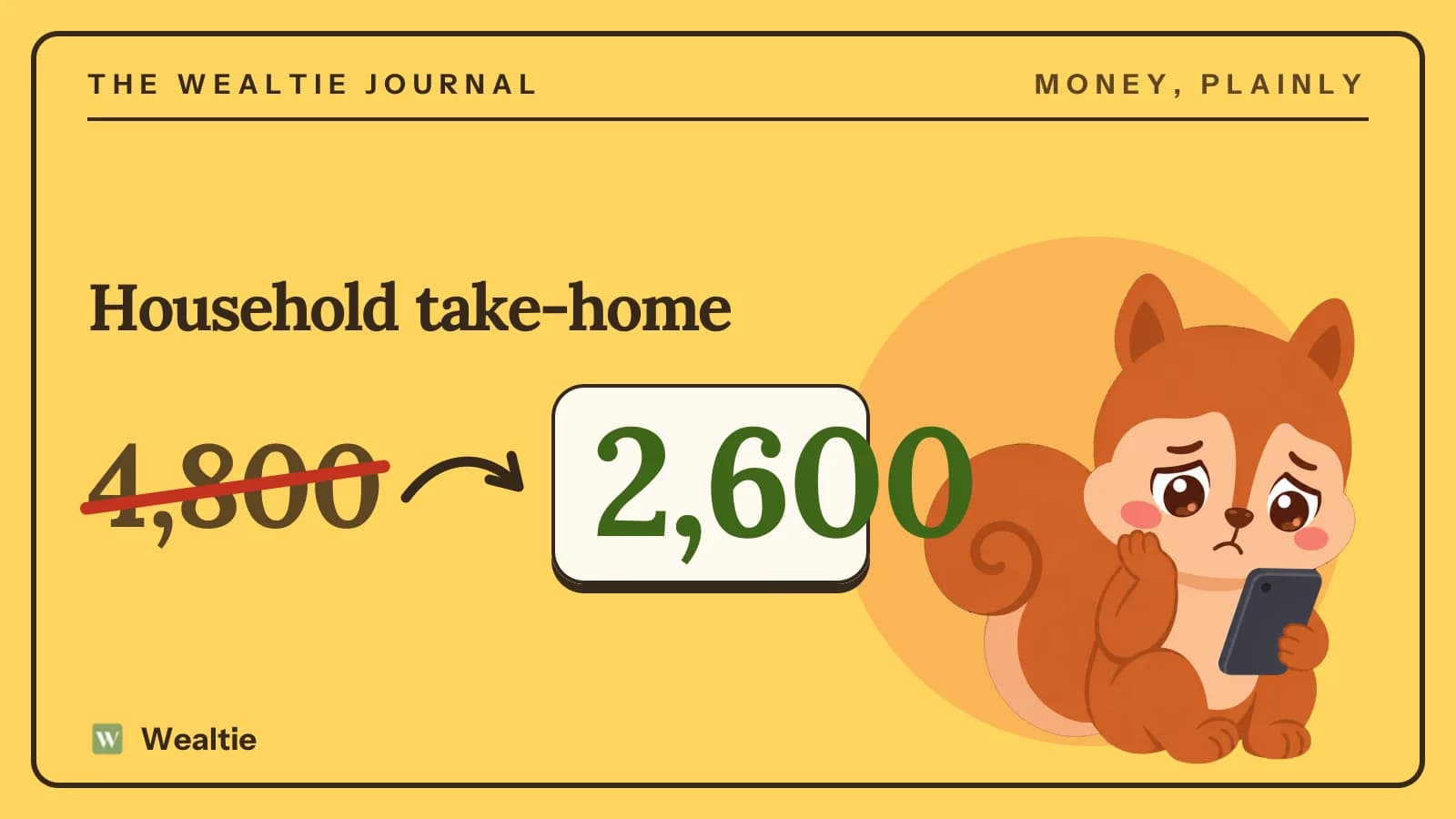
Going back to work after maternity leave brings new costs, like childcare and commuting, before your full pay arrives. Plan the first three months carefully: in a worked example, take-home of 2,400 leaves about 650 after childcare of 1,000 and other new costs.
 By Wealtie Team · 3 min read
Key takeaways
- Plan for childcare, commuting and work costs that start when you go back, before your first full payslip arrives.
- In a worked example, take-home of 2,400 leaves about 650 in the first month after childcare, work costs and settling-in.
- Check what childcare help, tax support or employer schemes you're entitled to.
- Rebuild your emergency fund gradually once the new budget settles.
How do you budget for going back to work after maternity leave?
Plan the first few months separately from the long term. Going back to work brings costs that didn't exist during leave, like childcare, commuting and work clothes, and some of them start before your first full payslip. A clear plan for the switch avoids a tight first month and helps you see what the new normal looks like, which makes the change less stressful.
The same applies to any parent returning after parental leave.
What changes when you go back?
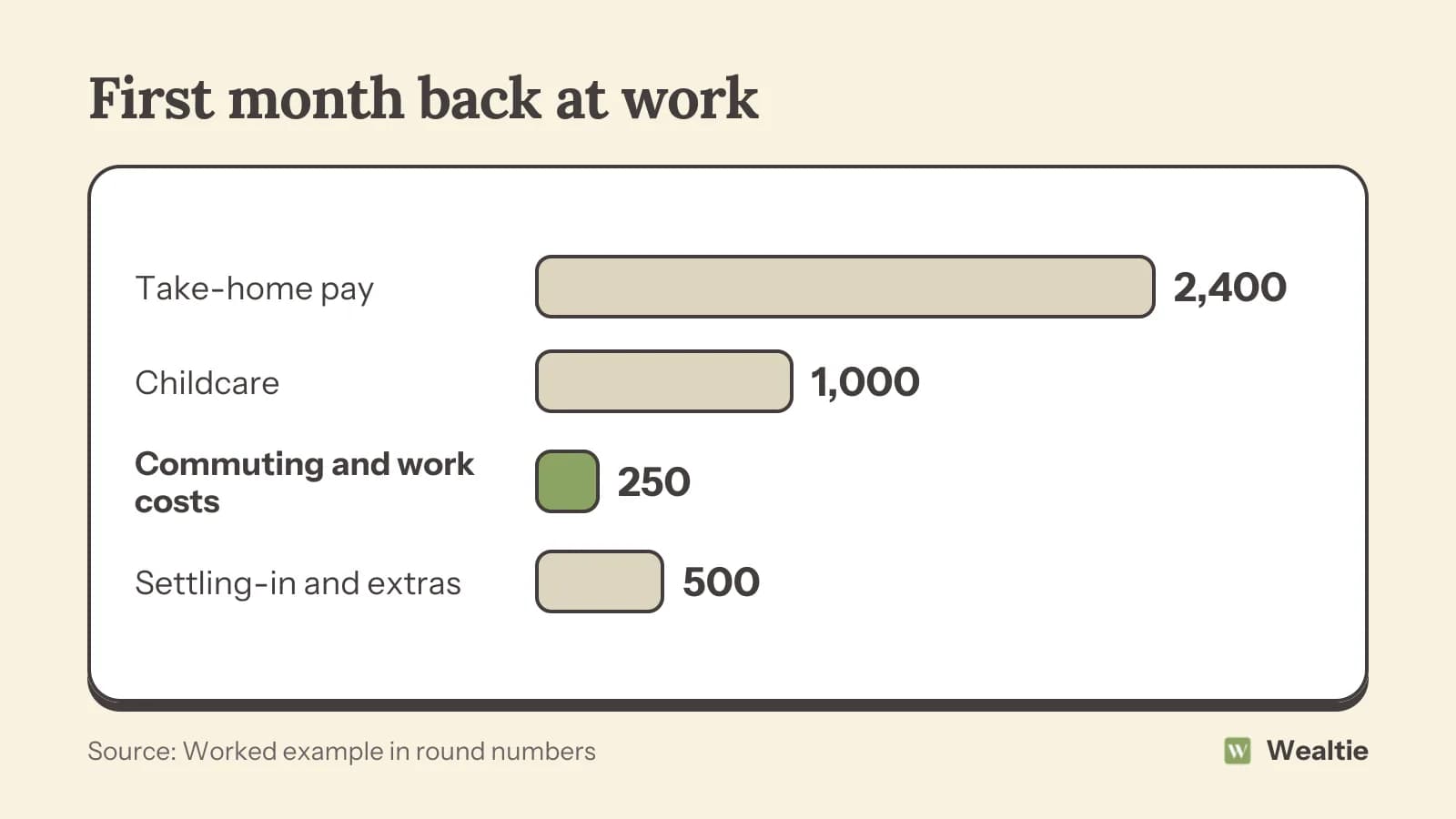
Income goes up, but so do costs. Here's a worked example of the first month back, in round numbers that work in any currency:
| Line | Amount |
|---|---|
| Take-home pay | 2,400 |
| Childcare | −1,000 |
| Commuting and work costs | −250 |
| Settling-in: deposit, kit, a few extra days of care | −500 |
| Left in the first month | 650 |
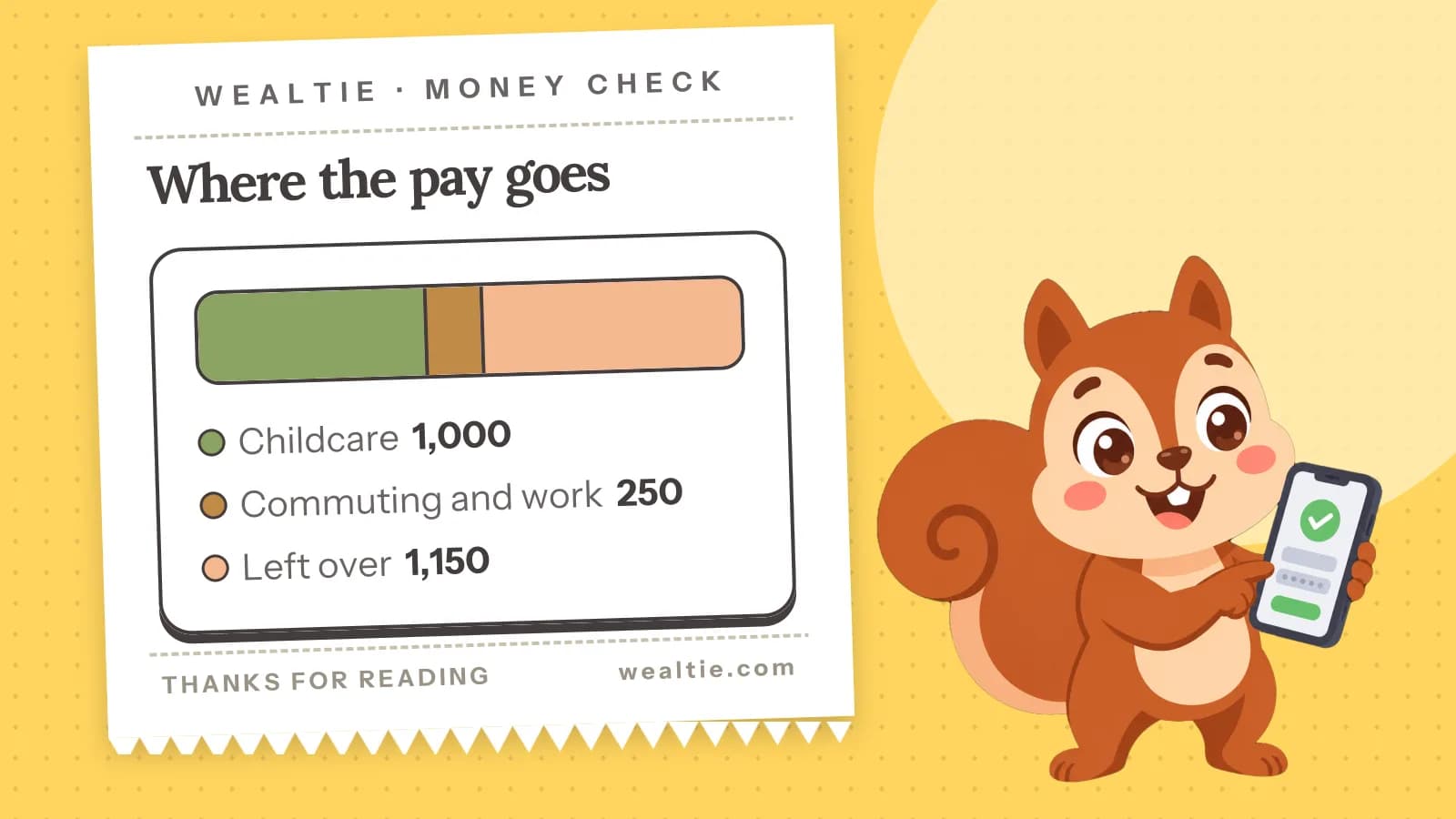
From the second month, the settling-in costs drop away, leaving about 1,150 after childcare and work costs. Some costs fall when you go back too, like daytime heating at home, so the change isn't all one way. Your own figures depend heavily on childcare prices where you live, your hours and any help you receive, so use real quotes.
When will your first full payslip arrive?
Check with your employer. If you return partway through a month, the first payslip might be smaller, while childcare may need paying upfront or at the start of the month. Some nurseries ask for a deposit and the first month in advance. Work out the gap and plan for it, using savings if you need to. A simple calendar of the first three months, showing when pay arrives and when childcare and other bills are due, makes the gap easy to see. If there's a month where outgoings arrive before pay, setting aside some savings in advance for that month avoids putting it on a credit card.
What childcare help can you get?
Check every scheme you might be entitled to, since childcare is usually the biggest new cost. Depending on where you live, there may be free hours, tax-free childcare accounts, tax credits or employer schemes. Apply early, since some take weeks to set up. How to save money on childcare goes through the options.
Ask your employer about flexible or part-time hours, which can reduce the days of childcare you need. A phased return, with fewer days for the first few weeks, can also help everyone settle, and some employers offer keeping-in-touch days during leave that ease the change.
Is going back to work worth it financially?
Look beyond the first year. Childcare costs are often highest when children are youngest and fall as they get older or reach free hours and school. Meanwhile, your career, pay and pension keep building. A year where childcare takes a large share of your pay can still be worth it over the longer term.
Compare your take-home after childcare and work costs now, then estimate how it changes in one, two and three years. Write it down in a simple table, with the childcare cost falling as free hours or school arrive, and the picture often looks very different from the first month alone.
How do you share costs with a partner?
Agree how childcare and other new costs are split, so it isn't treated as one parent's expense. Childcare lets both parents work, so it's a household cost. Splitting by income or pooling everything are common approaches. Combining finances after marriage covers ways to share fairly.
How do you rebuild savings?
Gradually. The leave may have used up savings, so start with a small monthly amount once the new budget settles, and build the emergency fund back up first. How to build an emergency fund has the steps. Restart pension contributions too, if they paused during leave. Review the budget after three months back, once childcare and commuting costs are known, and adjust savings up if there's room.
How do you plan the return in Wealtie?
Update your monthly income goal to your new take-home pay, and set the limit in the budget tracker to fit after childcare. Set childcare up as a recurring transaction, so it logs itself on the due date. If you share costs with a partner, a shared account lets you both see household spending, with the owner on Pro and the other person on any plan. The shared accounts page has more.
Questions people ask
Plan the first few months separately, counting childcare, commuting, work costs and settling-in costs that start before your first full payslip.
Look beyond the first year, since childcare costs often fall as children grow while your pay and pension keep building.
Early, since some schemes take weeks to set up. Check what's available where you live.
Treat childcare as a household cost and agree a split, such as by income or by pooling everything.
This article is general information, not financial, tax or legal advice. Your situation is your own; check the numbers that apply to you before you act on them.