Money as a couple: What to do if your partner has debt
If your partner has debt, start with an honest conversation about the full picture, then decide together how much you'll help and how to protect your own finances. In a worked example, a partner clears 6,000 of debt in two years at 250 a month, with a plan both people agree on.
 By Wealtie Team · 3 min read
Key takeaways
- If your partner has debt, an honest conversation about the full picture comes first.
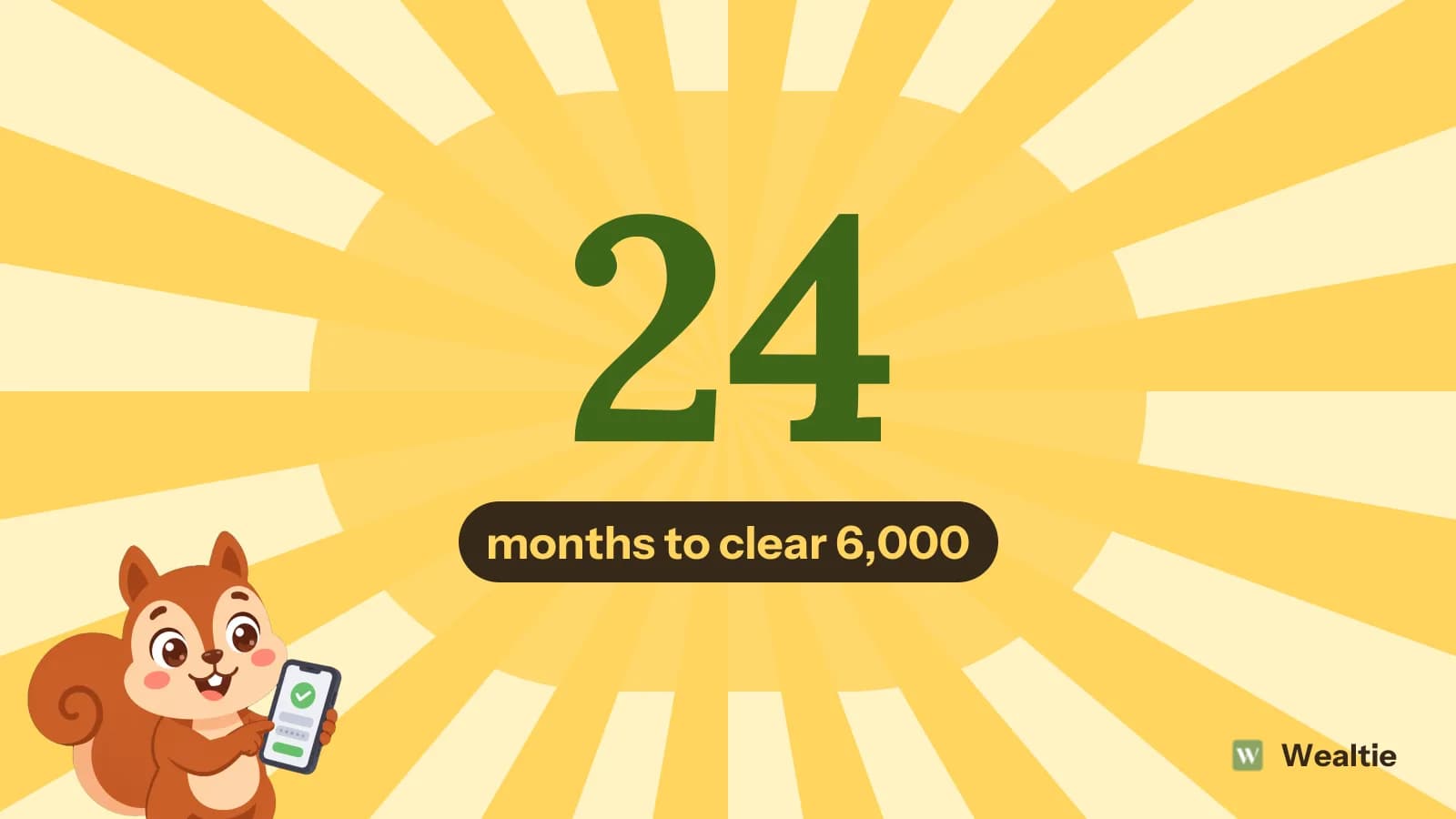
- In a worked example, 6,000 of debt is cleared in two years at 250 a month, before interest.
- You're usually not responsible for debts in your partner's name alone, but joint debts are shared.
- Help in ways that don't put your own finances at risk.
What should you do if your partner has debt?
Talk about it openly, without blame, and make a plan together. Debt is common, and many people bring student loans, credit cards or car finance into a relationship. Finding out your partner has debt can be worrying, especially if it's large or wasn't mentioned. But with honesty and a clear plan, it doesn't have to come between you.
The first goal is understanding. The second is deciding together what happens next. Remember that debt isn't a measure of someone's worth; it's a situation that can be changed with a plan.
How do you talk about it?
Choose a calm moment, not the middle of an argument. Ask about the full picture: what kinds of debt, how much, the interest rates and monthly payments. Listen without judgement, and share your own finances too, so it's a two-way conversation. Many people feel ashamed of debt, and a supportive response makes honesty easier. It may take more than one conversation to get the full picture, and that's normal. How to talk about money with your partner has tips for these conversations.
Are you responsible for your partner's debt?
Usually not, for debts in their name alone, but it depends on the rules where you live and how the debt was taken out. Debts in joint names, or where you've acted as a guarantor, are shared responsibility. In some places, marriage or shared property can affect how debts are treated. Check the rules where you live, especially before marrying or buying a home together. A short session with a financial adviser or free advice service can clarify your position.
Joint accounts and credit
Opening joint credit or a joint account with an overdraft can link your financial records, so a partner's missed payments might affect your credit history. Think carefully before taking on joint borrowing while one of you is clearing debt.
How do you make a plan?
List each debt with its balance, interest rate and minimum payment. Then decide how much can go towards repayment each month. Here's a worked example of clearing 6,000 at 250 a month, before interest, in round numbers that work in any currency:
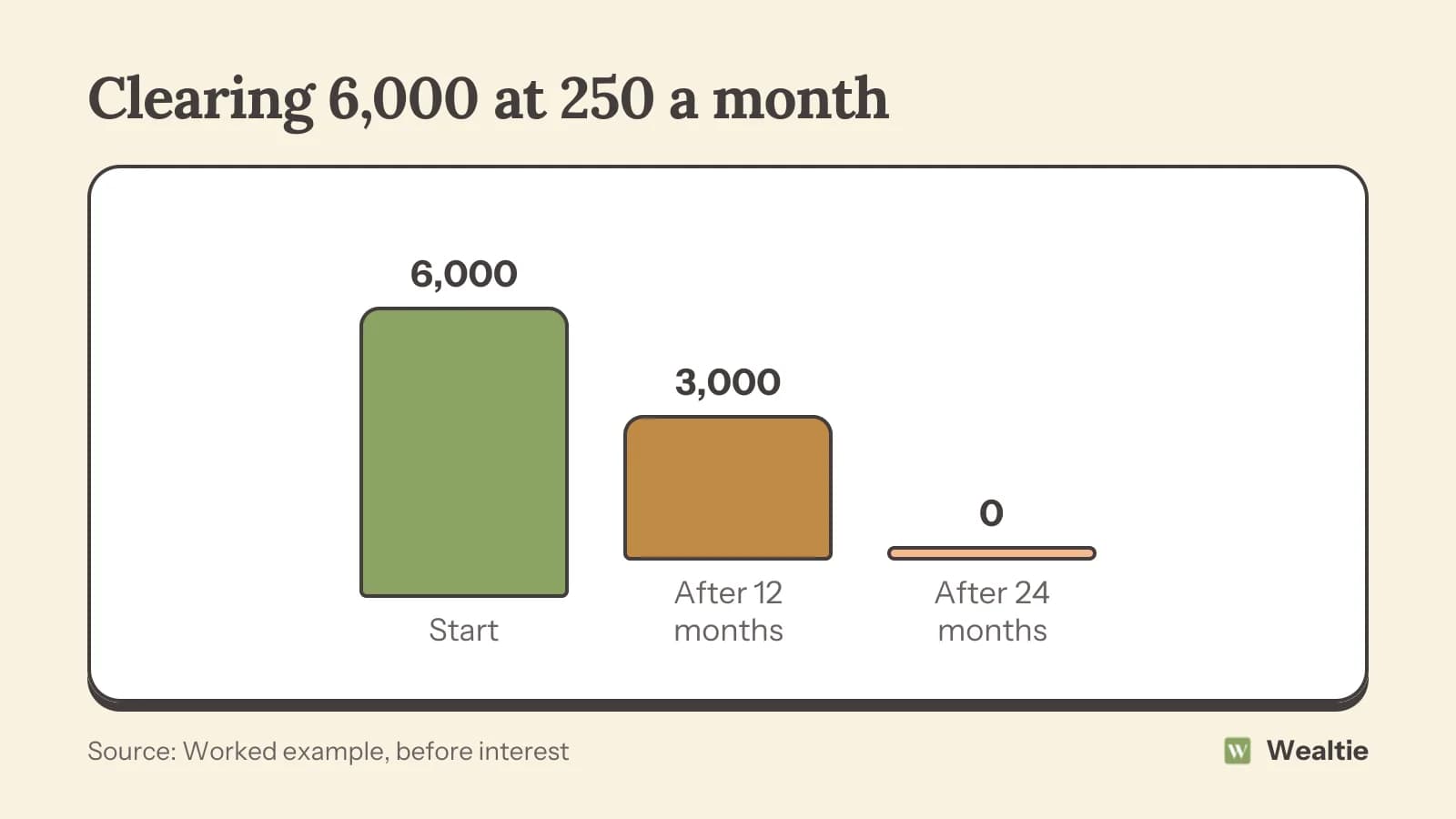
After a year, half is gone, and after two years it's cleared. Interest adds to the time, so tackling the highest-rate debts first, or the smallest first for quick wins, helps. Debt snowball vs avalanche explains both methods. Asking lenders about lower rates or moving to a cheaper option can shorten the time a lot.
Should you help pay it off?
That's a decision for the two of you. Some couples treat debt as a shared problem and pay it down together, especially once married or living together long term. Others keep debts separate, with the partner who owes paying it off themselves. Both can work. What matters is that you agree, and that helping doesn't put your own finances at risk. If you do help directly, agreeing whether it's a gift or a loan avoids confusion later.
Ways to help without taking on the debt
You can support a partner without putting your name on their debt: covering a bigger share of household costs for a while, helping with a budget, cooking at home together to cut spending or celebrating milestones. Avoid moving their debt into your name or lending money you couldn't afford to lose. Encouraging and celebrating progress can matter as much as money.
What if the debt keeps growing?
If debt is rising rather than falling, or your partner is hiding spending, it's a bigger concern. Talk about what's driving it, and suggest free debt advice, which can help with a realistic plan and talking to lenders. Financial red flags in a relationship covers warning signs worth taking seriously.
How does debt affect your plans together?
Debt can affect plans like buying a home, since lenders look at both incomes and debts for a joint mortgage. Being open about debt early helps you plan realistically. It may make sense to delay a big joint commitment until the debt is lower. Money questions to ask before marriage and how to combine finances after marriage cover planning your finances as a couple.
How do you track debt repayment in Wealtie?
Add each debt as an account and update the balance as it falls, so you can both see progress. Track spending in your expense categories and set a monthly limit in the budget tracker, so money for repayments is protected each month.
Questions people ask
Usually not for debts in their name alone, but joint debts and guarantees are shared. Rules vary, so check where you live.
That's for you to agree together. Help in ways that don't put your own finances at risk.
List each debt, agree a monthly amount and use the snowball or avalanche method to pay it down.
Not usually for debts in their name alone, but joint credit can link your financial records.
This article is general information, not financial, tax or legal advice. Your situation is your own; check the numbers that apply to you before you act on them.