Budgeting: The pain of paying: why cards make spending easier
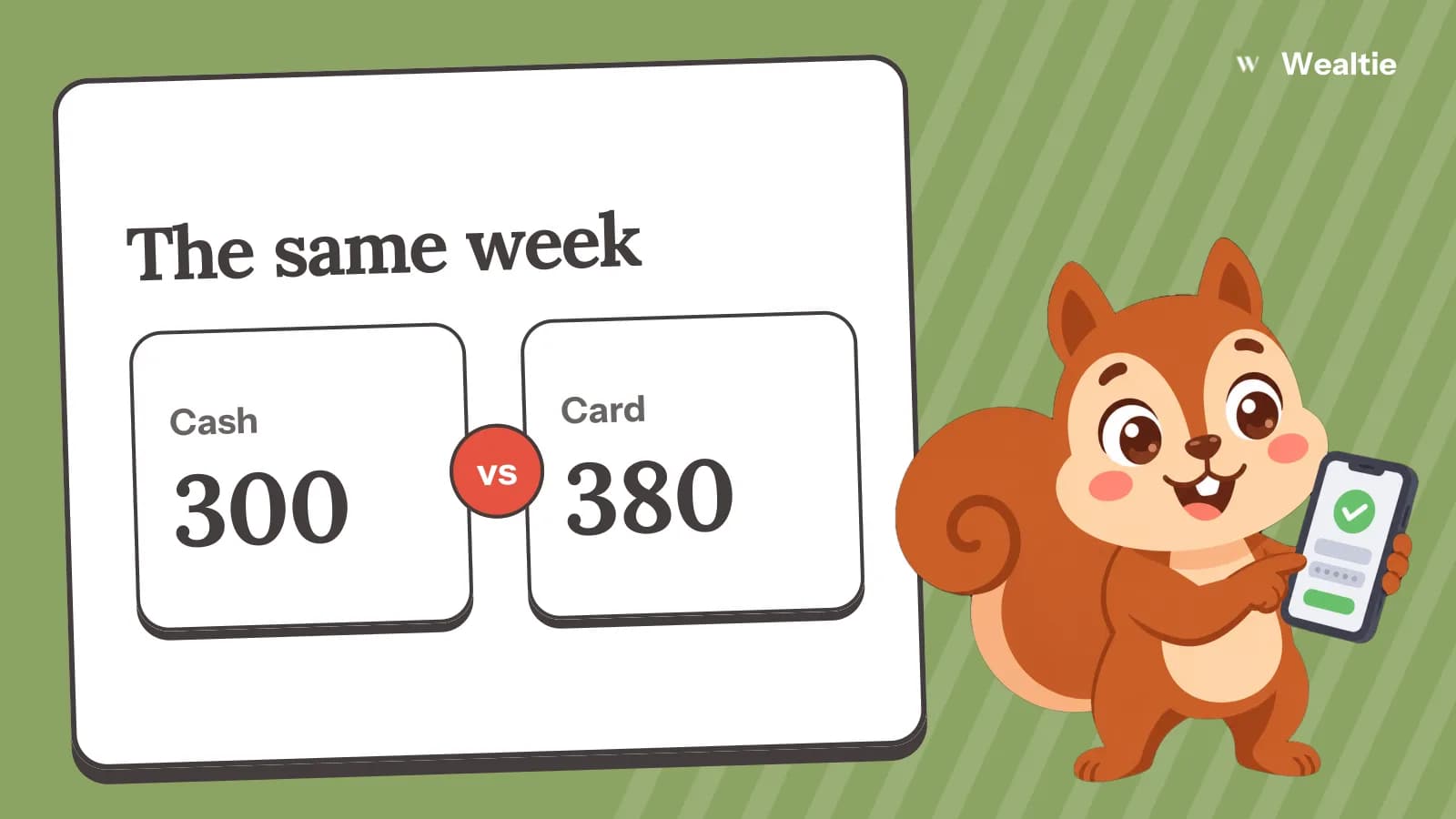
The pain of paying is the small sting you feel when money leaves your hands, and it's strongest with cash. Card taps, saved cards and subscriptions dull that sting, which is why the same week can cost 300 in cash or 380 on a card.
 By Wealtie Team · 3 min read
Key takeaways
- The pain of paying is the discomfort of parting with money, and it helps you spend less.
- Cash feels most painful; saved cards and subscriptions feel almost painless.
- Less friction usually means more spending.
- You can add friction back with cash envelopes, removed saved cards and quick tracking.
What is the pain of paying?
The pain of paying is the discomfort you feel when you hand over money. Researchers in behavioural economics, including Drazen Prelec and George Loewenstein, used the term to describe how paying for something takes away some of the pleasure of buying it. That small sting is useful. It makes you stop and ask if the purchase is worth it, and it nudges you towards spending less.
The strength of the pain depends on how you pay. Counting out notes, watching your wallet get thinner and getting coins back makes the cost very visible. Tapping a card or clicking a saved payment makes it nearly invisible. The price is the same either way, but how much it registers is very different.
Why do cards make spending feel easier?
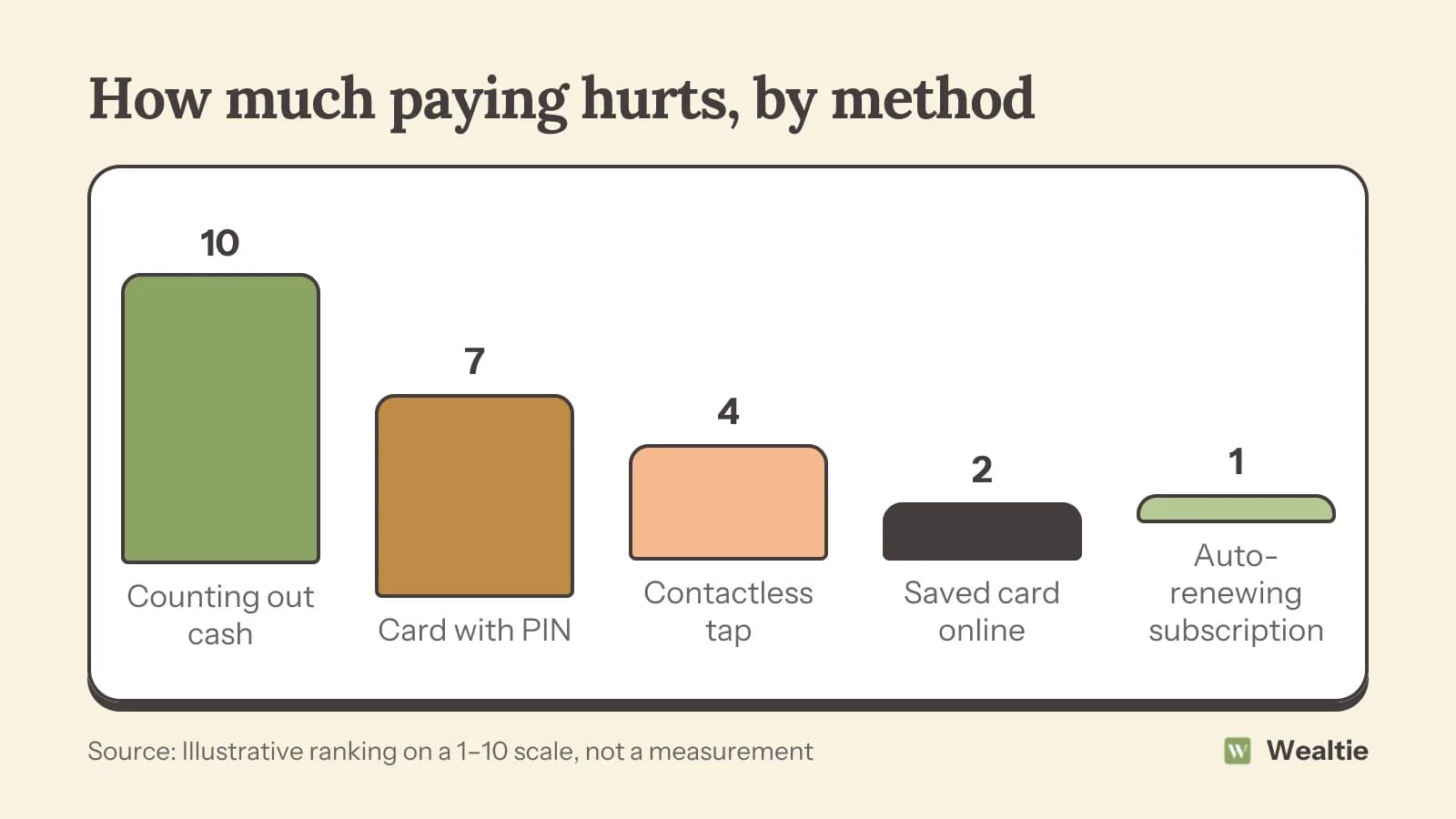
Cards, phones and saved payment details remove most of the moments that make paying feel real. There's no counting, no change and no empty wallet to notice at the end of the day. The money leaves later, in one line on a statement you might not read closely. Here's an illustrative ranking of how painful different payment methods tend to feel, on a scale of 1 to 10:
| Payment method | How much it stings |
|---|---|
| Counting out cash | 10 |
| Card with PIN | 7 |
| Contactless tap | 4 |
| Saved card online | 2 |
| Auto-renewing subscription | 1 |
As the sting gets weaker, spending tends to creep up. A week of groceries, coffee and lunches might come to 300 when you pay in cash, because each purchase feels like a decision. On a card, the same week can drift to 380 without any single purchase feeling like a splurge. That's a made-up example, but the pattern is one many people recognise when they try paying with cash for a month.
Where does low-friction spending add up?
Contactless and phone payments
Small purchases feel weightless when they take a second. Coffees, snacks and convenience-store trips are easy to repeat without noticing the total.
Saved cards and one-click checkout
When your card is stored, there's no pause to type in numbers and think again. Online shopping becomes as easy as browsing.
Subscriptions
After the first payment, you never actively pay again, so there's almost no pain at all. That's why subscriptions are easy to forget. How to cut subscription costs covers finding the ones you no longer use.
Buy now, pay later
Splitting a price into small instalments shrinks the pain at checkout and moves it into the future. Buy now, pay later covers the risks.
How do you use the pain of paying to spend less?
Pay cash for problem categories
You don't need to go cash-only. Choose the one or two categories where you overspend, like eating out or groceries, and pay those in cash for a month. Envelope budgeting works on the same idea.
Remove saved cards
Delete your card from shopping sites and apps. Typing the number in each time adds a few seconds of friction, which is often enough to change your mind.
Turn off one-click buying
Many shops let you disable instant checkout. Adding a basket step gives you a moment to reconsider.
Review subscriptions on a schedule
Put a reminder in your calendar every few months to check what you're paying for. Seeing the full list brings back some of the pain that auto-renewal removes.
Log spending as it happens
Writing down each purchase, even a coffee, puts back some of the sting that cards take away. It's a small act of counting, like handing over notes. How to track cash spending covers doing it quickly.
Wait before larger purchases
For anything over a set amount, wait a day before buying. How to stop impulse buying covers waiting rules that work.
It's worth saying that the pain of paying isn't something to remove completely. A little discomfort when money leaves your account is a healthy signal that keeps spending in line with what matters to you. The aim is to keep enough friction on the purchases you tend to regret, while letting bills and planned spending run smoothly in the background. Many people find a mix works best: automatic payments for rent and bills, and a pause for everything else.
How does Wealtie help bring the pain back?
Logging each purchase in Wealtie takes a few seconds and shows you the running total in each of your expense categories. Set a monthly budget for the categories where card spending drifts, and you'll see how much is left before every tap, which brings back the pause that cash used to give.
Questions people ask
The pain of paying is the discomfort you feel when you hand over money. It makes you think twice and tends to keep spending lower.
Many people find they spend more with cards, because tapping or clicking makes the cost feel less real than counting out notes.
You don't need to go fully cash. Paying cash for one or two problem categories, like eating out, is often enough to cut spending.
Remove saved cards from shopping sites, turn off one-click buying, log purchases as you make them and set a budget for each category.
This article is general information, not financial, tax or legal advice. Your situation is your own; check the numbers that apply to you before you act on them.