Budgeting: How to organise financial documents so you can find anything fast
To organise financial documents, sort them into a few clear groups, keep each for as long as you need it and store paper and digital copies in the same simple system. An hour to set up and ten minutes a month keeps everything easy to find.
 By Wealtie Team · 3 min read

Key takeaways
- To organise financial documents, sort them into a few clear groups.
- Keep each type for as long as you need it, then shred it safely.
- Use the same folders for paper and digital copies.
- An hour to set up and ten minutes a month keeps it tidy.
Why organise financial documents?
Financial paperwork has a way of piling up: bank statements, payslips, bills, insurance policies, tax letters, receipts and warranties. When it's scattered across drawers, inboxes and downloads folders, finding one document when you need it can take an hour. A simple system means you can find a payslip for a rental application, a warranty for a broken fridge or a policy number for an insurance claim in seconds.
It also helps your family. If something happened to you, an organised set of documents would make it far easier for someone you trust to manage your affairs.
What financial documents should you keep?
Most documents fall into a few groups. Sorting them this way makes the system easy to use.
Income
Payslips, invoices if you're self-employed, and any letters about benefits or pensions. These help with tax returns, loan applications and checking you've been paid correctly.
Banking and debts
Statements for current accounts, savings, credit cards and loans. Many people now keep these digitally and download them from their bank.
Bills and contracts
Energy, water, phone, internet and subscriptions, plus contracts that show prices and notice periods. How to organise bills covers keeping on top of regular payments.
Insurance
Policies for home, car, travel, health and life, with renewal dates and policy numbers.
Tax
Tax returns, letters from the tax office and records that support anything you've claimed.
Home and big purchases
Mortgage or rental agreements, receipts for expensive items and warranties.
Important personal papers
Birth and marriage certificates, passports, a will and any power of attorney. The cost of writing a will covers getting one in place.
How long should you keep financial documents?
It depends on the document and the rules where you live, especially for tax. As a rough guide, keep receipts until a return or warranty period ends, statements for a year unless you need them for tax, tax records for as long as your tax office says, and important personal papers for good. Check local rules for tax records, since they vary and can be several years.
How do you set up a simple system?
Here's a worked example of the time it takes to set up and keep a simple system:
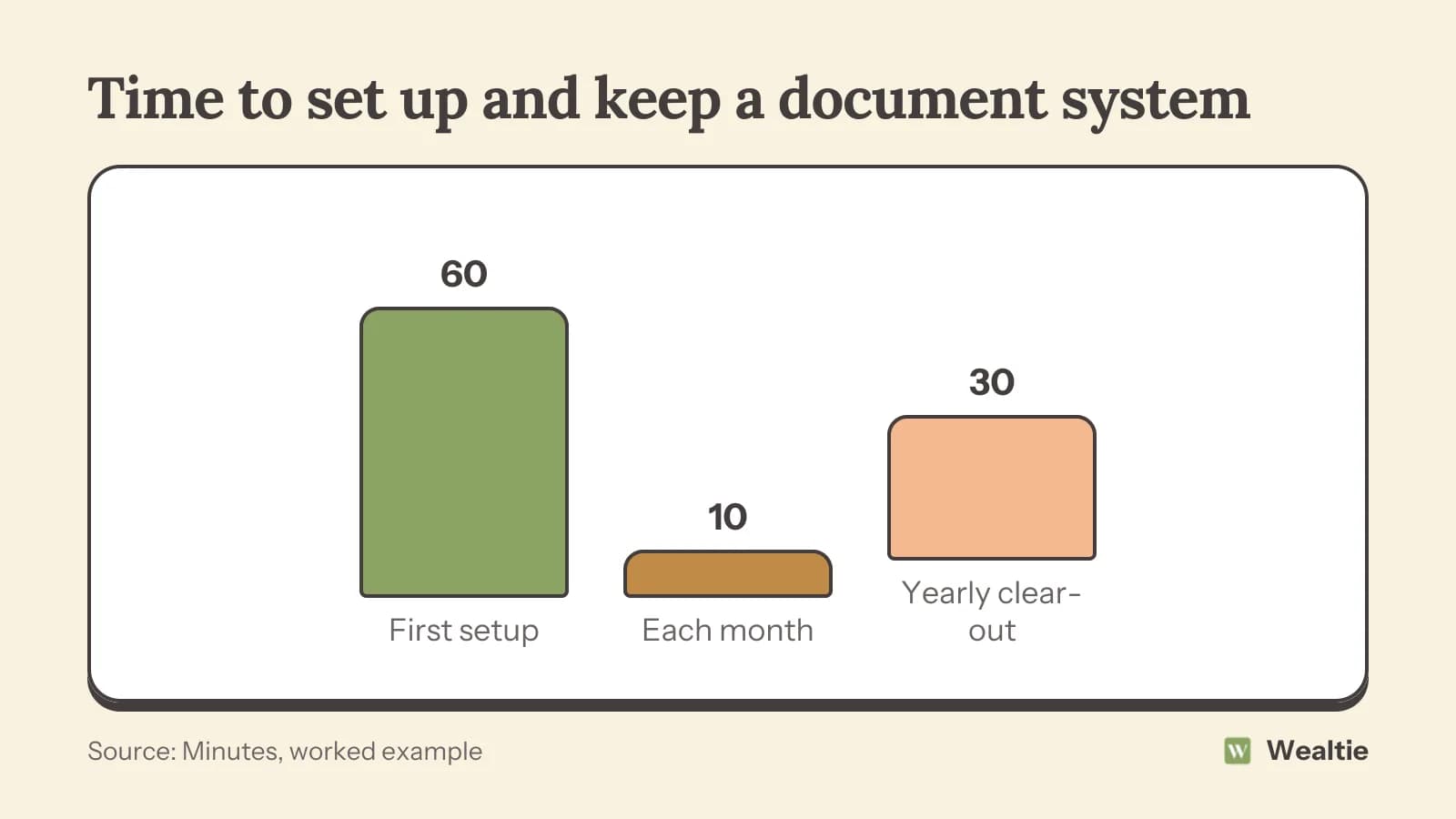
An hour to start, ten minutes a month and half an hour once a year is all most households need.
Gather everything in one place
Collect paperwork from drawers, bags and your inbox. It looks like a lot, but sorting goes quickly once it's all together. Put on some music, make a drink and work through one pile at a time. Most people find that much of the pile is junk mail, old envelopes and duplicates that can go straight in the recycling or shredder.
Use the same groups for paper and digital
Make a folder for each group, both in a filing box and on your computer or cloud storage. Using the same names in both places means you always know where to look.
Scan what you can
Scanning paper documents with your phone saves space and gives you a backup. Keep originals of important papers, like certificates and wills.
Shred what you don't need
Old documents with account numbers or personal details should be shredded, not thrown away whole. It protects you from identity theft. How to avoid money scams covers more ways to protect yourself.
Keep a short master list
A single page listing your accounts, policies and where each document is kept is useful for you and anyone who might need to help you.
How do you keep it tidy?
Spend ten minutes once a month filing new documents and deleting downloads you don't need. Once a year, do a bigger clear-out: shred anything past its keep-by date and check that policies and contacts are up to date. Spring clean your finances is a good time to do it, and how to read a bank statement helps when checking old statements.
Keep it safe
Store important papers somewhere safe from fire and water, and protect digital folders with a strong password and a backup.
If you share finances with a partner, set up the system together, so you both know where things are. It saves a stressful search if one of you is away or unwell when a document is needed.
How does Wealtie help keep records in order?
Log spending and income in expense categories and add regular bills as recurring transactions, so you have a clear record of what you pay and when. Wealtie can export your data as a ZIP of CSV files, which you can save in your digital finance folder each year.
Questions people ask
Sort them into a few groups, such as income, banking, bills, insurance, tax, home and personal papers, and use the same folders for paper and digital copies.
Keep receipts until return or warranty periods end, statements for a year unless needed for tax, tax records as long as local rules require and personal papers for good.
Yes, scanning saves space and gives you a backup. Keep originals of important papers like certificates and wills.
Shred anything with account numbers or personal details, rather than throwing it away whole.
This article is general information, not financial, tax or legal advice. Your situation is your own; check the numbers that apply to you before you act on them.