Budgeting: How to read a bank statement and spot what's costing you
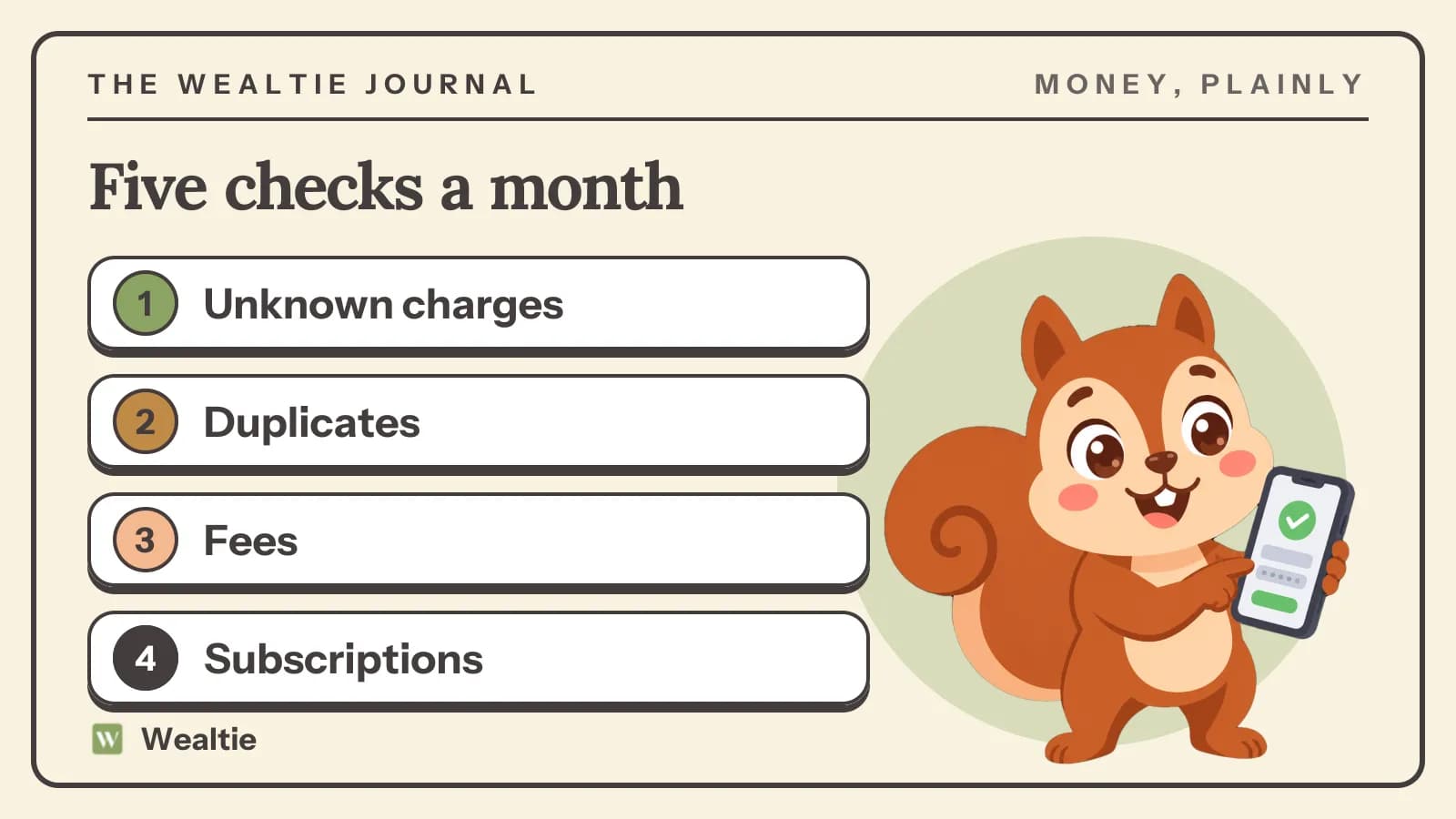
To read a bank statement, start with the opening and closing balance, then go down the transactions checking each one is yours. How to read a bank statement well comes down to five checks: unknown charges, duplicates, fees, subscriptions and refunds.
 By Wealtie Team · 3 min read
Key takeaways
- A bank statement shows an opening balance, every transaction in the period, and a closing balance.
- Check five things each month: charges you don't recognise, duplicates, fees, subscriptions and refunds that should have arrived.
- Card payments can show under a company's legal or payment-processor name, so search the name before assuming fraud.
- Report anything you didn't authorise to your bank quickly, since there are often time limits on disputes.
How do you read a bank statement?
Start at the top and work down. A statement covers a set period, usually a month, and shows three things: what was in the account at the start, every transaction in between, and what was left at the end. Most statements list transactions in date order, with money in and money out in separate columns or marked with a minus sign.
The opening balance plus everything that came in, minus everything that went out, should equal the closing balance. If you're checking by hand, that's the first sum to do.
What does each part of a statement mean?
Here's a short worked example in round numbers that work in any currency:
| Date | Description | Out | In | Balance |
|---|---|---|---|---|
| 1 Nov | Opening balance | 1,450.00 | ||
| 2 Nov | POS GROCER 2231 | 42.80 | 1,407.20 | |
| 3 Nov | DD LANDLORD RENT | 1,100.00 | 307.20 | |
| 25 Nov | SALARY ACME LTD | 2,800.00 | 3,107.20 | |
| 26 Nov | STREAMCO 12-MONTH | 15.99 | 3,091.21 | |
| 28 Nov | ATM FEE | 2.50 | 3,088.71 | |
| 30 Nov | Card payments, other | 1,876.71 | 1,212.00 |
The description is the part people find hardest. It's often a shortened company name, a reference number, or a code for the type of payment.
What do the codes and abbreviations mean?
They vary by bank and country, but these are common:
- DD: direct debit, a payment a company takes from your account with your permission
- SO: standing order, a regular payment you set up yourself
- POS: point of sale, a card payment in a shop
- ATM: a cash withdrawal, sometimes with a fee shown separately
- CHQ: a cheque
- TFR or FT: a transfer, often between your own accounts
Your bank's website or app usually has a list of the codes it uses. If you see one you don't know, look it up there before assuming it's a mistake.
What should you check every month?
Five things:
- Charges you don't recognise. Search the name online first. Card payments often show under a company's legal name or the name of the payment processor, not the shop's name.
- Duplicates. The same amount from the same place on the same day can be a mistake.
- Fees. Overdraft fees, foreign transaction fees, ATM fees, account fees. Most overdraft fees can be avoided with a small buffer and balance alerts.
- Subscriptions. Including free trials that turned into paid ones and yearly renewals.
- Refunds. Returns and cancelled orders that should have come back.
This takes ten minutes once a month. It's also where most people find a subscription they forgot about.
What should you do about a charge you don't recognise?
Try to identify it first. Search the exact description, check your email for a receipt from around that date, and ask anyone else who uses the card. Many unknown charges turn out to be a familiar company under a different name.
If it's still unknown, contact your bank straight away. Card payments can usually be disputed, and banks often have time limits for reporting unauthorised transactions, so don't wait for next month's statement. If you think your card details have been stolen, ask for the card to be blocked and replaced.
What's the difference between pending and cleared?
A pending transaction has been authorised but hasn't fully gone through. A cleared one has. Your app may show pending payments that won't appear on the statement until they clear, and the amount can sometimes change, for example when a hotel or petrol station takes a holding amount.
That's one reason your app's balance and your own record can differ for a few days. How much to keep in checking explains why a small cushion helps with timing.
How can a statement help your budget?
It's the most complete record of where your money went, so it's a good starting point for a budget. Go through one month and give every line a category: rent, groceries, eating out, transport, subscriptions and so on. Add each category up. That's what your month looks like, and it's often different from what you'd guess.
How to make a budget starts from exactly this. Doing it for three months gives you a more reliable average. Keep statements for at least a year, or longer if you're self-employed, since you may need them for tax or a loan. Download them as PDFs, because some banks only keep a limited history online.
How do you keep your records in line with Wealtie?
Log spending as you go, then compare with your statement once a month. If an account in Wealtie doesn't match the closing balance, look for missing lines first, then use Update Balance to correct any leftover difference without counting it as spending. Your expense categories show the month by category, and the expense tracker page covers logging.
Questions people ask
Check the opening and closing balance, then go through each transaction to make sure you recognise it. Look for unknown charges, duplicates, fees, subscriptions and missing refunds.
DD usually means direct debit, a payment a company takes from your account with your permission. Codes vary by bank, so check your bank's list.
Card payments often appear under a company's legal name or its payment processor's name. Search the description and check your email for a matching receipt.
Contact your bank straight away, since there are often time limits for disputes. Ask for the card to be blocked if you think the details were stolen.
This article is general information, not financial, tax or legal advice. Your situation is your own; check the numbers that apply to you before you act on them.



