Income & freelancing: How much does it cost to run an online shop?
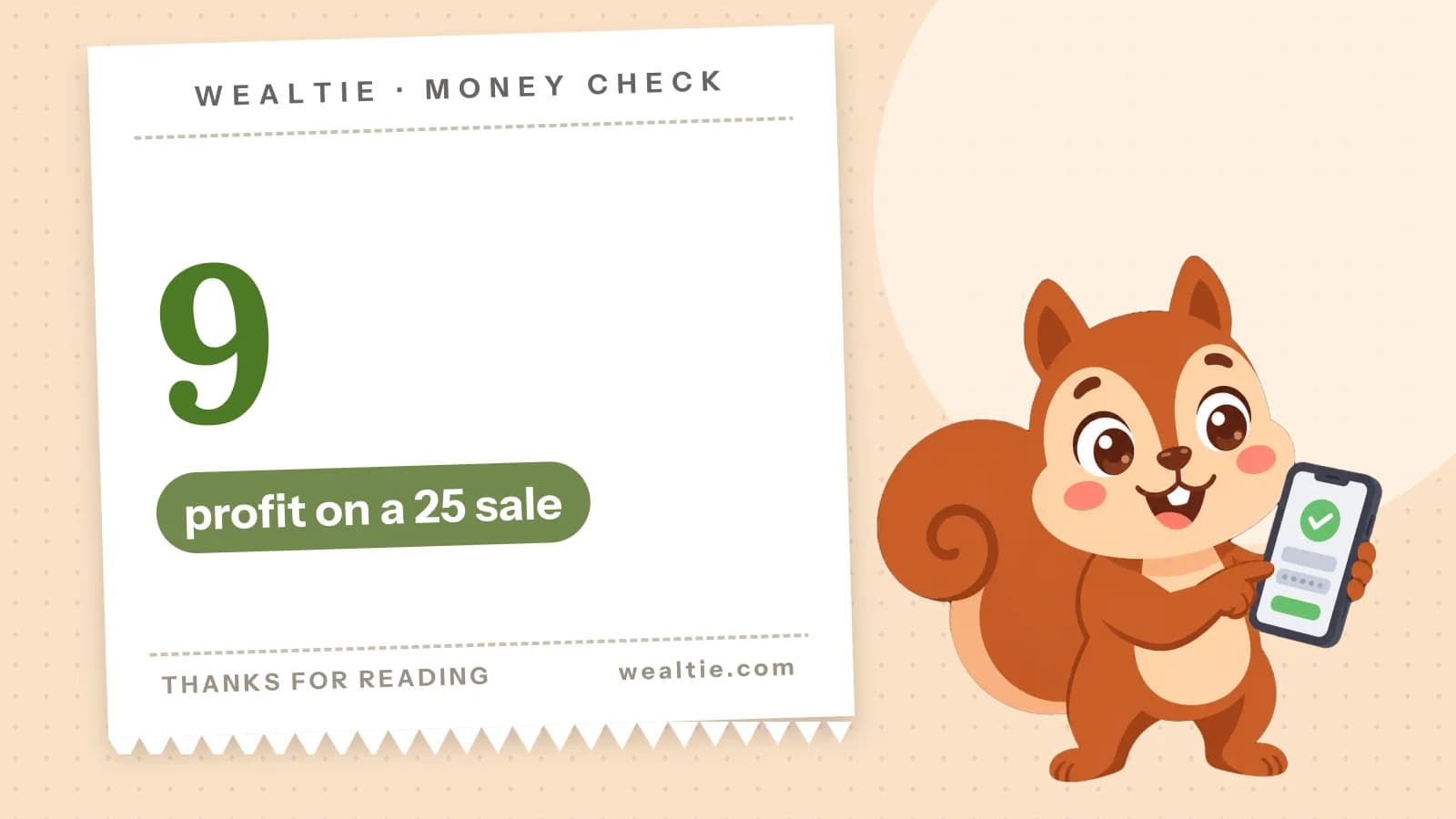
The cost to run an online shop goes beyond the stock you sell, with platform fees, payment fees, packaging, postage and marketing coming out of each sale. In a worked example, a 25 sale leaves about 9 of profit once those costs are counted.
 By Wealtie Team · 3 min read
Key takeaways
- The cost to run an online shop includes fees, packaging, postage and marketing, not just stock.
- In a worked example, a 25 sale leaves about 9 of profit.
- Price products to cover every cost per sale, plus your time.
- Track costs per sale, since small fees add up across many orders.
How much does it cost to run an online shop?
More than many new sellers expect, and the small costs are the ones most often missed. Online shops make it easy to reach customers, but every sale carries costs: platform fees, payment processing, packaging, postage and often marketing. On top of that, there may be monthly subscription fees for the shop platform or tools. Knowing the full cost of each sale helps you price properly and see whether the shop is profitable. Many new sellers find their first prices barely cover costs once everything is counted.
Where does each sale go?
Here's a worked example of a 25 sale, in round numbers that work in any currency:
| Amount | |
|---|---|
| Product cost | 8 |
| Postage and packaging | 4 |
| Platform and payment fees | 3 |
| Marketing | 1 |
| Profit | 9 |
| Sale price | 25 |
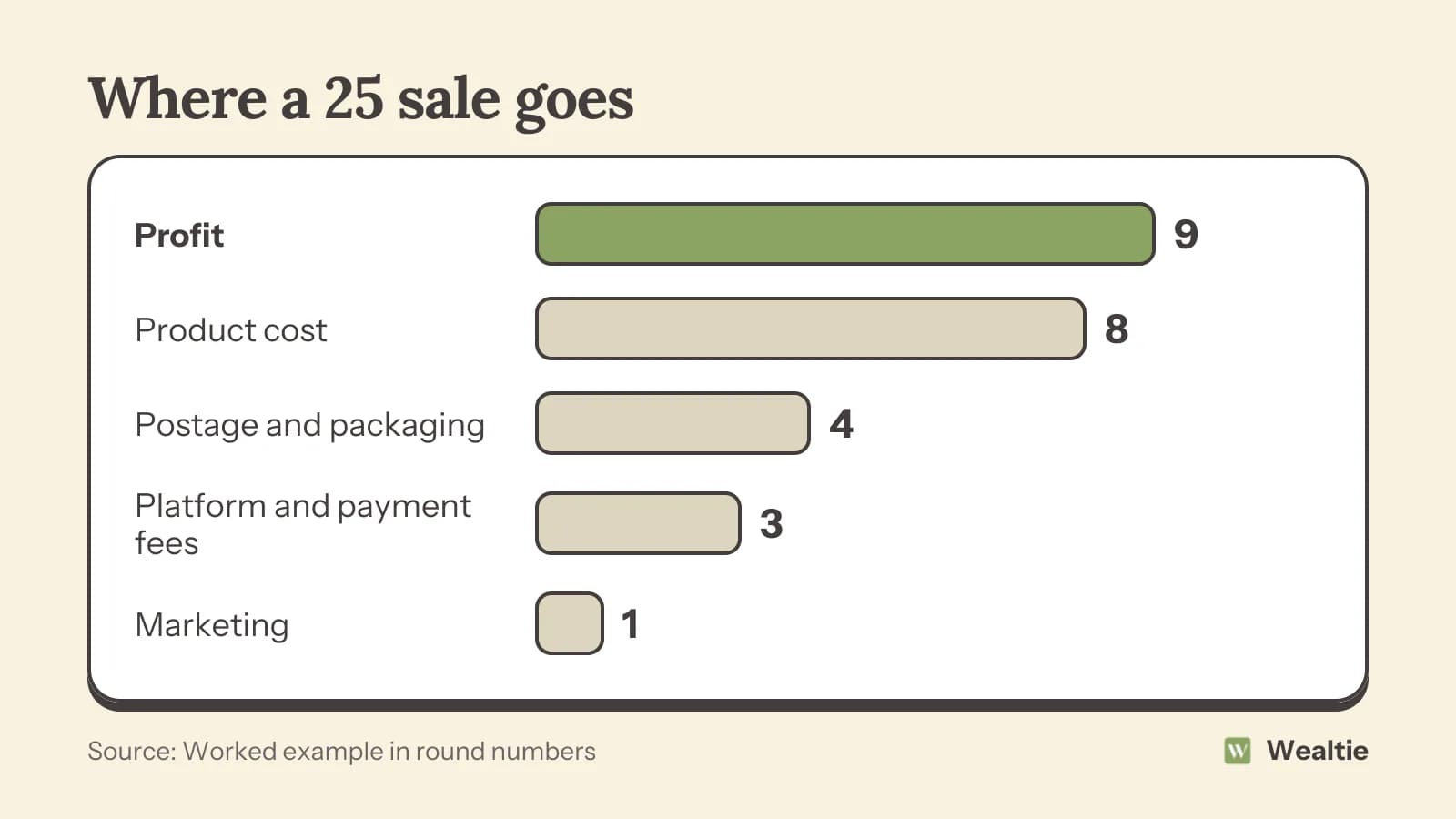
In this example, about 9 of every 25 sale is profit. Your own figures depend on what you sell, your platform and how you deliver orders. Heavier or bulkier items usually cost more to post, which eats into profit.
What are the main costs?
Platform and payment fees
Marketplaces often charge listing fees and a cut of each sale. Your own website may have a monthly subscription, like 20 in a worked example, plus payment processing fees on each order.
Stock or materials
The cost of the products you sell, or the materials to make them. Buying in bulk can lower the cost per item, but ties up money in stock. Starting with small quantities lets you see what sells before buying more.
Packaging and postage
Boxes, mailers, tape and labels, plus postage. Offering free delivery means you pay it, so build it into your price. Weighing parcels accurately avoids paying for a bigger postage band than needed.
Marketing
Paid adverts, promoted listings or social media tools. Many sellers start with free marketing and spend more as they grow. Tracking which marketing brings sales helps you spend only on what works.
Subscriptions and tools add up
Beyond per-sale fees, many shops pay for apps, design tools, email software or a domain name. Each might be small, but together they can be a large monthly cost. Listing them and cancelling any you don't use keeps your fixed costs low.
How do you price for a profit?
Add up every cost per sale, then add a margin for your time and profit. Check competitors' prices, but don't just match the cheapest; price for the quality and service you offer. If your profit per sale is very small, a few returns or a fee increase can wipe it out. How to price and track income from selling crafts covers pricing for handmade items.
Count returns
Returns cost postage and sometimes the product itself. Clear descriptions and photos reduce returns, and a returns policy that's fair but not too generous protects your profit.
Know your break-even point
Your fixed monthly costs, like platform subscriptions and tools, need to be covered before you make a real profit. Dividing them by your profit per sale shows how many sales a month you need just to break even. Knowing that number helps you set realistic goals.
How do you keep costs down?
Compare platforms' fees, buy packaging in bulk, choose the right postage service for your parcel sizes and test small marketing budgets before spending more. Reviewing your costs every few months catches fee changes and spending that's crept up. Platforms sometimes raise fees with little notice, so recheck your profit when they do.
Watch cash flow
Online shops often pay out sales after a delay, while stock and packaging are paid upfront. Keeping a small buffer for stock purchases stops a busy month from leaving you short. Ordering stock only when you have the cash avoids borrowing to grow.
Do you need to pay tax?
In many countries, regular online selling counts as a business, and profits are taxable once they pass a threshold. Keep records of every sale and cost. How to set aside money for taxes and the self-employed expenses list cover the basics.
How do you know if your shop is worth it?
Compare your monthly profit with the hours you spend. How much should a side hustle make helps you judge whether the time is worth the money, and how to track side hustle income helps you keep clear records.
How do you track an online shop in Wealtie?
Log shop payouts in the income tracker, and record stock, fees, packaging and postage in their own expense categories. Pro adds income analytics to compare months, so you can see which seasons and products earn most.
Questions people ask
Platform and payment fees, stock, packaging, postage and marketing. In a worked example, a 25 sale leaves about 9 of profit.
Add every cost per sale, plus a margin for your time and profit.
Only if you build the cost into your prices, since you pay the postage.
In many countries, regular selling counts as a business once profits pass a threshold. Keep records.
This article is general information, not financial, tax or legal advice. Your situation is your own; check the numbers that apply to you before you act on them.