Income & freelancing: How much does it cost to start a small business?
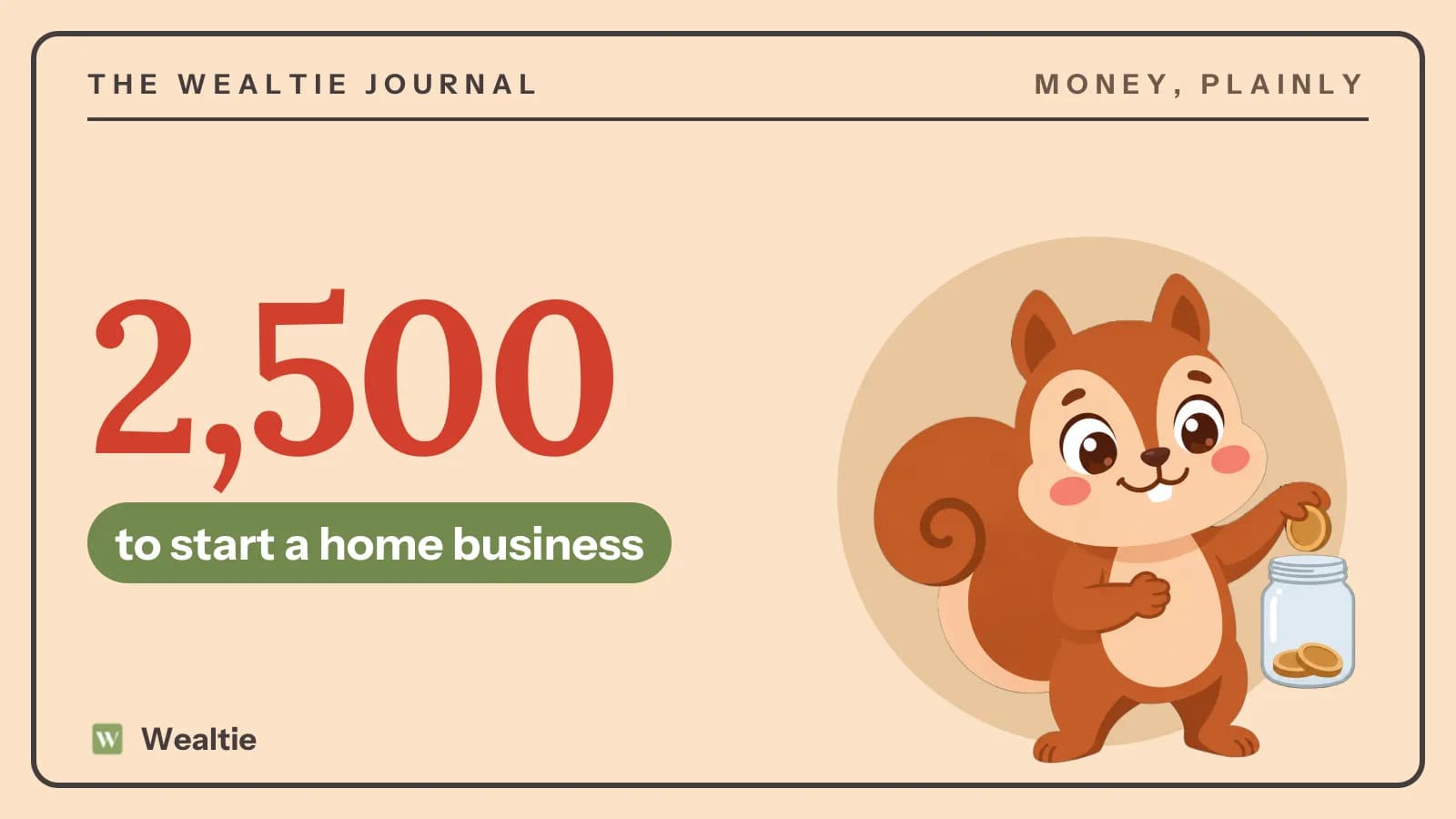
The cost to start a small business depends on the type of business, but most need equipment, registration, insurance, some marketing and a cash buffer. In a worked example, a small home-based service business costs about 2,500 to start, plus a buffer for the first few months.
 By Wealtie Team · 3 min read
Key takeaways
- The cost to start a small business depends on the type, but most need equipment, insurance, marketing and a buffer.
- In a worked example, a home-based service business costs about 2,500 to start.
- Starting lean, with only what you need to make your first sale, keeps risk low.
- Keep a cash buffer for the months before income becomes steady.
How much does it cost to start a small business?
It depends a lot on the business, and on how much you can start with what you already have. A service business run from home, like design, tutoring or bookkeeping, can start with very little. A shop, café or business that holds stock needs much more. Whatever you're starting, the main costs usually fall into a few groups: equipment, registration, insurance, marketing and a cash buffer to live on while the business grows. Listing them before you begin helps you avoid surprises and decide how much to save first.
Rules for registering and running a business vary by country, so check what applies where you live.
What does a small business cost to start?
Here's a worked example for a home-based service business, in round numbers that work in any currency:
| Cost | Amount |
|---|---|
| Equipment and software | 1,200 |
| Website and marketing | 500 |
| Insurance | 300 |
| Registration and accounting setup | 300 |
| Supplies and other | 200 |
| Total | 2,500 |
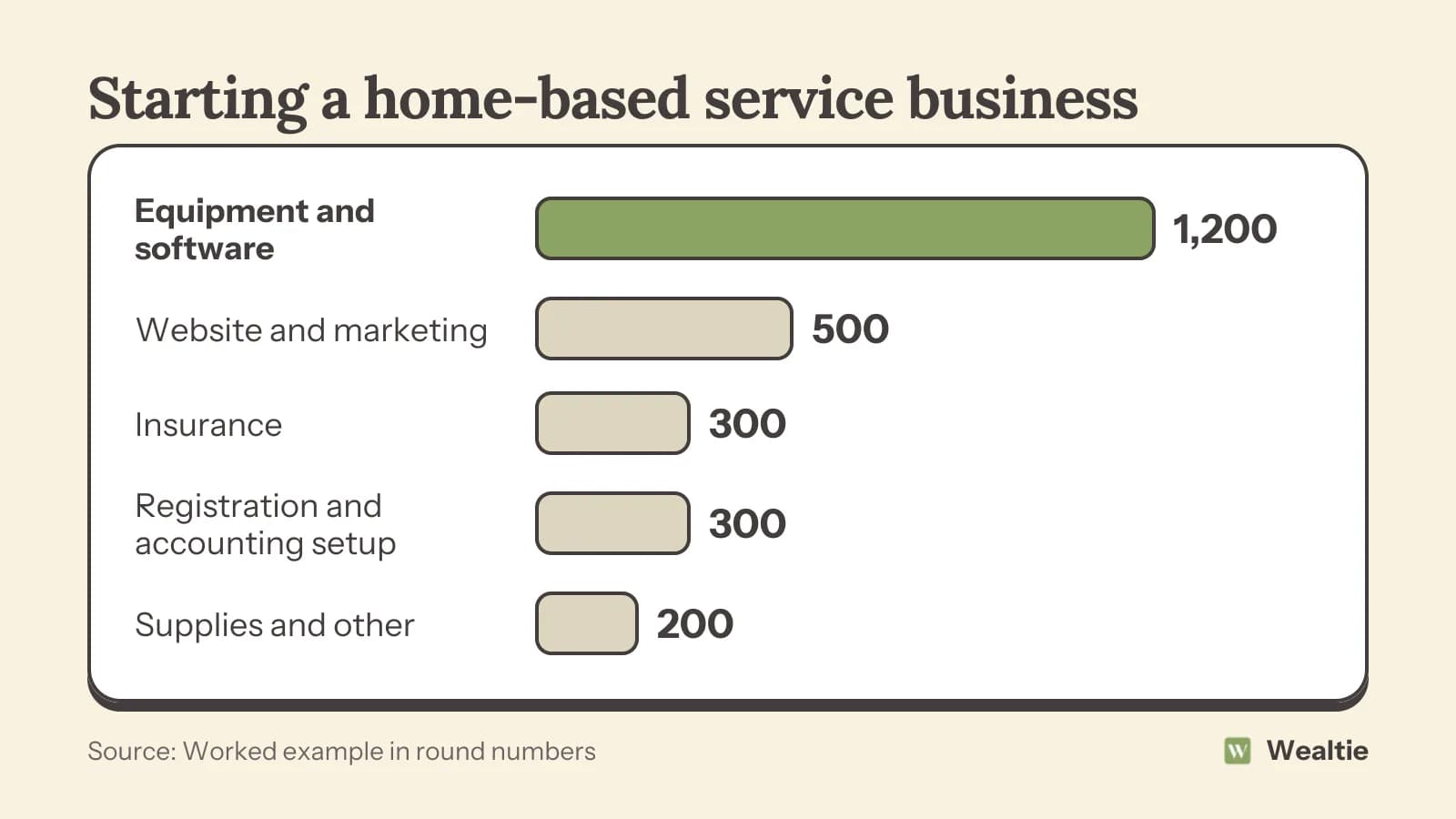
Your own costs depend on what you need to deliver your service or product. A business that needs premises, stock or vehicles can cost many times more. Getting quotes for each item turns a rough guess into a real figure.
What are the main startup costs?
Equipment and software
A laptop, phone, tools or specialist equipment, plus software subscriptions. Use what you already have where you can, and buy second-hand for the rest. Free versions of many software tools are enough to start with.
Registration and legal
Registering a business, getting licences or permits and setting up a business bank account. Some businesses also need professional advice to choose the right structure.
Insurance
Public liability, professional indemnity or equipment insurance, depending on what you do. It protects you if something goes wrong. Some clients require it before they'll hire you, so check early.
Marketing
A simple website, business cards, social media and perhaps some paid adverts. Many businesses start with free marketing, like word of mouth and social media, then spend as they grow. Asking early customers for reviews and referrals is one of the cheapest ways to find more.
Why do you need a cash buffer?
Because income often takes time to build. Clients may be slow to come, and invoices may be paid weeks after the work. A buffer to cover your personal costs for a few months means you can give the business time without panic. In a worked example, three months of personal costs at 1,500 a month is 4,500. How to save before going freelance covers building one.
How do you start lean?
Spend only what you need to make your first sale. Test your idea with a few customers before investing heavily. Many successful businesses start small, using personal equipment and free tools, and reinvest early income into growth. It keeps your risk low and helps you learn what customers want before spending on the wrong things.
Keep your job while you start
Some people start their business alongside a job, working on it in evenings or weekends until it earns enough. It's slower, but much less risky. It also lets you test whether customers want what you offer before giving up a steady income.
Plan your first year
Write a simple plan for the first year: what you'll sell, who to, at what price, and roughly how many sales you need to cover costs and pay yourself. It doesn't need to be long. Checking it every few months shows whether you're on track and where to adjust, before money runs low.
How do you keep track of business money?
Keep business and personal money separate from the start, and record every cost and payment. It makes tax much easier and shows whether the business is profitable. The self-employed expenses list covers common costs, and how to set aside money for taxes covers saving for tax.
Where can you get help with startup costs?
Some places offer small business grants, startup loans or free advice services for new businesses. Local business networks and libraries often run free workshops. Check what's available before borrowing. Be careful with personal credit cards for business costs, since debt can build quickly while income is uncertain.
How do you track a new business in Wealtie?
Add separate accounts for business and personal money, and record transfers between them, which aren't counted as spending. Log business income in the income tracker and costs in their own expense categories, so you can see whether the business is covering its costs.
Questions people ask
In a worked example, a home-based service business costs about 2,500 to start, plus a cash buffer. Costs depend on the type of business.
Equipment, registration, insurance, marketing and a cash buffer for personal costs.
Start lean with what you have, test the idea with a few customers and reinvest early income.
Enough to cover personal costs for a few months. In a worked example, 4,500 for three months.
This article is general information, not financial, tax or legal advice. Your situation is your own; check the numbers that apply to you before you act on them.