Income & freelancing: Can you make money renting out your car?
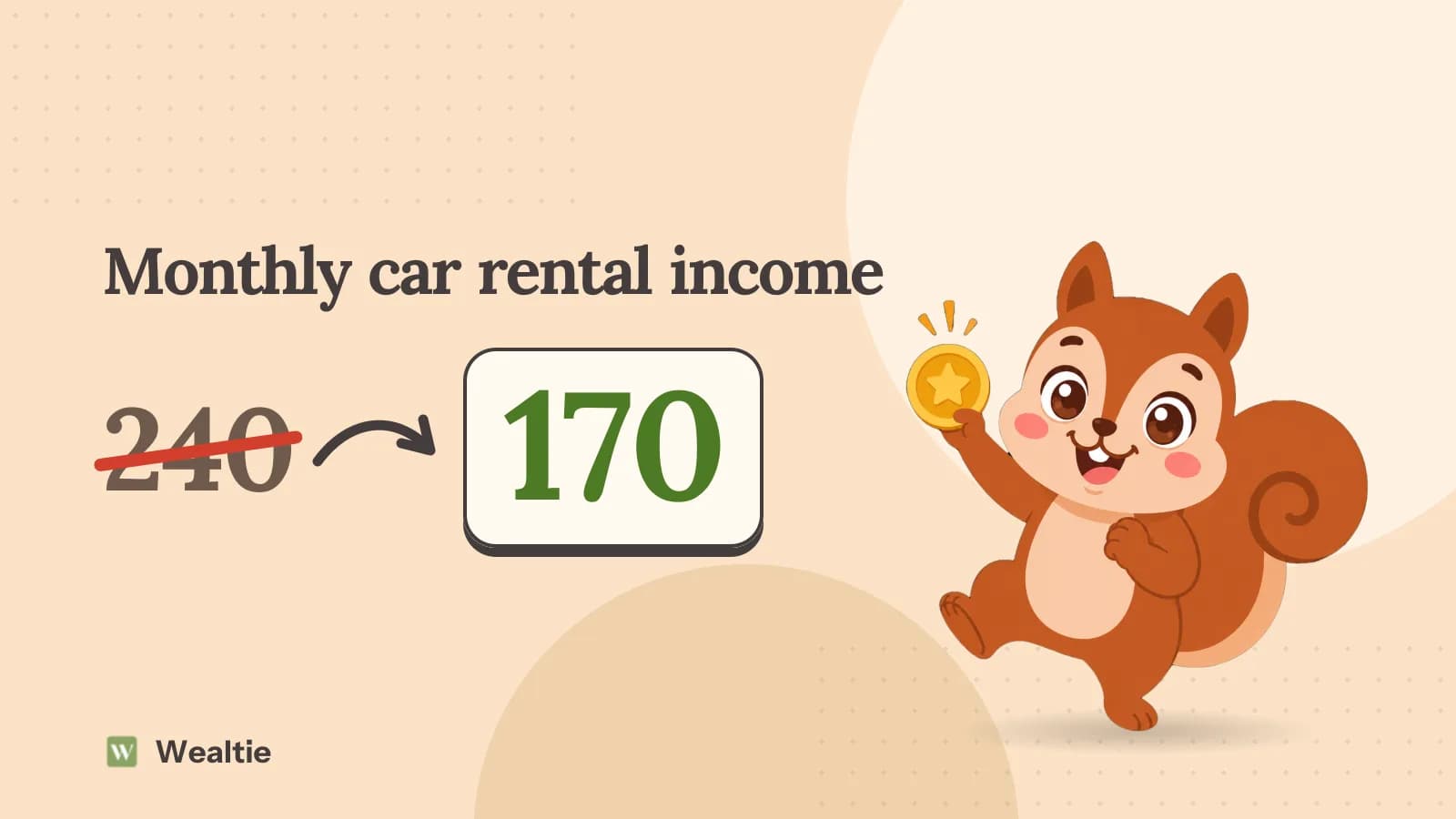
Renting out your car through a peer-to-peer platform can bring in extra money when you're not using it, but wear, insurance and admin reduce what you keep. In a worked example, renting a car out eight days a month brings in about 240, or about 170 after extra costs.
 By Wealtie Team · 3 min read
Key takeaways
- Renting out your car can bring extra income when you're not using it.
- In a worked example, eight days a month brings about 240, or 170 after extra costs.
- Check insurance carefully, since personal policies usually don't cover rentals.
- Extra wear, cleaning and your time reduce what you keep.
Can you make money renting out your car?
Yes, if your car often sits unused and you're comfortable with other people driving it. A car parked for days at a time still costs insurance, tax and depreciation, so earning something from it can help. Peer-to-peer car rental platforms let you list your car for others to rent by the day, usually with insurance arranged through the platform. If you work from home, use public transport or have a second car, renting out your car can help cover its costs. Some owners find it covers insurance or servicing for the year.
Rules, insurance and platform availability vary between countries, so check what applies where you live.
How much could you earn?
Here's a worked example of renting a car out eight days a month, in round numbers that work in any currency:
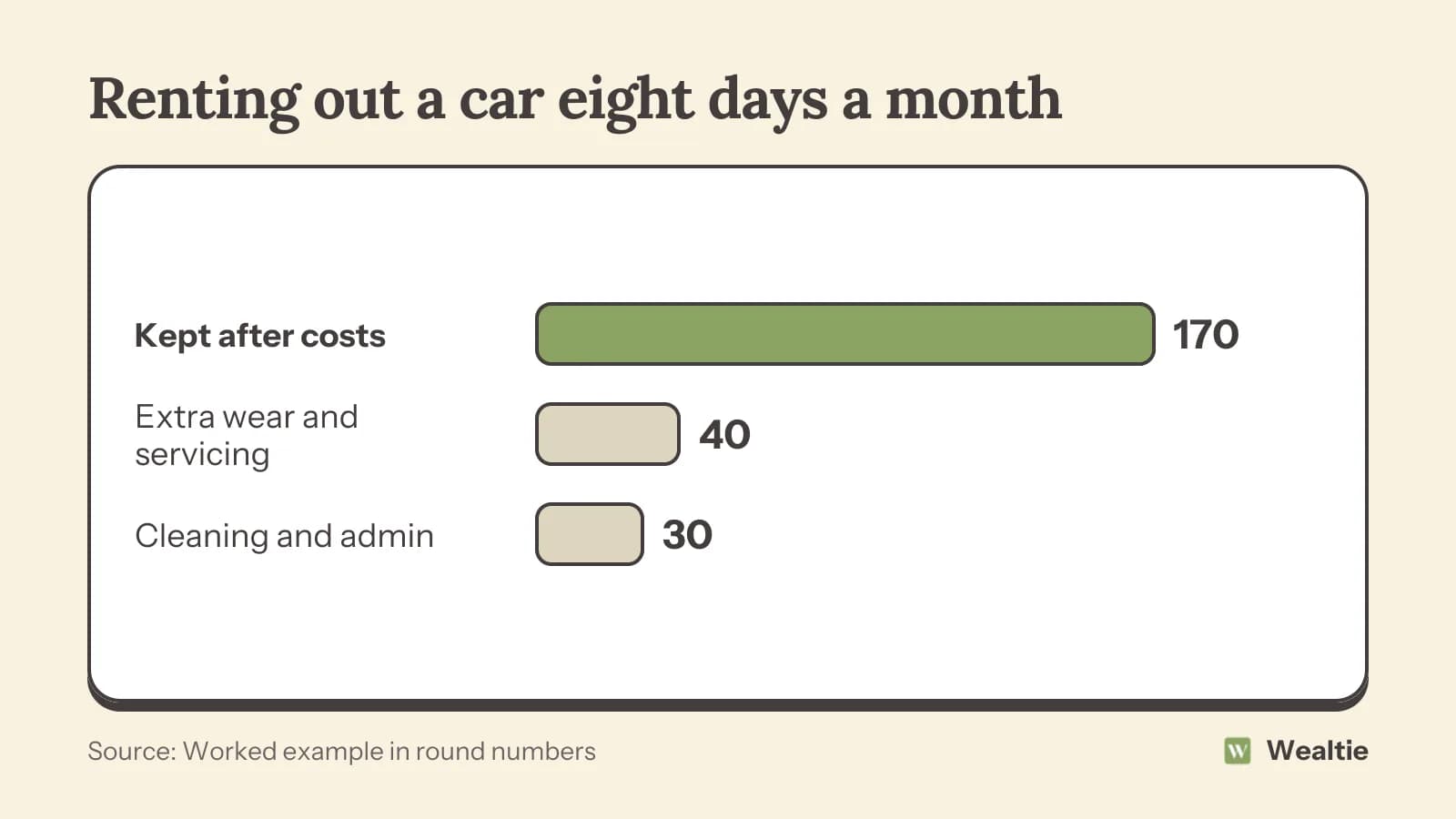
At about 30 a day after platform fees, eight days brings in about 240. After allowing for extra wear and servicing, cleaning and admin, about 170 is left. Your own earnings depend on your car, location, demand and how often you rent it out. Weekends and holidays are often busiest, and newer or more practical cars may book more often.
What are the costs?
Renting out your car isn't all profit, and the costs are easy to underestimate:
- Platform fees, taken from each booking
- Extra wear: more miles mean more servicing, tyres and depreciation
- Cleaning between rentals
- Your time: handovers, messages and checking the car
- Possible damage, even with insurance, like excess payments or time without the car
Count these honestly before deciding. If extra wear means replacing tyres or brakes sooner, that cost belongs in the sum. The car repair fund helps you plan for extra servicing.
What about insurance?
This is the most important check. Personal car insurance usually doesn't cover renting your car to others. Platforms typically provide insurance during rentals, but check exactly what's covered, the excess and how claims work. If your car is on finance or a lease, check whether your agreement allows renting it out, since many don't.
Protect yourself
Take photos of the car before and after each rental, and record the mileage and fuel. Clear records help if there's a dispute about damage. Removing personal items and checking the car after each rental also protects you.
Is it worth it?
It can be, especially if:
- Your car sits unused most of the week
- You live where there's demand, like a city or near an airport
- Your car is reliable and in good condition
- You're happy to handle bookings and handovers
It may not be worth it if you need your car often, if extra wear would cost a lot, or if you'd worry about others driving it. Trying it for a month or two shows whether the income is worth the effort.
Set rules for renters
Most platforms let you set rules, like minimum rental lengths, mileage limits, pets or smoking. Clear rules protect your car and reduce disputes. Checking renters' reviews before accepting bookings, where possible, helps you choose careful drivers.
What are the alternatives?
If your car rarely gets used, selling it might save more than renting it out. How much car can you afford helps you think about whether you need a car at all, and car clubs offer an alternative if you only drive occasionally.
Plan for gaps
Bookings aren't guaranteed every week, and demand can drop in quieter months. Treating rental income as a bonus, rather than relying on it for essentials, keeps your budget steady. Putting some of each payout aside for future repairs means extra wear doesn't become a surprise bill.
Do you pay tax on car rental income?
In many countries, yes. Income from renting out your car may count as taxable income, and you may be able to deduct some costs. Keep records of earnings and costs. Mileage logs help separate your own use from rentals if you need to work out costs. How to track side hustle income has a simple method.
Keep a simple record of every booking, payment and cost, like cleaning and wear. Comparing what you earn with the extra costs each month shows whether renting out your car is worth it, and makes any tax return much easier.
How do you track car rental income in Wealtie?
Log each payout in the income tracker, and record extra costs like cleaning and servicing in your expense categories. Comparing the two each month shows what renting out your car earns you.
Questions people ask
Yes, if it often sits unused. In a worked example, eight days a month brings about 240, or 170 after costs.
Usually not. Platforms often provide cover during rentals, but check exactly what's included.
Platform fees, extra wear and servicing, cleaning, your time and possible damage excesses.
Check your agreement, since many finance and lease deals don't allow it.
This article is general information, not financial, tax or legal advice. Your situation is your own; check the numbers that apply to you before you act on them.