Budgeting: The cost of new tyres, and how to make them last longer
The cost of new tyres depends on the size, brand and type, plus fitting, balancing and disposal of the old ones. In a worked example, four mid-range tyres cost about 400 fitted.
 By Wealtie Team · 3 min read
Key takeaways
- The cost of new tyres depends on size, brand and type, plus fitting.
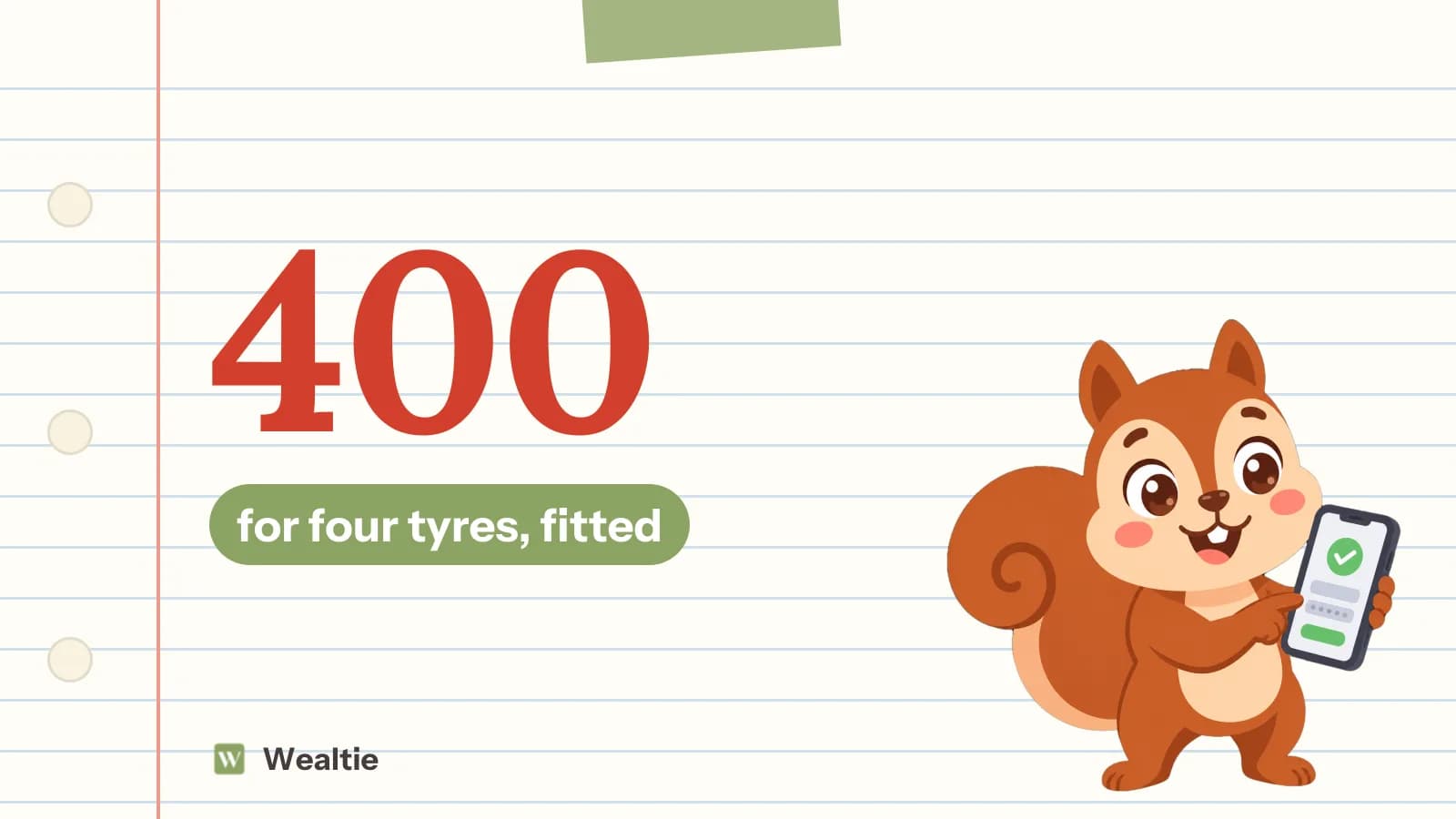
- In a worked example, four mid-range tyres cost about 400 fitted.
- Mid-range tyres often give the best balance of price, grip and life.
- Correct pressures and regular checks make tyres last longer.
What is the cost of new tyres?
Tyres are one of the most important safety parts of a car, and replacing them is a regular cost of driving. The price depends mainly on the tyre size, which is set by your car, and the brand and type you choose. Fitting usually includes removing the old tyres, fitting and balancing the new ones, a new valve and disposing of the old tyres. In a worked example, four mid-range tyres cost about 400 fitted.
How often you need new tyres depends on how far and how you drive, the condition of your car and how well you look after them. Many drivers replace tyres every few years, often in pairs rather than all four at once.
Legal minimum tread depths and rules on winter tyres vary by country. Driving on worn tyres is dangerous and can lead to fines, so check yours regularly.
Checking tread is easy and free. Many tyres have small bars moulded into the grooves that show when the tread is getting low, and a cheap tread depth gauge gives an exact reading. Look for cuts, bulges and cracks in the sidewalls too, since damage can make a tyre unsafe even if the tread is fine. Catching wear early lets you shop around for the best price, rather than buying whatever is available after a puncture or a failed safety check.
What do new tyres cost?
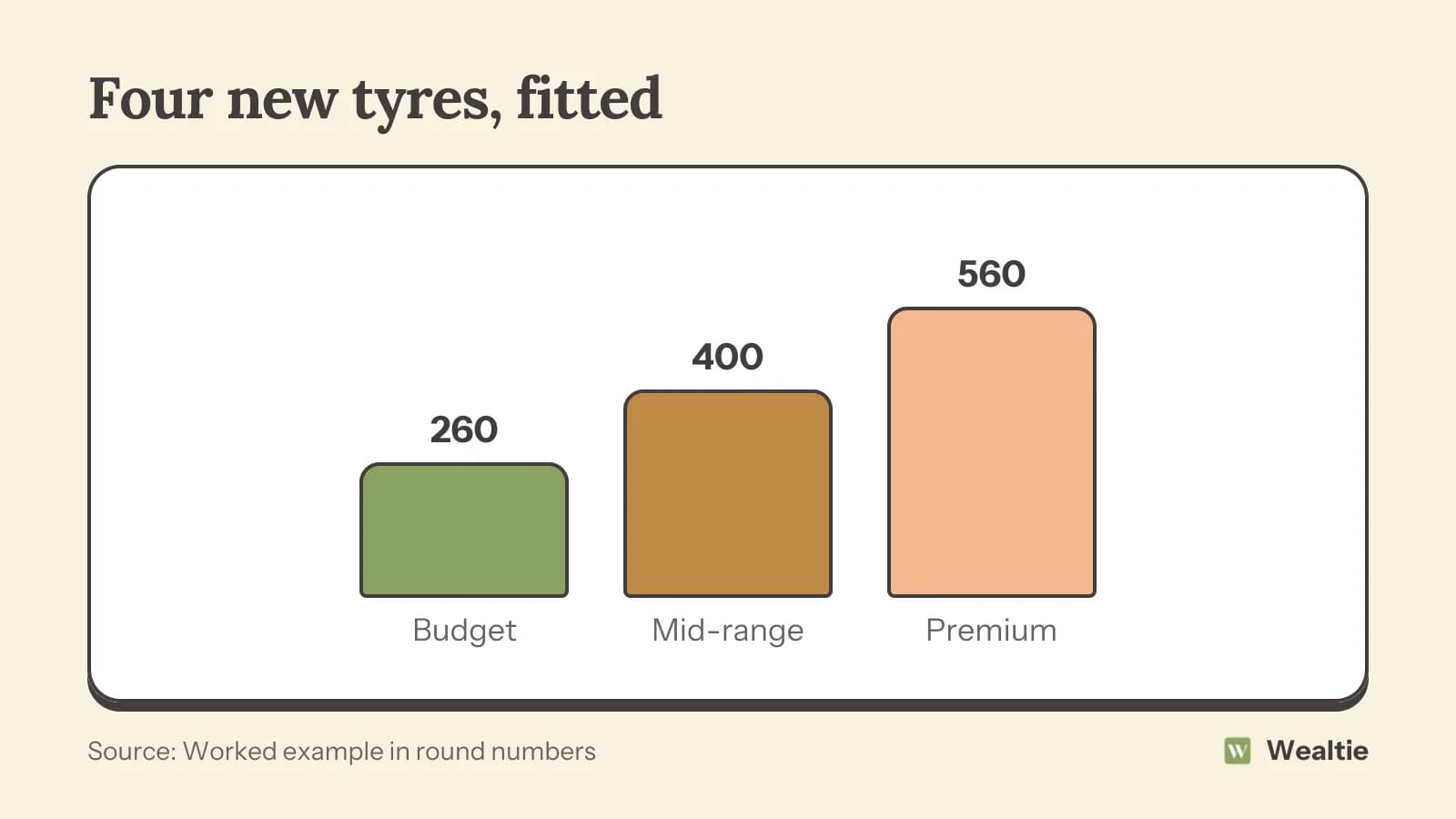
Here's a worked example of four tyres, fitted, in round numbers that work in any currency:
| Tyre range | Four tyres, fitted |
|---|---|
| Budget | 260 |
| Mid-range | 400 |
| Premium | 560 |
Larger wheels, performance cars and SUVs usually need more expensive tyres. Smaller cars with common sizes often have the most choice and the lowest prices.
Should you buy budget, mid-range or premium tyres?
Budget tyres
They cost the least upfront, but often wear faster and may have less grip, especially in the wet. For low-mileage drivers who mostly drive in town, they can be fine.
Mid-range tyres
Often the best balance for everyday drivers, with good grip and life at a reasonable price.
Premium tyres
They usually last longer and perform better in braking and wet weather. For high-mileage drivers, the longer life can make them good value per mile.
Many countries use tyre labels showing wet grip, fuel efficiency and noise, which help you compare beyond price. Work out the cost per use: a tyre that lasts much longer can cost less per mile even if it costs more to buy.
How can you pay less for tyres?
Compare fitted prices
Online retailers often sell tyres cheaply and fit them at a local garage or at your home. Compare the total fitted price, not just the tyre price.
Replace in pairs when needed
You don't always need four tyres at once. Front tyres often wear faster than rear ones. Replacing in pairs spreads the cost. Fit the newer pair where your garage recommends, often on the rear for stability.
Check the spare
Some cars have a spare tyre that can be used if it's the same size and in good condition. Others have a repair kit only.
Look out for offers
Retailers often run offers on tyres, especially before winter and summer. If your tyres still have some life left, buying ahead of time when prices drop can save a good amount.
How do you make tyres last longer?
Check tyre pressures at least once a month and before long journeys, using the figures in your handbook or door frame. Under-inflated tyres wear faster and use more fuel. Get the wheel alignment checked if the car pulls to one side or tyres wear unevenly. Rotate tyres between front and back if your garage recommends it. Drive smoothly, since hard braking and fast cornering wear tyres quicker. How to save money on gas explains how correct pressures also save fuel.
How do you budget for tyres?
Divide the cost by how long tyres usually last you. If four tyres at 400 last three years, that's about 11 a month. A car repair fund or sinking fund keeps the money ready. How much car can I afford? covers tyres alongside other running costs.
How do you track car costs in Wealtie?
Add a monthly transfer to your car fund as a recurring transaction, so it logs itself on its date. Keep tyres, servicing and fuel in a car category among your expense categories, and set a budget for it.
Questions people ask
In a worked example, four mid-range tyres cost about 400 fitted. Budget tyres cost about 260 and premium about 560.
For low-mileage town driving, they can be fine. High-mileage drivers often get better value per mile from mid-range or premium tyres.
Check pressures monthly, get the alignment checked if the car pulls, rotate tyres if recommended and drive smoothly.
Not always. Replacing in pairs when they wear is common and spreads the cost.
This article is general information, not financial, tax or legal advice. Your situation is your own; check the numbers that apply to you before you act on them.