Budgeting: How much does a new roof cost? Repairs, replacement and saving
A new roof cost depends on the size and shape of the roof, the materials and the labour, plus scaffolding and removing the old roof. In a worked example, replacing the roof of a typical house costs about 12,000.
 By Wealtie Team · 3 min read
Key takeaways
- A new roof cost depends on size, shape, materials and labour.
- In a worked example, replacing the roof of a typical house costs about 12,000.
- Repairs are often enough if the problem is local and the roof isn't old.
- Regular checks and small repairs delay the need for a new roof.
How much does a new roof cost?
A new roof is one of the largest repair bills a homeowner can face. The cost depends on the size and pitch of the roof, the materials, how hard it is to reach and whether the timbers underneath need work. Scaffolding and removing the old roof add to the total. In a worked example, replacing the roof of a typical house costs about 12,000.
Many roof problems don't need a full replacement. A few slipped tiles or a leak around a chimney can often be fixed for a fraction of the cost.
What does a new roof cost?
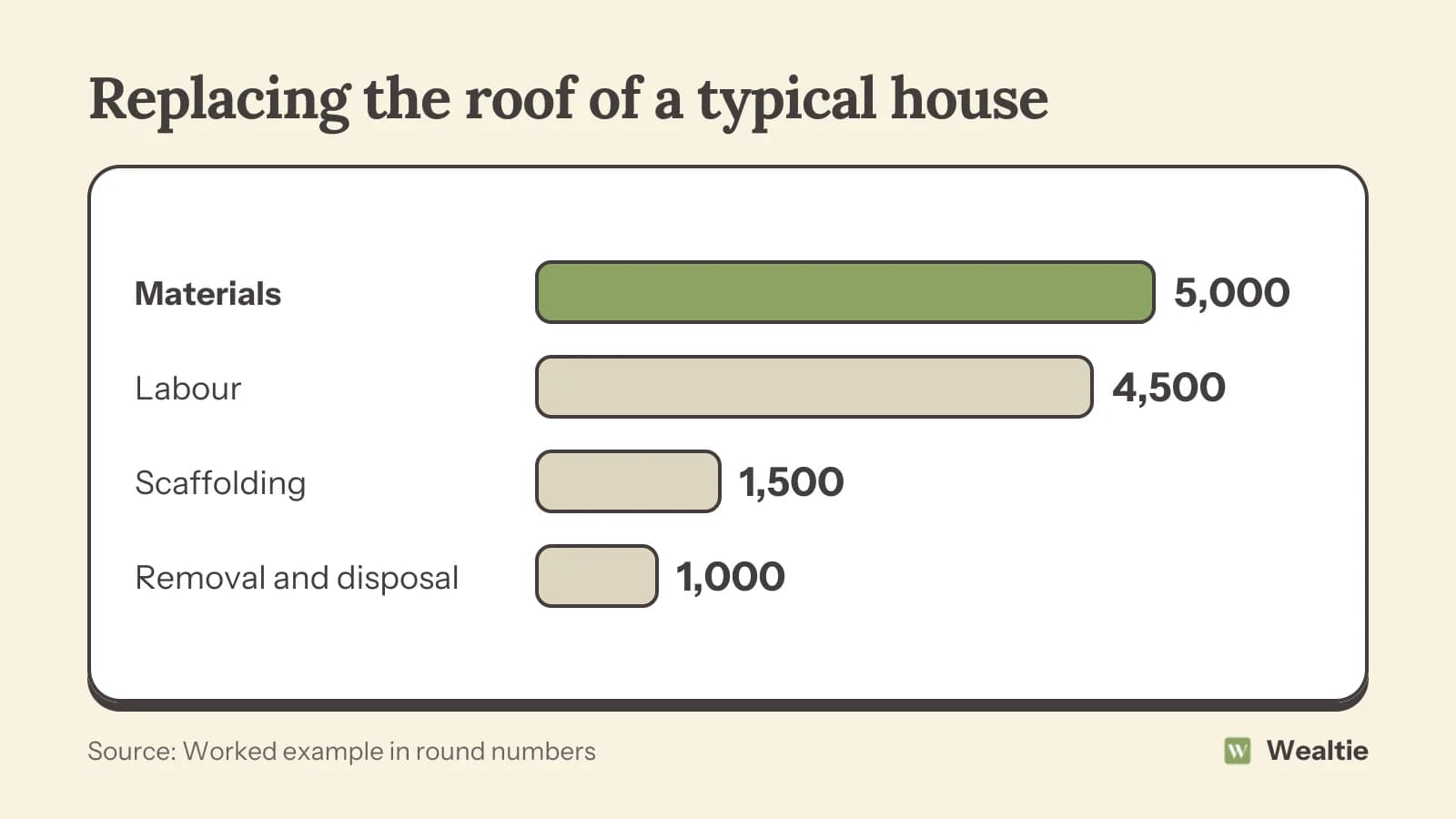
Here's a worked example for a typical house, in round numbers that work in any currency:
| Item | Cost |
|---|---|
| Materials | 5,000 |
| Labour | 4,500 |
| Scaffolding | 1,500 |
| Removal and disposal | 1,000 |
| Total | 12,000 |
A larger roof, a complex shape with valleys and dormers, or premium materials can cost much more. A small, simple roof costs less.
What affects the new roof cost?
Size and shape
The bigger the roof, the more materials and labour it needs. Complex shapes, steep pitches and features like chimneys, dormers and skylights take longer to work around.
Materials
Different roofing materials vary a lot in price and lifespan. Some last much longer, which can make a higher price better value over time. Ask roofers about the expected lifespan of each option.
Timbers and structure
Once the old roof is off, roofers sometimes find rotten timbers that need replacing. This is a common extra cost, so keep a contingency.
Access
Scaffolding is usually needed, and tight access or a tall building adds cost. Some homes need special permission for scaffolding on a pavement.
Should you repair or replace a roof?
Repair if the problem is in one area and the rest of the roof is in good condition. Replacing slipped tiles, fixing flashing around a chimney or patching a small flat roof section can cost a few hundred, like 500 in a worked example. Replace if the roof is near the end of its life, leaks in several places or has widespread damage. Repair or replace covers how to make the call for any big item.
Get several quotes
Ask at least three roofers for written quotes that list materials, labour, scaffolding, waste removal and any guarantee. Be wary of anyone who knocks on your door saying your roof needs urgent work, and check reviews before hiring.
Check your insurance
Home insurance sometimes covers storm damage to a roof, but rarely covers wear and tear. If a storm has damaged your roof, contact your insurer before arranging repairs, and take photos of the damage. Knowing what your policy covers before anything happens helps you decide how much to save yourself. It's also worth asking roofers whether their work comes with a guarantee and whether it's backed by insurance, so you're protected if the company closes.
Flat roofs
Flat roofs on extensions and garages tend to need replacing more often than pitched roofs. They're usually cheaper to redo, but plan for them in the same way, with regular checks and a little saved each month.
Think about extras while the scaffolding is up
If scaffolding is going up anyway, it can be a good time to fix gutters, chimneys or add roof insulation. Some people also look at solar panels at the same time, since fitting them during a re-roof can save on access costs.
How do you avoid a surprise roof bill?
Check your roof from the ground once or twice a year, and after big storms. Look for missing or slipped tiles, sagging and blocked gutters. Inside, check the loft for daylight showing through, damp patches or water stains on the ceiling, which are early signs of a leak. Binoculars help you see the roof clearly without climbing a ladder, which is safer. Clearing gutters and fixing small problems quickly stops water causing bigger damage. The home maintenance budget covers how much to set aside for upkeep.
Save before you need it
If your roof is likely to need replacing in about ten years, saving 100 a month builds 12,000 by then. A sinking fund keeps the money separate. If you've just bought a home, first-year homeowner costs covers other surprises to plan for.
How do you plan for roof costs in Wealtie?
Add a monthly transfer to your home savings as a recurring transaction, so it logs itself on its date. Track repairs in their own expense categories, and set a budget for home costs.
Questions people ask
In a worked example, replacing the roof of a typical house costs about 12,000, including materials, labour, scaffolding and removal.
Repair if the problem is in one area and the roof is otherwise sound. Replace if it's near the end of its life or damaged in several places.
A larger or more complex roof, premium materials, difficult access and rotten timbers found once work starts.
Check the roof once or twice a year, clear gutters and fix small problems quickly, and save a little each month.
This article is general information, not financial, tax or legal advice. Your situation is your own; check the numbers that apply to you before you act on them.