Budgeting: Are solar panels worth it? How to work out the payback
Are solar panels worth it? They can be if you stay in your home long enough for the bill savings to repay the cost, and in a worked example a 6,000 system that saves 600 a year pays for itself in about ten years.
 By Wealtie Team · 3 min read

Key takeaways
- Solar panels are worth it if you stay long enough for the savings to repay the cost.
- In a worked example, a 6,000 system saving 600 a year pays for itself in about ten years.
- Your roof, location, energy use and local schemes all change the numbers.
- Get several quotes and check the installer carefully before you commit.
Are solar panels worth it?
They can be, but it depends on your home and how long you'll stay. Solar panels turn sunlight into electricity, which lowers the amount you buy from the grid. In some places, you can also be paid for electricity you don't use. The big question is whether those savings repay the upfront cost before you move or the panels need replacing.
Working through the numbers for your own home gives you a clear answer.
How do you work out the payback?
Divide the cost of the system by how much it saves each year. Here's a worked example in round numbers that work in any currency:
| Amount | |
|---|---|
| Cost of system, installed | 6,000 |
| Savings on bills each year | 600 |
| Payback time | 10 years |
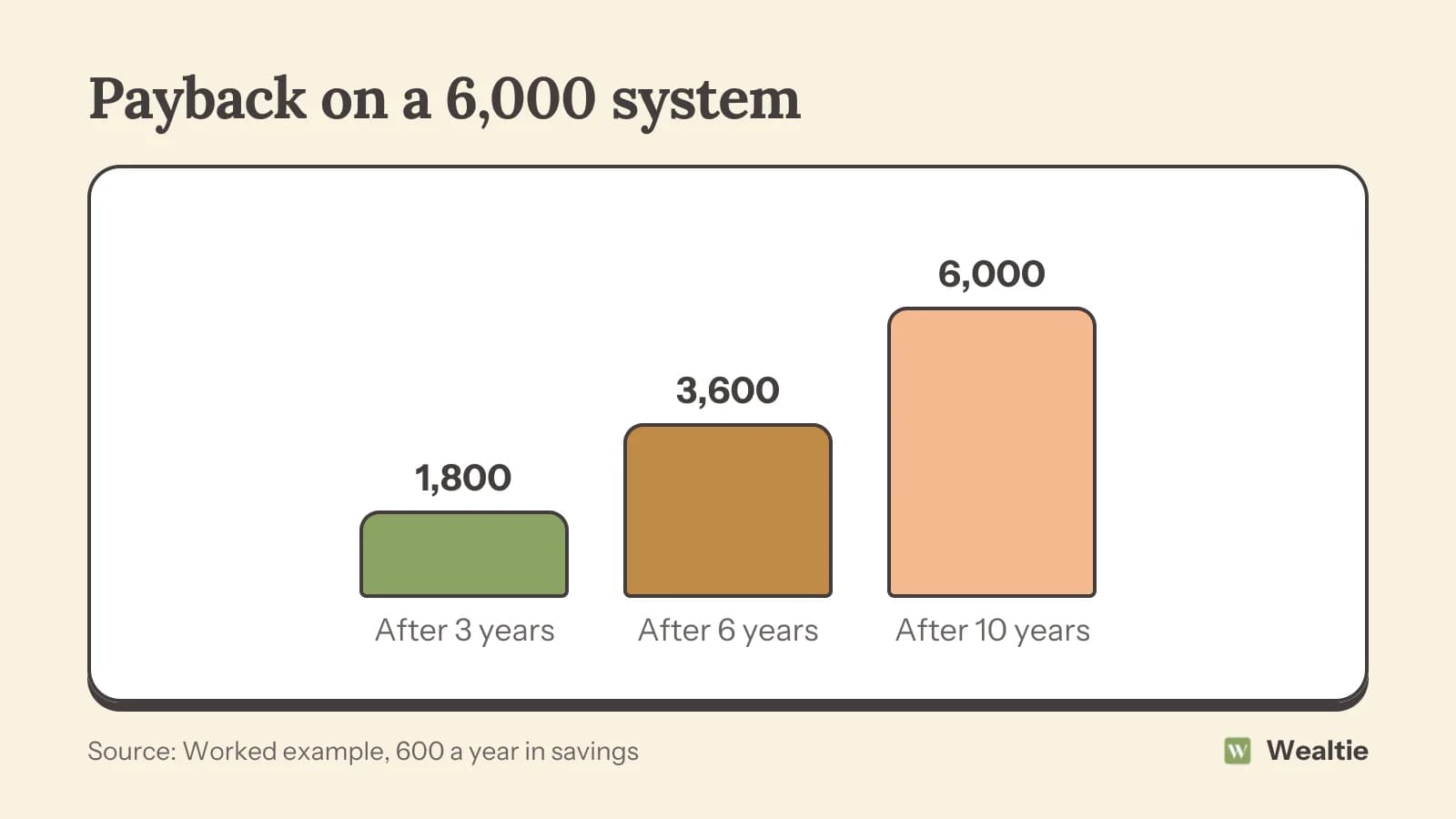
In this example, the system has repaid its cost after ten years. After that, the savings continue, which is where the real gain is. Your own numbers depend on many things, so treat this as a method rather than a promise. Panels slowly produce a little less over the years, so a cautious estimate uses slightly lower savings in later years.
What affects how much you save?
Several things change the savings a lot:
- Your roof: its direction, angle, shading and size
- Where you live: how much sun you get through the year
- Your energy use: especially how much you use during the day
- Electricity prices: higher prices mean bigger savings
- Export payments: whether you're paid for spare electricity, and how much
- The system size and quality
Using more electricity while the sun's shining, like running appliances during the day, raises the savings, since you use more of what you generate.
Checking your roof first
If your roof needs repairs soon, do them before installing panels, since removing and refitting panels later adds cost. An installer should check the roof's condition and whether it can take the weight.
What do solar panels cost?
Prices vary by country, system size and installer. As well as the panels, the price usually includes an inverter, mounting, wiring, scaffolding and installation. Ask what's included, how long the warranty lasts on panels and the inverter, and whether maintenance is needed.
Should you add a battery?
A battery stores electricity for use in the evening, which can raise your savings if you're out during the day. But it adds a lot to the cost, perhaps 3,000 more in a worked example, which lengthens the payback time. Compare the payback with and without a battery before deciding.
Are there grants or schemes?
In some countries, there are grants, low-cost loans, tax relief or payments for exporting electricity. These can change the payback a lot, and they change over time. Check what's available where you live before you buy. Be cautious of companies that use limited-time offers to rush a decision. Keep records of what you paid and any grant terms, since some schemes have conditions if you move.
What questions should you ask before buying?
Get at least three quotes, and ask each installer:
- How much electricity will the system generate each year, and how did you estimate it?
- What's included in the price, and what's extra?
- How long are the warranties, and who honours them if you go out of business?
- Is the installer certified or registered with a recognised scheme?
- What maintenance is needed, and what does it cost?
- Is planning permission or approval needed for my home?
Compare the estimated savings honestly. An installer who promises much higher savings than others may be overestimating.
What if you might move?
Payback matters more if you could move within a few years. Some buyers value solar panels, but you may not get the full cost back when you sell. If you're renting, panels are usually the landlord's decision. If you're likely to stay ten years or more, the case is usually stronger.
How do you pay for solar panels?
Saving ahead is the cheapest way, since loans add interest that lengthens the payback. If you use a loan, add the interest to the cost before working out the payback. A sinking fund helps you save for large home improvements. Other changes, like those in how to save money on your electric bill, cost little and lower your bills straight away. Check too whether your home insurance needs updating to cover the panels.
How do you track energy savings in Wealtie?
Set up your electricity bill as a recurring transaction with the bill tracker, and update the amount as your bills change. Comparing a year of bills before and after installation, in your expense categories, shows the real saving, and whether you're on track for the payback you expected.
Questions people ask
They can be if you stay in your home long enough for the bill savings to repay the cost. Work out the payback for your own home.
In a worked example, a 6,000 system saving 600 a year pays for itself in about ten years.
It raises savings if you use more power in the evening, but adds a lot to the cost. Compare the payback with and without one.
How they estimated generation, what's included, warranty terms, certification, maintenance and planning requirements.
This article is general information, not financial, tax or legal advice. Your situation is your own; check the numbers that apply to you before you act on them.