Budgeting: How to keep a money journal, and why it helps
A money journal is a short, regular note of what you spent, how you felt and what you noticed, and it helps you spot patterns that numbers alone miss. Five minutes a week is enough to start, and the prompts below make it easy to keep going.
 By Wealtie Team · 3 min read
Key takeaways
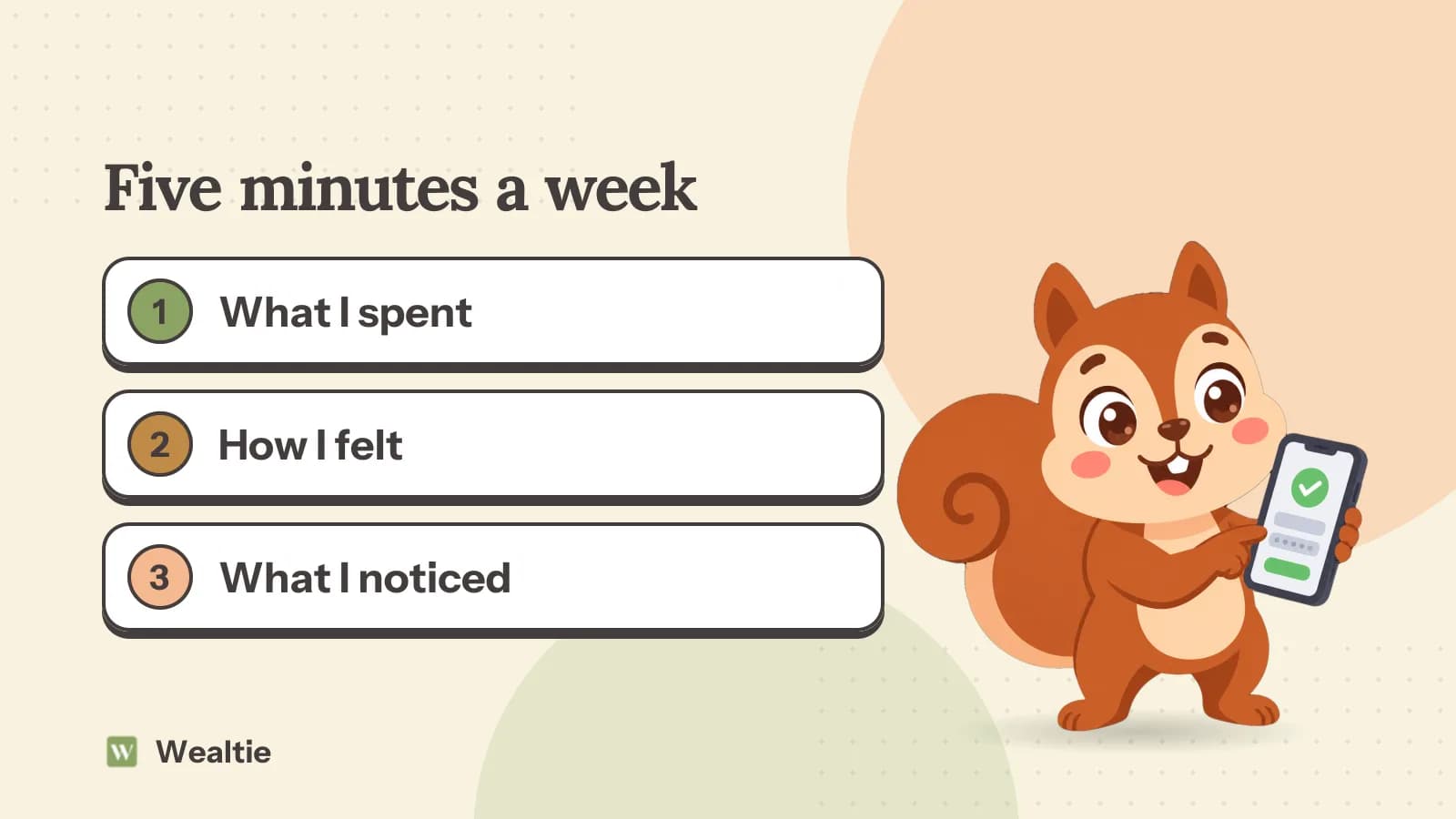
- A money journal records what you spent, how you felt and what you noticed.
- Five minutes a week is enough to start seeing patterns.
- Noting regretted purchases is often the quickest way to change a habit.
- A journal works best alongside tracking your spending, not instead of it.
What is a money journal?
A money journal is a short, regular note about your money: what you spent, how you felt about it and what you noticed. It's different from a spreadsheet or a budget. Numbers show what happened, while a money journal helps you understand why. That's often what makes the difference when you're trying to change a habit.
You don't need to write much. A few lines, a few times a week, is plenty.
Why does a money journal help?
It slows you down. Writing about a purchase, even after the fact, makes you think about it in a way that tapping a card doesn't. Over a few weeks, patterns start to appear: the days you spend most, the moods that lead to spending, the purchases you're glad of and the ones you regret.
It also helps with goals. Writing down what you're saving for, and why, keeps it in mind when you're tempted to spend. Many people find that noticing their spending is enough to change it.
What should you write in a money journal?
Keep it simple. Three things are enough:
- What you spent, roughly, and on what
- How you felt, before and after
- What you noticed, like a pattern, a good choice or a regret
Here's a worked example of a week's notes, summarised, in round numbers that work in any currency:
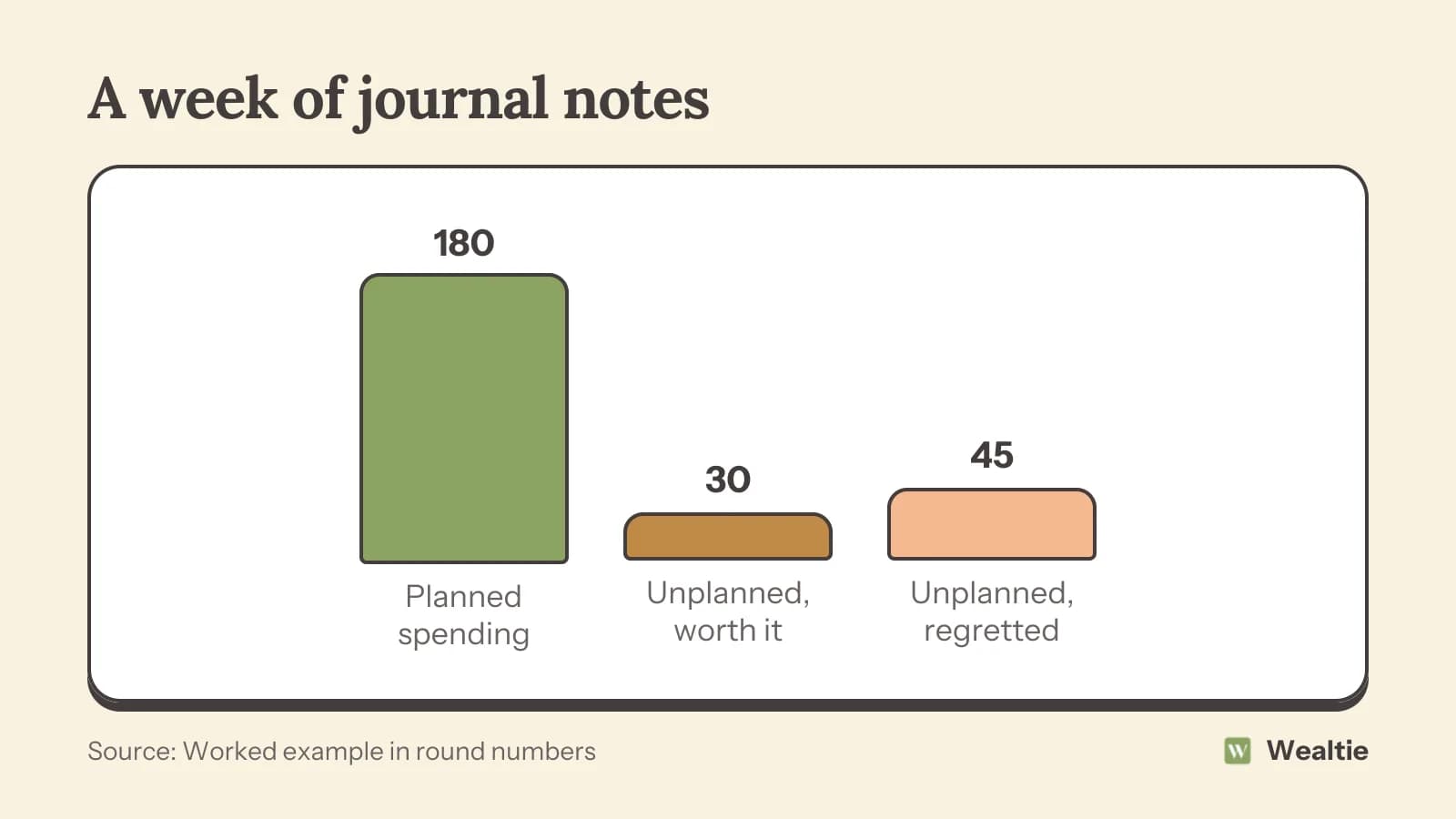
In this example, most spending was planned. Of the unplanned spending, 30 was worth it, like coffee with a friend, and 45 was regretted, like a takeaway on a tired evening and an online order that arrived and disappointed. Over a year, 45 a week of regretted spending would come to about 2,340.
How often should you write?
Find a rhythm you'll keep. Some people write a line each evening. Others sit down once a week, on a Sunday for example, and look back over the week. Weekly works well for most people, since it's often enough to remember what happened and not so often that it feels like a chore. Pairing it with something you already do, like a Sunday coffee, makes it easier to remember.
Keep it short
The biggest reason money journals stop is that they feel like too much work. Five minutes is enough. If you miss a week, just start again.
What are some money journal prompts?
If you're not sure what to write, try one of these:
- What did I spend this week that I'm glad about?
- What did I spend that I wish I hadn't?
- When did I feel the urge to spend, and what was going on?
- What am I saving for, and how close am I?
- What's one money win from this week, however small?
- What's worrying me about money right now?
- What would I like to do differently next week?
Choosing one or two prompts each time keeps it quick. Writing by hand in a notebook or typing a note on your phone both work, so choose whichever you'll keep using.
How do you use what you notice?
Look back every month or so. Read through your notes and look for patterns. If you often regret takeaways on tired evenings, plan a quick meal for those nights. If you spend more after scrolling social media, change when or how you scroll. If certain purchases always feel good, make room for them in your budget.
How to stop impulse buying has ideas for acting on what you find, and how to set financial goals helps turn what you notice into clear aims.
Should you journal with a partner?
You can. Couples sometimes keep a shared money journal, or talk through their notes at a regular money meeting. It helps each person understand the other's feelings about money, which often matter more than the numbers. The monthly money meeting covers a simple way to talk money together.
How does a journal work with tracking?
They work best together. Tracking shows the numbers: what you spent and where. The journal adds the story. When you look at your spending each week, adding a few lines about how it felt turns the numbers into something you can learn from. At the end of the year, your notes make a year-end money review much richer.
How do you track spending alongside a journal in Wealtie?
Log spending in your expense categories as it happens, so the numbers are ready when you sit down to write. A monthly limit in the budget tracker, with Budget Health, shows how the month is pacing, which is a useful starting point for your weekly notes.
Questions people ask
A short, regular note of what you spent, how you felt and what you noticed, to help you understand your spending habits.
Weekly works well for most people. Five minutes, once a week, is enough to spot patterns.
What you spent, how you felt before and after, and what you noticed, like a pattern or a regret.
No. It works best alongside tracking, adding the story behind the numbers.
This article is general information, not financial, tax or legal advice. Your situation is your own; check the numbers that apply to you before you act on them.