Budgeting: The cost of owning a rabbit: a yearly budget
The cost of owning a rabbit is higher than many people expect, because rabbits need space, a companion and regular vet care. In a worked example, a pair of rabbits costs 600 to set up and about 900 a year.
 By Wealtie Team · 3 min read
Key takeaways
- The cost of owning a rabbit includes setup, daily food, vet care and space.
- Rabbits are social and usually do best in pairs, which doubles some costs.
- Hay is the biggest ongoing cost and the most important part of their diet.
- Adopting from a rescue often includes neutering and vaccinations.
What is the cost of owning a rabbit?
Rabbits are often thought of as an easy, cheap first pet, but they need more space, care and money than many people expect. They're social animals that usually do best with a companion, they need lots of hay every day, and they can live for many years, often around a decade. The cost of owning a rabbit adds up over that time, so it's worth planning before you bring one home.
Costs fall into two parts: the setup when you first get them and the yearly cost of looking after them. In round numbers that work in any currency, setting up for a pair might cost around 600, including an indoor pen or a hutch with a large run, bowls, a litter tray, toys and an adoption fee.
What does a rabbit cost each year?
Here's a worked example of a year of care for two rabbits:
| Yearly cost | Amount |
|---|---|
| Hay and fresh greens | 350 |
| Pellets and treats | 100 |
| Vet checks and vaccinations | 200 |
| Insurance | 150 |
| Bedding and replacements | 100 |
| Total | 900 |
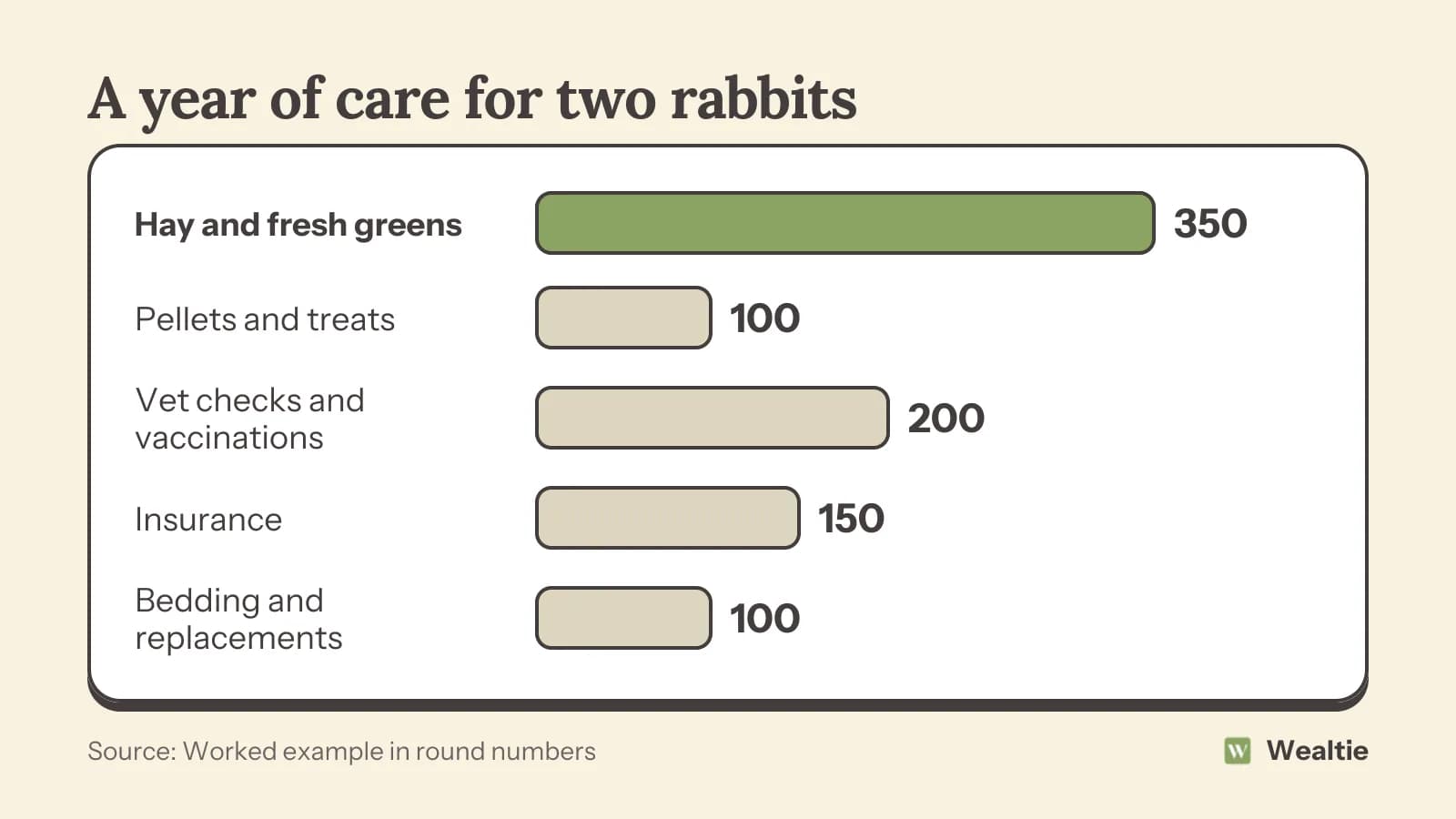
That's about 75 a month for the pair. Over ten years, the total comes to around 9,000, plus the setup and any unexpected vet bills. Costs vary by where you live and whether your rabbits live indoors or outside.
Why do rabbits need a companion?
Rabbits are social and can become lonely and stressed on their own. Many rescues and vets recommend keeping them in pairs, often a neutered male and female. That means two sets of vet bills and twice the food, but it's better for their wellbeing. Adopting a bonded pair from a rescue avoids the time and stress of introducing two rabbits yourself.
What are the main costs?
Hay
Good-quality hay should make up most of a rabbit's diet and be available all day. It's the biggest ongoing cost. Buying in bulk from a farm or feed shop is usually much cheaper than small bags from a pet shop.
Fresh greens and pellets
A daily portion of leafy greens and a small amount of pellets complete the diet. Growing some herbs and greens at home can save a little.
Vet care
Rabbits need regular check-ups, vaccinations and neutering. Dental problems are common in rabbits, so vet visits can be more frequent than people expect. How to build a vet bills fund covers saving for the unexpected.
Insurance
Pet insurance for rabbits can help with large vet bills. Is pet insurance worth it? covers how to decide.
Housing
Rabbits need far more space than the small hutches often sold for them. A large run or an indoor pen with room to hop, stretch and stand up is better for them, and it's the biggest setup cost.
Holiday care
When you travel, you'll need a pet sitter or boarding, which adds to the cost each trip.
How do you keep rabbit costs down?
Adopt from a rescue
Rescues often neuter, vaccinate and health-check rabbits before rehoming, and the adoption fee usually costs less than paying for those separately.
Buy hay in bulk
Bales from farms or feed shops cost much less per day than small packs. Store them somewhere dry.
Build or buy second-hand housing
Second-hand pens and runs, or a simple DIY setup, can cost much less than new hutches. Make sure it's secure and large enough.
Make toys at home
Cardboard boxes, tubes and untreated willow make good toys and cost little or nothing.
Keep up with check-ups
Regular vet checks catch dental and health problems early, when they're usually cheaper to treat.
Is a rabbit right for your budget?
A pair of rabbits costs around 75 a month in this example, plus setup, for many years. That's less than a dog but more than many people expect for a small pet. How to budget for a pet compares the costs of other pets if you're still deciding. If the yearly cost fits your budget and you have the space and time for daily care, rabbits can be wonderful, affectionate companions.
Before committing, spend time with rabbits if you can, perhaps by volunteering at a rescue or visiting a friend who keeps them. You'll see how much space, cleaning and attention they need day to day, and you can ask the rescue staff what owners most often underestimate. Many say it's the space and the vet bills, so plan generously for both, and keep a small emergency fund ready from the first month.
How can Wealtie help you track pet costs?
Log hay, food, vet visits and insurance in a pet expense category, and add insurance as a recurring transaction. Setting a monthly budget for your rabbits shows what they cost and helps you save for vet bills.
Questions people ask
In a worked example, a pair of rabbits cost about 600 to set up and 900 a year for food, vet care, insurance and bedding.
Not as cheap as many people expect. They need space, a companion, lots of hay and regular vet care, often for around a decade.
Yes, in most cases. Rabbits are social and usually do best with a neutered companion.
Adopt from a rescue, buy hay in bulk, use second-hand or DIY housing, make toys at home and keep up with vet check-ups.
This article is general information, not financial, tax or legal advice. Your situation is your own; check the numbers that apply to you before you act on them.