Budgeting: A list of budget categories to start with
A good list of budget categories covers housing, bills, food, transport, debt, savings and personal spending, plus a few that fit your life. In a worked example, a 2,500 monthly budget splits into ten categories, which is enough to see where money goes without getting lost in detail.
 By Wealtie Team · 3 min read
Key takeaways
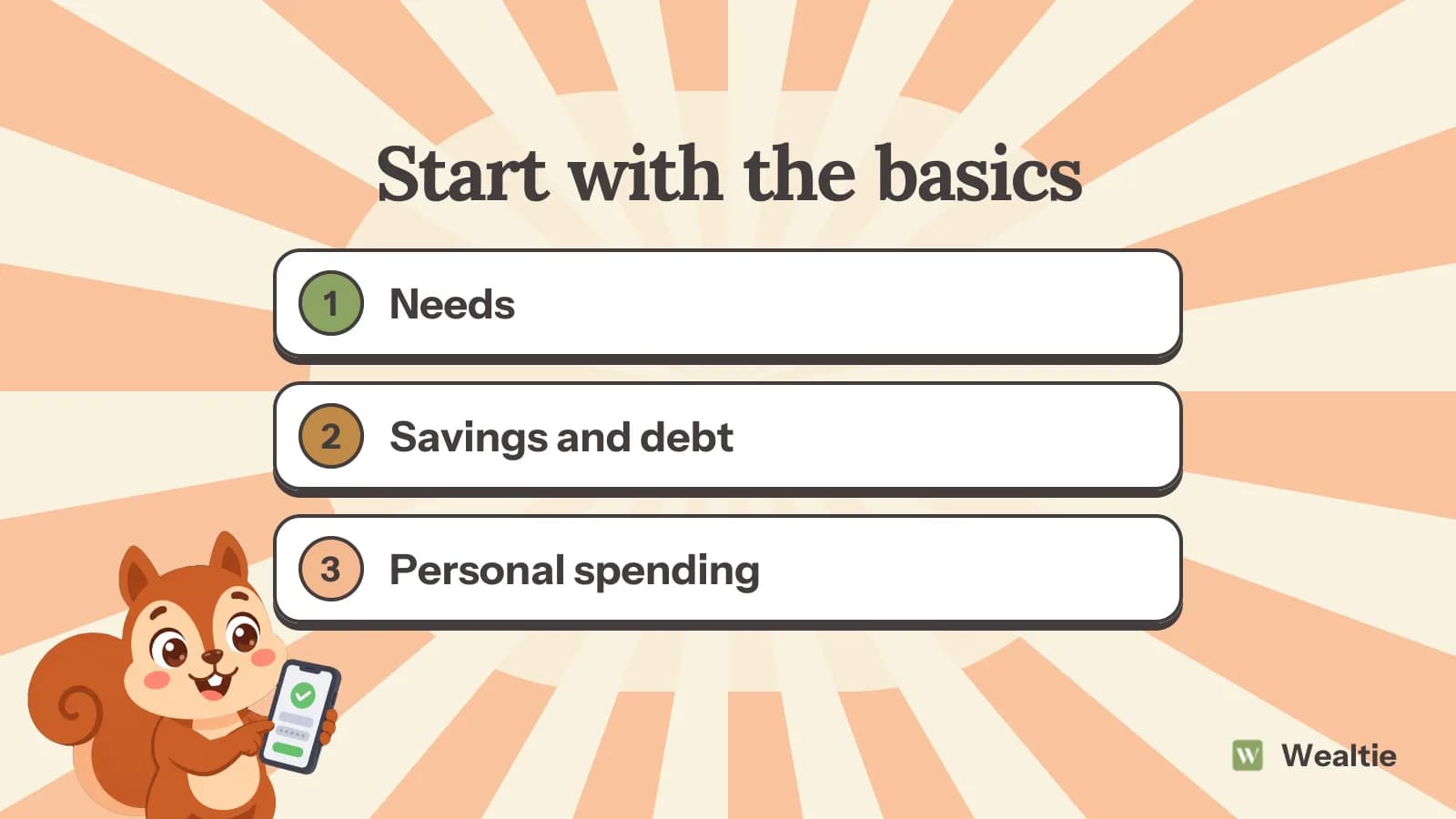
- A list of budget categories should cover needs, savings and debt, and personal spending.
- In a worked example, a 2,500 budget splits into ten categories.
- Start with about ten categories, and add more only if they help you make decisions.
- Give irregular costs, like gifts and car repairs, their own categories so they don't surprise you.
What is a good list of budget categories?
One that covers everything you spend on, without so much detail that tracking becomes a chore. Categories are the buckets your money goes into: housing, food, transport and so on. A good list of budget categories shows you where your money goes, so you can make decisions about it. Too few, and everything blurs together. Too many, and you'll stop tracking.
For most people, about ten categories is a good start. You can always add more later, once you know where the detail would help.
What categories should you start with?
Here's a starter list:
- Housing: rent or mortgage, and any service charges
- Bills: energy, water, phone, internet and insurance
- Food: groceries and household basics
- Transport: fuel, fares, parking and car costs
- Debt repayments: cards, loans and other borrowing
- Savings: emergency fund and goals
- Eating out: restaurants, takeaways and coffee
- Personal: clothes, haircuts, toiletries and hobbies
- Gifts and celebrations: birthdays, holidays and events
- Health: prescriptions, dental care and glasses
You might swap some for categories that fit your life better, like Childcare, Pets or Subscriptions. The best list is one you'll keep using, so choose names that make sense to you.
How might a budget split across categories?
Here's a worked example for a 2,500 monthly budget, in round numbers that work in any currency:
| Category | Amount |
|---|---|
| Housing | 900 |
| Food | 400 |
| Savings | 300 |
| Bills | 250 |
| Transport | 200 |
| Debt repayments | 150 |
| Personal | 100 |
| Eating out | 100 |
| Gifts and celebrations | 50 |
| Health | 50 |
| Total | 2,500 |
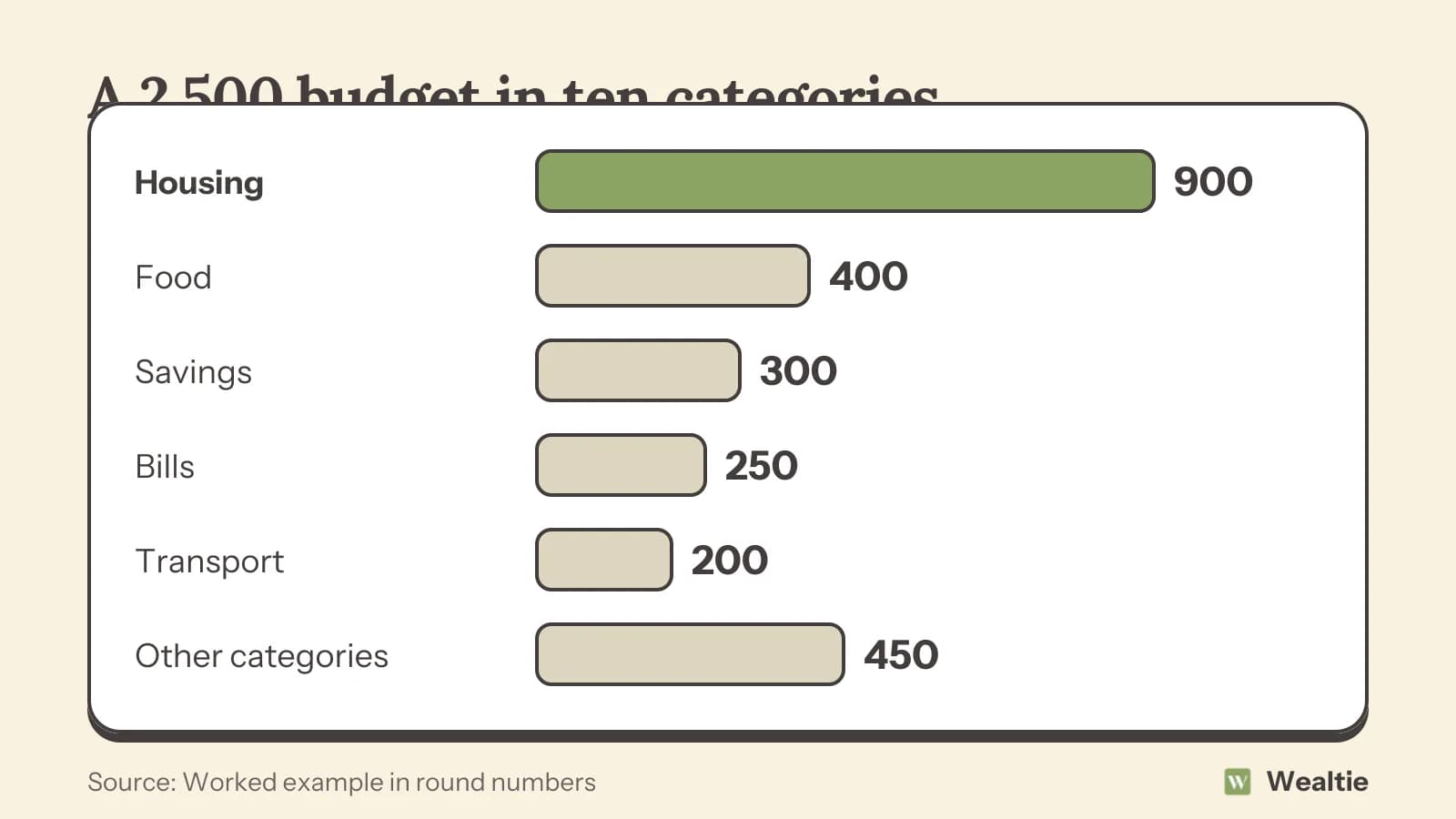
Your own split will be different. The point is that every bit of income has a place, including savings. When a category regularly runs over, it may need a bigger share, with a matching cut somewhere else.
How many categories should you have?
Start with about ten and adjust after a month or two. If one category is a mystery, like Personal hiding a lot of online shopping, split it. If you never use a category, merge it. Two people sharing a budget may want a few personal categories each, so neither has to explain every small purchase. Add categories only when they help you make a decision, like seeing how much takeaways cost compared with groceries.
Separate needs from wants
Keeping essentials, like groceries, separate from extras, like eating out, makes it easy to see where you could cut back if you need to. It also helps you protect the essentials first.
Keep income separate too
If you have more than one source of income, like a salary and a side job, track them separately. It shows which income you rely on and helps if one changes.
What about irregular costs?
Give them their own categories. Costs that don't come every month, like gifts, car repairs, yearly subscriptions and holidays, are the ones that throw budgets off. Setting aside a little each month in a category for each one smooths them out. Looking back at last year's bank statements is the quickest way to list them. How to budget for annual expenses and sinking funds cover this in detail.
Should savings be a category?
Yes. Treating savings as a category, and paying it first, makes saving a habit rather than whatever's left over. Some people split it into several: emergency fund, holiday and a long-term goal. Seeing each one grow is motivating. Moving savings on payday, before you spend, makes sure the category is always filled.
How do you choose categories for your life?
Look at last month's spending and group it. Your natural groups often suggest the best categories. Families might add Childcare and School. Freelancers might add Business costs and Tax. Pet owners might add Pets. How to track your spending helps you see where your money goes before you decide, and how to make a budget covers the full process.
Review your categories every few months
As life changes, your categories should too. A new baby, a pet, a move or a side income might need a new category, while others may no longer apply. A quick review every few months keeps your budget matched to your life.
How do you set up categories in Wealtie?
The free plan includes 10 expense categories, which matches this starter list well. Pro adds unlimited categories and lets you nest them up to four levels, like Food, then Groceries and Eating out. Set a monthly limit in the budget tracker, and how to set up categories in Wealtie walks through it step by step. Starting simple and adding detail later is usually easier than starting with a long list.
Questions people ask
Housing, bills, food, transport, debt repayments, savings, eating out, personal, gifts and health are a good starting list.
About ten is a good start. Split categories that hide a lot of spending, and merge ones you never use.
Yes. Treating savings as a category and paying it first makes saving a habit.
Give them their own categories, like gifts or car repairs, and set aside a little each month.
This article is general information, not financial, tax or legal advice. Your situation is your own; check the numbers that apply to you before you act on them.