Budgeting: Microwave vs oven cost: which is cheaper to cook with?
Comparing microwave vs oven cost, a microwave is usually far cheaper for small portions and reheating because it cooks quickly and heats only the food. In a worked example, using the microwave for daily reheating instead of the oven saves about 50 a year.
 By Wealtie Team · 3 min read
Key takeaways
- A microwave is usually far cheaper than an oven for small portions.
- In a worked example, daily reheating in the microwave saves about 50 a year.
- The oven makes more sense for big batches or several dishes at once.
- Cooking several things together in the oven spreads its cost.
Microwave vs oven cost: which is cheaper?
For small amounts of food, the microwave wins easily. A microwave heats the food directly and only runs for a few minutes. An oven has to heat a large box of air and metal before it even starts cooking, then keeps that heat going for the whole cooking time, with much of it escaping. For reheating leftovers, cooking a jacket potato for one or steaming vegetables, a microwave uses a small fraction of the energy an oven does.
The oven still has its place. For a big roast, a tray of vegetables for a family or several dishes at once, the oven's cost is spread across a lot of food. And some dishes need an oven to taste right.
The cheapest kitchen uses each appliance for what it does best. Small, quick jobs in the microwave, big batches in the oven, and the hob for things that need stirring and simmering. Thinking about which one to use before you start cooking is a habit that costs nothing and adds up over a year.
The hob sits between the two. Boiling water in a kettle first, then pouring it into a pan, is quicker and cheaper than heating cold water on the hob. Using a pan that matches the size of the ring, and keeping the lid on, stops heat escaping. For things like pasta and rice, the hob is usually the right choice, but for a single portion of vegetables or reheating a bowl of soup, the microwave is faster and cheaper.
Microwaves are also forgiving for people who don't enjoy cooking. Many simple, cheap meals, from porridge to jacket potatoes and scrambled eggs, can be made in a few minutes with almost no washing up.
How much cheaper is a microwave?
Here's a worked example of reheating one meal, in round numbers that work in any currency:
| Appliance | Cost per meal |
|---|---|
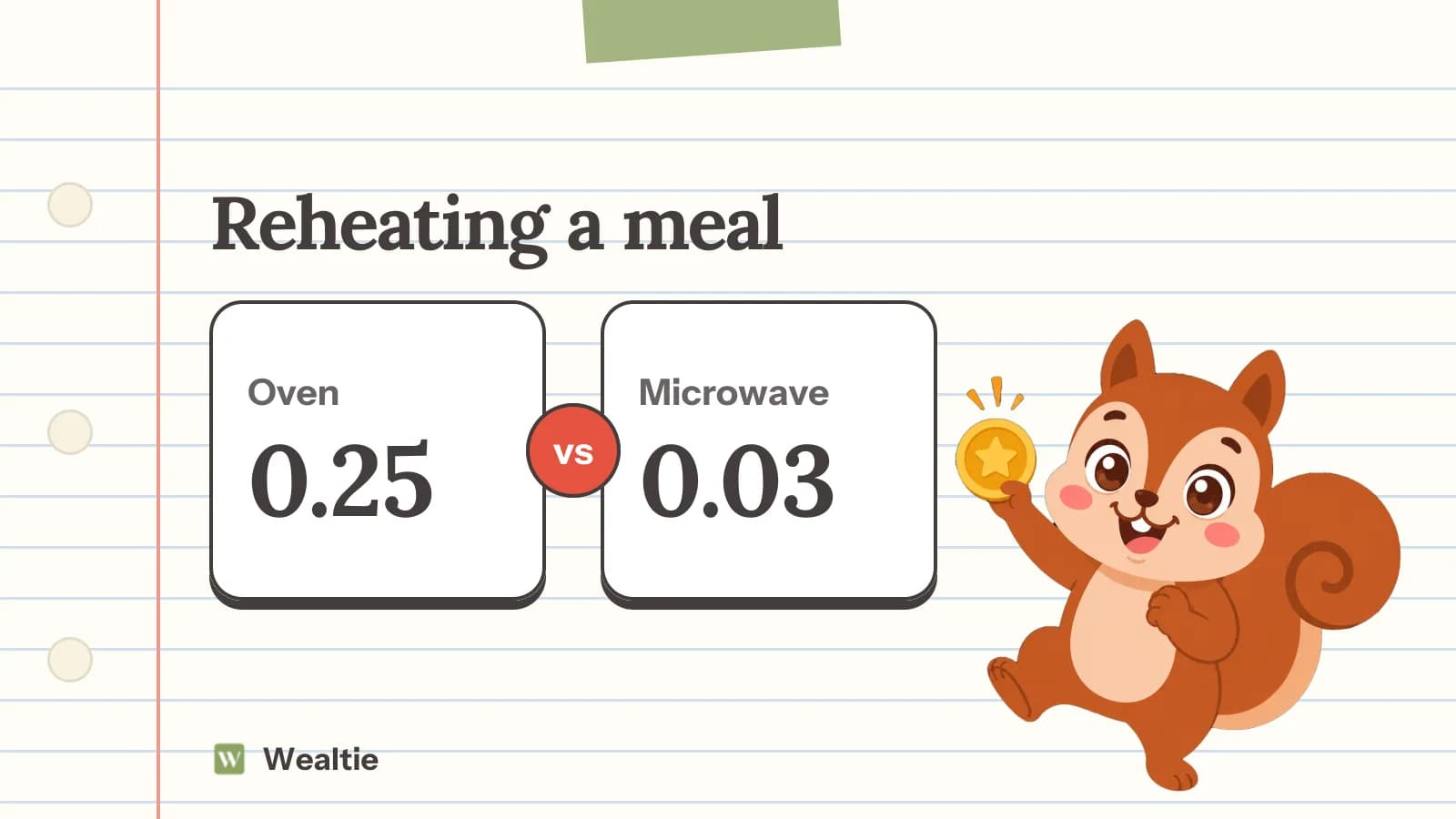
| Oven | 0.25 |
| Microwave | 0.03 |
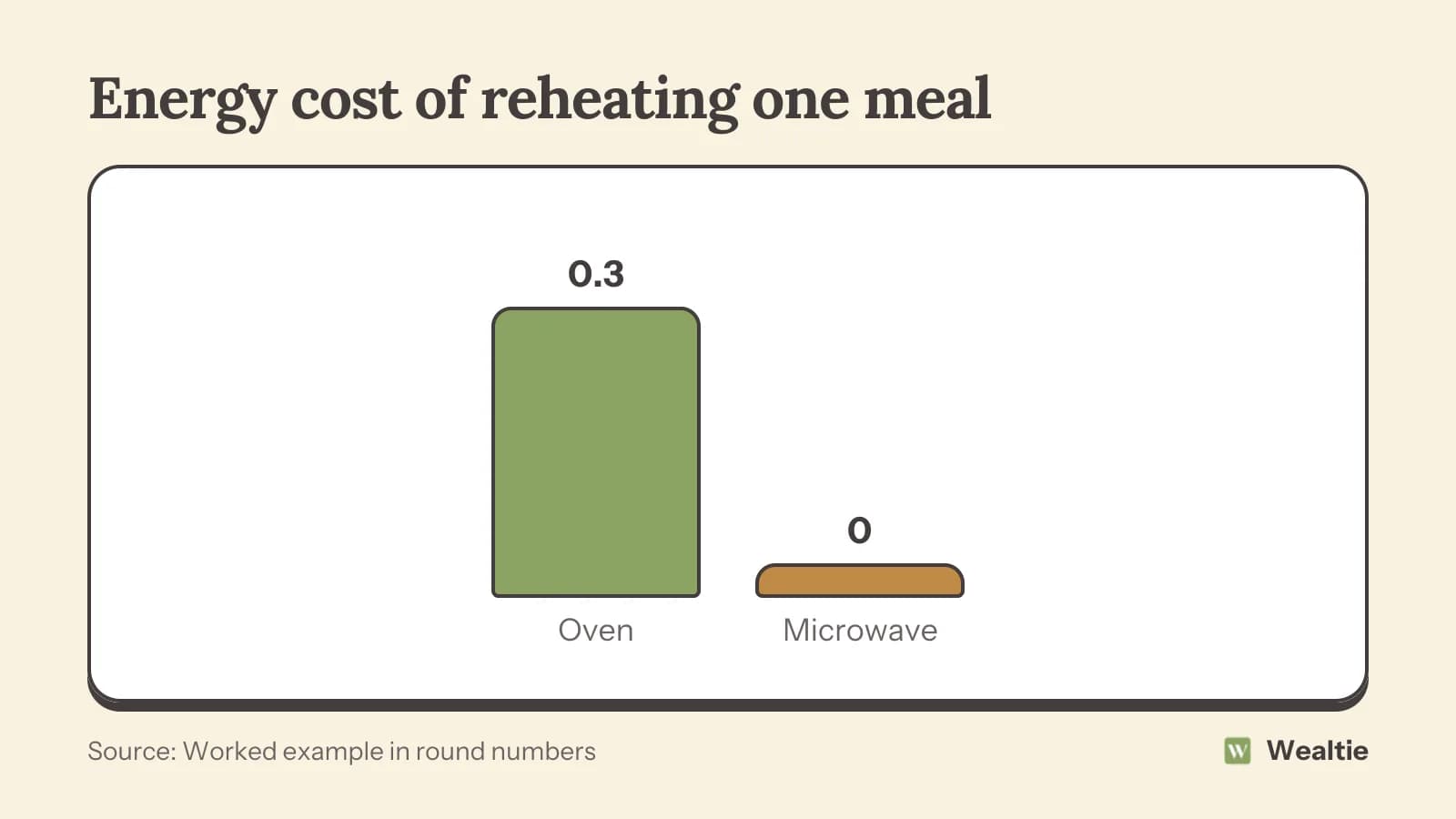
Reheating a meal in the microwave instead of the oven on most days of the year saves about 50. Your own figures depend on your energy prices and your appliances. Check the power ratings and your unit price to work them out. How to save money on your electric bill explains how.
When is the microwave the best choice?
Reheating
Leftovers, soups and ready meals reheat quickly and cheaply in the microwave. Stirring halfway through helps food heat evenly, so you don't need to run it for longer.
Small portions
Cooking for one or two, a microwave handles jacket potatoes, porridge, scrambled eggs and steamed vegetables with very little energy.
Defrosting
The defrost setting is quicker than leaving food out and cheaper than defrosting in the oven. Better still, move food from the freezer to the fridge the night before, which costs nothing at all and keeps it safe.
Steaming vegetables
Vegetables steam well in a covered dish with a splash of water, keeping their colour and texture.
When does the oven make more sense?
Big batches
When cooking for a family or batch cooking for the week, the oven's energy is spread across many portions.
Several dishes at once
Filling the oven with a main dish, vegetables and a dessert makes the most of the heat. Baking bread or a cake at the same time as dinner uses the same warm-up.
Food that needs crisping or browning
Roasts, bakes and pastry need the dry heat of an oven to turn out well.
How do you cut cooking costs?
Use the smallest appliance that does the job. Batch cook in the oven and reheat portions in the microwave. Keep the oven door closed while cooking, and turn it off a few minutes early, since it stays hot. Use lids on pans on the hob. Defrost food in the fridge overnight. Meal planning on a budget helps you plan batch cooking, and how to save money on groceries covers the food side.
Is it worth buying a microwave to save money?
If you don't have one and reheat food often, a basic microwave is cheap and can pay for itself fairly quickly through energy savings. Work out the cost per use: a microwave used every day costs almost nothing per use over its life.
How do you track energy costs in Wealtie?
Add energy bills as recurring transactions, so they log themselves on their date. Keep them in their own expense category, and compare bills over a few months to see how changing your cooking habits adds up.
Questions people ask
For small portions and reheating, yes, by a lot. In a worked example, daily reheating in the microwave saves about 50 a year.
For big batches, several dishes at once and food that needs crisping or browning.
Usually the microwave, since it heats only the food and runs for a few minutes.
Fill the oven with several dishes at once, keep the door closed and turn it off a few minutes early.
This article is general information, not financial, tax or legal advice. Your situation is your own; check the numbers that apply to you before you act on them.