Money as a couple: How to make a long-distance relationship budget work
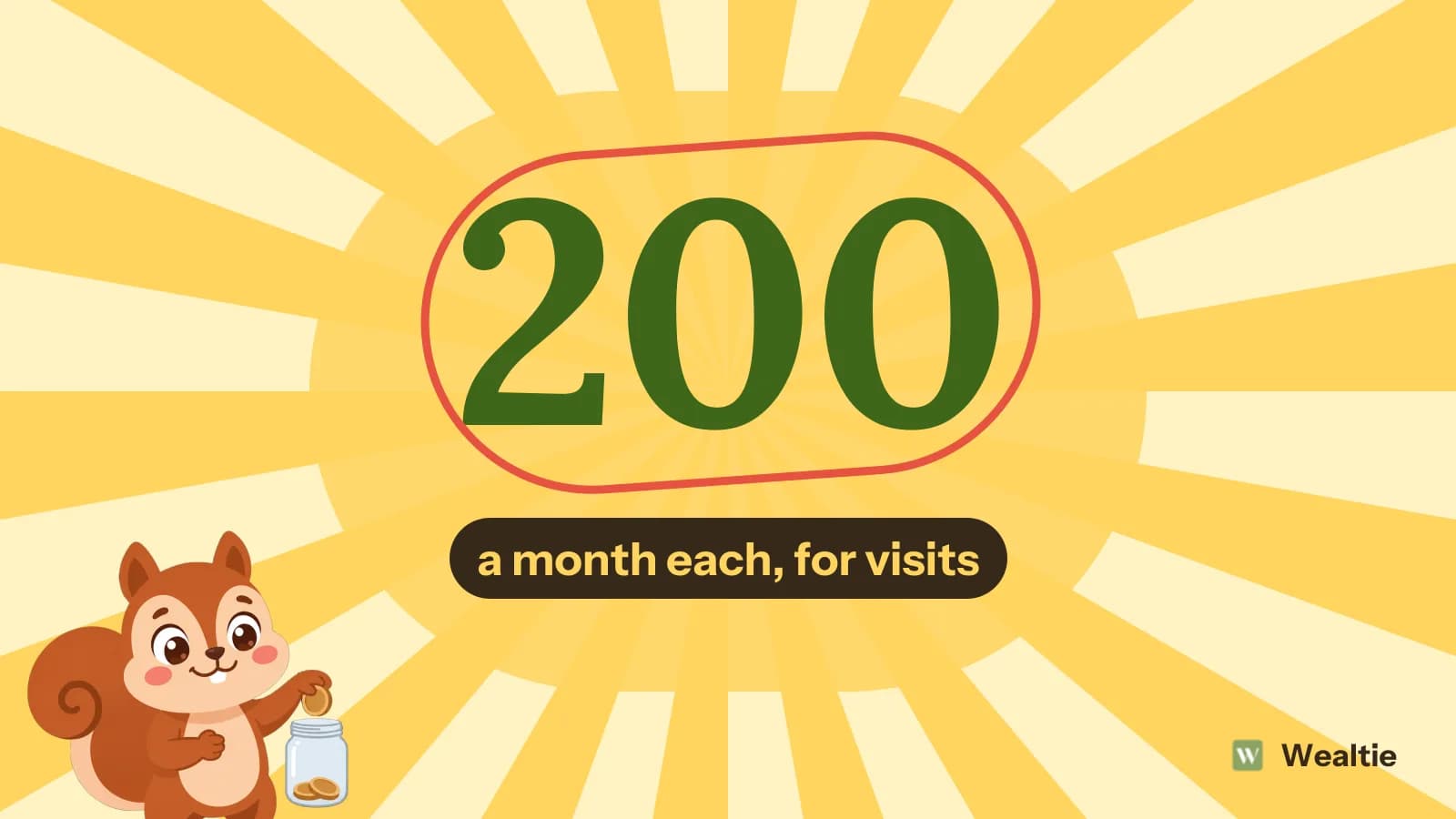
A long-distance relationship budget starts with the cost of each visit, multiplied by how often you'll see each other. In a worked example, a visit every six weeks costs about 2,400 a year each, or 200 a month.
 By Wealtie Team · 3 min read
Key takeaways
- Work out the cost of one visit, then multiply by how often you plan to see each other.
- In a worked example, a visit every six weeks costs about 2,400 a year each, or 200 a month.
- Agree how you'll share costs, especially if one of you earns more or travels more.
- Booking travel early and staying flexible on dates usually saves the most.
How do you budget for a long-distance relationship?
Price a typical visit, multiply by how often you'll see each other, and agree how to share it. Travel is usually the biggest cost, and it's easy to underestimate when it's spread across a year. A plan makes it easier to keep visiting without either of you running short. Distance makes some costs bigger and others smaller: you'll spend more on travel, but often less on weekly dates.
What does a year of visits cost?
Here's a worked example for a couple seeing each other every six weeks, about eight visits a year, taking turns to travel. In round numbers that work in any currency, per person:
| Cost | Per year |
|---|---|
| Travel, four trips at 400 | 1,600 |
| Spending during visits | 600 |
| Gifts and post | 200 |
| Total | 2,400 |
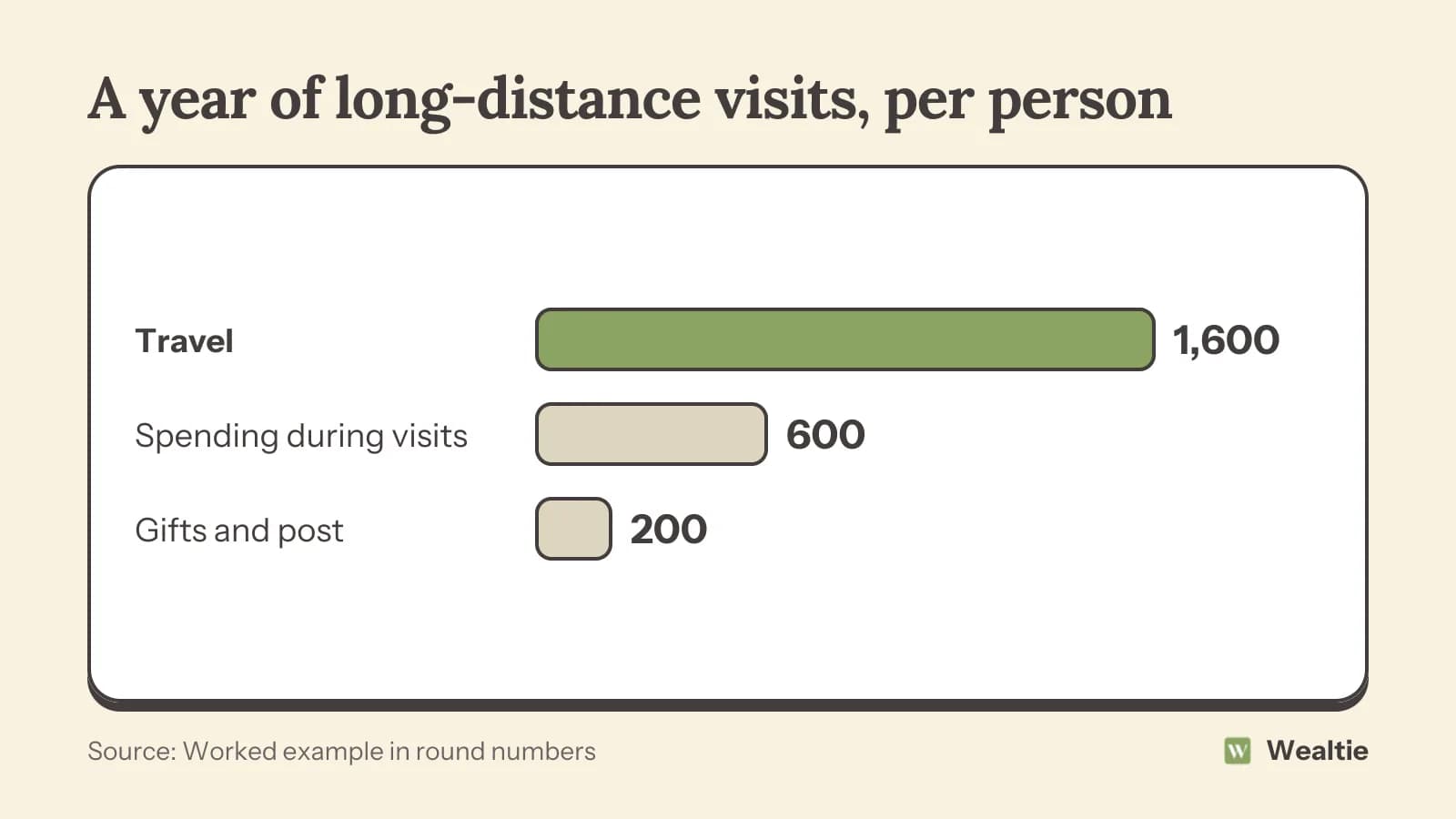
That's 200 a month each. If you live further apart, or one of you travels more, the figures change a lot. Add the costs that come with each trip, like getting to the airport, luggage fees and the occasional taxi.
How should you share the costs?
Talk about it early and agree what's fair, ideally before the first few visits set a pattern. Taking turns to travel splits costs naturally if fares are similar both ways. If one of you earns much more, or travel is cheaper from one side, you might agree that the higher earner pays for more trips, or that the host covers food and activities during visits.
Write down what you've agreed, so neither of you feels you're carrying more, and revisit it every few months as circumstances change. How to split bills as a couple has ideas that work for travel too.
How do you save on travel?
Book early, be flexible and compare options:
- Book fares as soon as you know your dates, since prices often rise closer to travel
- Travel midweek or at quieter times if your schedules allow
- Compare trains, coaches and flights, including the cost of getting to and from stations and airports
- Look for railcards, loyalty schemes or season discounts for regular routes
- Meet halfway sometimes, if that's cheaper for both of you
How to save money on flights goes into the details. Set price alerts for your route, and plan the next visit before the current one ends so you can book while prices are low.
How do you keep visits affordable?
Spend some of the time at home. Cooking together, walks, films and getting to know each other's everyday life cost little and can be some of the best parts of a visit. Meeting each other's friends over a home-cooked meal is cheaper than a restaurant and often more fun. Save the big outings for special occasions, and explore free things in each other's cities, like parks, markets and free museums.
Set a rough budget for each visit, so the host isn't left covering everything.
Should you have a shared pot?
It can help. Each of you puts a set amount into a shared savings pot each month, and travel and visit costs come out of it. It makes sharing feel natural and stops anyone keeping score. Agree what the pot covers: travel only, or dates and gifts too. If you're planning to move to be together, start pricing the move early, including deposits, moving costs and a buffer for job hunting.
If you're planning to close the distance, a shared pot for the move can give you both a goal. Saving for a goal together covers how to do that when you earn different amounts.
What about staying in touch between visits?
Most of it costs little: video calls, messages and shared online activities. Check your phone plan covers international calls or data if you're in different countries, since roaming and call charges can add up. A good plan or calling over the internet usually solves it. Sending post now and then costs little and means a lot.
How do you manage shared costs in Wealtie?
A shared account lets you both see the visit fund and what's been spent, with owner, editor and viewer roles. You can split an expense using current shares or custom amounts, to the cent. The account owner needs Pro to invite, and the other person can be on any plan. If you're in different countries, each account can keep its own currency. The shared accounts page has more, and your expense categories show what visits cost over a year.
Questions people ask
About 2,400 a year each in a worked example with a visit every six weeks, or 200 a month, though distance changes it a lot.
Taking turns to travel is a natural split. If one earns more or travel is cheaper from one side, agree a different split and write it down.
Book early, travel at quieter times, compare trains, coaches and flights, and sometimes meet halfway.
It can help. Each puts in a set amount monthly, and visit costs come out of it, so nobody keeps score.
This article is general information, not financial, tax or legal advice. Your situation is your own; check the numbers that apply to you before you act on them.