Budgeting: How to save money on taxis and ride-hailing
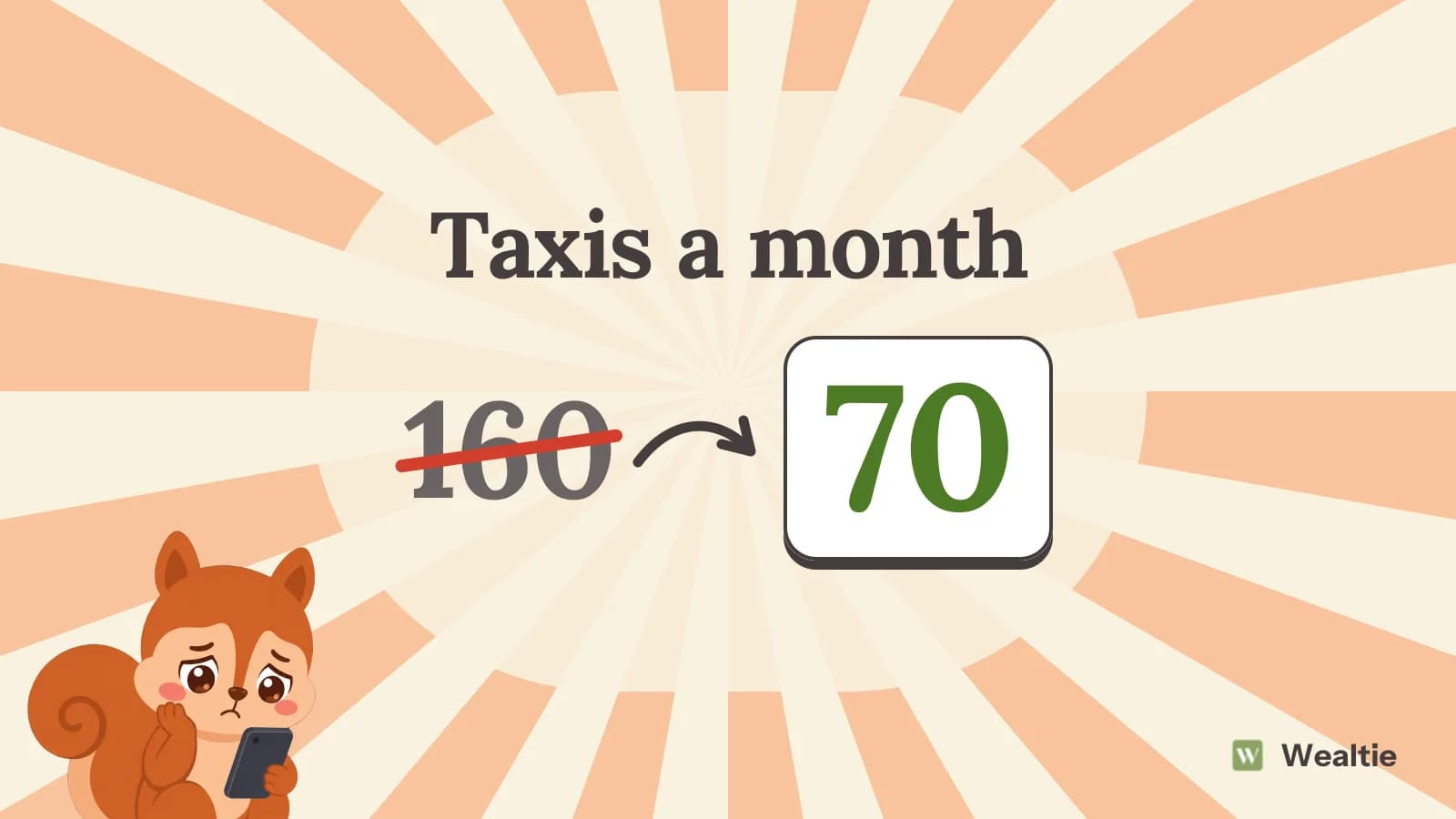
To save money on taxis, add up a month of rides, then plan journeys so you're not booking at the last minute, share rides, avoid surge times and use public transport where it works. In a worked example, 160 a month drops to 70.
 By Wealtie Team · 3 min read
Key takeaways
- Add up a month of taxi and ride-hailing journeys, since small rides add up quickly.
- In a worked example, planning ahead and sharing rides cut 160 a month to 70.
- Surge pricing at busy times can multiply the fare, so waiting a few minutes or walking a little way can help.
- Keep taxis for the times they're worth it, like late at night or when safety matters.
How do you save money on taxis?
Find out how much you spend, then cut the rides you could have planned around. Taxis and ride-hailing apps are convenient, and the cost of one ride rarely feels like much. Over a month, though, they can add up to more than a public transport pass.
Safety comes first. Taking a taxi home late at night, or when you're unwell, is money well spent. The savings are in the other rides, the ones booked out of habit or because you left a few minutes late.
How much do you spend?
Look at your ride-hailing app's history or your bank statement for the last month. Here's a worked example in round numbers that work in any currency:
| Rides a month | Average fare | Total | |
|---|---|---|---|
| Before | 16 | 10 | 160 |
| After | 7 | 10 | 70 |
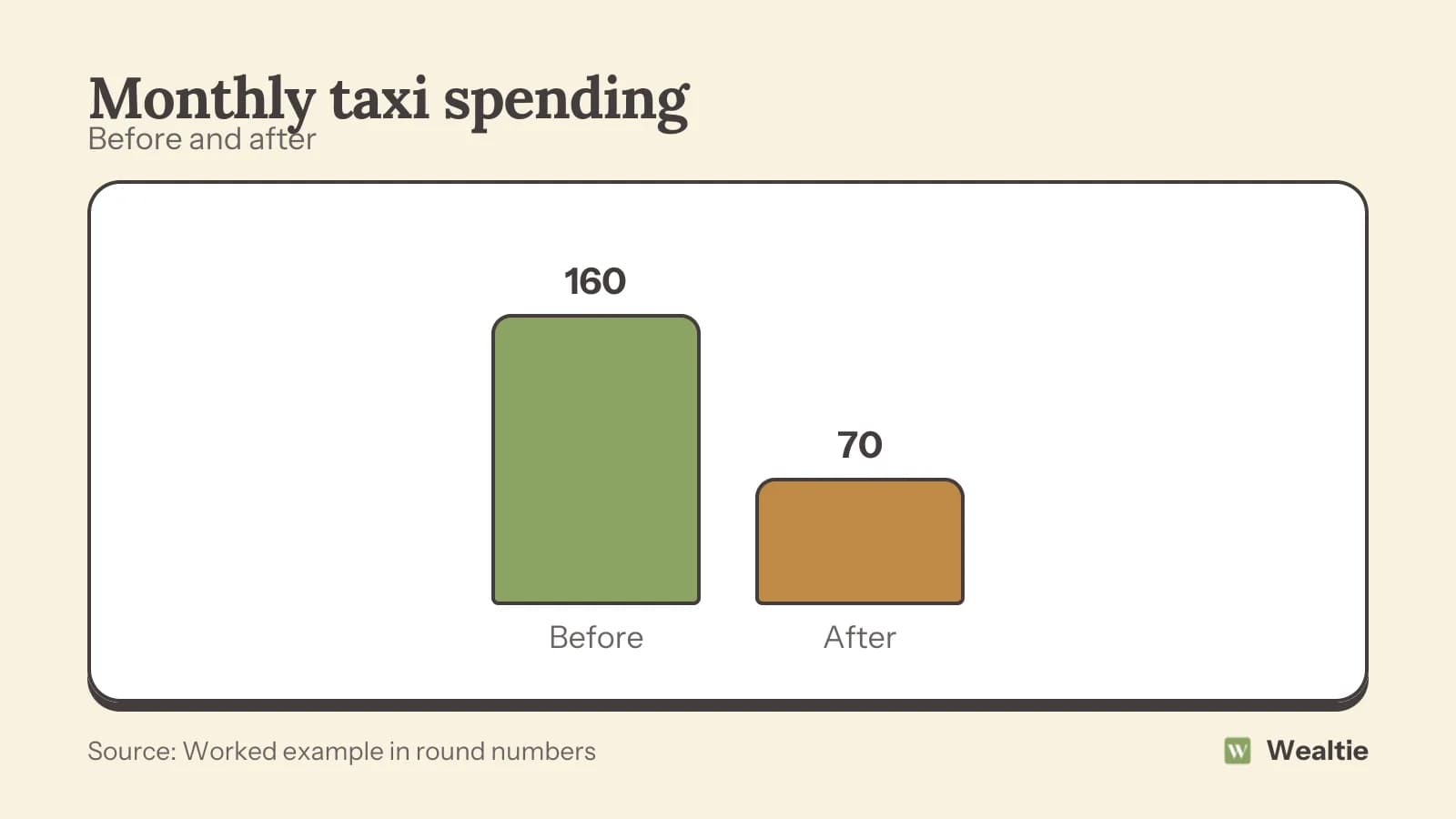
Going through the list ride by ride shows which ones were worth it. The rides that went were the last-minute ones: running late for work, short trips that could have been walked, and the ride home after an evening when public transport was still running.
Why do last-minute rides cost so much?
Partly because they're the ones you'd have planned differently with ten minutes' notice, and partly because of surge or peak pricing. Many apps charge more when demand is high, like rush hour, bad weather, or when events finish.
When the fare looks high, wait a few minutes, walk away from the busiest spot, or check whether another app is cheaper. Leaving five minutes earlier often means you can take the bus instead of a taxi. Turning on fare alerts or checking the estimate before you confirm makes it easier to say no to an expensive ride.
How else can you spend less?
A few habits help:
- Share rides with friends going the same way and split the fare
- Combine trips, so one ride covers two errands
- Check public transport before booking, especially for routes you take often
- Walk short distances when it's safe and the weather allows
- Use a pass or travel card if you take public transport regularly, since it can make the switch cheaper
- Book ahead for airport trips, which can be cheaper than hailing on the day
For regular journeys, like a commute, compare the monthly cost of taxis with a transport pass or a bike. How to save money on gas helps if you drive instead.
What about nights out?
Plan the journey home before you go. Check when the last train or bus leaves, and agree with friends to share a taxi if you'll need one. Splitting one fare four ways costs far less than four separate rides.
If you regularly take taxis after nights out, give it a line in your budget so it doesn't come as a surprise. Setting a budget for the whole night, including the ride home, helps you see the full cost before you go out.
When is a taxi worth it?
When safety matters, when you're carrying a lot, when you're travelling with young children and public transport would be hard, or when it saves a lot of time for something important. The point isn't to never take one, but to choose when. Keeping a small amount in your budget for taxis means the ones you do take don't feel like a failure.
How do you budget for taxis if you don't drive?
On purpose, as part of your transport. If you don't own a car, taxis can be a sensible part of getting around and still cost less than running a car. A car's yearly cost, once you add insurance, tax, fuel, servicing and the value it loses, can easily run into thousands, so several taxi rides a month can still come out ahead.
Set a monthly amount, say 60, alongside a public transport pass, and use taxis for the trips where they make the most difference: heavy shopping, late nights and appointments that are hard to reach. Car clubs or occasional hire can cover longer trips. Review the total every few months, and if taxis creep well above the plan, look at which trips could move to public transport or be combined.
How do you track taxi spending in Wealtie?
Give taxis their own line in your expense categories, separate from other transport, so you can see what they cost each month. Giving the category a share of your monthly limit in the budget tracker keeps it in view.
Questions people ask
Plan journeys to avoid last-minute rides, share with friends, avoid surge times and check public transport before booking.
Many ride-hailing apps raise prices when demand is high, such as rush hour, bad weather or after events.
Public transport is usually cheaper, especially with a pass. Shared taxis can be competitive for groups.
When safety matters, when you're carrying a lot or travelling with young children, or when it saves time for something important.
This article is general information, not financial, tax or legal advice. Your situation is your own; check the numbers that apply to you before you act on them.