Saving: A kid's first bank account: when and how to open one
A kid's first bank account helps children learn to save, spend and track money, and many banks offer free accounts with parental controls. In a worked example, saving 5 a week from age eight builds 1,300 by age thirteen.
 By Wealtie Team · 3 min read
Key takeaways
- A kid's first bank account teaches saving, spending and tracking money.
- Younger children often start with a savings account, teens with a spending account and card.
- Look for no fees, parental controls and an easy app.
- Regular small deposits matter more than the amount.
When should you open a kid's first bank account?
There's no single right age. Many parents open a savings account when a child is young, so birthday money and pocket money can be saved. Spending accounts with a debit card are often available from around the early teenage years, depending on the bank and country. A kid's first bank account is less about the money itself and more about learning how money works: saving, spending, checking a balance and seeing it grow.
Here's a worked example of a child saving 5 a week from age eight, in round numbers that work in any currency, before any interest:
| Age | Saved |
|---|---|
| Age 9 | 260 |
| Age 11 | 780 |
| Age 13 | 1,300 |
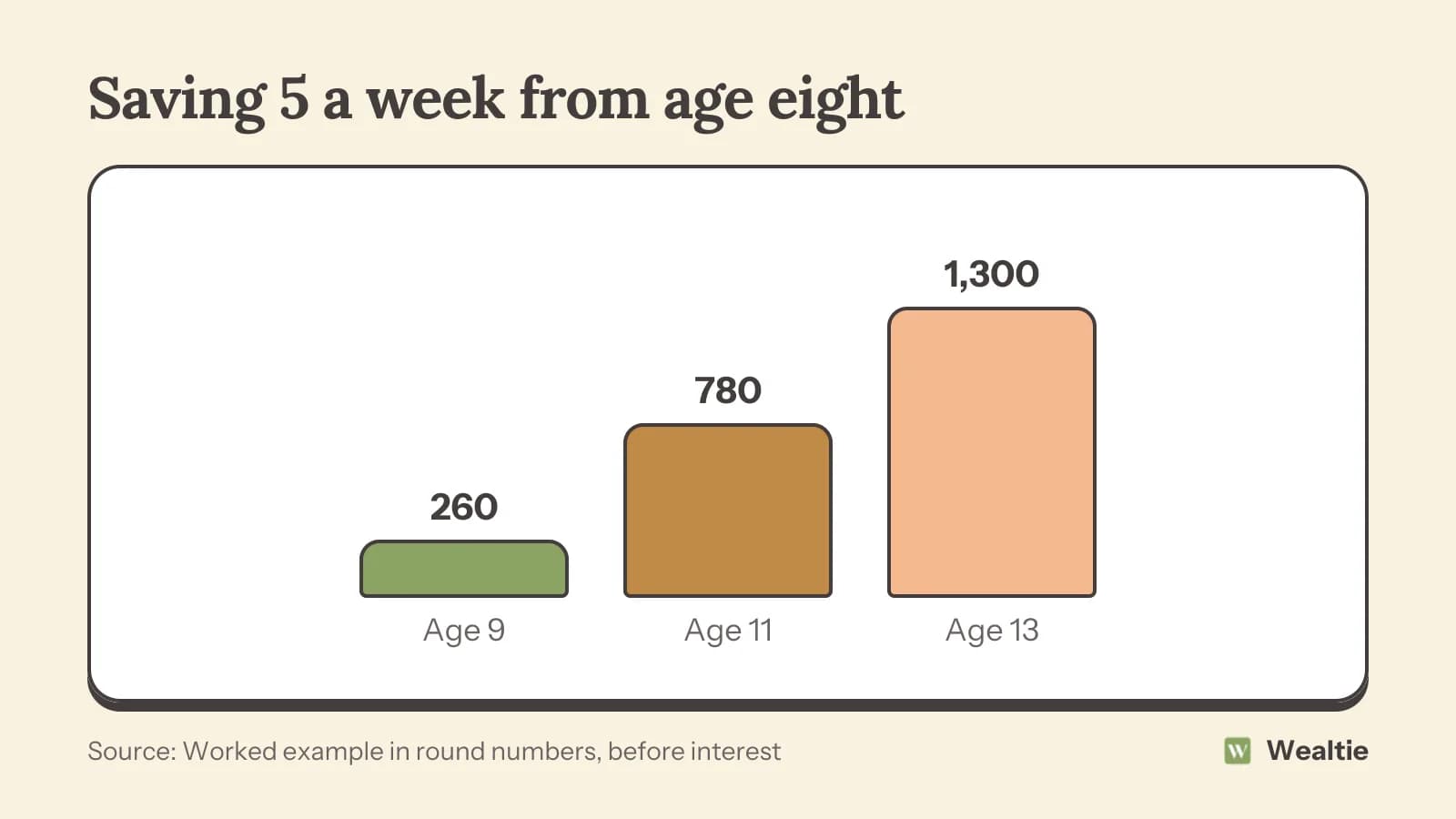
Small, regular amounts add up. By thirteen, the child has 1,300 saved and a habit that's likely to last.
What types of accounts are there?
Children's savings accounts
These hold money for the future, often with no card. They're good for birthday money, gifts and saving towards bigger goals.
Children's spending accounts
These come with a debit card and an app, often with parental controls. They suit older children who are ready to manage their own spending.
Prepaid cards for kids
Some families use prepaid cards with parental apps instead of a bank account. Check the fees, since some charge monthly, which can make them more expensive than a free children's account.
What should you look for?
No fees
Most children's accounts should be free to run.
Parental controls
Spending limits, notifications and the ability to block certain shops or online spending help parents guide younger children.
An easy app
A clear app lets children see their balance, track spending and set savings goals.
Savings goals
Some accounts let children create pots for things they're saving for, which makes goals feel real.
Interest
Savings accounts that pay interest show children how money can grow, though the amount matters less than the habit.
How do you teach money skills with an account?
Pay pocket money into it
Regular deposits help children plan and budget. Pocket money by age covers setting amounts, and paying kids for chores covers linking money to tasks.
Set a savings goal together
Choosing something to save for, like a toy, game or day out, makes saving meaningful.
Check the balance together
Looking at the app together each week helps children understand where their money goes.
Let them make small mistakes
Spending money on something they later regret is a valuable lesson when the amounts are small.
Talk openly about money
Explaining how your own budget works helps children see money as something to plan. How to talk to kids about money has ideas.
What about teenagers?
Teens with part-time jobs or more independence benefit from a spending account and a simple budget. How to budget your first paycheck as a teen and how to budget as a teenager cover the next steps.
Involve your child in choosing and opening the account. Visiting a branch or setting up the app together makes it feel exciting and gives you a chance to explain what a bank does, how interest works and why saving matters. Children who feel ownership of their account are more likely to take an interest in it.
Gifts from relatives are a great opportunity to practise. When a child receives birthday or holiday money, you might agree that part goes into savings and part can be spent. Talking about the split helps them think about short-term wants and longer-term goals.
As children get older, gradually give them more control. A younger child might need approval for every purchase, while a teenager can manage a monthly budget with occasional check-ins. Letting them take on more responsibility step by step builds confidence and good habits.
Remember that the aim is learning, not perfection. Children will sometimes overspend or forget to save. Calm conversations about what happened and what they'd do differently teach more than strict rules.
Finally, keep any account details and passwords safe, and teach children never to share their card details or codes, even with friends.
Compare a few accounts before choosing. Some offer extra features like chore tracking, savings rewards or the ability for grandparents to send money directly. Picking one that fits your family's routine makes it more likely the account will be used and enjoyed, rather than forgotten after the first few weeks.
How can Wealtie help families learn about money?
Older children can use their own Wealtie account to log spending in expense categories and see where their pocket money goes. Setting a small monthly budget for treats or games, and seeing a simple record of spending, helps them build habits that last into adulthood.
Questions people ask
Many families open a savings account when a child is young, and a spending account with a card in the early teens, depending on the bank.
No fees, parental controls, an easy app, savings goals and, for savings accounts, some interest.
Small, regular amounts matter most. In a worked example, saving 5 a week from age eight built 1,300 by age thirteen.
Pay pocket money into it, set savings goals together, check the balance weekly and let children learn from small mistakes.
This article is general information, not financial, tax or legal advice. Your situation is your own; check the numbers that apply to you before you act on them.