Budgeting: What to do with your first paycheck as a teenager
With your first paycheck as a teenager, start by understanding your payslip, then split the money between spending, saving and a goal before you spend any of it. In a worked example, a 200 paycheck splits into 100 to spend, 60 to save and 40 towards a goal.
 By Wealtie Team · 3 min read
Key takeaways
- Understand your payslip first, so you know what you earned and what was taken off.
- In a worked example, a 200 paycheck splits into 100 to spend, 60 to save and 40 towards a goal.
- Saving a little from every pay builds a habit that lasts.
- Keep your bank card and login details private, and watch for scams aimed at young workers.
What should you do with your first paycheck as a teenager?
Make a plan before you spend it. Your first paycheck as a teenager is exciting: it's money you earned yourself, and you get to decide what happens to it. The habits you start now, like saving a little and knowing where your money goes, can stay with you for life. A simple plan lets you enjoy your money and still have some left for things that matter later. You don't need to be perfect; even saving a small amount from each pay is a great start.
How do you read your payslip?
Check it carefully. Your payslip shows how much you earned before anything was taken off, called gross pay, and how much you received, called net pay or take-home pay. The difference might include tax or other deductions, depending on where you live and how much you earn. Check that your hours and pay rate are right. If something looks wrong, ask your employer politely. Gross vs net income explains the difference in more detail. Keep your payslips somewhere safe, since you may need them later for tax or to prove your income.
How should you split your paycheck?
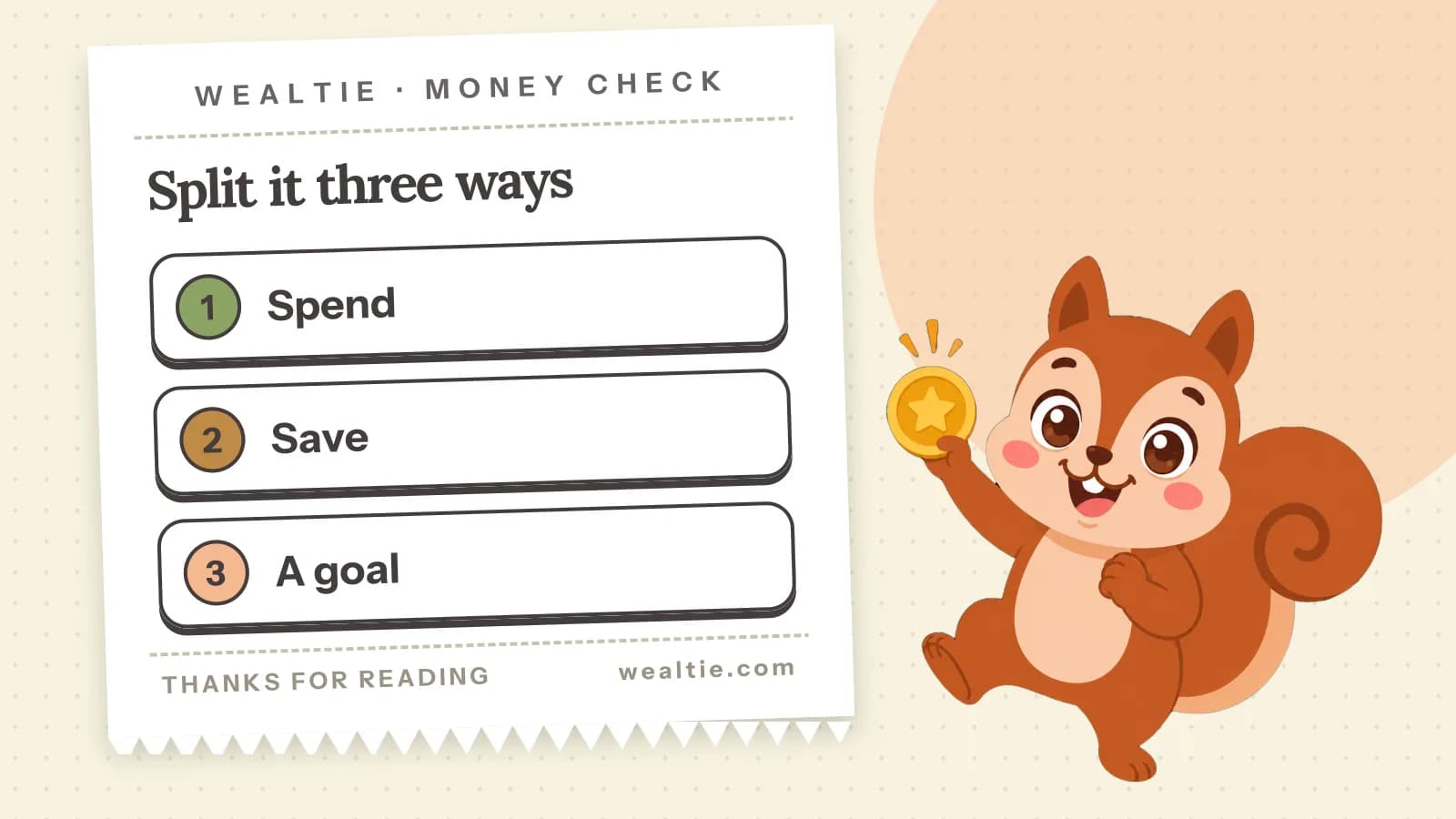
A simple split into three parts works well. Here's a worked example for a 200 paycheck, in round numbers that work in any currency:
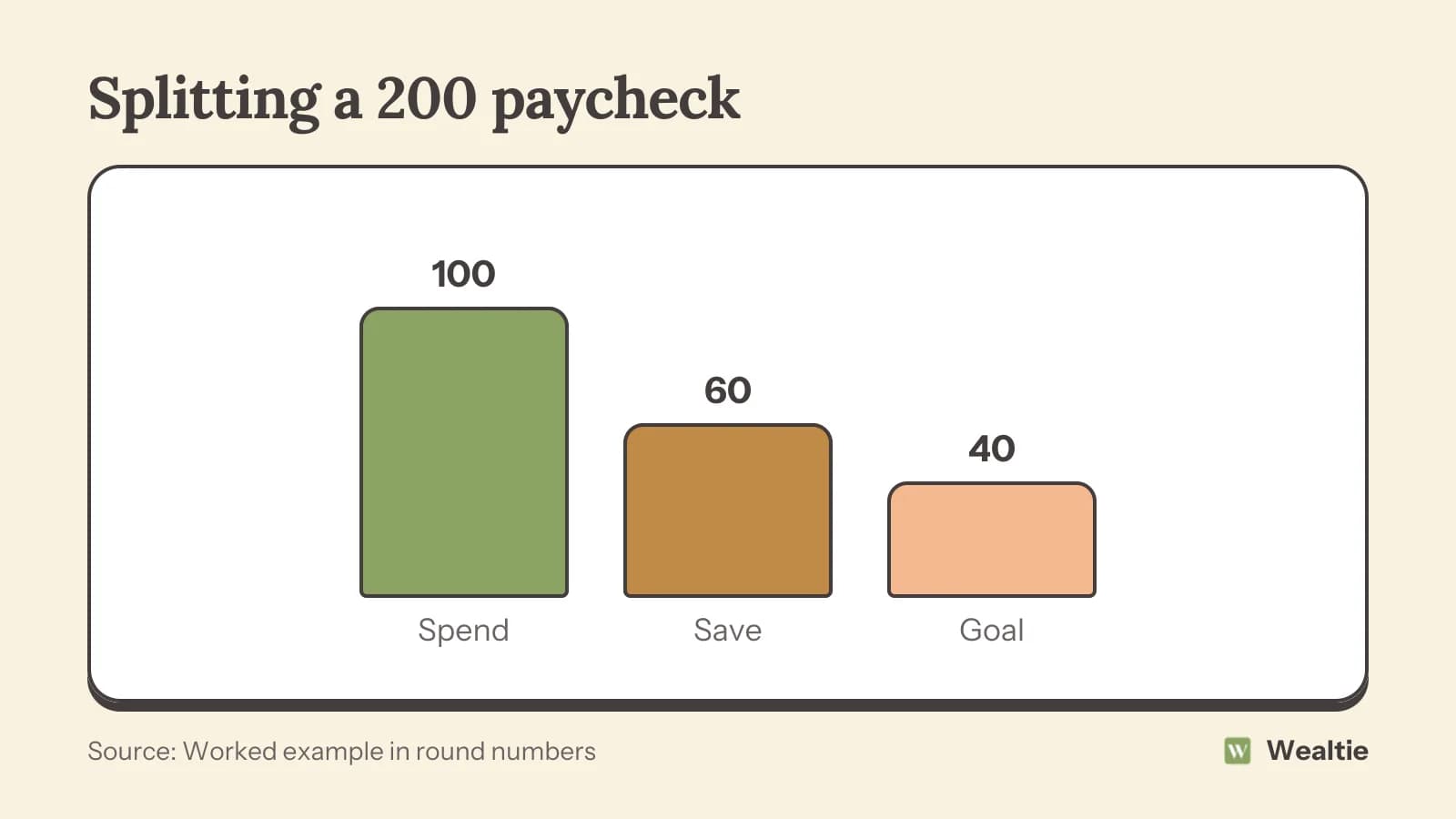
In this example, 100 is for spending, 60 goes into savings and 40 goes towards a goal, like a new phone, a trip or driving lessons. Your own split can be different, but saving something from every pay is the most important part.
Pay yourself first
Move your savings and goal money as soon as you're paid, before you start spending. That way, saving happens automatically, and you spend what's left without worrying. Pay yourself first explains why this works so well.
Open a savings account
A separate savings account makes it harder to spend your savings by accident. Many banks offer accounts for young people, sometimes with better interest. Ask a parent or carer to help you compare and open one if you need an adult to sign.
What should you save for?
Having a goal makes saving easier. Common goals include:
- A phone, laptop or games console
- Driving lessons or a first car
- A trip with friends
- Money for university or college
- An emergency fund, for when something unexpected comes up
If you're saving 40 a month towards a goal, you'll have 240 after six months. Seeing the total grow is motivating. Writing your goal and its cost on a note, or setting it as a savings target, helps you stay on track when you're tempted to spend.
How do you avoid spending it all at once?
It's tempting to spend a first paycheck quickly. A few habits help:
- Decide how much you'll spend each week, and stick to it
- Wait a day before buying anything big
- Notice small spending, like snacks and drinks, which adds up
- Keep your savings in a separate account so it's not easy to spend
How to budget as a teenager covers making a simple budget that works. Checking your balance once a week takes a minute and stops surprises.
Should you contribute at home?
Some families ask teenagers with jobs to contribute a little towards household costs, or to cover some of their own expenses like phone bills or travel. That's a good way to learn about real-life costs. Talk it through with your parents or carers and agree something fair. Paying for your own phone or travel teaches you what things cost before you live on your own. Pocket money by age covers how families handle money at different ages.
How do you keep your money safe?
Keep your card, PIN and banking login private, even from friends. Be wary of messages offering easy money, asking you to receive and send payments for someone else, or asking for your bank details. These are often scams, and some can get you into serious trouble. If something feels wrong, talk to an adult you trust. Turning on notifications for your account means you'll see every payment straight away.
How do you track your money in Wealtie?
Add your bank account and a separate savings account, and track your spending in expense categories like food, transport and fun. A monthly limit in the budget tracker shows how much you have left, and moving money into savings as a transfer keeps it apart from spending.
Questions people ask
Check your payslip, then split the money between spending, saving and a goal before you spend any of it.
Something from every pay. In a worked example, 60 of a 200 paycheck goes to savings and 40 to a goal.
Gross pay is what you earned before deductions. Net pay is what you receive after them.
Some families ask for a small contribution. Talk it through and agree something fair.
This article is general information, not financial, tax or legal advice. Your situation is your own; check the numbers that apply to you before you act on them.