Budgeting: Should you pay kids for chores?
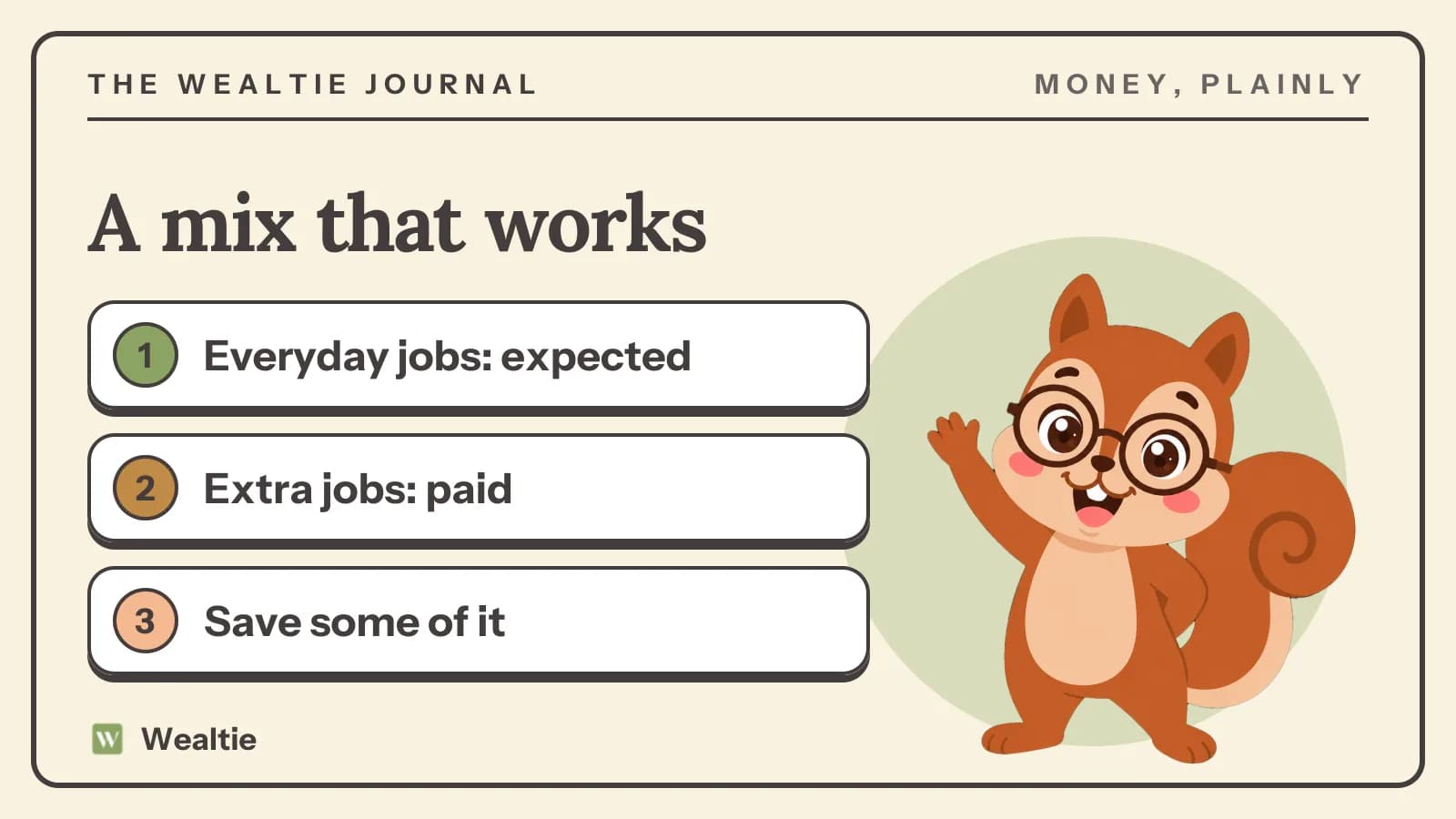
Should you pay kids for chores? Many families find a mix works best, where everyday jobs are expected and extra jobs earn money, and in a worked example a child earns about 10 a month from a few paid extras while learning that work and money are linked.
 By Wealtie Team · 3 min read
Key takeaways
- Many families expect everyday chores and pay only for extra jobs.
- In a worked example, a child earns about 10 a month from a few paid extras.
- Paying for chores links work and money, but can make children ask to be paid for everything.
- Encourage saving some of what they earn, so the lesson goes further.
Should you pay kids for chores?
There's no single right answer, and families do it differently. Some pay for every chore, some pay for none, and many use a mix: everyday jobs are part of family life and expected, while extra jobs earn money. The aim, whichever way you choose, is to teach children that helping at home matters and that money comes from effort.
Thinking about what you want your children to learn helps you choose. Talking it through with any other adults in the household first means children get the same message from everyone.
What are the pros of paying for chores?
Paying for chores can:
- Show children that money is earned through work
- Give them money of their own to manage, save and spend
- Motivate them to help with jobs they wouldn't otherwise do
- Teach them to plan, for example by saving up their earnings for something they want
For many children, earning their first money from a job at home is a proud moment. It also gives them a reason to do a job properly, especially if payment depends on the result.
What are the cons?
Paying for chores can also:
- Lead children to expect payment for everything, even basic tidying
- Make helping feel like a deal rather than part of family life
- Mean children skip chores if they don't need money that week
These are why many families choose a mixed approach. Paying for jobs that should be routine can also be hard to undo later, so it's worth starting with the system you want to keep.
How does a mixed approach work?
Separate expected jobs from paid extras. Everyday jobs, like making their bed, clearing their plate and tidying their room, are part of living in the family and aren't paid. Extra jobs, beyond the usual, can earn money. Here's a worked example of a month of paid extras, in round numbers that work in any currency:
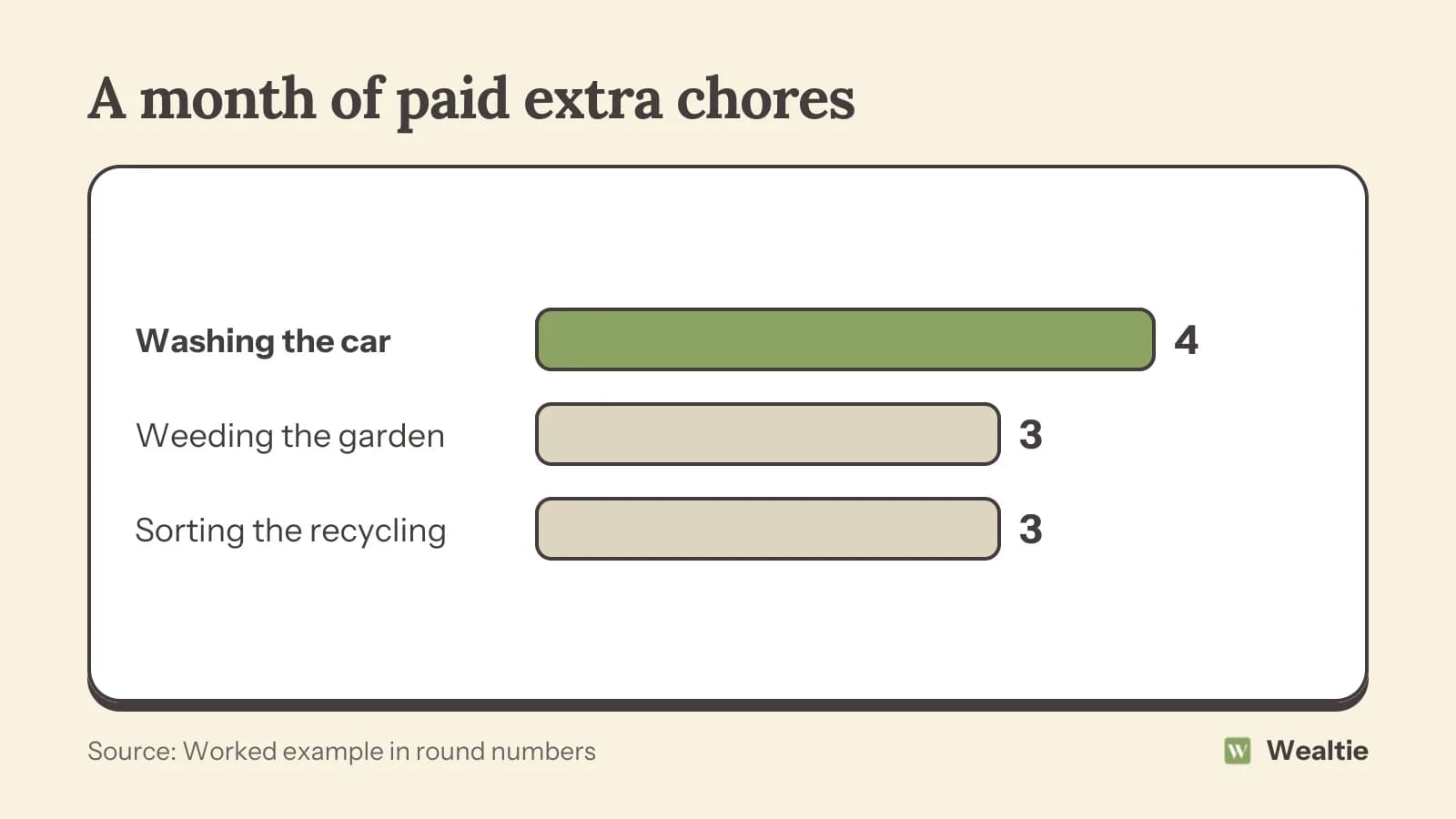
In this example, washing the car, weeding the garden and sorting the recycling earn about 10 a month. Your own amounts depend on your child's age, the jobs and your budget.
Make the rules clear
Write down which jobs are expected and which are paid, and how much each extra job earns. A simple chart on the fridge avoids arguments. Paying on the same day each week, like Saturday, makes it feel like a real payday. Agree what "done" means, so a job half-finished doesn't earn full pay.
How much should you pay?
Small, fair amounts that fit your budget. Pay more for bigger or harder jobs, and less for quick ones. Older children can take on larger jobs for more money. Some families combine a small base allowance with chore earnings, so children have some money even in busy weeks. Pocket money by age covers typical amounts.
Matching jobs to age
Younger children can earn small amounts for simple extra tasks, like pairing socks or watering plants. Older children can take on bigger jobs, like washing the car or helping with the garden, for more. Matching the job to their age keeps it fair and safe.
How do you turn chores into a money lesson?
Encourage saving. Suggest children save part of what they earn, like half, towards something they want. If a child saves 5 a month, they'll have 20 after four months. Waiting and watching the money grow teaches patience and planning. You might also encourage a small amount for giving, if that fits your family's values. Some parents add a little to whatever a child saves, which rewards saving and makes the goal arrive sooner.
Talk about choices too. If they spend all their earnings on sweets, the lesson is that money doesn't stretch to everything. How to save money for your child covers saving on their behalf alongside this.
What about teenagers?
As children grow, chores can become a bridge to a first job. Teenagers can take on bigger tasks, like mowing the lawn or babysitting siblings, for fair pay, or start earning outside the home. How to budget as a teenager is a guide you can share with them as their earnings grow. Paying them fairly for real work also prepares them for how jobs outside the home work.
How can Wealtie help with family money lessons?
Older teens can track their own earnings and spending, with a savings account for a goal and expense categories for what they buy. Seeing a monthly limit in the budget tracker gives them a real-world taste of managing money before they leave home.
Questions people ask
Many families use a mix: everyday chores are expected, and extra jobs earn money.
Small, fair amounts that fit your budget. In a worked example, a few extra jobs earn about 10 a month.
Children may expect payment for everything or skip chores when they don't need money.
Suggest saving part of each payment towards a goal, so they see the money grow over time.
This article is general information, not financial, tax or legal advice. Your situation is your own; check the numbers that apply to you before you act on them.