Budgeting: Keeping up with the Joneses: how to stop spending to match others
Keeping up with the Joneses means spending to match what friends, neighbours or colleagues have, rather than what you need or enjoy. It can quietly drain your budget, but a few habits help you spend on your own terms.
 By Wealtie Team · 3 min read
Key takeaways
- Keeping up with the Joneses means spending to match others rather than your own priorities.
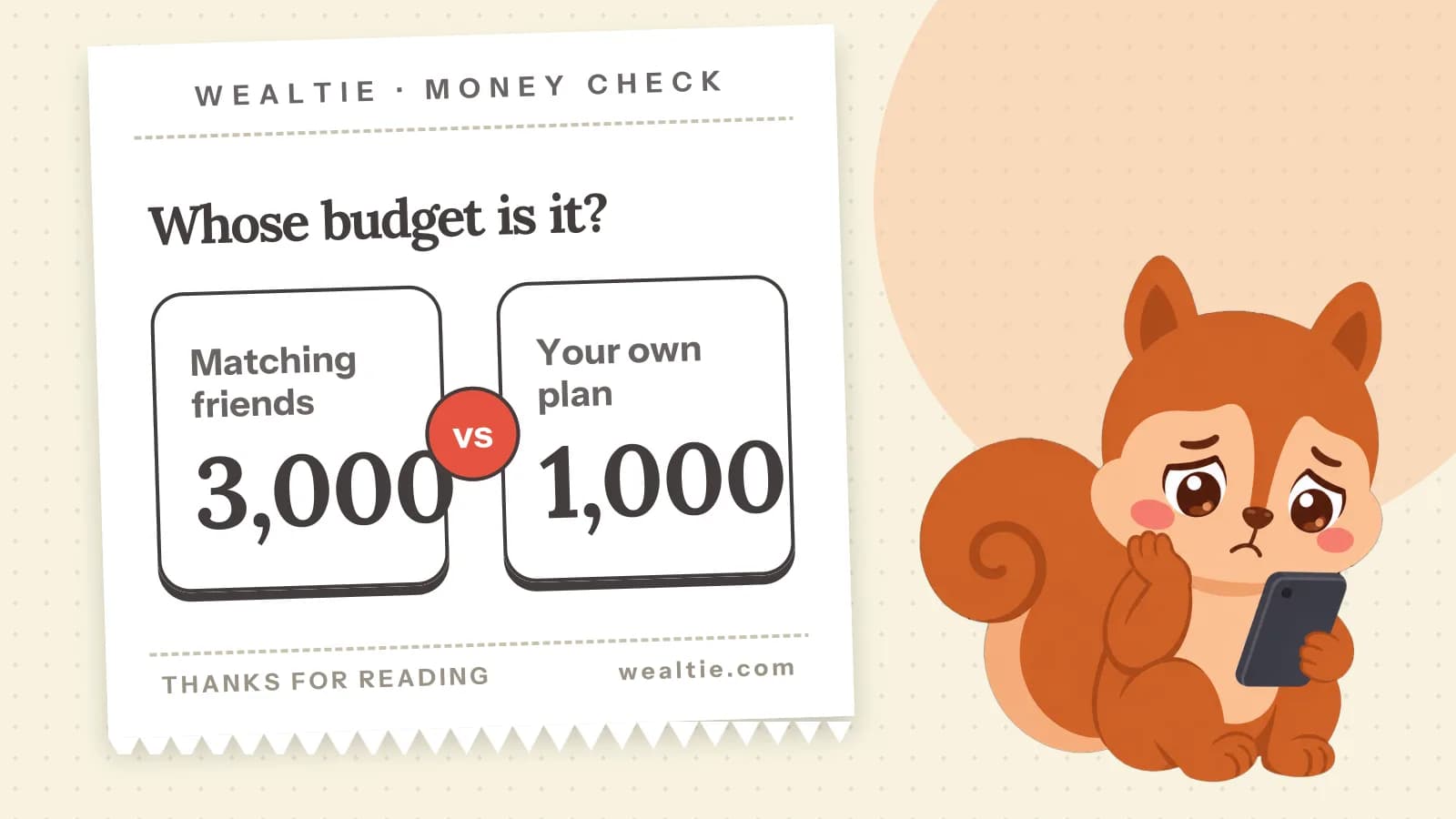
- In a worked example, upgrades bought to keep up cost about 3,000 in a year.
- People only show the best parts of their lives, and many are paying with debt.
- Spending on what you value, and saving first, takes the pressure off.
What does keeping up with the Joneses mean?
Keeping up with the Joneses is an old phrase for spending to match the people around you. A neighbour gets a new car, so yours starts to feel old. Friends book an expensive holiday, so a simple trip feels like a let-down. A colleague has the latest phone, so you upgrade too. None of these choices comes from what you need or enjoy. They come from comparing yourself to others.
It's a natural instinct. People care about fitting in, and money is one of the most visible ways to show status. But matching other people's spending means living by their budget, which may look nothing like yours.
Why do people try to keep up?
Comparison is everywhere
Social media shows a steady stream of holidays, homes, cars and nights out. It's easy to feel behind, even if you're doing well. And the people posting usually show only the best moments.
You don't see the full picture
You see your friend's new car, not the loan behind it. You see the holiday photos, not the credit card bill. Many people who look wealthy are carrying debt to keep up appearances.
Spending feels like belonging
Joining in with expensive plans can feel like the price of staying close to friends. Saying no can feel like stepping back from the group. How to say no to spending with friends covers how to handle that kindly.
What does keeping up with the Joneses cost?
Here's a worked example of upgrades bought over a year to keep up with friends, in round numbers that work in any currency:
| Upgrade | Cost |
|---|---|
| Newer phone | 800 |
| Holiday upgrade | 1,000 |
| Car upgrade costs | 700 |
| Clothes and gadgets | 500 |
| Total | 3,000 |
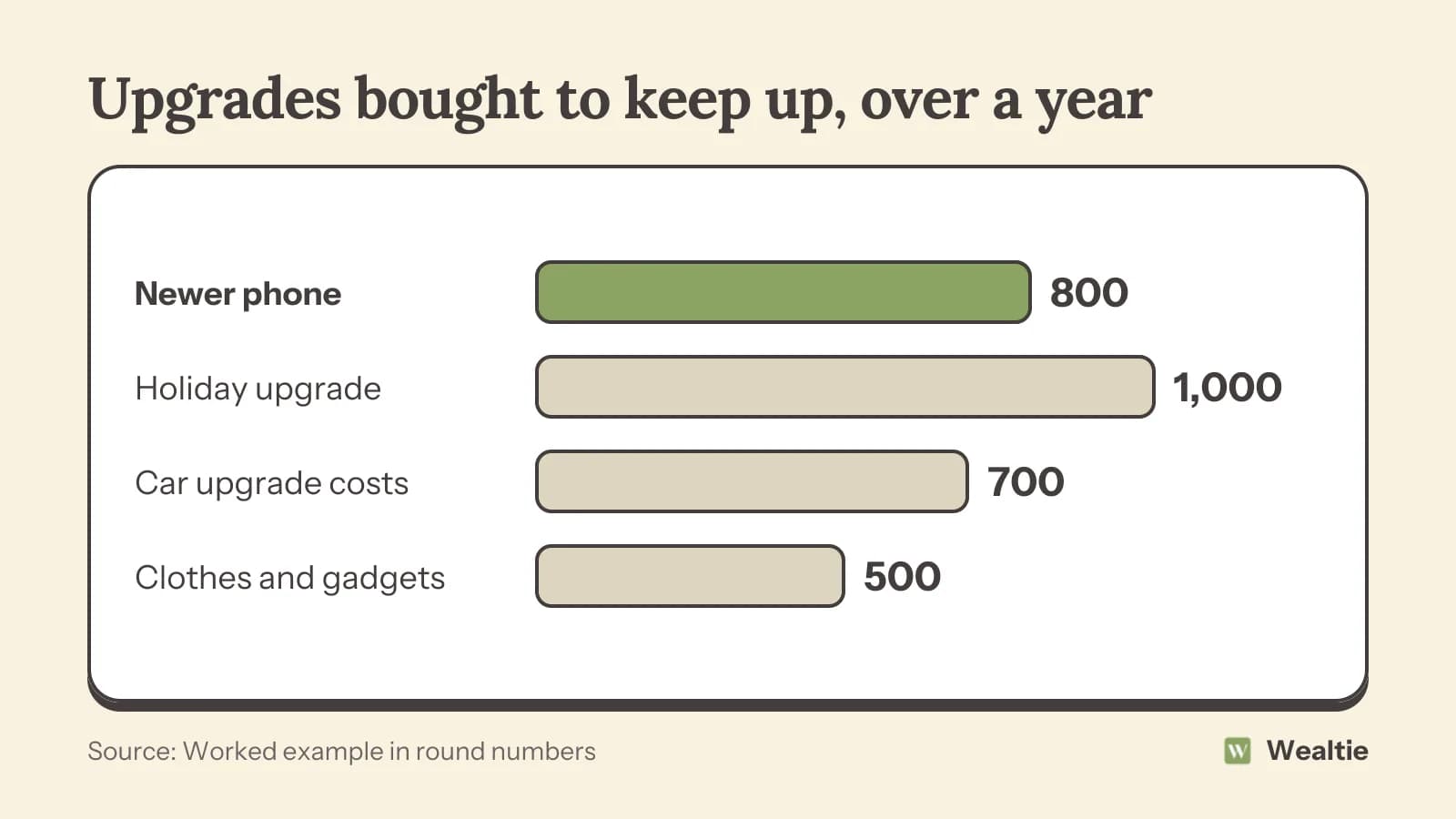
That's 3,000 in a year spent on things that weren't priorities. If the same person spent 1,000 on what they value and saved the rest, they'd have 2,000 more, and possibly a much calmer year. Over a few years, the gap grows into a deposit, an emergency fund or a debt cleared.
How do you stop keeping up with the Joneses?
Decide what you value
Make a short list of the things that matter most to you: maybe travel, good food, time with family or a hobby. Spend on those, and cut back on the rest. When you know your priorities, other people's choices matter less.
Save first
Move money to savings on payday, before you spend anything else. What's left is yours to spend however you like, without guilt and without falling behind on goals. Pay yourself first explains how.
Notice the trigger
When you feel the urge to buy something, ask whether you'd still want it if nobody else could see it. If the answer is no, it's probably about keeping up rather than wanting it.
Spend less time comparing
Mute accounts that leave you feeling behind, and limit time on apps that push you to spend. Less exposure means fewer urges. Many people find they want far fewer things after a few weeks of seeing fewer ads and posts.
Talk openly with friends
Many friends feel the same pressure. Suggesting cheaper plans, like a dinner at home or a walk instead of a pricey outing, often brings relief. You might find you're not the only one trying to keep up.
Measure yourself against your own goals
Instead of comparing with others, compare with where you were. Did you save more this month than last? Is a debt smaller than it was in spring? Progress on your own goals is a far better measure than what a neighbour drives, and it's one you control. Writing down a goal, like a holiday fund or a cleared card, gives you something to aim for that's yours alone.
What about lifestyle creep?
Keeping up with others often goes hand in hand with lifestyle creep, where spending rises every time income does. Both leave you earning more without feeling better off. Setting a budget that grows more slowly than your income keeps both in check.
When spending feels like stress relief
If you find yourself buying things to feel better after scrolling or a hard day, that's emotional spending. Emotional spending covers how to spot it and what to do instead.
How does Wealtie help you spend on your own terms?
Set expense categories for what you value and give each a monthly budget. Seeing your spending laid out shows where money goes on things that matter to you and where it goes on keeping up. Your budget is private, so the only person you're comparing with is yourself last month.
Questions people ask
Spending to match what friends, neighbours or colleagues have, rather than what you need or enjoy.
In a worked example, upgrades bought to keep up with friends cost about 3,000 in a year.
Decide what you value, save first, ask whether you'd want a purchase if nobody could see it and spend less time comparing.
Comparison is everywhere, people only show the best parts of their lives, and spending can feel like a way to belong.
This article is general information, not financial, tax or legal advice. Your situation is your own; check the numbers that apply to you before you act on them.