Budgeting: How to say no to spending with friends and keep the friendships
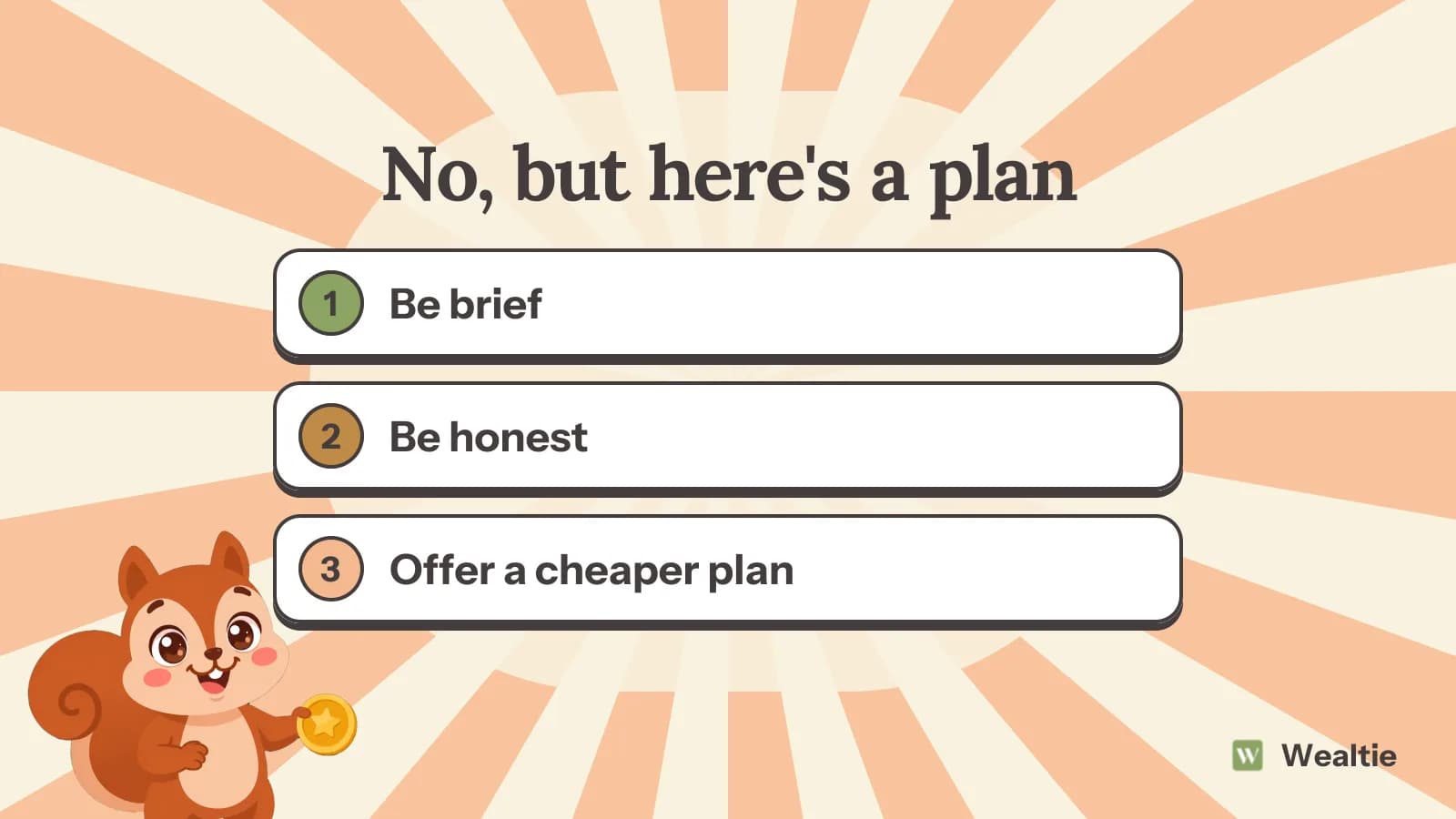
To say no to spending with friends, be honest and brief, then suggest a cheaper alternative. "I'm saving this month, but I'd love to do a picnic on Sunday" keeps the friendship and your budget, and most friends will understand.
 By Wealtie Team · 3 min read
Key takeaways
- You don't need a long explanation; a short, honest no is usually enough.
- Pairing a no with a cheaper alternative keeps you in touch with friends.
- For group plans, join part of it or agree the cost before booking.
- Many friends are relieved when someone suggests cheaper plans.
How do you say no to spending with friends?
Briefly, honestly and with an alternative. Social plans are one of the hardest parts of sticking to a budget, because saying no can feel like letting people down. In practice, most friends care far more about seeing you than about where you go, and a clear, friendly no rarely causes the problem people fear.
What should you say?
Something short and true. You don't owe anyone a detailed account of your finances. A few examples:
- "I'm saving for something this month, so I'll skip dinner, but I'm free for a walk on Saturday."
- "That's a bit over my budget right now. Could we do drinks at mine instead?"
- "I'd love to come for the main bit, but I'll pass on the second venue."
- "Money's tight this month. Can we do something next month instead?"
The pattern is simple: say no to the cost, not to the friend, and offer something else. It keeps you in touch, and it often leads to plans everyone enjoys more.
What are good cheaper plans to suggest?
Plenty, depending on your friends and the season:
- A picnic or a walk with coffee
- A dinner at someone's home, with everyone bringing a dish
- A film or games night
- Free events, like outdoor concerts, markets or exhibitions
- Cooking a meal together
- A cheap café instead of a restaurant
Suggest them before plans are made, not just as a response. Having two or three cheap ideas ready means you can reply to an invitation straight away with something positive, instead of only saying no. Rotating who hosts a dinner at home spreads the cost and gives everyone a turn. If you're the one who often picks the plan, you can steer it towards something that suits your budget without anyone noticing.
How do you handle group plans?
Ask about the cost early, before anything's booked. Group plans can grow quickly, with a dinner, then drinks, then a taxi. If the total is more than you can manage, say so early and join for part of it, like the dinner but not the drinks.
When a bill is split evenly and you've had much less, it's fair to pay for what you ordered. Saying "I'll just pay for mine" at the start is easier than raising it at the end. Agree whether rounds are happening before they start, since rounds in a large group can cost much more than buying your own.
Splitting travel costs with friends has a system for bigger shared costs, like trips.
What if your friends earn much more than you?
It's common, and it's worth talking about once, plainly. Something like "I love our dinners, but I can't do expensive places every week" usually lands well. Good friends will adjust, and some will be glad someone said it. Taking turns to pick plans, with a mix of cheap and pricier ones, can work for groups with different incomes.
You don't need to match anyone else's spending, and trying to usually ends in debt or resentment. Your budget is about your goals and your income, not theirs.
How do you avoid feeling left out?
Plan ahead. If you know a birthday, a wedding or a trip is coming, set aside money for it in advance, so you can say yes to the things that matter most. A small monthly amount for social plans means you can join in without guilt. How much spending money per month helps you set it.
Choose what to say yes to, and write those dates down early. Saying no to a regular expensive dinner might mean you can afford a friend's birthday weekend, which you'd regret missing much more.
What if friends react badly?
Most won't, but if someone repeatedly pressures you or makes you feel bad about money, that's worth noticing. A friendship that only works when you spend more than you can afford is costing you more than money. Spending time with friends who are happy with cheaper plans can make sticking to a budget much easier. Many people find that once they start suggesting cheaper plans, friends who were also stretched start doing the same.
How do you plan for social spending in Wealtie?
Give social plans their own line in your expense categories, like Going Out, and a share of your monthly limit in the budget tracker. When the share's nearly gone, you'll know it's time to suggest the free plan.
Questions people ask
Briefly and honestly, without a long explanation, and suggest a cheaper alternative, like a walk or a dinner at home.
Mention once that you can't do expensive plans every time, suggest cheaper ones and take turns choosing.
Say at the start that you'll pay for your own order, and agree whether rounds are happening before they start.
Suggest picnics, walks, dinners at home, games nights and free events, and set a monthly amount for social plans.
This article is general information, not financial, tax or legal advice. Your situation is your own; check the numbers that apply to you before you act on them.