Income & freelancing: Insurance for freelancers: which policies you need and what they cost
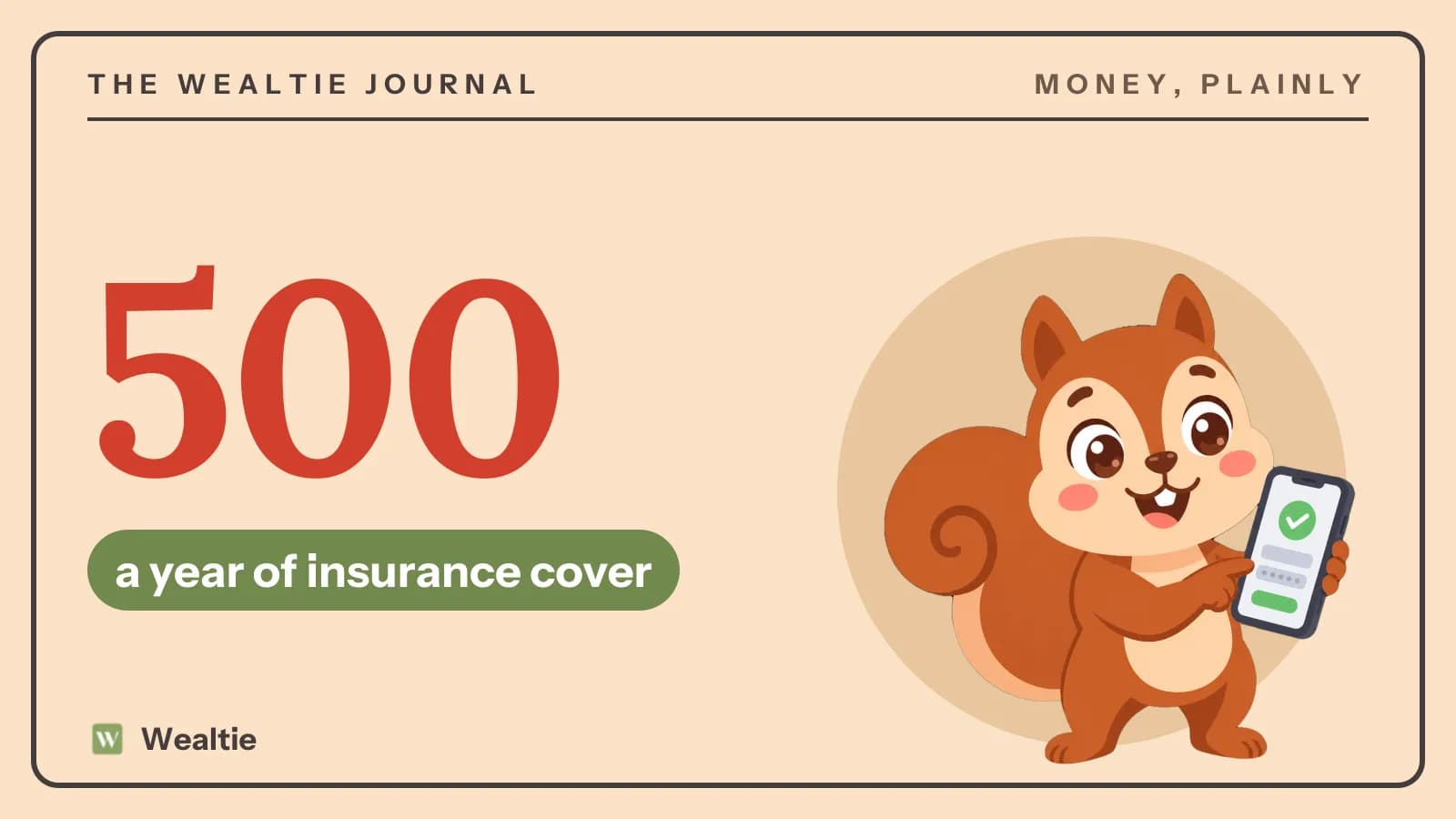
Insurance for freelancers usually starts with professional indemnity or public liability, depending on your work, then equipment cover and income protection. In a worked example, a freelance designer's yearly insurance costs about 500.
 By Wealtie Team · 3 min read
Key takeaways
- Insurance for freelancers depends on the work you do and the risks you face.
- In a worked example, a freelance designer pays about 500 a year.
- Professional indemnity and public liability are the most common business policies.
- Income protection matters because there's no employer sick pay.
What insurance for freelancers do you need?
When you work for yourself, there's no employer to cover you if a client claims you made a mistake, someone is hurt at your workplace or your laptop is stolen. There's also no sick pay if you can't work. Insurance for freelancers fills some of those gaps. Which policies you need depends on the work you do, who your clients are and what you'd struggle to pay for yourself. In a worked example, a freelance designer's yearly insurance costs about 500.
Some clients require certain insurance before they'll hire you, and some professions require it by law or regulation. Requirements vary by country and industry, so check what applies to you.
It's tempting to skip insurance when money is tight, especially in your first year. But one claim or a stolen laptop can cost far more than a year of cover, and could put your business at risk. Building insurance into your rate from the start makes it a normal business cost rather than a painful extra.
It's worth reading the contracts your clients send you. Many state the insurance they expect and the amount of cover, especially larger companies and public bodies. Knowing this before you buy means you won't pay for the wrong level of cover, or find out at the last minute that you can't sign a contract. If you're unsure, a broker who specialises in small businesses can explain what's needed for your work, often at no extra cost to you.
What does freelance insurance cost?
Here's a worked example for a freelance designer working from home, in round numbers that work in any currency:
| Policy | A year |
|---|---|
| Professional indemnity | 200 |
| Income protection | 180 |
| Equipment cover | 70 |
| Public liability | 50 |
| Total | 500 |
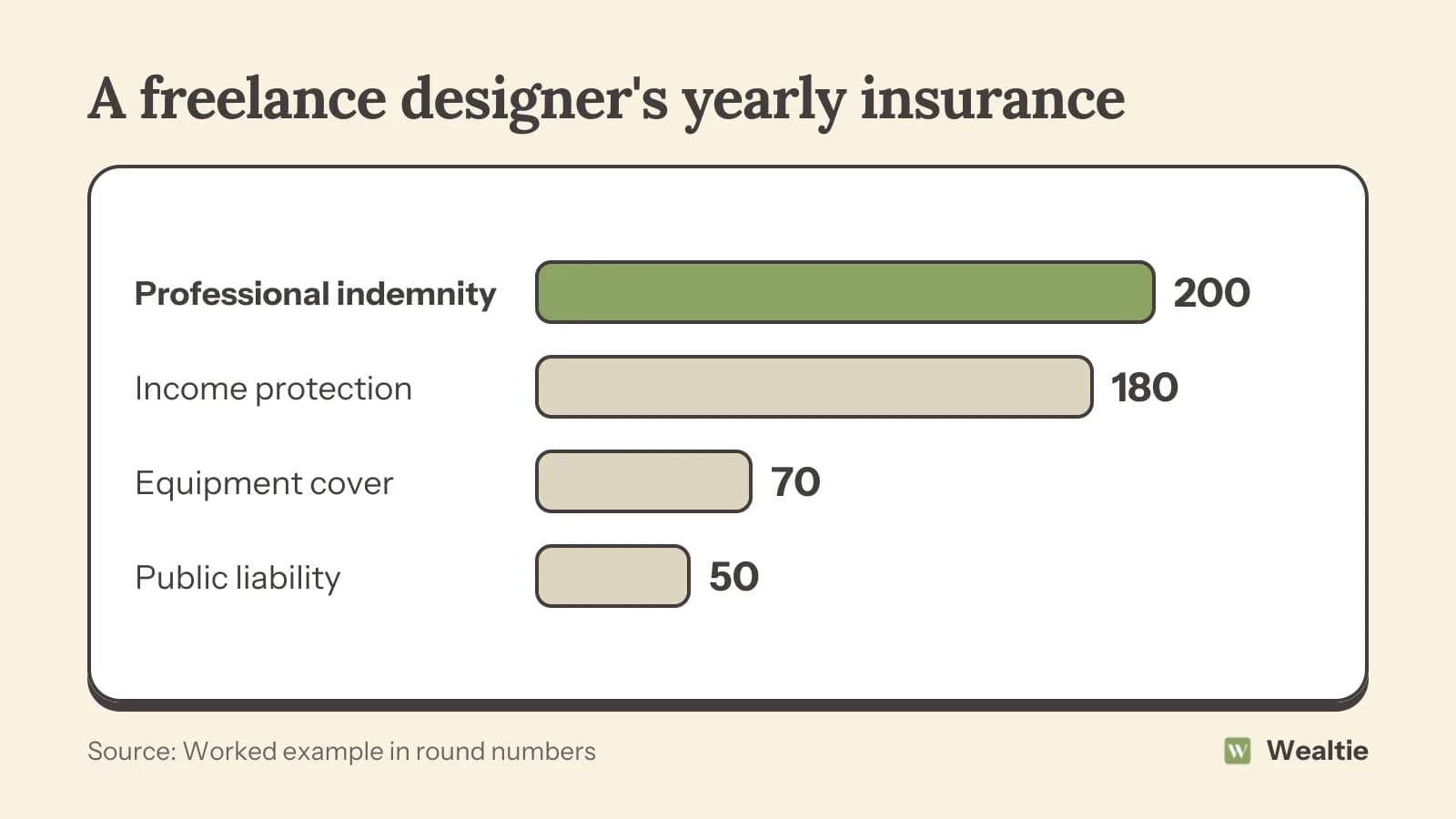
That's about 42 a month. Costs vary a lot with your industry, turnover, the level of cover and your claims history. Higher-risk work, like building trades or giving financial advice, usually costs more.
Which policies should freelancers consider?
Professional indemnity
Covers you if a client claims your advice or work caused them a financial loss. It's important for consultants, designers, developers, writers and anyone giving advice. Many clients ask for it in contracts.
Public liability
Covers you if someone is injured or their property is damaged because of your work. It matters most if you visit clients, work in public spaces or have people visit you.
Equipment and contents cover
Covers laptops, cameras, tools and other equipment against theft, loss or damage. Home insurance often doesn't cover business equipment, so check your policy. If you work in cafés or travel with your kit, make sure the cover applies away from home too.
Income protection
Pays part of your income if you can't work because of illness or injury. Policies with a longer waiting period before payments start usually cost less, which can work well if you have savings to cover the first few weeks. Without an employer's sick pay, this can be one of the most valuable policies. How to budget for time off sick covers planning for gaps in income.
Employer's liability
If you employ anyone, even part-time, you may be legally required to have this in some countries.
Health insurance
In countries without free public healthcare, health insurance is often essential for freelancers. Elsewhere, it's optional.
What can freelancers usually skip?
If you work from home on a laptop and never meet clients in person, public liability may be less important. If your work carries little risk of financial loss for clients, professional indemnity may be optional unless clients require it. Avoid buying the same cover twice, such as equipment cover that your home insurance already includes. Which insurance do you need? covers checking for overlaps.
How do you keep insurance costs down?
Compare quotes each year, since renewal prices often rise. Choose cover levels that match your actual risk and what clients require, not the maximum. Join a professional body, since some offer cheaper group policies. Pay yearly if it's cheaper than monthly. Build insurance into your rates. How to set your freelance rate covers including business costs like insurance.
Keep a buffer too
Insurance won't cover everything, like a slow month or a client who pays late. A cash buffer covers those gaps. How to save for time off as a freelancer and how much to save before going freelance cover building one.
How do you track insurance costs in Wealtie?
Add each policy as a recurring transaction, so it logs itself on its date and you can see renewal dates. Keep insurance in a business category among your expense categories, and set a budget for business costs.
Questions people ask
Professional indemnity, public liability, equipment cover and income protection are the most common, chosen to match the work you do.
In a worked example, a freelance designer pays about 500 a year, or about 42 a month, for four policies.
It's important for anyone giving advice or creating work clients rely on, and many clients require it.
Often, yes, since there's no employer sick pay if you can't work because of illness or injury.
This article is general information, not financial, tax or legal advice. Your situation is your own; check the numbers that apply to you before you act on them.