Income & freelancing: How to save for time off as a freelancer
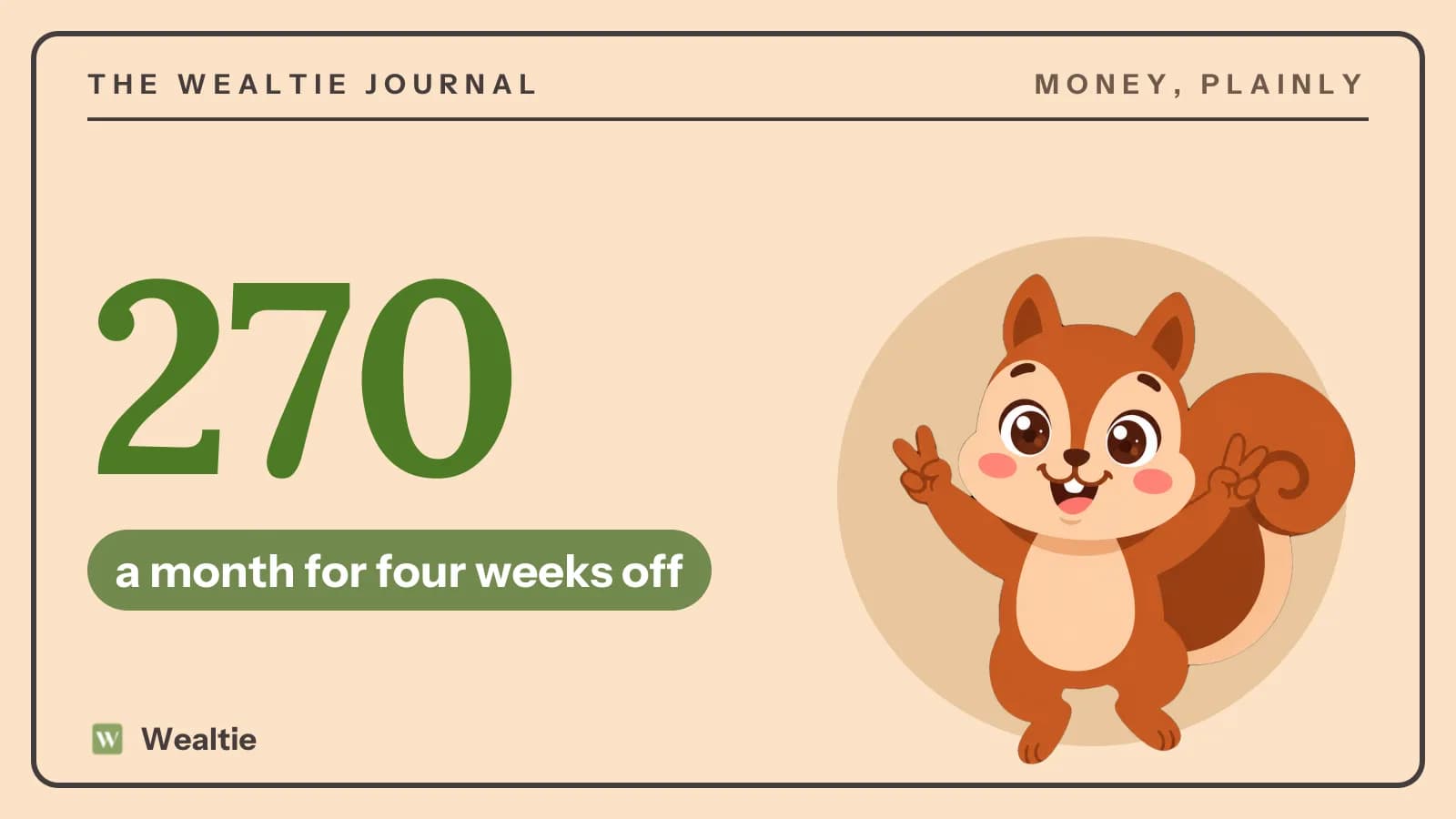
To save for time off as a freelancer, work out how much income you'll miss, build it into your rates and set aside a little from every payment. In a worked example, four weeks off a year means saving about 270 a month to keep your pay steady while you rest.
 By Wealtie Team · 3 min read
Key takeaways
- Freelancers don't get paid holiday, so time off needs to be planned and saved for.
- In a worked example, four weeks off a year means saving about 270 a month.
- Build time off into your rates, so it's part of what clients pay for.
- Plan breaks in quieter periods and tell clients early.
Why save for time off as a freelancer?
Because when you stop working, your income stops too. Employees usually get paid holiday, sick pay and public holidays. Freelancers get none of these. Taking two weeks off means two weeks without pay, on top of the cost of any trip. Without a plan, many freelancers avoid taking breaks altogether, which isn't good for them or their work. Rest protects your income in the long run too, since tired freelancers make more mistakes and are more likely to burn out and lose work.
Saving for time off turns a break from a financial worry into something you've already paid for.
How much do you need to save?
Work out the income you'll miss. Here's a worked example for a freelancer who pays themselves 800 a week and wants four weeks off a year, in round numbers that work in any currency:
| Amount | |
|---|---|
| Weekly pay | 800 |
| Weeks off a year | 4 |
| Missed income | 3,200 |
| Saved each month | about 270 |
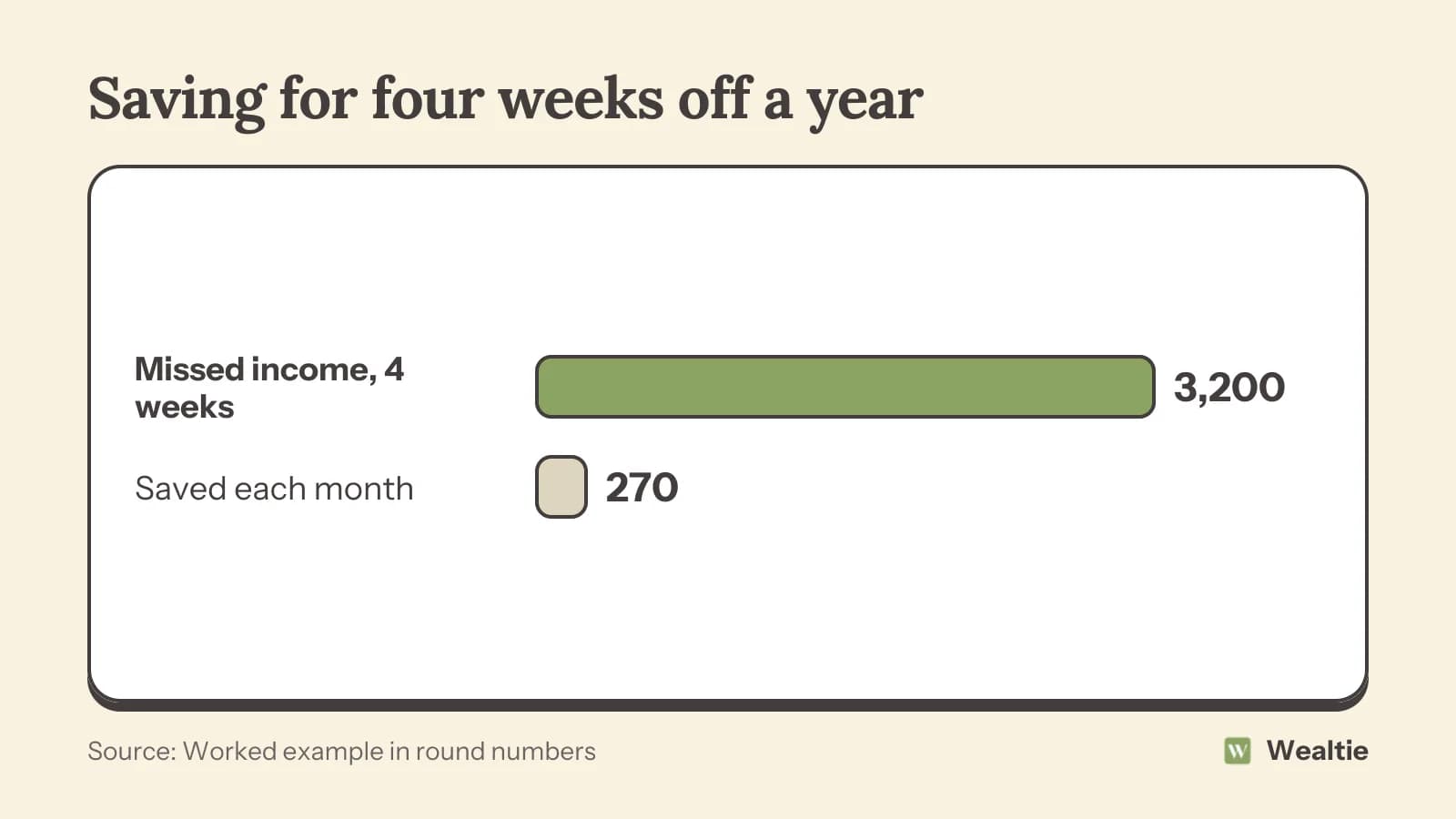
Saving about 270 a month means your pay stays steady through the four weeks. The cost of the holiday itself, like travel and accommodation, comes on top, from your usual budget or a separate holiday fund.
Don't forget public holidays
Public holidays, festive closures and the quiet days around them add to the weeks you're not earning. Count them in your total, alongside your planned holidays.
How do you build time off into your rates?
Charge enough to cover it. An employee's salary is paid across the whole year, including holidays. Your rate should do the same. When you work out your rate, divide your target yearly income by the weeks you'll work, not by 52. Freelance rate to salary shows how this works, and how to set your freelance rate covers the full calculation.
If your current rate doesn't allow for time off, that's a strong reason to raise it.
A quick check
If you want 40,000 a year and plan to work 46 weeks, you need about 870 a week, rather than the 770 you'd need across 52. That difference is your paid time off, built into your rate.
How do you save as you go?
Set aside a share of every payment. Just as you put money aside for tax as soon as a client pays, move a small share into a time-off fund. Keeping it in a separate account stops it being spent on everyday costs. When you take a break, pay yourself your usual amount from that fund. Some freelancers set their time-off share at the same time as their tax share, so both happen in one step.
A sinking fund works well for this, since you know the cost is coming even if the date isn't fixed. Seeing the fund grow through the year also makes it easier to book the break without guilt.
What about sick days?
Plan for them too. Illness can stop you working without warning, and freelancers usually have no sick pay. An emergency fund helps cover short illnesses, and some freelancers look into income protection insurance for longer ones. Policies vary a lot, so check the waiting period before payments start and how long they last. How to budget for time off sick covers this in more detail.
When should you take time off?
Choose quieter periods where you can. Many freelancers have busy and quiet seasons, and taking breaks in the quiet ones means you miss less work. Tell clients well in advance, finish or hand over urgent tasks, and set an out-of-office message with your return date. Most clients respect freelancers who plan breaks clearly. Booking time off early in the year, even roughly, helps you plan workloads around it.
Taking a real break
It's tempting to check emails on holiday, but a real rest helps you come back with more energy. If you need to stay reachable, set a clear limit, like checking messages once a day, so the break still feels like one.
What if you can't afford time off yet?
Start with shorter breaks, like long weekends, and build up your fund over time. Even a few days of rest is better than none. Working fewer hours for a week, rather than stopping completely, can also give you a lighter break while some income continues. As your fund grows, and as you raise your rates to include time off, longer breaks become possible.
How do you track a time-off fund in Wealtie?
Add a time-off account and move money into it as a transfer each time you're paid, which isn't counted as spending. Track client payments in the income tracker, and set a monthly income goal that includes your time-off share. Your expense categories show what's left for everyday spending.
Questions people ask
No. Freelancers don't get paid holiday, so time off needs to be saved for and built into rates.
Enough to cover the income you'll miss. In a worked example, four weeks off at 800 a week means saving about 270 a month.
Divide your target yearly income by the weeks you'll work, not by 52, so holidays are covered.
In quieter periods where possible, with plenty of notice to clients.
This article is general information, not financial, tax or legal advice. Your situation is your own; check the numbers that apply to you before you act on them.