Budgeting: What is an insurance excess, and how much should yours be?
An insurance excess is the part of a claim you pay yourself before the insurer pays the rest. A higher excess usually means a cheaper premium, but only makes sense if you could pay it without stress.
 By Wealtie Team · 3 min read
Key takeaways
- An insurance excess is the part of a claim you pay yourself.
- A higher excess usually lowers your premium.
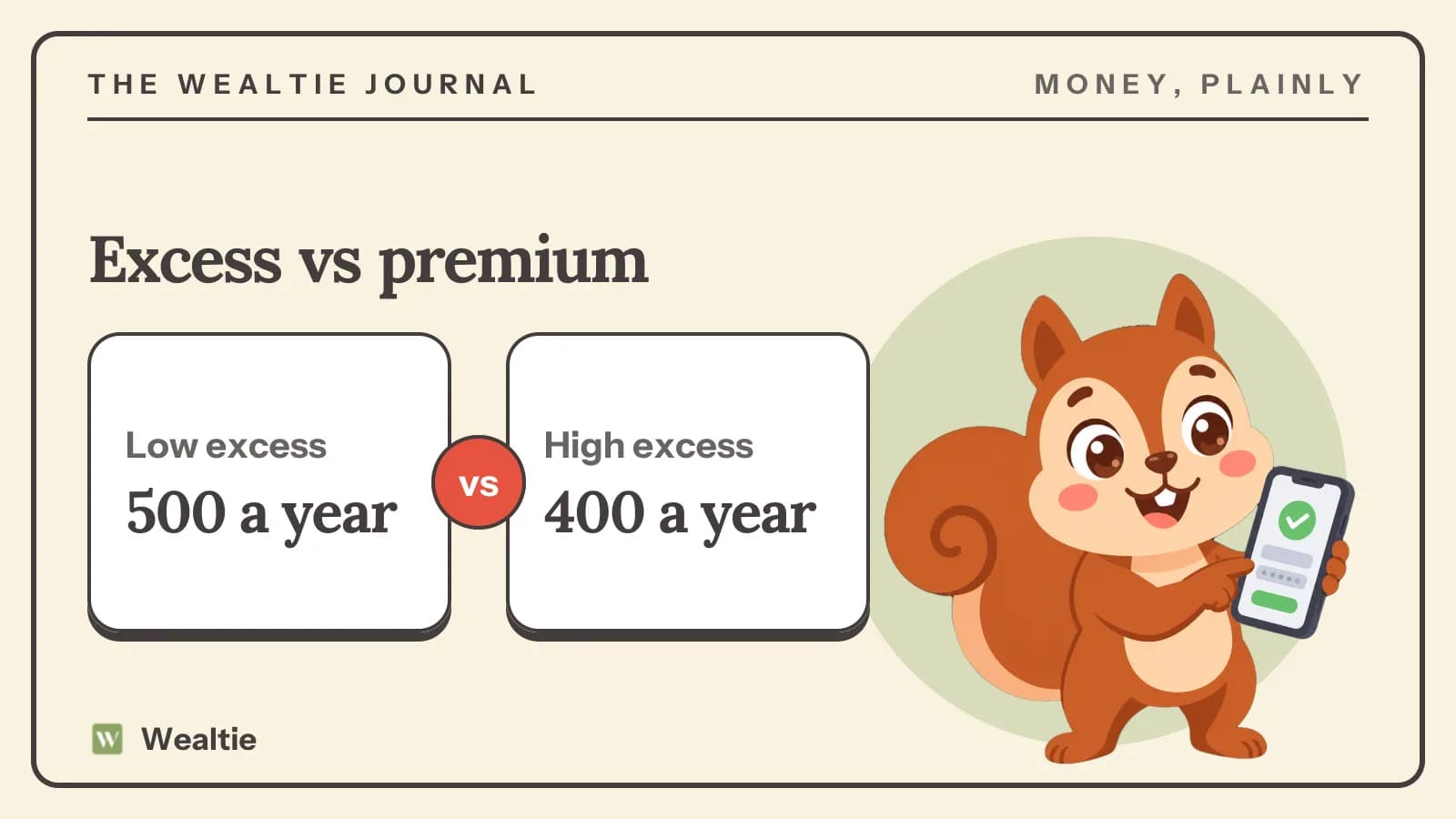
- In a worked example, raising the excess from 100 to 500 saves 100 a year.
- Only choose an excess you could pay from savings without stress.
What is an insurance excess?
An insurance excess, called a deductible in some countries, is the amount you agree to pay towards a claim yourself. If you have an excess of 200 and make a claim for 1,000, you pay the first 200 and the insurer pays 800. Most policies have an excess, from car and home insurance to travel, pet and health cover. The amount is shown in your policy documents, usually near the start, and it's worth knowing before you ever need to claim.
There are usually two parts. The compulsory excess is set by the insurer. The voluntary excess is an extra amount you choose to add, usually in return for a lower premium. Your total excess is the two added together.
The excess is easy to overlook when comparing quotes, since most comparisons focus on the premium. Two policies with the same price can have very different excesses, and the cheaper-looking one may cost far more when you claim. Before choosing a policy, look at the excess as closely as the premium, and check that it's an amount you'd be comfortable paying on a bad day.
How does the excess affect your premium?
Insurers charge less when you agree to pay more of any claim yourself, since they'll pay out less. Here's a worked example of car insurance, in round numbers that work in any currency:
| Option | Excess | Yearly premium |
|---|---|---|
| Low excess | 100 | 500 |
| High excess | 500 | 400 |
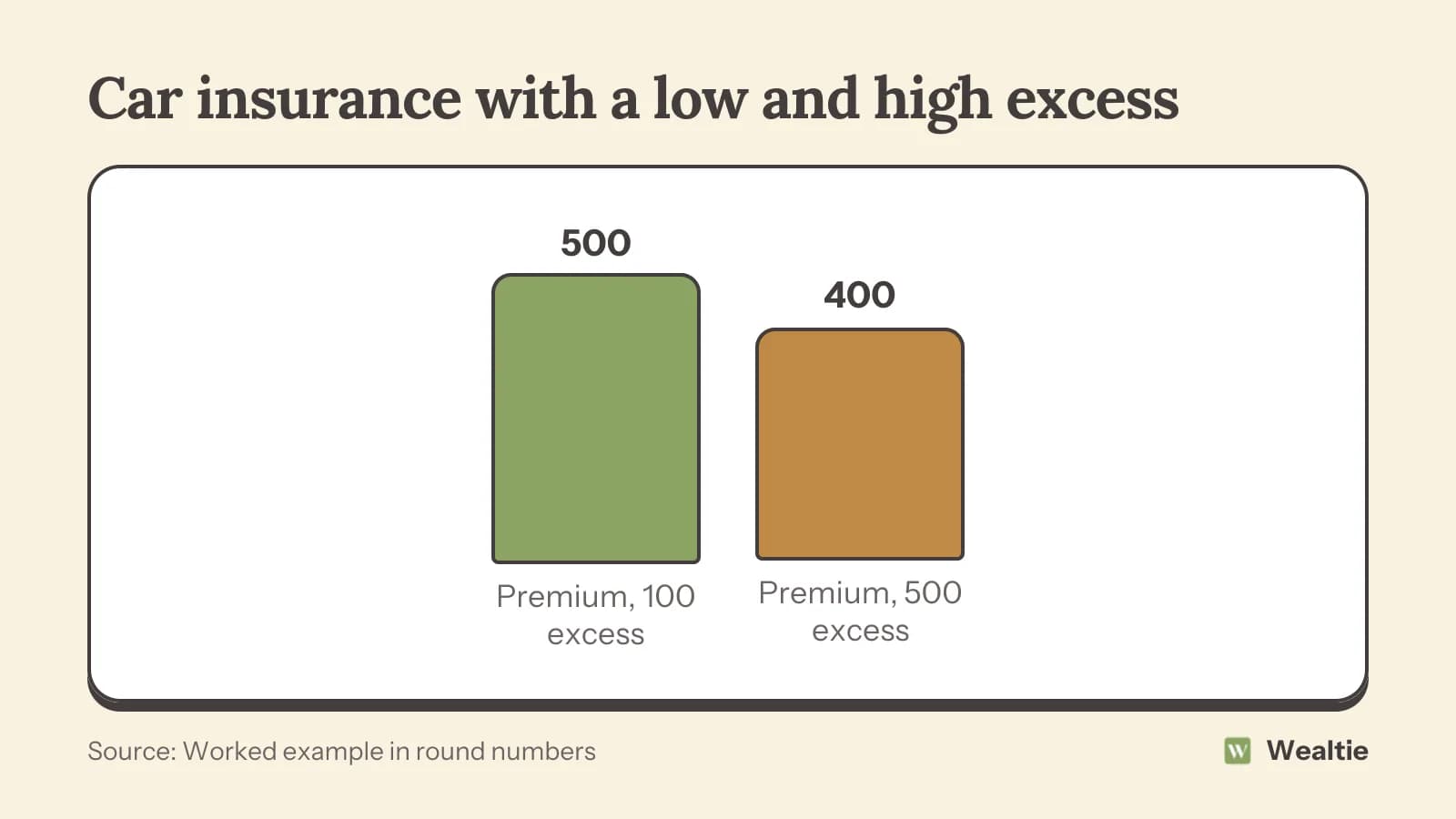
Choosing the higher excess saves 100 a year. But if you make a claim for 1,500, you pay 500 yourself instead of 100. You'd need four claim-free years to save the extra 400 you'd pay on one claim.
How do you choose the right excess?
Ask what you could pay tomorrow
The most important question is whether you could pay the excess from savings if you had to claim tomorrow. If paying 500 would mean borrowing or missing bills, a lower excess is safer, even if the premium is higher.
Think about how often you claim
If you rarely claim, a higher excess can save money over time, especially if you keep the yearly saving in an account you could use for an excess. If you claim often, perhaps for a pet with health problems, a lower excess may cost less overall.
Check the excess for different claims
Some policies have different excesses for different types of claim, like a higher excess for young drivers, water damage or theft. Read the details, not just the headline figure. A policy with a low standard excess but a high excess for the most common claims may cost more than it seems when you need it.
Compare the saving with the risk
Work out how much the higher excess saves each year and how many years it would take to cover the extra you'd pay on one claim. If it takes many years, the saving may not be worth the risk.
When is a claim not worth making?
If the cost of a repair is close to your excess, claiming may not be worth it, since you'd get little or nothing back and a claim can raise future premiums. For small damage, paying yourself can sometimes cost less overall. This is another reason to keep an emergency fund. How to build an emergency fund covers how to start.
How does excess work on different policies?
Car insurance
There's usually a compulsory and voluntary excess, and sometimes extra excess for young or new drivers. How to save money on car insurance covers other ways to cut the cost.
Home insurance
Policies may have different excesses for buildings, contents and certain claims like subsidence or escape of water. How to save money on home insurance has more tips.
Travel insurance
Travel policies often have an excess per person per claim. Some cheaper policies have high excesses that make small claims pointless. Paying a little more for a lower excess can be worth it if you're travelling with expensive items. Is travel insurance worth it? covers what to check.
Excess protection
Some insurers and car hire firms sell excess protection, which pays your excess if you claim. It can be useful, but compare the cost with keeping the money in savings. Which insurance do you need? covers which policies matter most.
How do you plan for insurance costs in Wealtie?
Add your premiums as recurring transactions, so they log themselves on their date. Keep insurance in its own expense category, and set a monthly budget that includes a small amount for savings, so you could pay an excess if you needed to claim.
Questions people ask
An insurance excess is the part of a claim you pay yourself before the insurer pays the rest. It's called a deductible in some countries.
Usually, yes. In a worked example, raising the excess from 100 to 500 cuts a car insurance premium from 500 to 400 a year.
Choose an amount you could pay from savings tomorrow without stress or borrowing.
The compulsory excess is set by the insurer. The voluntary excess is an extra amount you choose to add for a lower premium.
This article is general information, not financial, tax or legal advice. Your situation is your own; check the numbers that apply to you before you act on them.