Saving: Is an induction hob worth it? Costs and savings
Is an induction hob worth it? Mostly when you're replacing a hob anyway, and in a worked example, induction costs about 40 a year to run, against 55 for a ceramic hob.
 By Wealtie Team · 3 min read

Key takeaways
- An induction hob is worth it mostly when you need a new hob anyway.
- Induction heats quickly and wastes less energy than ceramic.
- You may need new pans and electrical work, which add to the cost.
- Running cost savings are modest, so speed and safety are big reasons to choose it.
Is an induction hob worth it?
Induction hobs heat pans directly using a magnetic field, rather than heating a surface or burning gas. That makes them fast, responsive and efficient, since little heat is lost into the kitchen. The surface stays cooler than a ceramic hob, which many people find safer and easier to clean. Whether an induction hob is worth it depends on what you have now, your energy prices and whether you're replacing a hob anyway.
Here's a worked example of yearly running costs for typical home cooking, in round numbers that work in any currency:
| Hob type | Yearly running cost |
|---|---|
| Induction | 40 |
| Gas | 35 |
| Ceramic electric | 55 |
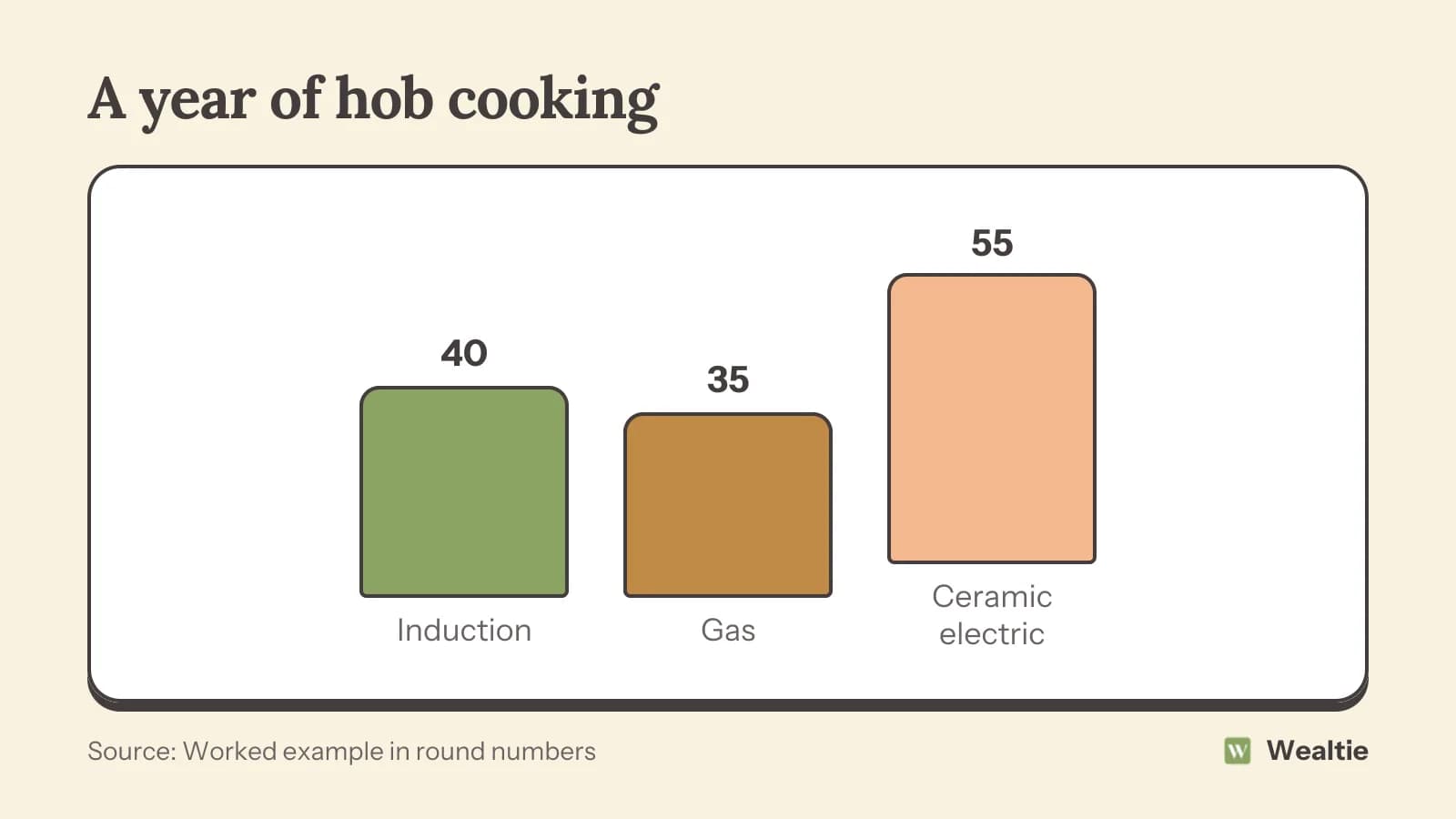
Induction costs about 40 a year to run, against 55 for a ceramic electric hob. Gas can be cheaper to run where gas prices are low compared with electricity, though that depends on local prices. The savings from switching are modest, so running costs alone rarely justify replacing a working hob.
What does it cost to switch?
The hob
In round numbers, an induction hob might cost around 400, compared with 250 for a basic ceramic hob. Prices vary widely by size and features.
Fitting
Installation might cost around 150. Some induction hobs need a dedicated electrical circuit, which could add around 300 if your kitchen doesn't have one. Switching from gas also means capping the gas supply safely.
Pans
Induction only works with pans that have a magnetic base. Many modern pans already work, which you can check with a fridge magnet. If yours don't, a basic set might cost around 150.
Adding it up, switching from ceramic to induction could cost several hundred upfront, and saving 15 a year in running costs would take a very long time to pay that back. That's why most people choose induction for its speed, control and safety, not just its running costs.
When does an induction hob make sense?
You're replacing a hob anyway
If your old hob is broken or worn out, the extra cost of induction over ceramic is much easier to justify. Repair or replace covers how to decide on old appliances.
You're renovating the kitchen
During a kitchen renovation, adding a circuit and choosing induction is simpler and cheaper than doing it later. How to plan a kitchen renovation budget covers the wider costs.
You want faster, safer cooking
Induction boils water quickly, responds instantly to changes and has a cooler surface, which is useful with children around.
You're moving away from gas
Some households switch to induction as part of moving away from gas, for example alongside a heat pump or solar panels.
Are there cheaper ways to try induction?
A single portable induction plate can cost much less than a full hob and lets you try induction cooking first. It's also useful for small kitchens or as an extra ring. Make sure your pans work with it.
How do you cut hob running costs on any hob?
Use lids to keep heat in, match the pan size to the ring, boil only the water you need and use the kettle to heat water before adding it to the pan. Cooking several things at once in one pan, or using an air fryer or microwave for small portions, also helps. How to save money on your electric bill covers more ways to cut energy use.
Think about how you cook before deciding. If you mostly use the oven, microwave or air fryer, the hob may only run for a short time each day, and the difference between types will be small. If you cook on the hob every day, boil a lot of pasta or rice, or fry often, the speed and control of induction will be more noticeable, and the running cost difference will be a little bigger.
Cleaning is another everyday benefit. Because the surface doesn't get as hot as a ceramic hob, spills are less likely to burn on, so a quick wipe is usually enough. That's a small thing, but it's one reason many people who switch say they wouldn't go back.
If you rent, ask your landlord before changing a hob. Some landlords are happy to upgrade when an old hob needs replacing, especially if it adds value to the property, but any change to gas or electrics needs permission and a qualified installer.
Second-hand and ex-display hobs can bring the purchase price down, but make sure they're safe, tested and fitted by a professional.
How can Wealtie help you track kitchen costs?
Log a new hob, fitting and pans in a home expense category, and add your energy bills as recurring transactions. Comparing bills over a few months shows what the switch saves and how it fits your wider budget.
Questions people ask
Mostly when you're replacing a hob anyway. Induction is fast, safe and efficient, but running cost savings alone rarely justify replacing a working hob.
Not always. In a worked example, gas was slightly cheaper, but it depends on gas and electricity prices where you live.
You need pans with a magnetic base. Many modern pans work, which you can check by seeing if a magnet sticks to the bottom.
Some do. Many induction hobs need a dedicated electrical circuit, which can add to the fitting cost.
This article is general information, not financial, tax or legal advice. Your situation is your own; check the numbers that apply to you before you act on them.