Budgeting: Is income protection insurance worth it?
Income protection insurance is worth it if you'd struggle to pay the bills during a long illness or injury and your sick pay is limited. In a worked example, a policy paying 1,800 a month costs about 35 a month.
 By Wealtie Team · 3 min read
Key takeaways
- Income protection insurance replaces part of your income if you can't work through illness or injury.
- Check your sick pay, savings and partner's income before buying.
- A longer waiting period makes the policy cheaper.
- Self-employed people often benefit most, since they get no sick pay.
What is income protection insurance?
Income protection insurance pays you a regular monthly amount if you can't work because of illness or injury. Payments usually start after a waiting period, like one, three or six months, and continue until you return to work, the policy ends or you reach retirement age, depending on the terms. It usually replaces part of your income, not all of it.
It's different from life insurance, which pays out when you die, and from critical illness cover, which pays a lump sum for specific conditions. Income protection is about keeping the bills paid while you recover, whatever the illness or injury, within the policy's terms.
Is income protection worth it?
It's worth considering if your household would struggle without your income for several months. Here's a worked example over six months off work, in round numbers that work in any currency. Before illness, take-home pay is 2,800 a month. Statutory sick pay is 500 a month. The policy pays 1,800 a month after a one-month waiting period:
| Six months off work | Total received |
|---|---|
| Statutory sick pay only | 3,000 |
| With income protection | 9,000 |
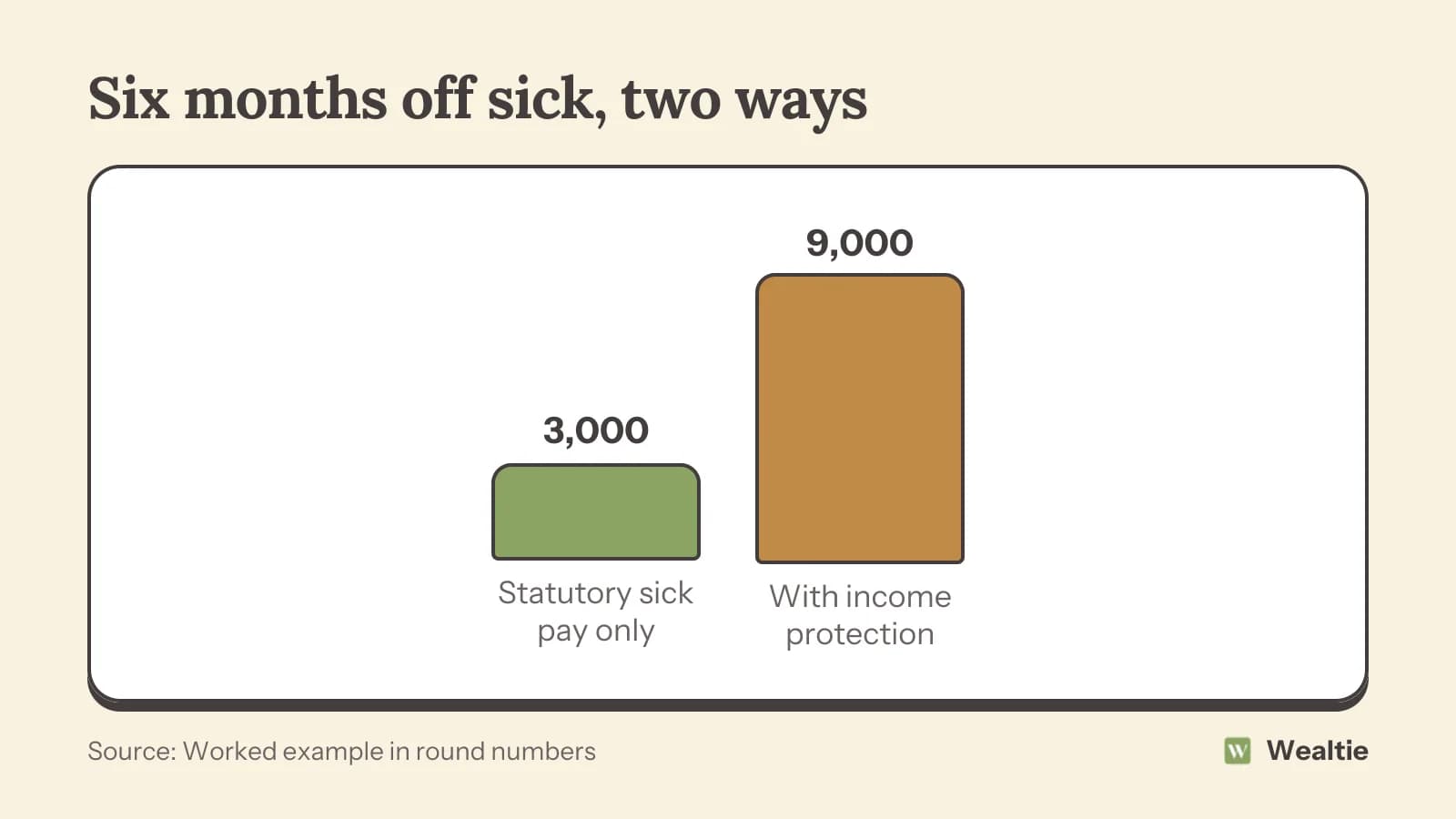
With sick pay alone, the household would receive 3,000 over six months, far short of what the bills need. With income protection, five months of payments at 1,800 bring in 9,000. In this example, the policy costs about 35 a month, though prices vary a lot with age, health, job and the terms you choose.
Who benefits most from income protection?
The self-employed
Freelancers and the self-employed usually get no sick pay at all, so a long illness can stop their income completely. How to save for time off as a freelancer covers building your own safety net too.
People with limited sick pay
If your employer only pays statutory or short-term sick pay, income protection can fill the gap for longer absences.
Single earners and main earners
If your household relies mainly on your income, a long absence would hit hard. How to budget for time off sick covers managing reduced income.
People with large fixed costs
A big mortgage or rent, childcare and loan payments don't stop when you're ill.
When might you not need it?
Generous sick pay
Some employers pay full salary for many months. Check your contract to see how long you'd be covered.
A large emergency fund
If you have enough savings to cover several months of expenses, you may be able to choose a longer waiting period or skip cover. How much should you keep in an emergency fund? covers how much is enough.
A partner who could cover the bills
If your household could manage on one income for a while, you may need less cover.
Existing workplace cover
Some employers include group income protection as a benefit. Check before buying your own.
How do you keep the cost down?
Choose a longer waiting period
Matching the waiting period to when your sick pay or savings run out makes the policy cheaper. A six-month wait costs much less than a one-month wait.
Cover what you need, not your full salary
Work out the monthly amount your household needs for essentials. That may be less than your full take-home pay.
Choose the right term
Some policies pay for a limited period, like two years per claim, which is cheaper than paying until retirement. Decide which suits you.
Compare and ask a broker
Policies differ in how they define being unable to work. A broker or adviser can help you compare terms, not just prices.
What should you check in the policy?
Check the definition of being unable to work, the waiting period, how long it pays, whether payments rise with inflation, and what's excluded. Being honest about your health and job on the application matters, since leaving things out can mean a claim is refused. Which insurance do you need? covers how income protection fits with other cover.
Think about the policy alongside your emergency fund. Savings cover the first weeks or months, and income protection takes over for longer absences. Getting the balance right means you're not paying for cover you don't need, and you're not relying on savings that would run out too soon.
How can Wealtie help you plan for it?
Add the premium as a recurring transaction, so it's part of your monthly budget. Tracking your essential spending in expense categories for a few months also shows how much income you'd need each month if you couldn't work, which is the figure to insure.
Questions people ask
It's worth considering if your household would struggle without your income for several months and your sick pay is limited.
It pays a monthly amount if you can't work due to illness or injury, starting after a waiting period and lasting until you return or the policy ends.
Choose a longer waiting period, cover only what you need for essentials and consider a policy that pays for a limited time per claim.
Many do, since they usually get no sick pay. A long illness could stop their income completely.
This article is general information, not financial, tax or legal advice. Your situation is your own; check the numbers that apply to you before you act on them.