Budgeting: How to haggle and get a better price without feeling awkward
Learning how to haggle starts with knowing the going price, asking politely for a better deal and being ready to walk away. It works best on big purchases, second-hand items, services and bills, and a few calm questions can save hundreds a year.
 By Wealtie Team · 3 min read
Key takeaways
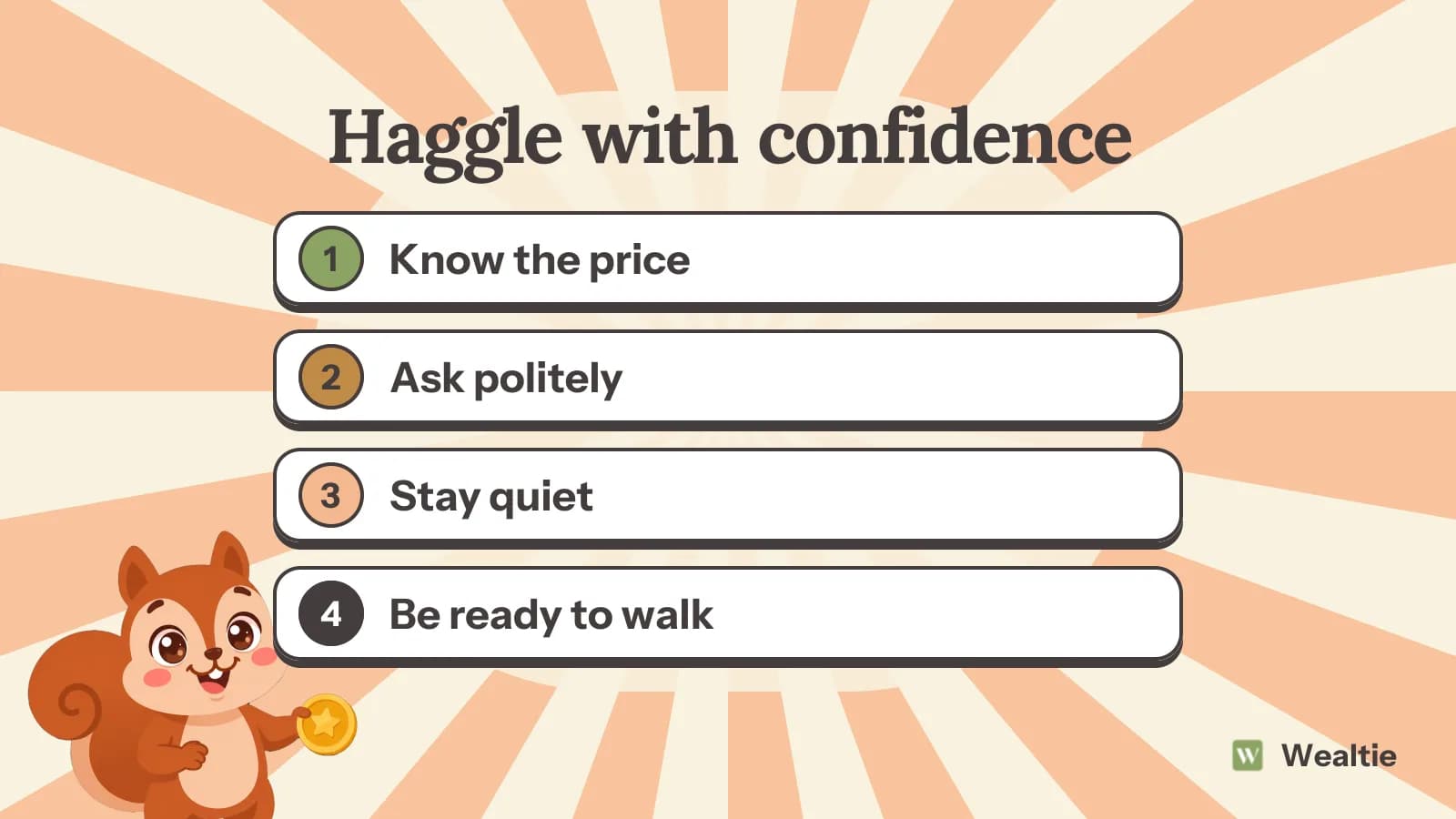
- To haggle well, know the going price and ask politely for a better deal.
- It works best on big purchases, second-hand items, services and bills.
- Staying quiet after an offer and being ready to walk away are powerful.
- In a worked example, haggling saves about 550 in a year.
Does haggling work?
More often than many people think. In some places, haggling is expected at markets and with independent sellers. Elsewhere, people feel awkward asking for a lower price, so they never ask. But many sellers have room to move, especially on big items, second-hand goods, services and contracts. The worst they can say is no, and you're no worse off than before.
Haggling isn't about being pushy. It's about asking calmly whether a better price is possible, with good reasons, and being ready to accept a fair answer.
If you feel nervous, start small. Ask for a few coins off at a market stall or a free extra with a second-hand purchase. Each time you ask, it gets easier, and you'll be surprised how often people say yes. Remember that the seller is used to these conversations. To them, it's a normal part of doing business, not a personal challenge.
How much can haggling save?
Here's a worked example of savings from haggling over a year, in round numbers that work in any currency:
| Purchase | Saved |
|---|---|
| Used car | 300 |
| Phone and internet deals | 120 |
| Furniture | 80 |
| Second-hand items | 50 |
| Total | 550 |
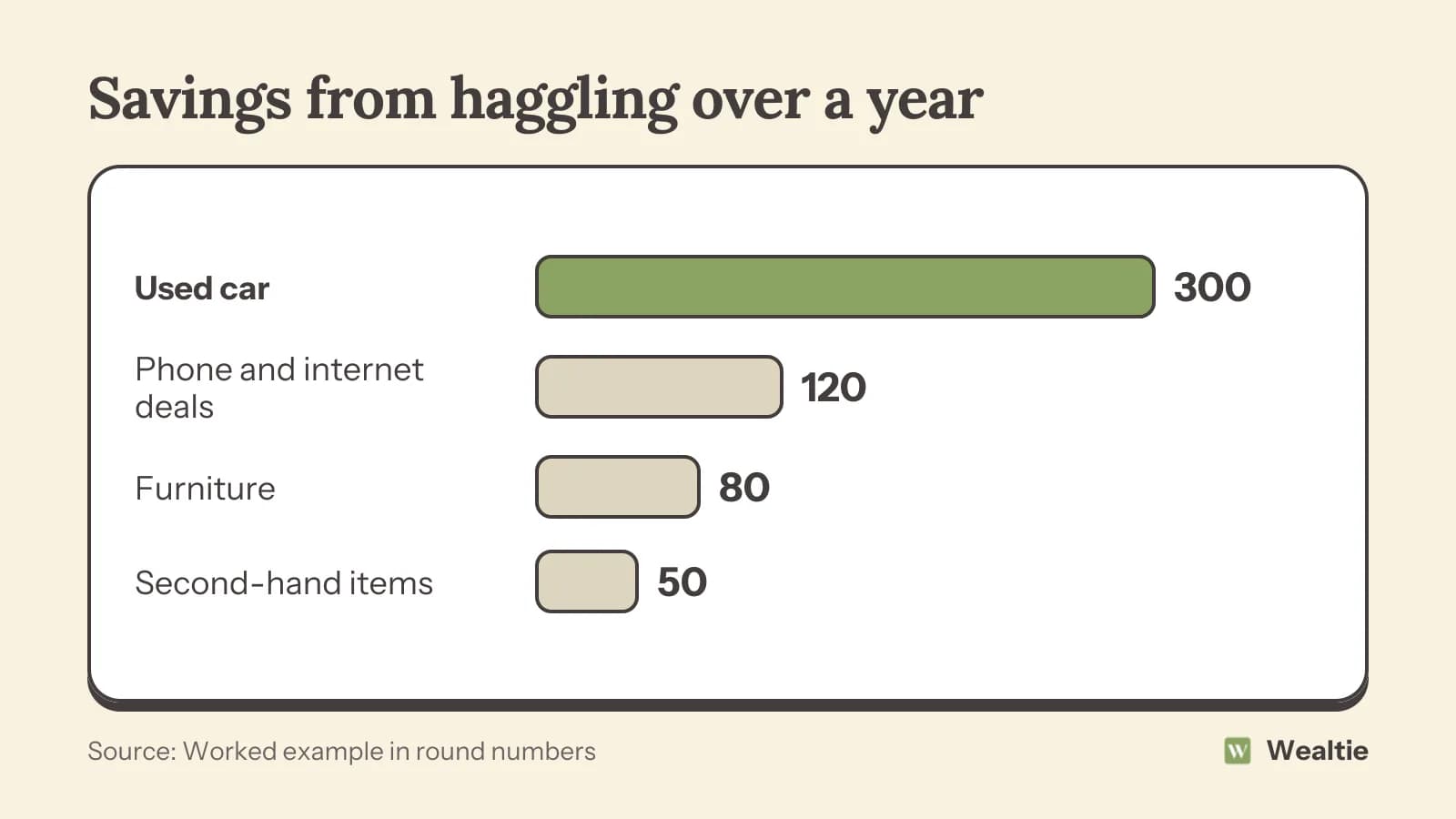
That's 550 saved by asking a few questions. None of these needed a big argument, just preparation and a polite request.
Where does haggling work best?
Big purchases
Cars, furniture, appliances and electronics often have room for a discount, especially near the end of a month or season, when sellers have targets. How to buy a used car without overpaying covers car negotiations in detail.
Second-hand items
Prices on marketplaces and at car boot sales are usually open to offers. Sellers often price high, expecting to come down.
Services
Builders, cleaners, gardeners and other tradespeople may offer a better price for a bigger job, flexible timing or paying promptly.
Bills and contracts
Phone, internet, insurance and energy providers often have better deals for customers who ask, especially at renewal. How to negotiate bills covers this.
How to haggle, step by step
Know the going price
Check what the same or similar items sell for elsewhere. Knowing the market price gives you a fair starting point and the confidence to ask.
Ask an open question
"Is that your best price?" or "Is there any flexibility on that?" is a gentle way to start. It invites the seller to offer something without you naming a number first.
Make a reasonable offer
If you name a price, make it lower than you'd pay, but not so low it's insulting. Give a reason: a flaw, a lower price elsewhere or paying in cash today. A reason makes the request feel fair rather than cheeky, and gives the seller a way to agree without losing face.
Stay quiet
After you make an offer, wait. Many people rush to fill the silence and end up raising their own offer. Let the seller respond. A pause of a few seconds feels long, but it often prompts the seller to sweeten the deal or explain what they can do. If they say no, you can still ask what the lowest price they'd accept would be.
Ask for extras instead
If the price won't move, ask for something else: free delivery, an accessory, an extended warranty or installation included.
Be ready to walk away
The strongest position is being willing to leave. If the price doesn't work for your budget, thank them and go. Sellers sometimes call you back with a better offer.
What should you avoid when haggling?
Don't haggle on things you don't need just to get a deal, since a discount on an unplanned purchase still costs money. Price anchoring explains how a high first price can make a deal look better than it is. Be polite, especially with small sellers, and know when a price is already fair. A small business owner selling handmade goods may have little room to move, and pushing hard can sour the conversation. Save your haggling for places where there's a clear margin, like big retailers, car dealers and service contracts, where discounts are part of how they sell.
Keep your budget in mind
Decide your maximum price before you start, and stick to it. Haggling works best when you're clear about what you can afford. How to stop impulse buying helps you avoid getting carried away.
How do you track savings from haggling in Wealtie?
Log purchases in your expense categories and set a monthly budget, so you can see where haggling made a difference. Seeing a lower total in a category is a good reminder that asking pays.
Questions people ask
Know the going price, ask an open question like "Is that your best price?", make a reasonable offer with a reason and be ready to walk away.
On big purchases, second-hand items, services from tradespeople and bills or contracts at renewal.
Start with "Is there any flexibility on that?" Then make a reasonable offer and give a reason, like a lower price elsewhere.
Ask for extras like free delivery or an accessory, or thank them and walk away if it doesn't fit your budget.
This article is general information, not financial, tax or legal advice. Your situation is your own; check the numbers that apply to you before you act on them.