Budgeting: How to get a refund when something goes wrong
Knowing how to get a refund starts with contacting the seller quickly, with your proof of purchase, and saying clearly what you want. Knowing your rights and keeping a record of every message makes a refusal much less likely.
 By Wealtie Team · 3 min read
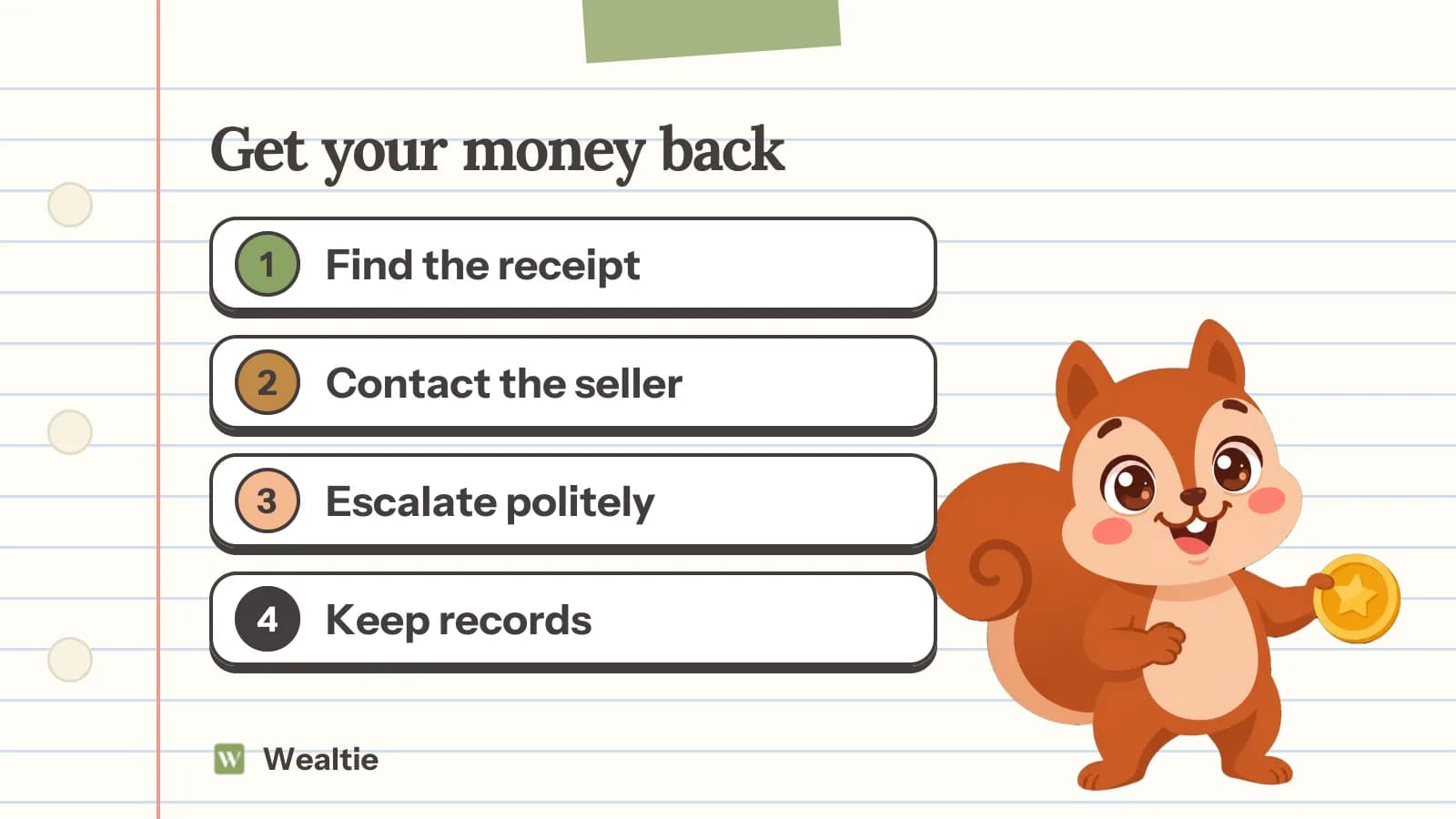
Key takeaways
- To get a refund, contact the seller quickly with proof of purchase.
- Be clear about the problem and what you want: a refund, repair or replacement.
- Escalate politely, in writing, if the first answer is no.
- Small refunds add up, so they're worth chasing.
When can you get a refund?
You can often get a refund when something you bought is faulty, not as described, never arrived or wasn't fit for its purpose. Many shops also offer refunds if you change your mind, but that's usually their policy rather than your right, and it often has time limits. For services, you may be able to get some money back if the work was poor or not done at all.
Consumer rights vary by country, so check what applies where you live. Many countries have a consumer advice service that explains your rights for free. It's worth a quick look before you contact the seller, since knowing what you're entitled to helps you ask with confidence and spot when a seller is offering less than you're owed.
Are small refunds worth chasing?
Yes. Here's a worked example of refunds someone might miss in a year, in round numbers that work in any currency:
| Refund | A year |
|---|---|
| Faulty items | 80 |
| Late or missing orders | 60 |
| Cancelled services | 40 |
| Overcharges | 20 |
| Total | 200 |
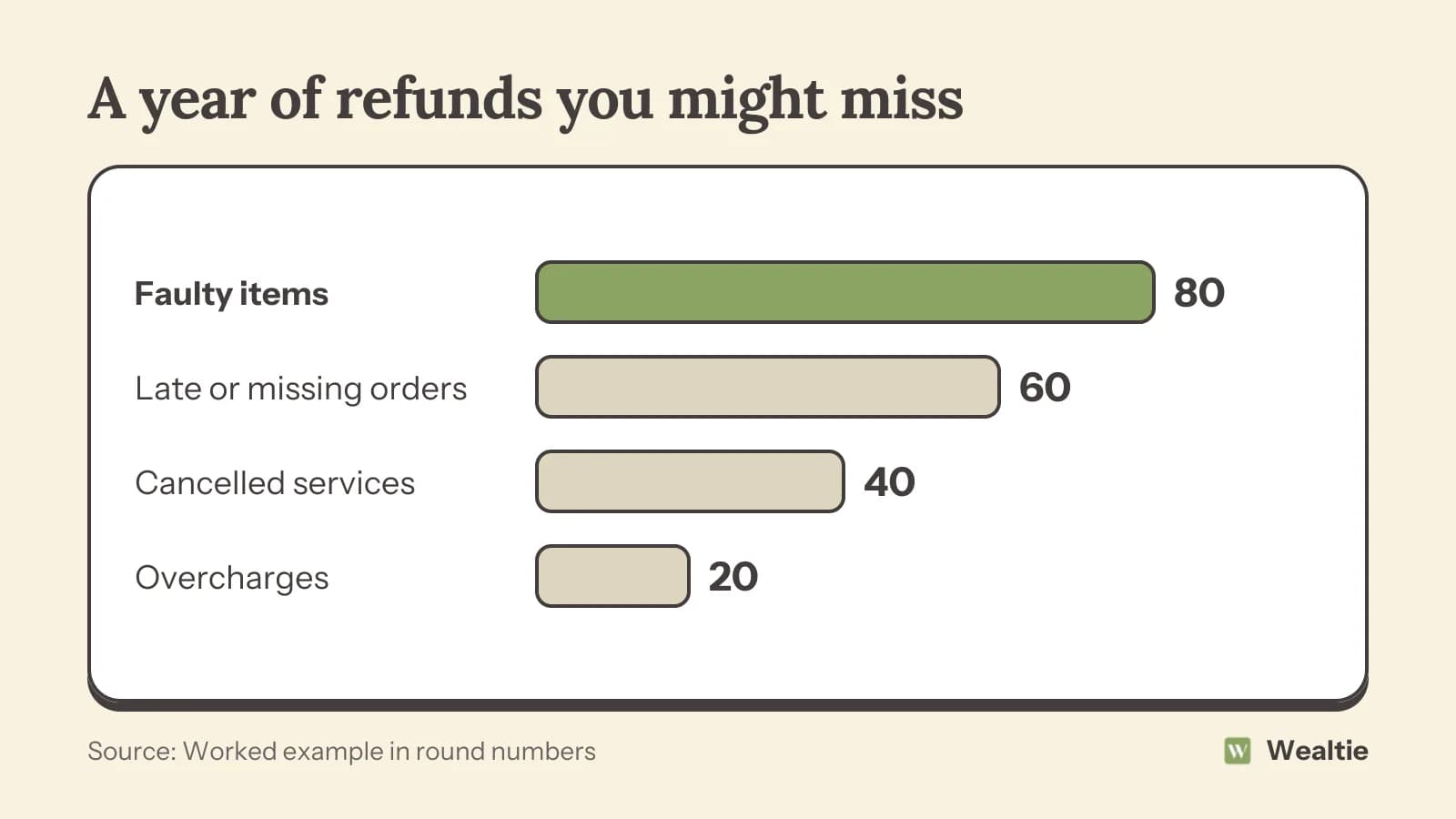
Each one feels too small to bother with. Together, they're 200, enough for a nice meal out or a month's savings for some people.
The reason many refunds go unclaimed is that asking feels like a hassle, or people worry about seeming difficult. In practice, most sellers handle refund requests every day and have a simple process for them. A short, polite message with the right details is usually all it takes. The more often you do it, the quicker and easier it gets, and the less money slips through the cracks.
How to get a refund, step by step
Act quickly
Contact the seller as soon as you notice a problem. Many rights and policies have time limits, and a quick complaint is taken more seriously than one months later.
Find your proof of purchase
A receipt, order confirmation, bank or card statement all show what you paid and when. Keep receipts for bigger items until the warranty ends. A photo of a paper receipt works well, since the ink on some receipts fades within months.
Explain the problem clearly
Say what you bought, when, what's wrong and what you'd like: a refund, a repair or a replacement. Keep it short and polite. Photos help if an item is damaged or faulty. Include your order number in the first line, so the seller can find your purchase quickly. Avoid long stories or angry language, which slow things down and rarely help. A calm, specific message is the fastest route to your money.
Put it in writing
Phone calls are fine to start, but follow up by email or through the seller's complaints form. A written record helps if you need to escalate later.
What if the seller says no?
Escalate politely
Ask to speak to a manager or use the seller's formal complaints process. Mention your rights if you know them, calmly and clearly.
Use an independent service
Many industries have an ombudsman or dispute service that can look at complaints for free. Consumer advice services can tell you which applies.
Ask your card provider
If you paid by card, your card provider may be able to help get your money back. This is a separate process from asking the seller.
Small claims
As a last step, some countries have simple, low-cost courts for small claims. Check the rules and costs before going down this route.
How do you avoid needing refunds?
Check reviews before buying from a new seller, read return policies and keep receipts. For online orders, pay by card rather than bank transfer, since card payments are easier to recover. Inspect items as soon as they arrive, so problems are spotted while you can still return them. How to avoid money scams covers spotting sellers who aren't genuine.
Track what's owed to you
Keep a short list of refunds you're waiting for, with dates. Check your statement to confirm when each arrives. How to read a bank statement helps you spot refunds and charges. If a refund relates to a subscription, how to cut subscription costs covers cancelling cleanly, and how to negotiate bills covers getting a better deal on regular costs.
How do you record refunds in Wealtie?
When a refund comes in, log it in the same category as the original purchase in your expense categories, so your monthly budget shows what the item cost you in the end. Keeping your own log also makes it easy to check that every refund you were promised has arrived.
Questions people ask
Contact the seller quickly with proof of purchase, explain the problem clearly, say what you want and follow up in writing.
Escalate politely to a manager or formal complaints process, then try an independent dispute service or your card provider.
Often not by law, but many shops allow it under their own return policy, usually with time limits.
Yes. In a worked example, small refunds someone might miss add up to about 200 a year.
This article is general information, not financial, tax or legal advice. Your situation is your own; check the numbers that apply to you before you act on them.