Saving: Should you rent or buy a house? Compare the costs you don't get back
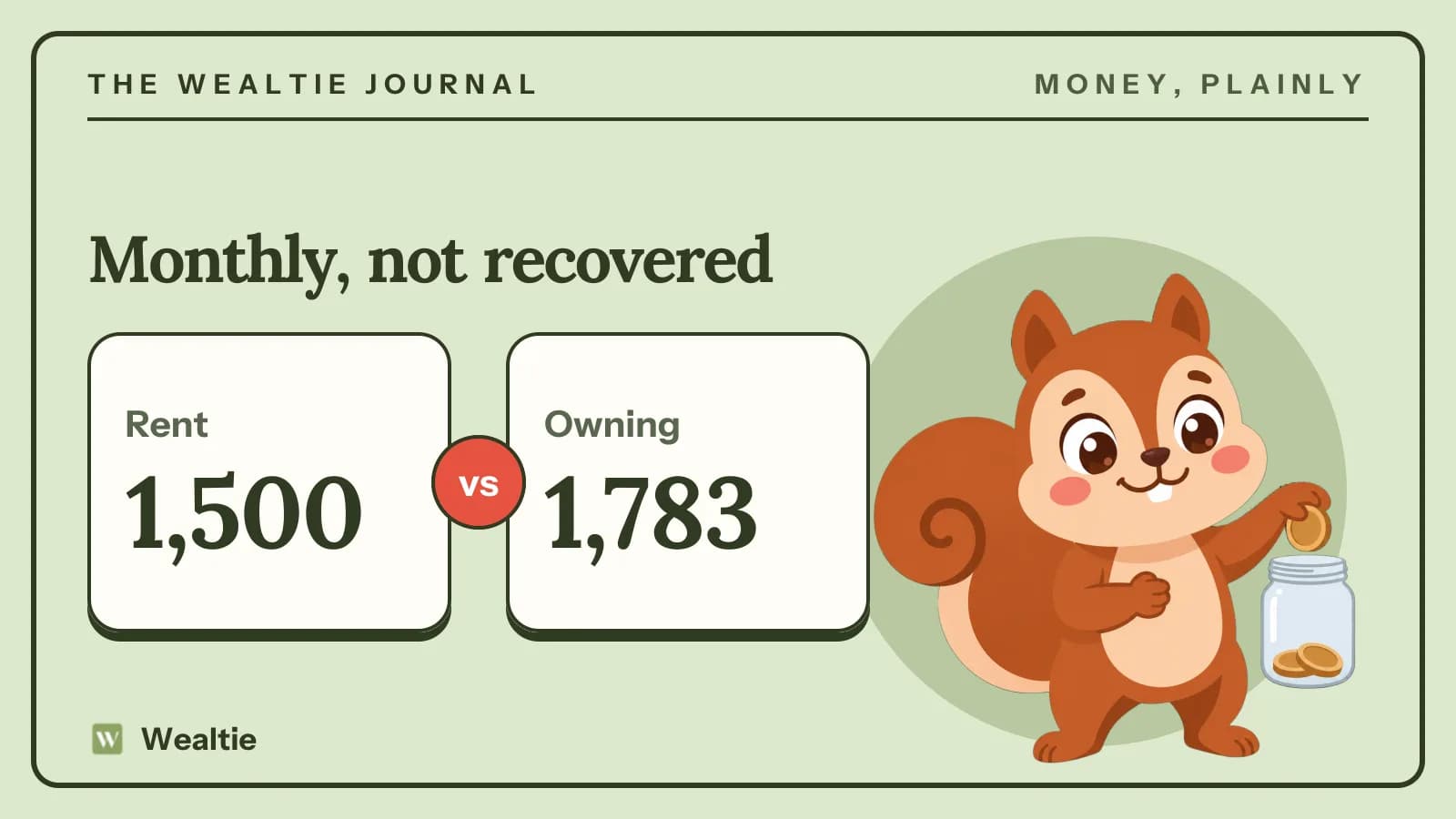
Whether to rent or buy a house depends on comparing rent with the costs of owning that you never get back: interest, taxes, maintenance, insurance and what your deposit could have earned. In a worked example, those come to about 1,783 a month against rent of 1,500.
 By Wealtie Team · 3 min read
Key takeaways
- Compare rent with the costs of owning that you never get back, not with the whole mortgage payment.
- In a worked example on a 300,000 home, those costs come to about 1,783 a month, more than rent of 1,500.
- Buying and selling costs mean owning usually only pays off if you stay several years.
- Paying off the mortgage builds equity, which is why the full payment isn't the right comparison.
Should you rent or buy a house?
Compare rent with the costs of owning that you never get back. Rent is all unrecoverable: it pays for a place to live and nothing else. A mortgage payment is part interest and part repayment, and the repayment part stays yours as equity. So comparing rent with the full mortgage payment makes buying look worse than it is.
What you don't get back when you own is interest, property taxes, maintenance, insurance, and the return you'd have had on your deposit.
What does owning cost each month?
Here's a worked example on a 300,000 home with a 60,000 deposit, in round numbers that work in any currency. Your own figures will differ, sometimes a lot, depending on where you live and the rate you get.
| Cost you don't get back | Per year | Per month |
|---|---|---|
| Interest on a 240,000 mortgage, first year | 12,000 | 1,000 |
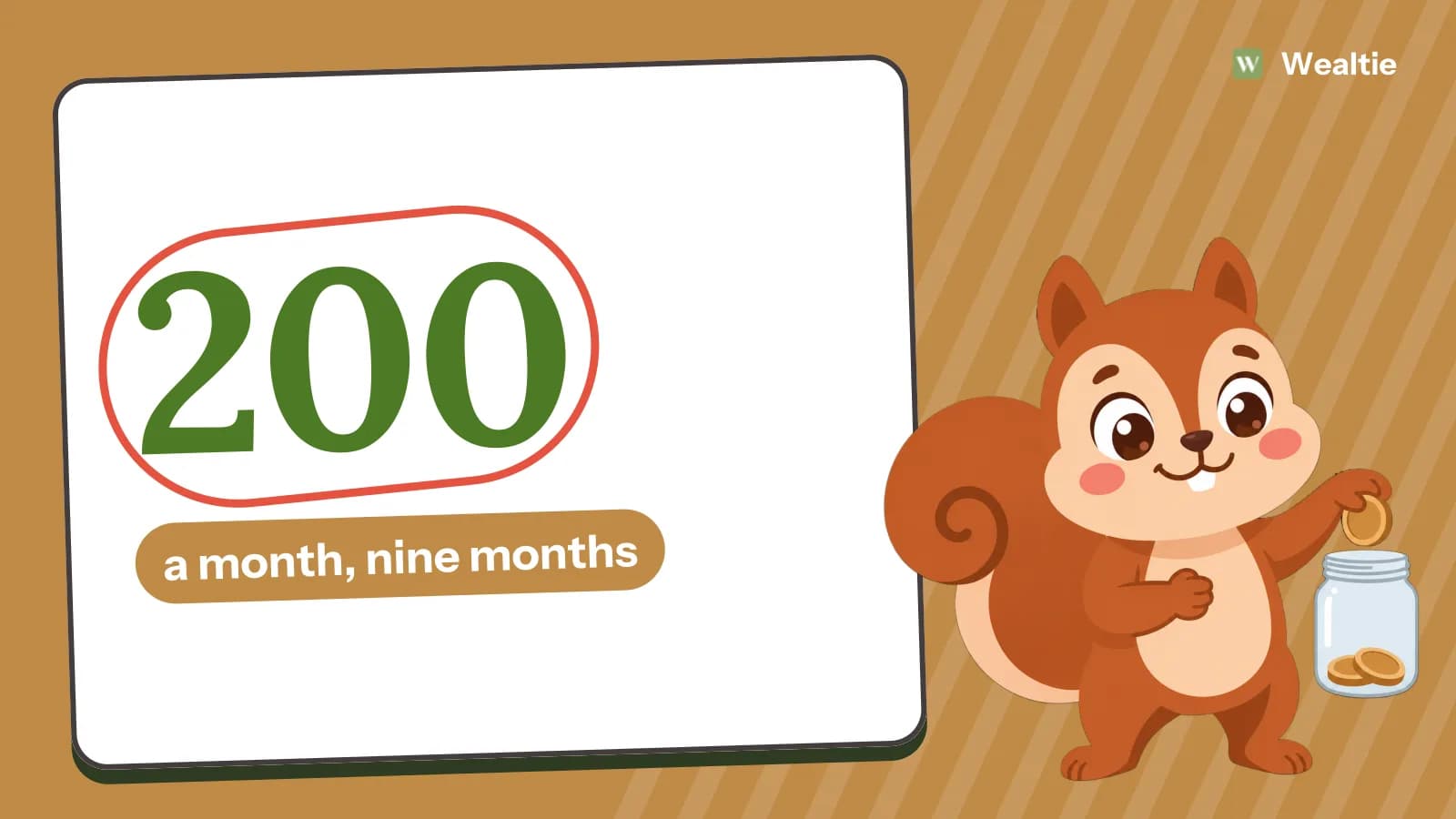
| What the 60,000 deposit could have earned | 2,400 | 200 |
| Property tax | 3,000 | 250 |
| Maintenance and repairs | 3,000 | 250 |
| Insurance | 1,000 | 83 |
| Total | 21,400 | 1,783 |
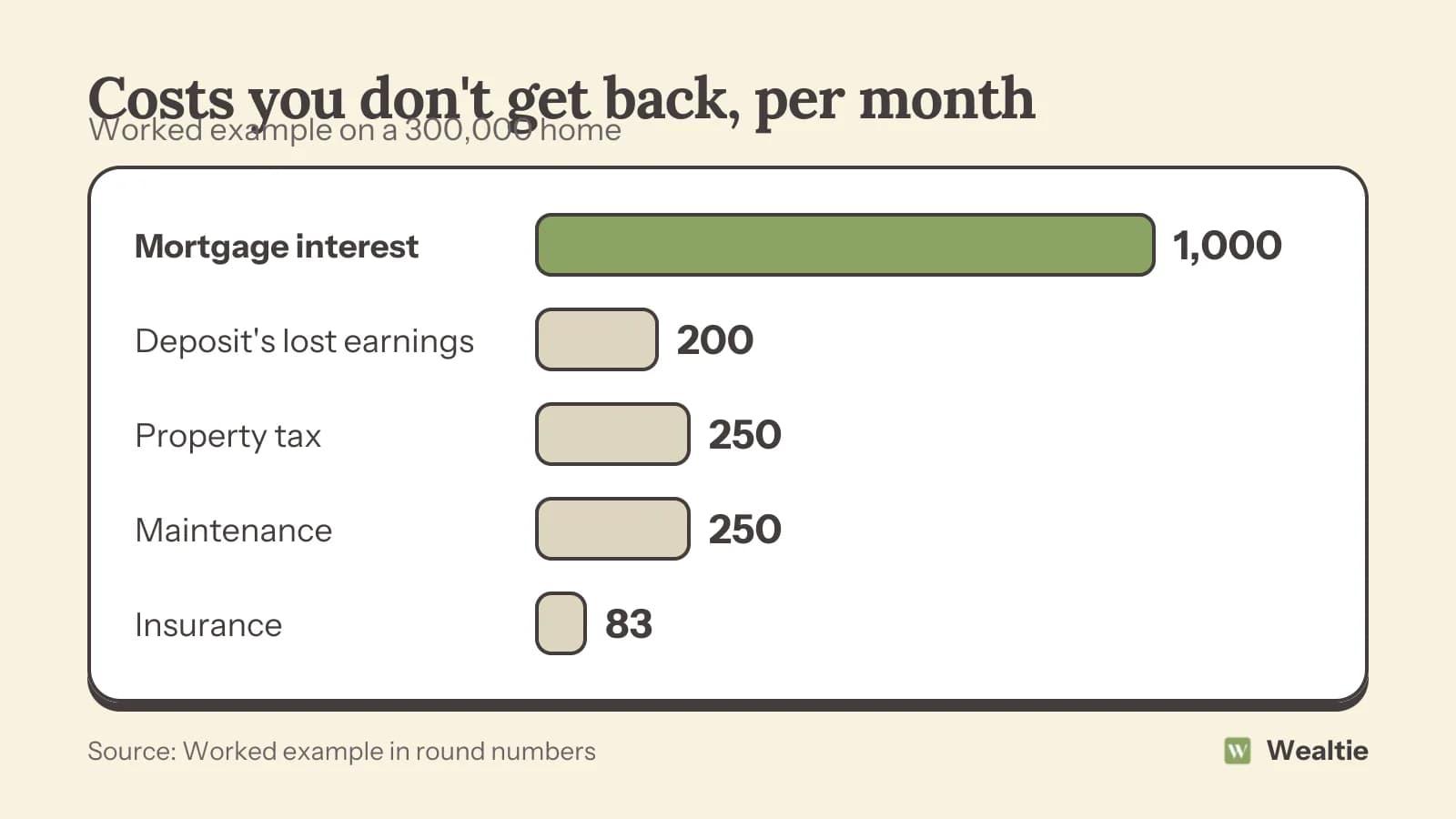
If a similar home rents for 1,500, renting costs less each month in this example, even though the mortgage payment might look comparable to the rent.
The interest figure falls over the years as you pay the loan down, so owning gets relatively cheaper the longer you stay.
Why does how long you stay matter?
Because buying and selling cost a lot. Taxes on the purchase, legal fees, survey costs, moving, and agent fees when you sell can add up to tens of thousands. In this example, say that's 24,000 across buying and selling.
If you sell after two years, that 24,000 is a big extra cost on top of the monthly figures. If you stay fifteen years, it's spread so thinly that it barely matters. Most people find buying makes sense only if they expect to stay for a good number of years.
If your job, relationship or city might change in the next few years, renting keeps you flexible.
What about house prices going up?
They might, and that's part of why people buy. But prices don't always rise, and they can fall for years. A plan that only works if prices go up is a risky one. Treat any rise as a bonus.
Rents can rise too, which is one reason people buy. A fixed-rate mortgage holds the interest part steady for the length of the deal, while a lease renewal can bring a higher rent each year.
Renters can build wealth too, by investing the difference between rent and the cost of owning, plus what would have been the deposit. That only works if the money's invested and not spent. Be honest with yourself about which you'd do.
What else should you think about?
Money isn't everything here. Owning gives you stability and control: nobody can end your lease, and you can paint the walls. Renting gives you flexibility and no surprise repair bills.
Questions worth asking before you buy, in your own situation and with your own numbers:
- Would your emergency fund still be intact after the deposit and costs?
- Could you keep paying if rates rose when your fixed deal ends?
- Could you handle a big repair, like a roof, in your first year?
- Do you expect to stay at least several years?
If any answer's no, waiting might be the better choice. How much should be in an emergency fund covers the first question.
How do you make the decision with your own numbers?
Get real figures: a rent for a similar place, a mortgage quote, local property taxes and insurance quotes. Work out the yearly unrecoverable costs as above, divide by 12, and compare with rent. Add an estimate of buying and selling costs spread over the years you'd stay.
If it's close, other things will decide it, like how settled you want to be. If renting is clearly cheaper and you're not sure you'll stay, keep renting and keep saving. How to save money for a house helps you get ready either way, and how much rent can I afford checks the other side.
How do you see your progress in Wealtie?
Add your savings for a deposit as their own account and move money into it as a transfer each payday. Transfers aren't counted as spending, so your budget tracker stays accurate. If you own already, your net worth tracker shows your accounts in one total. Wealtie adds up the accounts you've entered, so it isn't a valuation of your home.
Questions people ask
Buying usually wins if you'll stay many years and the unrecoverable costs of owning are close to rent. In a worked example on a 300,000 home, those costs were about 1,783 a month, against rent of 1,500, so renting was cheaper.
No, it pays for somewhere to live, just as mortgage interest, taxes and maintenance do for an owner. Compare those costs with rent, not the full mortgage payment.
Usually several years at least, because buying and selling costs are high. Spread over a short stay, they often make renting cheaper.
Maintenance and repairs, property taxes, insurance and the return the deposit could have earned elsewhere. Buying and selling costs also add up.
This article is general information, not financial, tax or legal advice. Your situation is your own; check the numbers that apply to you before you act on them.